The Symbolism Beyond the Gold
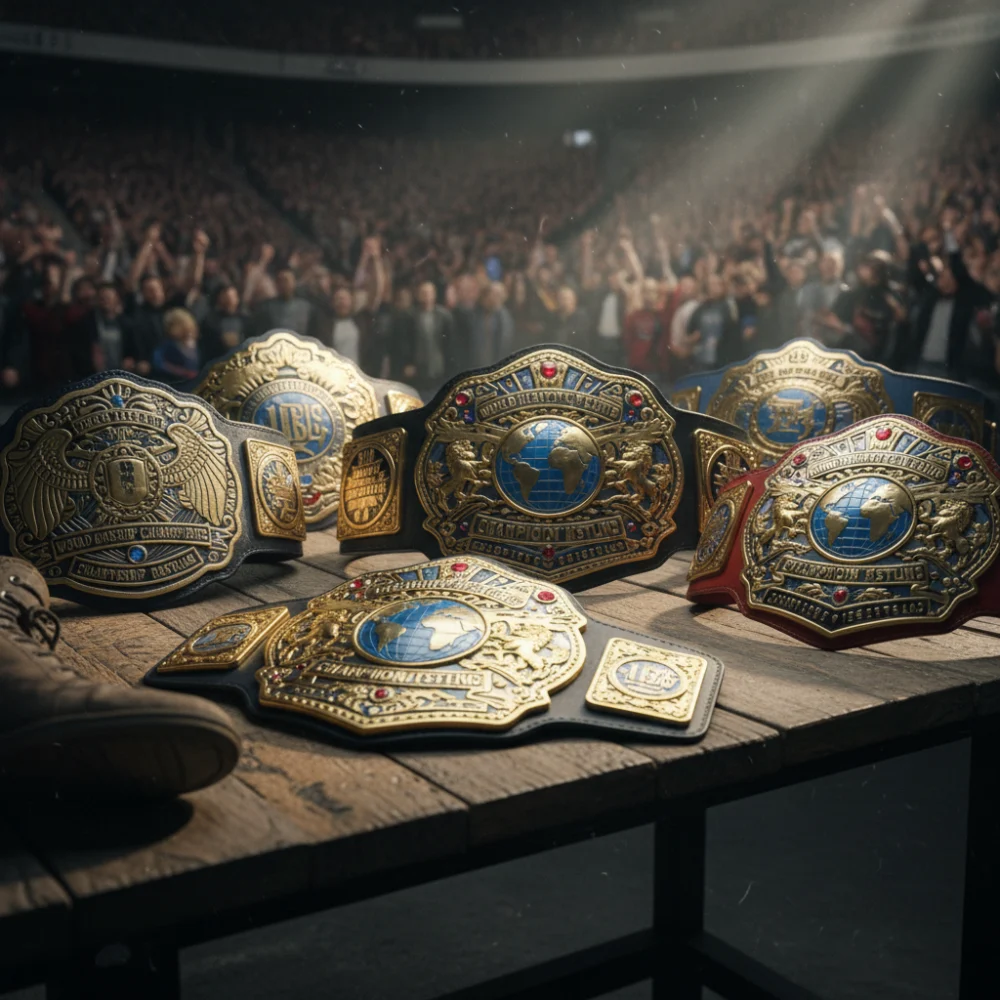
In the world of professional wrestling, nothing commands respect quite like a championship title. Often referred to colloquially as wrestling belts or ‘straps,’ these physical objects are far more than mere props; they are the narrative anchors of the entire industry. When a performer hoists a championship belt above their head, it signifies that the promotion has placed its trust in them to carry the company. It represents box office draw, in-ring excellence, and the culmination of years of sacrifice. While the outcomes may be predetermined, the physical toll required to earn the right to wear the gold is undeniably real, making the belt a sacred icon in sports entertainment.
The Early History of Championship Gold
The concept of awarding a belt to a champion dates back to the late 19th and early 20th centuries, borrowing from boxing traditions. In the days of Frank Gotch and George Hackenschmidt, championship accolades were often represented by diamond-studded belts or massive trophies. However, as professional wrestling evolved into a distinct spectacle, the need for a portable, recognizable symbol became apparent. Early designs were often crude by modern standards, featuring simple leather straps and relatively small, flat metal plates. These early iterations laid the groundwork for the elaborate, multifaceted designs that would define the television era.
The Holy Grail: The ‘Big Gold’ Belt
Perhaps no single wrestling belt is as iconic as the NWA World Heavyweight Championship, famously known as the ‘Big Gold Belt.’ Introduced in 1986 and crafted by silversmith Charles Crumrine, this masterpiece deviated from the standard design of the time. Instead of a flat plate on a strap, it featured a massive, 3D-textured buckle with a domed globe, intricate floral filigree, and genuine ruby accents. It represented the Ric Flair era of the National Wrestling Alliance and later became the centerpiece of WCW. Its enduring legacy is so potent that WWE revived the design in the early 2000s as their World Heavyweight Championship, proving that classic aesthetics never go out of style.
The Winged Eagle: A Golden Era Icon
For fans who grew up during the Hulk Hogan and Shawn Michaels eras, the Winged Eagle belt is the definitive WWE Championship. Debuting in 1988 and crafted by the legendary belt maker Reggie Parks, this design featured a circular main plate with an eagle’s wings spreading beyond the edges. It was the first major departure from blocky, rectangular plates, introducing a silhouette that looked dynamic around the waist of a superstar. The dual-plating technology—mixing gold and silver finishes—added a depth and shimmer that popped perfectly under the bright television lights of WrestleMania.
The Attitude Era and the ‘Big Eagle’
As the 1990s progressed and wrestling entered the raucous Attitude Era, the belts needed to become louder and larger. The Winged Eagle was retired in favor of the ‘Big Eagle’ (or the Attitude Era belt), which featured a massive, rounded main plate and a dark blue or black strap. This era also introduced the concept of the custom championship. Stone Cold Steve Austin famously commissioned the ‘Smoking Skull’ belt, a personalized title featuring snakes and skulls that perfectly encapsulated his rebellious character. This move opened the door for merchandise opportunities and future custom designs.
The Controversial Spinner Belt
In 2005, John Cena introduced the most polarizing design in wrestling history: the Spinner Belt. Designed to reflect hip-hop culture and Cena’s ‘Doctor of Thuganomics’ gimmick, the center plate actually spun like a car rim. While traditionalists loathed the toy-like aesthetic, it became a merchandising juggernaut for the WWE. It remained the primary championship design for nearly eight years, proving that wrestling belts are not just symbols of athletic prowess but also powerful marketing tools targeting younger demographics.
The Modern Era of CNC Machining
The manufacturing process of wrestling belts has undergone a radical transformation in the last decade. Historically, belts were made using acid etching, where chemicals ate away metal to create relief patterns. Today, major promotions like WWE and AEW utilize CNC machining. This computer-controlled milling process allows for incredibly deep 3D cuts, stacking multiple layers of metal to create heavy, architectural designs. The current WWE United Kingdom Championship and the AEW World Championship are prime examples of this technology, featuring layers of detail that acid etching could never achieve.
The Art of Leather Crafting
While the metal plates get the glory, the leather strap is the unsung hero of a quality wrestling belt. High-end belts use varying grades of leather, with the best being vegetable-tanned cowhide that is hand-tooled. The ‘tooling’ refers to the decorative patterns—often shell or floral motifs—stamped into the leather borders. A proper strap must be soft enough to flop naturally (a quality known as ‘floppiness’ among collectors) while being sturdy enough to hold heavy zinc or brass plates. Cheap replicas often use stiff simulated leather or polyurethane, which cracks over time and fails to drape correctly over a champion’s shoulder.
The Intercontinental Championship: The Worker’s Title
Historically, the Intercontinental Championship was viewed as the ‘worker’s title,’ held by the best in-ring technical wrestlers like Bret Hart, Mr. Perfect, and Randy Savage. The classic design, featuring a rectangular plate with a globe and a yellow leather strap (during the Ultimate Warrior’s reign) or white strap (during Shawn Michaels’ reign), remains a favorite. The belt represents the stepping stone to the main event, and its design has traditionally been kept more modest yet dignified compared to the world titles, emphasizing the athletic struggle required to hold it.
Tag Team Titles and Uniformity
Tag team wrestling belts have seen a shift from unique, distinct designs to uniform branding. In the 1980s and 90s, the WWF Tag Team titles were large, rectangular, and distinct. However, in the modern era, promotions often create belts that mirror the singles titles but with different colored straps or silver plating to denote a different tier. This ‘uniformity’ strategy helps with brand cohesion but is often criticized by fans who miss the unique identities of titles like the classic ECW Television Title or the WCW United States Championship.
Japanese Strong Style: The IWGP Heavyweight
In Japan, wrestling belts are treated with a reverence akin to samurai swords. The IWGP Heavyweight Championship (4th Generation) used by New Japan Pro-Wrestling (NJPW) was widely considered the most beautiful belt in the world before its retirement. It featured massive, thick plates with intricate detailing listing previous champions on the side plates. The aesthetic was less about ‘bling’ and more about legitimate sporting prestige. The presentation of these belts in NJPW involves careful handling, reinforcing the idea that the title is a prize worth fighting for, not just a prop.
The Rise of AEW and ‘Big Platinum’
When All Elite Wrestling (AEW) launched, they aimed to make an immediate statement with their world title. The result was a massive, throwback-inspired belt often nicknamed ‘Big Platinum.’ It combines the size of the Big Gold belt with the multi-layered depth of modern CNC machining. The use of a high-relief logo and extensive gold plating signaled to fans that this new promotion viewed its championship as equal to, if not greater than, the competition. It demonstrated that belt design is a critical component of a promotion’s visual identity.
The Collecting Culture: Replicas vs. Real
A massive subculture exists around collecting wrestling belts. This ranges from:
- Toy Belts: Plastic versions sold at big-box stores for children.
- Commemorative Belts: plastic plates on faux leather.
- Replica Belts: Metal plates (usually zinc alloy) on polyurethane straps, sold by WWE Shop or Figures Toy Company.
- Real/Send-Out Belts: Belts made by the actual belt makers (like Dave Millican or Leather Rebels) using the same materials as the TV props.
Serious collectors often buy official replicas and pay custom leather workers to ‘re-leather’ them, replacing the stiff factory strap with high-quality, hand-tooled cowhide to mimic the TV-authentic look and feel.
Bootlegs and Intellectual Property
The high demand for wrestling belts has spawned a massive black market of bootleg belts, primarily manufactured overseas. These unauthorized reproductions often use stolen artwork and inferior materials, such as thin brass or tin and cardboard-filled straps. While they offer a cheaper entry point for fans, they are controversial within the community. Belt makers and promotions aggressively protect their copyright, as the design of a belt like the Winged Eagle is a protected piece of intellectual property. Collectors are frequently warned that ‘you get what you pay for’ when buying from unauthorized sellers.
The Enduring Legacy of the Strap
Ultimately, wrestling belts remain the physical manifestation of pro wrestling’s drama. Whether it is the ‘Ten Pounds of Gold’ traveled by Harley Race or the ‘Spinner’ held by John Cena, these objects capture moments in time. They are the background of every major promo and the focal point of every pay-per-view main event. As designs continue to evolve with technology, moving from acid etching to 3D printing and CNC milling, the core purpose remains unchanged: to mark the distinct line between a wrestler and a champion.