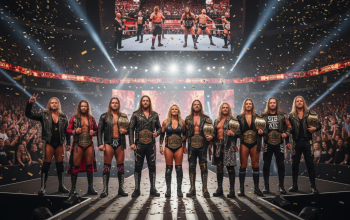

In the vast and theatrical world of professional wrestling, nothing signifies success quite like a championship belt. These gold and leather trophies are far more than mere props; they serve as the narrative anchor for the entire industry. A wrestling championship represents the pinnacle of achievement, signaling to the audience that the holder is the ‘top guy’ or the face of the company. While the outcomes of matches are predetermined, the responsibility of carrying a major championship is very real, requiring the performer to draw crowds, sell merchandise, and maintain a high standard of in-ring performance.
The Origins of the Gold
The concept of a wrestling champion dates back to the late 19th and early 20th centuries, bridging the gap between legitimate catch-as-catch-can tournaments and the worked carnivals of the era. The historic 1905 match between George Hackenschmidt and Frank Gotch helped establish the lineage of the original World Heavyweight Wrestling Championship. In these formative years, the title was a legitimate claim to being the toughest grappler on the planet. As the industry transitioned into ‘sports entertainment,’ the title became a storytelling device used to generate heat and interest between territories.
The formation of the National Wrestling Alliance (NWA) in 1948 revolutionized how championships were perceived. The NWA Worlds Heavyweight Championship became a traveling prize, defended across various regional territories against local stars. Legendary figures like Lou Thesz, Harley Race, and Ric Flair carried the ‘Ten Pounds of Gold,’ bringing credibility to every arena they entered. This era established the precedent that the champion was the hardest-working athlete in the business, often wrestling seven nights a week in different cities.
The WWE Championship Lineage
While the NWA dominated the territorial era, the secession of the World Wide Wrestling Federation (WWWF) in 1963 created a new lineage that would eventually become the most recognized prize in the industry: the WWE Championship. First held by ‘Nature Boy’ Buddy Rogers and solidified by the years-long reign of Bruno Sammartino, this title became the centerpiece of Vince McMahon’s global expansion. Today, holding the WWE Championship places a wrestler in an elite fraternity of pop culture icons including Hulk Hogan, ‘Stone Cold’ Steve Austin, and John Cena.
The physical design of championship belts has evolved drastically over the decades to reflect the aesthetics of the times. In the 1970s and 80s, belts often featured small plates on plain leather. This changed with the introduction of iconic designs like the ‘Big Gold Belt’ (originally the NWA/WCW World title) and the ‘Winged Eagle’ WWF Championship. These designs featured massive, intricate gold plates that looked impressive on television. Visual prestige is a crucial component of a championship; if the belt looks like a toy, the audience struggles to take the champion seriously.
The Hierarchy of Titles
Wrestling promotions typically structure their championships in a strict hierarchy. At the top sits the World Heavyweight Championship, the primary prize. Below that are the mid-card titles, such as the Intercontinental or United States Championships. These secondary titles serve a vital purpose: they are the ‘workhorse’ belts often held by the best in-ring performers who are being groomed for the main event. Legends like Randy Savage, Bret Hart, and Shawn Michaels used their runs with the Intercontinental title to prove they were ready for the top spot.
Tag team wrestling offers a unique dynamic within the championship landscape. The World Tag Team Championships represent the pinnacle of duo coordination and psychology. Great tag teams like The Road Warriors, The Dudley Boyz, and The Usos elevated these titles by showcasing matches that were often faster-paced and more chaotic than singles bouts. The prestige of tag titles often fluctuates depending on the promotion’s focus, but during peak eras, the tag team main event is as a draw as any singles contest.
The Women’s Revolution
For decades, women’s championships were treated as sideshow attractions or bathroom breaks in major western promotions. However, the last decade has seen a massive paradigm shift. The retirement of the ‘Divas Championship’ and the reintroduction of the WWE Women’s Championship at WrestleMania 32 marked a turning point. Now, titles like the WWE Women’s World Championship and the AEW Women’s World Championship are frequently defended in the main events of pay-per-views, held by superstars like Becky Lynch and Charlotte Flair who have redefined the genre.
Outside of North America, the philosophy of championships can differ significantly. in Japan, particularly within New Japan Pro-Wrestling (NJPW), the IWGP World Heavyweight Championship is treated with a reverence akin to legitimate sports titles. The presentation includes press conferences, strict rule enforcement, and a ‘Strong Style’ of combat that emphasizes durability and fighting spirit. The lineage of the IWGP title is protected fiercely, with short reigns being rare and successful defenses being the primary metric of greatness.
Lucha Libre and the Mask
In Mexico’s Lucha Libre tradition, championships are highly respected but often take a backseat to Apuestas (betting) matches. In promotions like CMLL and AAA, the most prestigious match is not always for a gold belt, but rather ‘Mask vs. Mask’ or ‘Hair vs. Hair.’ However, holding a world title in Mexico is still a sign of elite technical skill. The belts are often categorized by weight class (Light Heavyweight, Welterweight, Middleweight) more strictly than in the US, maintaining a connection to boxing traditions.
Hardcore and Gimmick Titles
Not all championships are created for pure competition. The late 1990s introduced the concept of the Hardcore Championship, defended 24/7 under rules that allowed weapons and interference. While often comedic, these titles (and their successors like the 24/7 Title) provided screen time for lower-card talent and added an element of unpredictability to the show. While they lack the prestige of a World title, they remain a beloved part of wrestling history for their entertainment value.
The psychology of ‘The Chase’ is fundamental to wrestling booking involving championships. The money in professional wrestling is often found in the babyface (hero) chasing the heel (villain) champion. The moment the hero finally wins the belt is the climax of the story. However, booking a champion after they have won is notoriously difficult. This leads to the concept of the ‘transitional champion’—a wrestler who holds the belt for a short period solely to move it from one major star to another without damaging either’s reputation.
The Grand Slam
Modern wrestling acknowledges versatility through accomplishments like the Triple Crown or Grand Slam. To become a Grand Slam Champion, a wrestler must win a primary world title, a secondary title, a tag team title, and often a tertiary title (like the European or Hardcore) throughout their career. Achieving this status proves that a performer can excel in every division and role the company has to offer. It is a hallmark of longevity and adaptability found in stars like Chris Jericho and Seth Rollins.
In the modern era, the landscape of championships has expanded with the rise of All Elite Wrestling (AEW). The AEW World Championship was established to provide an alternative to the WWE style, focusing on win-loss records and sports-centric presentation. The existence of a second major national promotion with its own prestigious lineage creates a healthy competitive environment, giving wrestlers more opportunities to achieve championship glory and increasing the value of title belts industry-wide.
Ultimately, a wrestling championship is a prop that gains value through the blood, sweat, and tears of the performers who hold it. A belt is only as prestigious as the matches fought for it and the stories told around it. Whether it is the classic ‘Ten Pounds of Gold’ or the modern ‘Spinner Belt,’ these championships serve as the immortal symbols of pro wrestling history, linking generations of fans and athletes in a continuous narrative of combat and glory.