The landscape of World Wrestling Entertainment is perpetually in flux, a dynamic canvas where broadcast demands frequently reshape the very presentation of its premier weekly programming. As the calendar turned towards the new year, a significant shift was confirmed for Friday Night SmackDown, the blue brand poised to expand its runtime to an unprecedented three hours, commencing on Friday, January 2nd. This strategic extension, while undoubtedly a boon for network partners seeking more valuable airtime, immediately ignited fervent discussion among the WWE Universe and industry observers alike, raising critical questions about narrative pacing, talent utilization, and the inherent challenges of sustaining audience engagement over an extended live broadcast.
SmackDown’s journey through various time slots and network homes has been a storied one, evolving from its initial Thursday night two-hour slot on UPN in 1999 to its current prominent Friday evening position on a major network. For the majority of its existence, the show has maintained a tight, focused two-hour format, a structure often praised for its ability to deliver impactful storylines without overstaying its welcome. Unlike its Monday night counterpart, Raw, which has long grappled with the creative demands of a three-hour weekly commitment, SmackDown has historically leveraged its shorter duration to craft more concise, often more critically acclaimed, narratives. The decision to now mirror Raw’s extended format marks a pivotal moment, signaling a new era of programming intensity and presenting both immense opportunities and formidable obstacles for WWE’s creative team and its formidable roster.
The transition to a three-hour broadcast is not merely an arithmetic addition of sixty minutes; it represents a fundamental recalibration of storytelling philosophy. The primary challenge lies in filling this expanded window with compelling, meaningful content that avoids the pitfalls of repetition or dilution. Three hours necessitate more matches, more backstage segments, more promo time, and ultimately, more distinct narrative threads to keep the audience captivated. This can lead to increased exposure for a wider array of talent, potentially elevating deserving performers who might otherwise struggle for television time. However, it also risks overexposing certain characters, stretching feuds thin, or introducing segments that feel like filler rather than essential components of the overarching story. The delicate balance between maximizing airtime and maintaining creative integrity will be under intense scrutiny as SmackDown embarks on this extended venture.
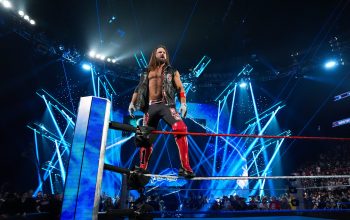
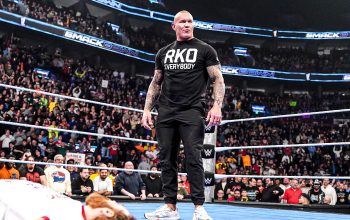
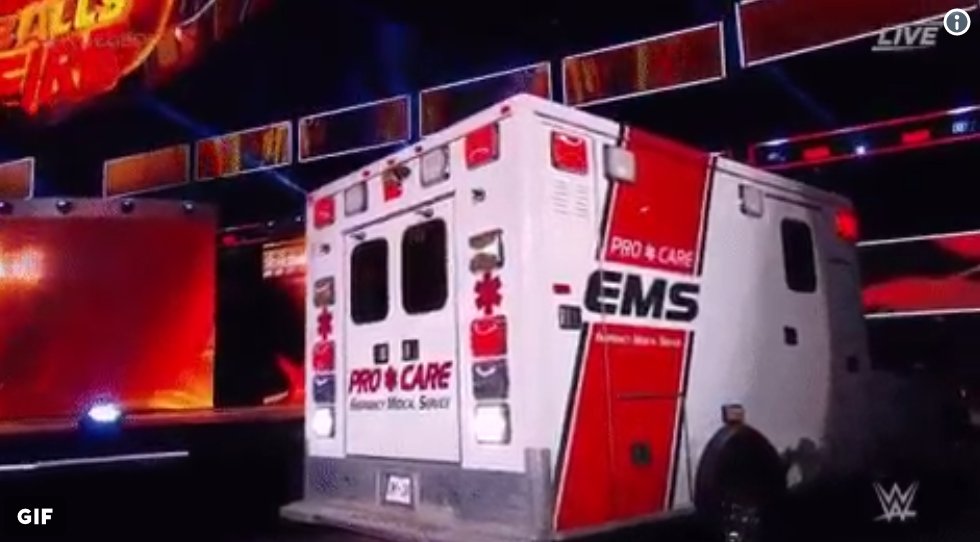
Headlining the inaugural three-hour SmackDown on January 2nd, emanating from the KeyBank Center in Buffalo, New York, is a highly anticipated and undeniably brutal encounter: an Ambulance Match between Aleister Black and Damian Priest. This stipulation, one of the most unforgiving in professional wrestling, promises a definitive conclusion to a rivalry that has captivated, and at times tested the patience of, segments of the WWE audience. The feud between Black and Priest has been a fixture on the blue brand for several months, characterized by its intense physicality and the stark contrast in the combatants’ approaches.
Aleister Black, with his enigmatic aura and devastating striking prowess, has long been a fan favorite, known for his methodical, almost surgical dismantling of opponents. His character, shrouded in mystery and dark aesthetics, often relies on an internal struggle, manifesting in explosive, impactful offense. Damian Priest, on the other hand, embodies a more overtly aggressive, almost primal force, his imposing stature and hard-hitting style making him a formidable antagonist. Their rivalry has seen numerous singles matches, multi-person brawls, and backstage altercations, escalating steadily over weeks. A particularly chaotic multi-segment brawl aired on the blue brand just before the Christmas holiday, pushing their animosity to a fever pitch. Following this, Priest issued a direct challenge to Black on the December 26th episode, and the company later confirmed the Ambulance Match stipulation via social media, solidifying its place as the evening’s main event.
The Ambulance Match itself is a rare and potent weapon in WWE’s storytelling arsenal, reserved for feuds that demand a decisive, often violent, resolution. The objective is simple yet brutal: incapacitate your opponent sufficiently to load them into the back of a waiting ambulance and close the doors. There are no pinfalls, no submissions, no disqualifications—only raw, unadulterated combat until one competitor is rendered unable to continue. This stipulation inherently signals a "blow-off" scenario, a definitive end point designed to finally separate two warring individuals. For Black and Priest, whose rivalry has been a consistent, if sometimes protracted, presence on SmackDown, this match carries immense weight. It is not just about victory, but about exorcising a demon, proving superiority, and moving forward. The outcome will undoubtedly have significant implications for both men, potentially launching the victor into a new main event program or sending the loser back to the drawing board to reassess their trajectory. The expectation is a grueling, hard-hitting spectacle, providing a fittingly dramatic centerpiece for SmackDown’s expanded debut.

While the Ambulance Match commanded the lion’s share of early attention for the January 2nd broadcast, the expansion to three hours naturally suggests a more robust card overall. However, specific details regarding other contests for the debut extended show remained somewhat sparse in initial announcements, a common practice when a marquee main event is designed to carry the promotional load. The additional hour provides ample opportunity to advance multiple storylines, showcase emerging talent, and potentially feature longer, more intricate matches than typically seen on the two-hour format. This added time could be a boon for championship feuds that require more narrative development, or for tag team and women’s divisions that sometimes struggle for consistent, meaningful airtime.
Beyond the immediate focus on Black versus Priest, another significant, long-running rivalry on the blue brand is also nearing a climactic conclusion: the bitter struggle between Cody Rhodes and Drew McIntyre for the prestigious WWE World Heavyweight Championship. This championship feud has been a masterclass in long-term storytelling, weaving a complex tapestry of ambition, betrayal, and a relentless pursuit of glory. Cody Rhodes, the "American Nightmare," has been on a redemption arc, fiercely committed to capturing the top prize that eluded his legendary father. Drew McIntyre, the "Scottish Warrior," having tasted the pinnacle of success and endured periods of self-doubt, has returned with a renewed, almost ruthless, intensity, convinced that the championship is his rightful destiny.
Their rivalry has been defined by its emotional depth, with both men delivering impassioned promos and engaging in physically demanding encounters. The stakes have continuously escalated, reflecting the personal animosity that has developed between them. This protracted conflict is now slated to reach its apex in a "Three Stages of Hell" match, a stipulation renowned for its brutality and rarity, scheduled for Friday, January 9th, during a special live event broadcast from Berlin, Germany, as part of WWE’s European tour.
The "Three Stages of Hell" match is one of the most grueling and decisive stipulations in professional wrestling. It typically involves three distinct matches, each with its own specific rules, played out consecutively to determine a winner. The first competitor to secure two falls wins the overall contest. The specific stages can vary, but they often include traditional singles match rules, a No Disqualification or Street Fight stipulation, and then a final, often even more extreme, stipulation like a Steel Cage or Ladder Match, ensuring that both competitors are pushed to their absolute limits. For a championship of the magnitude of the WWE World Heavyweight Title, and for a feud as deeply personal as Rhodes and McIntyre’s, the "Three Stages of Hell" is a fitting and almost poetic choice to finally crown a definitive victor and bring closure to their saga. Holding such a high-stakes championship match on an international tour stop further amplifies its significance, allowing WWE to present a major title defense to a passionate global audience.
The prevalence of these extended, deeply personal feuds – Black vs. Priest and Rhodes vs. McIntyre – underscores a fundamental aspect of modern professional wrestling: the double-edged sword of long-form storytelling. When executed with precision, protracted rivalries can cultivate profound emotional investment from the audience, allowing characters to evolve, motivations to deepen, and the stakes to become almost unbearable. Fans witness the ebb and flow of a conflict, investing in the journey as much as the destination. However, the risk lies in overextending these narratives, pushing them beyond their natural lifespan, and consequently, testing the audience’s patience. The wrestle-web, as it is colloquially known, often buzzes with commentary regarding the perceived longevity of certain feuds, with calls for definitive conclusions becoming louder the longer a storyline persists. The challenge for WWE’s creative team is to discern the optimal moment for a "blow-off" match, ensuring that the eventual resolution feels earned and impactful, rather than simply overdue.
The decision to expand SmackDown to three hours is a clear indication of WWE’s strategic imperative to maximize its broadcast partnerships and deliver more content to its vast global audience. While the commercial benefits are evident, the artistic and logistical challenges are equally significant. The company will need to demonstrate a consistent ability to produce engaging, high-quality programming across three hours every Friday night, a task that has historically proven demanding even for its flagship show, Raw. This will require not only deeper narrative planning but also meticulous attention to pacing, character development, and the judicious use of its extensive roster.
As the blue brand steps into this new, extended era, the immediate focus will be on the quality of its initial offerings. The Ambulance Match between Aleister Black and Damian Priest, and the impending "Three Stages of Hell" match between Cody Rhodes and Drew McIntyre, serve as potent examples of the kind of high-stakes, conclusive storytelling that will be required to fill these additional hours with compelling drama. These matches, with their brutal stipulations and deeply personal underpinnings, promise to deliver the kind of definitive action that fans crave. The success of the three-hour SmackDown will ultimately hinge on WWE’s ability to consistently deliver such impactful narratives, ensuring that the expanded runtime translates into an enriched viewing experience rather than merely an extended one. The wrestling world watches with keen interest as SmackDown embarks on this ambitious new chapter, eager to see how the blue brand evolves under the weight of its new, demanding schedule.