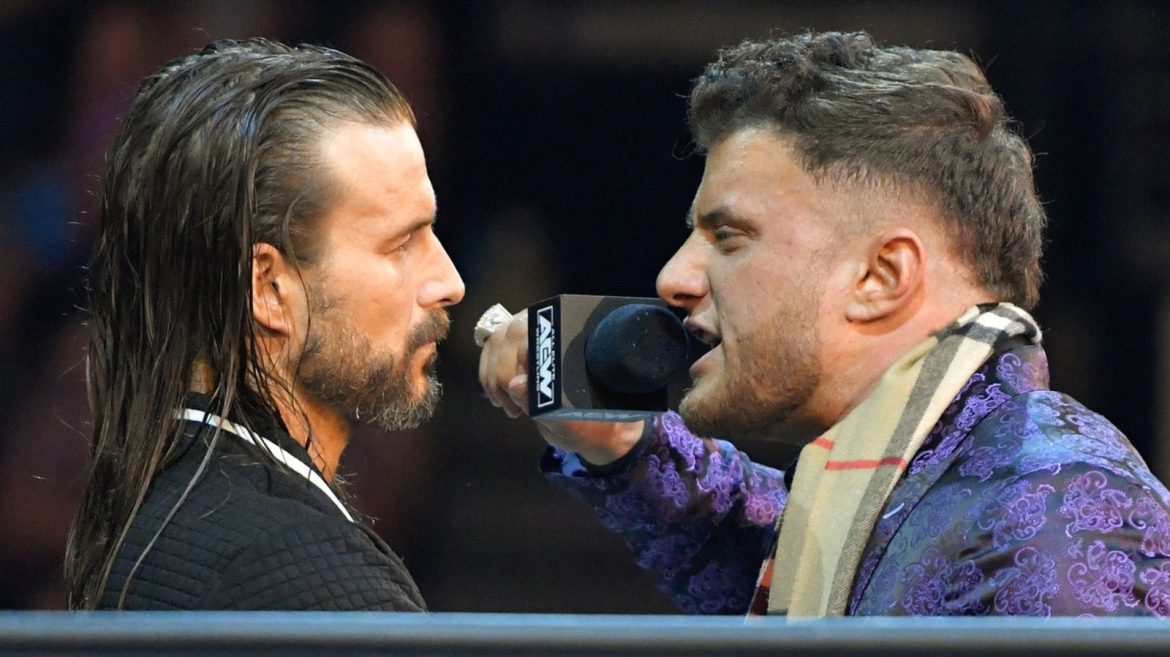
The landscape of professional wrestling is often defined by its seismic shifts, unpredictable turns, and the deeply personal narratives that captivate audiences. Among the more discussed and, at times, divisive storylines in recent All Elite Wrestling history was the unexpected alliance between Maxwell Jacob Friedman, the reigning, self-proclaimed "Salt of the Earth," and Adam Cole, the "Bay Bay" prodigy. What began as a seemingly transactional partnership between two of AEW’s most prominent stars, fueled by mutual ambition and a shared disdain for their opponents, evolved into a complex dynamic that, for a period, dominated headlines and conversations. Now, with the benefit of hindsight and a period of personal reflection, MJF has offered his candid thoughts on the trajectory and ultimate reception of this pivotal chapter in his career.
The initial formation of the "Better Than You, Bay Bay" tag team was a masterclass in calculated risk and immediate impact. MJF, a generational talent whose charisma and controversial persona had already cemented him as a top draw, found an unlikely foil and partner in Adam Cole. Cole, renowned for his technical prowess and engaging ring presence, possessed a similar penchant for theatricality and a hunger for championship gold. Their pairing was not born of genuine camaraderie, but rather a shared objective: to ascend to the pinnacle of AEW’s tag team division and, subsequently, to position themselves for even greater individual accolades. This inherent tension, the knowledge that their alliance was likely temporary and built on a foundation of self-interest, added an immediate layer of intrigue. It was a stark departure from the typical "best friends" tag team trope, offering a more cynical, yet arguably more realistic, portrayal of professional wrestling partnerships.
From a business perspective, the "Better Than You, Bay Bay" act was an undeniable success. MJF, speaking in a recent interview, highlighted the statistical evidence of their impact. He asserted that, at their peak, their segments were generating the highest minute-for-minute viewership figures not just within AEW, but across the entirety of professional wrestling. This claim, if accurate, speaks volumes about the magnetic pull of their on-screen chemistry and the compelling nature of their characters. Furthermore, MJF pointed to their merchandise sales, stating that they were the top sellers in AEW during that period. This tangible metric underscored their ability to connect with the fanbase on a commercial level, translating their popularity into revenue for the company. In a business where drawing power is paramount, their immediate success was a clear indicator of their marketability and the audience’s engagement with their unique dynamic.
However, the narrative surrounding MJF and Adam Cole was not without its complexities and, as MJF himself acknowledged, its "sour notes." The expectation for a dramatic betrayal was palpable from the outset. The wrestling world is steeped in the tradition of the heel turning on their partner, and with MJF’s established history of deviousness, it was widely assumed he would be the architect of Cole’s downfall. The shock, therefore, came when the script was flipped. It was Adam Cole, the seemingly more earnest of the duo, who ultimately turned on MJF, leading to a significant shift in the narrative. This subversion of expectations, while initially a refreshing twist, eventually encountered obstacles that, in MJF’s view, prevented the storyline from reaching its full, intended conclusion.

One of the primary disruptors to the unfolding drama was, unfortunately, the unfortunate reality of injuries. Professional wrestling, for all its spectacle, is an incredibly demanding physical pursuit. Adam Cole’s own health issues, which led to him being sidelined for a period, significantly hampered the momentum of their feud. MJF expressed frustration with this turn of events, noting that Cole’s injury occurred midway through their planned arc. This interruption meant that the carefully constructed narrative had to be adapted, leading to a perceived "lull" in the storytelling for some observers. While MJF acknowledged the success of other long-term storylines, such as The Bloodline in WWE, he felt that their own narrative, at that particular juncture, had momentarily lost its steam due to these unforeseen circumstances.
Despite the frustrations associated with the trajectory of the feud, MJF revealed that the year spent in this particular storyline proved to be a period of significant personal growth. He admitted to experiencing a "dark place" during his own time away from the ring, a period of reflection that, paradoxically, fueled his determination. This time off allowed him to confront his own vulnerabilities and to channel his frustrations into a renewed sense of purpose. He candidly stated that his anger wasn’t directed at the fans, but rather at himself for the circumstances that had led to his own absences and the perceived derailment of his and Cole’s shared narrative. This introspective approach, a hallmark of MJF’s intellectual approach to his craft, demonstrates a maturity beyond his years and a deep commitment to understanding the nuances of his own journey.
The "Better Than You, Bay Bay" partnership, in essence, represented a modern take on the classic wrestling tag team. It eschewed overt displays of loyalty in favor of a pragmatic, almost business-like, collaboration. Their dynamic was built on a foundation of shared ambition and a mutual understanding that their individual goals would eventually supersede their partnership. This realism, coupled with their undeniable charisma, allowed them to connect with a broad spectrum of the audience. Some fans gravitated towards the perceived heelish nature of their alliance, appreciating the cynical undertones. Others were drawn to the spectacle and the inherent drama of two immensely talented individuals vying for dominance, even within a tag team setting.
The impact of their rivalry extended beyond the ring and into the broader wrestling discourse. It sparked debates about the nature of storytelling in professional wrestling, the importance of character development, and the inherent challenges of maintaining narrative momentum in the face of unpredictable variables like injuries. For MJF, the experience was a valuable learning curve. It taught him about the importance of adaptability, the resilience required to overcome setbacks, and the power of introspection in fueling creative drive. While the ultimate conclusion of the "Better Than You, Bay Bay" saga may not have unfolded precisely as envisioned, its imprint on AEW’s recent history is undeniable, and MJF’s reflections offer a compelling glimpse into the intricate machinations of a wrestling storyline and the personal evolution of one of its most captivating stars. The calculated risks, the surprising twists, and the eventual personal growth all coalesce to form a narrative that, despite its perceived imperfections, remains a significant chapter in the ongoing saga of MJF’s reign atop the wrestling world. The lessons learned, the experience gained, and the undeniable connection forged with the audience during this period will undoubtedly continue to shape his future endeavors, solidifying his status as a true student of the game and a master of his craft.