
The echoes of a respected veteran’s caution reverberated throughout the professional wrestling community recently, igniting a crucial discourse on the inherent perils of the squared circle. William Regal, a man whose career spanned decades and whose very name conjures images of technical prowess and unyielding resilience, issued a poignant public statement regarding the catastrophic consequences of improper landings and the long-term effects of injuries to the cervical spine. His message, shared across various platforms, served as a stark reminder of the sacrifices performers make, often unseen and unacknowledged, long after the final bell rings. It underscored the critical imperative for safety in an industry built on the illusion of combat, yet frequently delivering very real, life-altering impacts. Regal’s words carry immense weight, not merely because of his legendary status, but because they stem from a deep, personal understanding of the body’s breaking points and the unforgiving nature of a career spent taking bumps.
Regal’s journey through professional wrestling is a testament to both its allure and its brutality. Debuting in the late 1980s, his style was a hybrid of British catch wrestling and American strong style, earning him a reputation as one of the most legitimate and hard-hitting competitors of his generation. He graced the rings of WCW and WWE, capturing numerous championships and engaging in countless memorable encounters. His career was marked by a relentless work ethic and an unwavering commitment to his craft, but also by the physical toll that such dedication inevitably incurs. Beyond his in-ring exploits, Regal transitioned into a pivotal role as a trainer and talent scout, notably as the General Manager of NXT, where he helped shape the next generation of wrestling superstars. In this capacity, his focus on fundamental technique and, crucially, on safety, became paramount. He has witnessed firsthand the bright-eyed optimism of rookies transform into the weary wisdom of veterans, often etched with the scars of their profession. When a figure of Regal’s stature speaks about injury prevention, especially concerning the neck, it is not mere advice; it is a solemn declaration born from years of observation, mentorship, and personal experience. His recent warning served as a potent call to awareness, particularly aimed at aspiring wrestlers and those pushing the boundaries of in-ring acrobatics, urging them to consider the profound, irreversible consequences of compromising their most vital structural support.
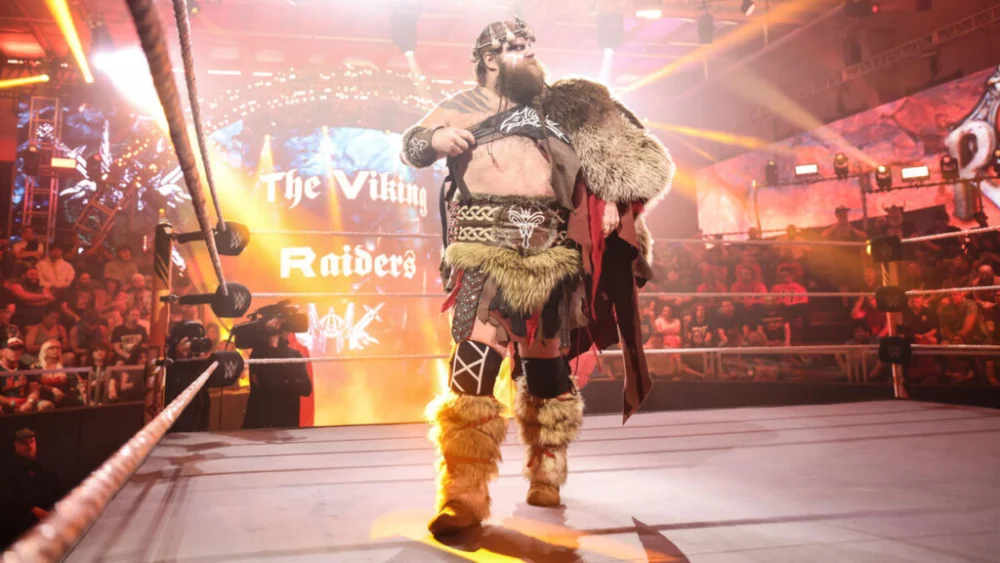
Responding to Regal’s impassioned plea, one of WWE’s most distinctive heavyweights, Ivar of The Viking Raiders, offered a chilling corroboration of the veteran’s concerns. His public acknowledgment painted a vivid, harrowing picture of the toll taken by severe neck trauma, describing a pivotal shift in his existence, a clear demarcation in his life that forever altered his physical and perhaps even his mental landscape. He spoke of a profound division in his timeline, a time "before" and a time "after," lamenting his inability to fully recall the memories from the earlier, unburdened chapter of his life. Such a statement transcends the typical wrestling trope of "toughness"; it delves into the deeply personal and often devastating reality of chronic injury. Ivar, known for his unique blend of immense power, surprising agility, and high-flying maneuvers as part of the dominant tag team alongside Erik, is no stranger to putting his body on the line. The Viking Raiders, formerly known as War Machine and War Raiders across various promotions, forged their reputation on a hard-hitting, impactful style that blends traditional strong-style brawling with breathtaking aerial assaults, often involving Ivar himself executing spectacular dives despite his considerable size. This high-impact approach, while thrilling for audiences, inherently carries elevated risks.
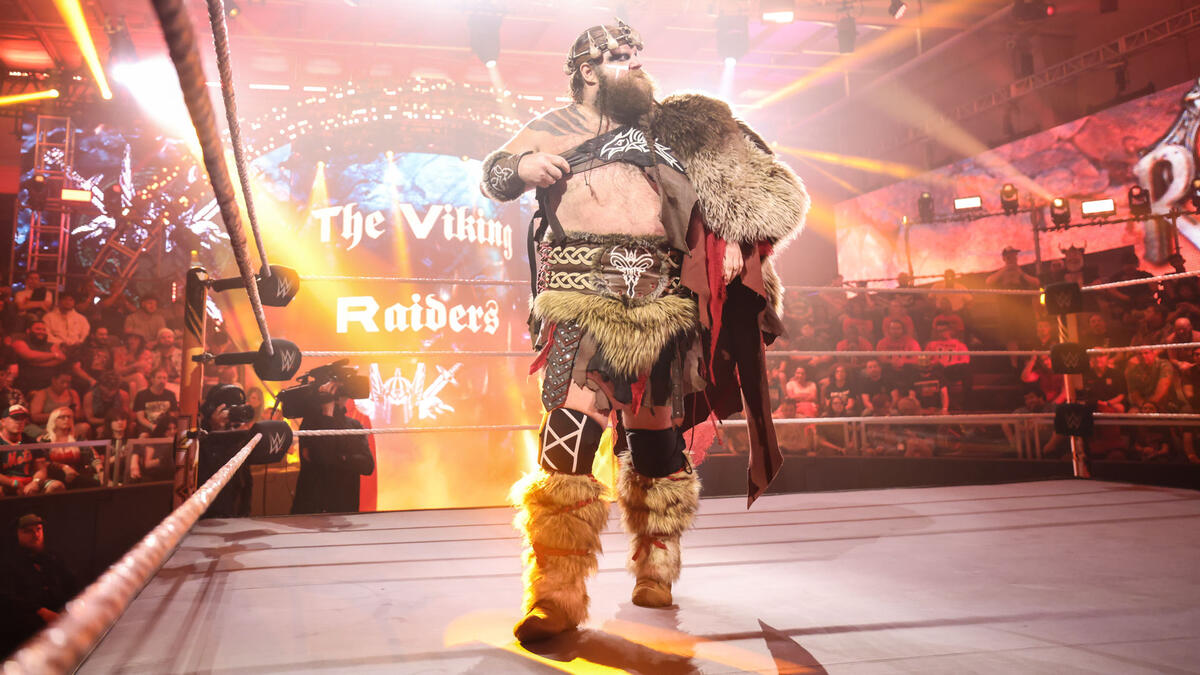
Ivar’s personal narrative of neck injuries provides a stark, real-world illustration of Regal’s caution. His first major cervical setback occurred in September 2020 during a match on Monday Night Raw. The incident necessitated complex surgical intervention, forcing him away from active competition for an extended period. The journey back to the ring was arduous, a testament to his dedication and resilience, culminating in his return in April 2021. This period of rehabilitation involves not just physical therapy but immense psychological fortitude, battling doubts and the relentless demands of recovery. For any athlete, a significant injury represents a crossroads, a moment where the future becomes uncertain, and the passion for their craft is tested against the harsh realities of physical limitation.
However, the wrestling world would soon discover that Ivar’s ordeal was far from over. In April 2024, another alarming incident led to a second, equally terrifying neck injury. This time, the prognosis was even more dire. At one point, he faced the devastating prospect that his career in professional wrestling, the very pursuit he had dedicated his life to, might be irrevocably concluded. Such news would crush the spirit of most, forcing an agonizing reevaluation of their identity and future. Yet, through a combination of medical expertise, personal perseverance, and perhaps a degree of fortunate circumstance, Ivar narrowly averted the worst possible outcome. As he revealed in an interview with Chris Van Vliet in December 2024, he "escaped a devastating fate," implying that the injury, while severe, did not necessitate a forced retirement. Nevertheless, this escape came with an undeniable, permanent cost. He openly discussed living with an unyielding neurological impairment and persistent discomfort in his hands, an indelible reality that will remain an inescapable companion throughout his life. While he managed to recover a substantial degree of cervical flexibility and largely restored his neck’s range of motion, the sensory affliction in his extremities serves as a constant, tangible reminder of the sacrifices made in pursuit of his passion. This ongoing battle with chronic pain and nerve damage encapsulates the very essence of Regal’s warning, demonstrating that even when a career is salvaged, the body often carries indelible marks of its arduous journey.
The history of professional wrestling is replete with cautionary tales of neck injuries, a sobering reminder of the sport’s inherent risks. Legends like "Stone Cold" Steve Austin, whose career was curtailed by a botched piledriver in 1997, navigated years of spinal issues before being forced into early retirement. Edge, another icon, faced a similar fate in 2011, sidelined by cervical stenosis, only to make an improbable, emotionally charged return almost a decade later, a testament to medical advancements and sheer willpower, but also a stark reminder of the razor’s edge upon which these careers balance. Daniel Bryan (now Bryan Danielson), a celebrated technical wizard, also confronted the specter of forced retirement due to a series of neck and concussion-related issues, eventually returning after extensive rehabilitation and a change in his in-ring style. These are but a few prominent examples among countless others whose careers were either cut short, drastically altered, or overshadowed by the lingering pain and limitations imposed by spinal trauma.
The culture of professional wrestling, particularly in earlier eras, often emphasized an almost superhuman resistance to pain and injury. Performers were expected to "work through" discomfort, to maintain the illusion of invincibility, and to push their bodies to the absolute limit for the entertainment of the crowd. This ethos, while contributing to the captivating drama of the sport, inadvertently fostered an environment where long-term health was sometimes secondary to immediate performance. Wrestlers, driven by passion, financial necessity, and the desire to connect with an audience, frequently ignored or downplayed injuries, exacerbating issues that could have been mitigated with proper rest and medical attention. The pressure to deliver spectacular, high-impact moments, known as "spots," has always been immense. From breathtaking dives off the top rope to bone-jarring powerbombs, these maneuvers are designed to elicit gasps and cheers, but they also carry an inherent risk, especially when executed imperfectly or when landing awkwardly.

In recent decades, there has been a noticeable, albeit gradual, shift in the industry’s approach to wrestler welfare. Promotions like WWE have invested more heavily in medical staff, concussion protocols, and comprehensive wellness policies. The understanding of conditions like chronic traumatic encephalopathy (CTE) and the cumulative effect of head and neck trauma has grown significantly, leading to increased awareness and, in some cases, modifications to in-ring style and move sets. Wrestlers themselves are more educated about the importance of protecting their bodies and advocating for their health. Yet, the fundamental nature of professional wrestling remains unchanged: it is a physically demanding art form that simulates combat, requiring athletes to absorb impact and execute intricate, often dangerous, sequences. The tension between delivering unforgettable, high-octane entertainment and safeguarding the long-term well-being of the performers is a constant, delicate balancing act.
Ivar’s poignant reflection on his life being split into distinct phases, where the memories of his uninjured past have become elusive, speaks to the profound psychological toll that severe injuries exact. Beyond the physical pain, there is the mental anguish of grappling with a changed body, the frustration of limitations, and the fear of recurrence. For a performer whose identity is so intertwined with their physical capabilities, the loss of "the before" can be devastating. It implies a sense of detachment from one’s own history, a disorienting experience where a significant portion of one’s life feels alien or inaccessible. The constant companionship of chronic pain, especially nerve damage, can erode one’s quality of life, affecting everything from sleep patterns to mood and overall outlook. It requires immense mental fortitude to not only endure the physical discomfort but also to navigate the emotional landscape of such a profound alteration.
William Regal’s public statement and Ivar’s deeply personal response collectively underscore a timeless truth about professional wrestling: the spectacle, the glamour, and the fleeting moments of glory often come at an extraordinary, sometimes irreversible, cost. While the industry continues to evolve in its approach to safety, the inherent dangers of the squared circle will always remain. The physical sacrifices made by performers are not merely part of the show; they are very real commitments, often carrying lifelong repercussions. The discussion ignited by Regal’s warning, and illuminated by Ivar’s stark testimony, serves as a vital reminder for fans, performers, and promoters alike: behind every exhilarating maneuver and every championship victory lies a human being, pushing the boundaries of their physical limits, often with consequences that extend far beyond the roar of the crowd and the final ring of the bell. As the industry moves forward, the dialogue around wrestler welfare, long-term health, and the balance between athletic spectacle and human preservation must continue with unwavering commitment and transparency, ensuring that the grave cost of glory is understood, respected, and, wherever possible, mitigated.


