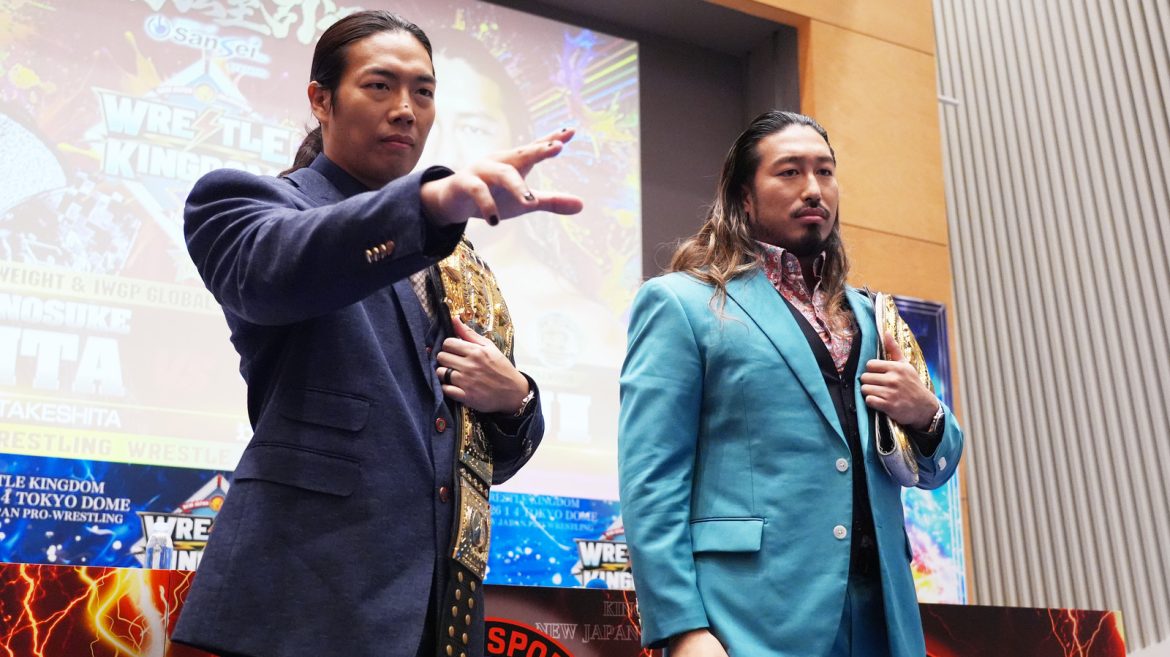
The air in the wrestling world is perpetually thick with anticipation, speculation, and the occasional seismic declaration that shifts the very landscape of the industry. Such was the case when Yota Tsuji, the current IWGP Global Champion, voiced a sentiment that sent ripples through the New Japan Pro-Wrestling fanbase and beyond: a profound desire for NJPW to sever its burgeoning working relationship with All Elite Wrestling. This wasn’t a casual remark dropped in a locker room chat; Tsuji articulated his feelings with a raw intensity, particularly in the lead-up to NJPW’s monumental Wrestle Kingdom 20 event, an occasion that historically serves as the promotion’s grandest stage.
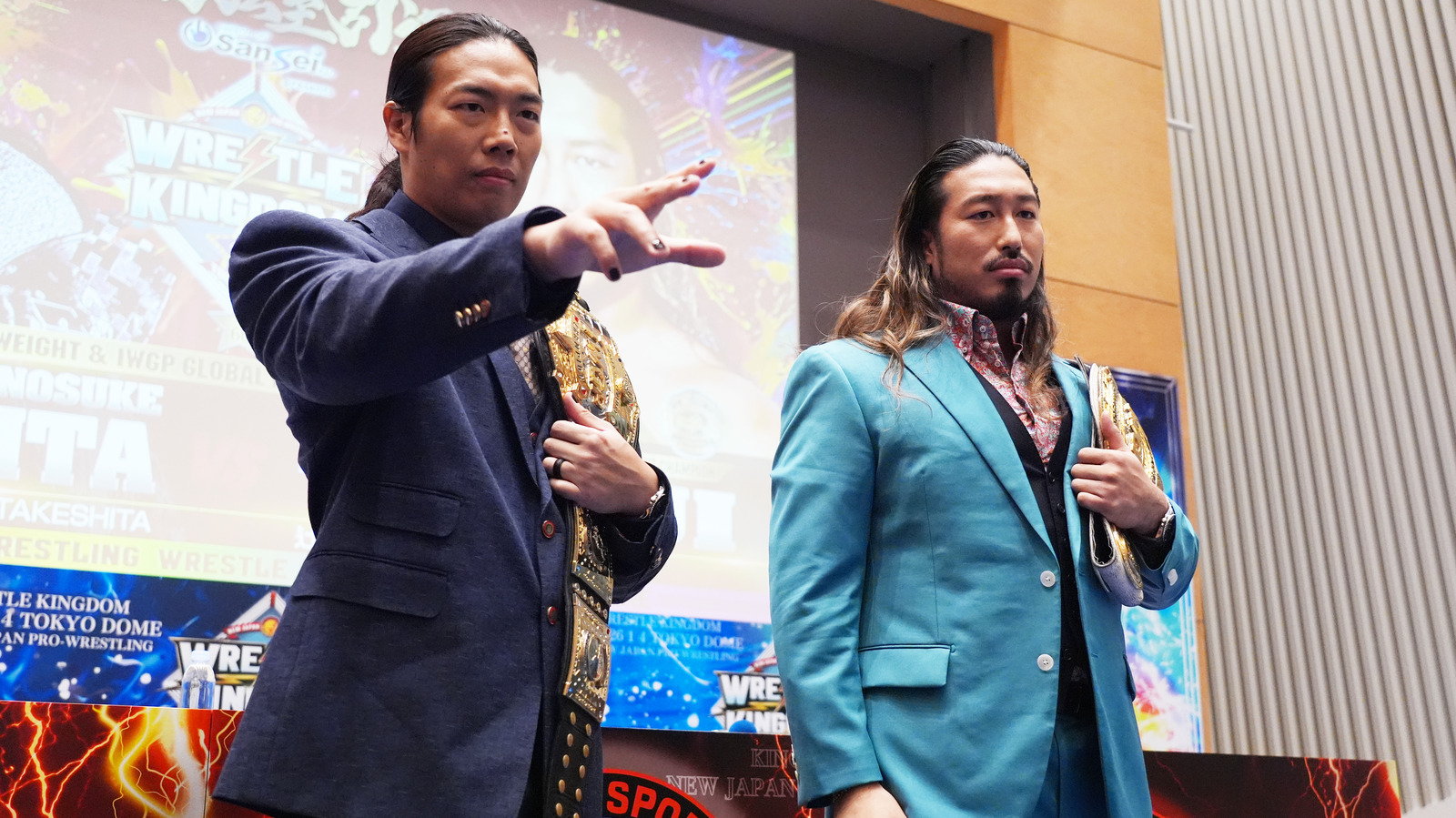
The context for Tsuji’s bold statements is crucial. Wrestle Kingdom 20, scheduled to take place at its traditional and hallowed venue, the Tokyo Dome, was already poised to be a landmark show. However, the card was set to feature a significant AEW presence, most notably in the form of a highly anticipated winner-take-all bout for the IWGP World Heavyweight Championship and the IWGP Global Championship. In this unique contest, the reigning IWGP World Heavyweight Champion, Konosuke Takeshita, an AEW stalwart, would face off against Tsuji himself. Furthermore, another prominent AEW star, Kazuchika Okada, a legendary figure within NJPW, was slated to participate in a deeply emotional match against Hiroshi Tanahashi, a true icon of New Japan, in what was billed as Tanahashi’s retirement match. The presence of two AEW performers in such high-profile, marquee matches on NJPW’s flagship show was precisely the catalyst for Tsuji’s outspoken criticism.
In an interview conducted mere days before the monumental event, Tsuji did not mince words. "I don’t want to lose to AEW. I don’t like AEW," he declared, his voice carrying the weight of his convictions. He went on to elaborate, expressing a clear preference for NJPW to extricate itself from the partnership altogether. "In all honesty, with the relationship between us the way it is, I’d like us to cut ties with them." These were not the words of a wrestler seeking a simple competitive challenge; they represented a deeper concern about the perceived imbalance and direction of the alliance.
When pressed by the interviewer to elaborate on his strong sentiments, Tsuji posed a pointed question that underscored his frustration: "What has being with AEW done for NJPW, really?" He argued that the relationship, in his view, was far from equitable. "If it was an even-handed relationship that’s one thing, but it’s not," he stated. Tsuji acknowledged the significant financial disparity between the two promotions, recognizing that AEW, backed by powerful resources, operated on a different scale. However, he refused to let this disparity excuse what he perceived as a lack of assertiveness from NJPW’s side. "There’s certainly a difference in terms of the money behind each company, but I don’t see that as a reason to be so weak-willed," he asserted with passion. "This is NJPW, dammit." This declaration was a rallying cry, a plea for his promotion to uphold its proud legacy and distinct identity.
Tsuji did concede that Kazuchika Okada’s involvement in the card had indeed helped to generate buzz and draw attention, a pragmatic acknowledgement of the star power Okada brings. However, his pride was evidently wounded by the prospect of an AEW competitor, rather than a New Japan wrestler, participating in Hiroshi Tanahashi’s final professional wrestling match. While he understood that Okada possessed a unique and deep-seated connection with Tanahashi, a bond forged over years of shared history and epic battles within NJPW, the emotional resonance for Tsuji lay in seeing a NJPW wrestler honor Tanahashi’s illustrious career. This sentiment highlights a core tension: the strategic benefits of cross-promotional partnerships versus the preservation of internal pride and the opportunities for NJPW’s own talent to shine on its most significant stages.
To fully appreciate the gravity of Tsuji’s comments, one must delve into the history of New Japan Pro-Wrestling and its international collaborations. For decades, NJPW has been a beacon of professional wrestling excellence, renowned for its hard-hitting style, intricate storytelling, and a roster of incredibly skilled athletes. Its influence has been global, and it has historically engaged in partnerships with various promotions around the world, from Mexico’s CMLL to the United Kingdom’s RevPro. These alliances have served multiple purposes: expanding NJPW’s reach, providing its wrestlers with international experience, and allowing fans to witness dream matches that would otherwise be impossible.
The partnership with All Elite Wrestling, which began to solidify significantly in recent years, marked a new chapter. AEW, founded in 2019, quickly established itself as a major player in the North American wrestling scene, attracting top talent and offering a distinct alternative to the established giants. The alliance with NJPW was seen by many as a mutually beneficial arrangement. For AEW, it provided access to a rich lineage of championships, a revered wrestling style, and a fanbase deeply invested in the sport’s history. For NJPW, it offered a gateway into the lucrative American market, a platform for its stars to gain broader recognition, and the opportunity to engage in compelling inter-promotional clashes.
However, as Tsuji’s comments suggest, such partnerships are not without their inherent challenges and potential pitfalls. The fundamental question of balance is always at play. How much does each promotion benefit? Does the talent exchange feel organic and fair, or does one side appear to be gaining disproportionately more than the other? In the wrestling business, perception is often as powerful as reality, and if a significant portion of the fanbase or the roster feels that the scales are tipped, it can breed resentment and undermine the integrity of the product.
Tsuji’s specific criticisms – the feeling that AEW is not contributing equally to the partnership and a sense of "weak-willed" capitulation on NJPW’s part – echo sentiments that have occasionally surfaced within wrestling communities when major cross-promotional endeavors are undertaken. The idea of "what has it done for us?" is a valid question for any promotion’s internal stakeholders. NJPW, with its deep-rooted tradition and a roster of wrestlers who have dedicated their careers to its principles, understandably prioritizes its own identity and the development of its talent. When AEW stars occupy prime spots on NJPW’s biggest shows, it can, from the perspective of some within NJPW, divert opportunities and attention away from the wrestlers who have consistently contributed to the promotion’s success.
The case of Kazuchika Okada’s retirement match against Hiroshi Tanahashi is particularly poignant. Okada, a bona fide legend of NJPW, has had an unparalleled career within the promotion, defining an era and holding the IWGP Heavyweight Championship for a record number of days. His association with Tanahashi is legendary, a rivalry that has produced some of the greatest matches in professional wrestling history. For many NJPW loyalists, seeing an AEW wrestler like Okada in Tanahashi’s final bow, while understandable from a storyline and draw perspective, might feel like a missed opportunity for a current NJPW star to have had the honor of facing the "Ace" in his swan song. It speaks to a desire to see NJPW’s own narrative conclude with its own heroes.
Yota Tsuji, as the IWGP Global Champion, occupies a unique position. This championship, while newer than the prestigious IWGP World Heavyweight title, represents a significant accomplishment and a platform from which to voice concerns about the direction of the promotion. His title defense against Takeshita, the IWGP World Heavyweight Champion, at Wrestle Kingdom 20, a match that merges the lineage of both championships, perfectly encapsulates the complex interplay between NJPW and AEW. It’s a match born out of their collaboration, yet it also brings the underlying tensions to the forefront.
The notion of "cutting ties" is a drastic one, and it’s unlikely to happen overnight, if at all. Such alliances are often built on intricate business deals, contractual obligations, and strategic marketing goals. However, Tsuji’s outspokenness serves as a valuable barometer of sentiment within the NJPW locker room and among its dedicated fanbase. It highlights the delicate balancing act that NJPW’s management must perform: leveraging international partnerships for growth and exposure while simultaneously safeguarding the promotion’s unique identity, prioritizing its homegrown talent, and ensuring that its most significant moments are steeped in its own rich history.
His words are a powerful reminder that even in the era of globalized wrestling, the passion and pride of individual wrestlers and the loyalties of dedicated fanbases remain paramount. Yota Tsuji’s roar of discontent is not just a personal opinion; it’s a reflection of a deeper conversation about the soul and direction of New Japan Pro-Wrestling in an increasingly interconnected, yet fiercely competitive, wrestling landscape. The coming months will undoubtedly reveal how NJPW leadership responds to such candid feedback and how the future of its relationship with AEW evolves, potentially shaped by the very voices that have helped build the promotion’s storied legacy.