The professional wrestling industry is built on the foundation of wins and losses, yet few narratives are as compelling as the veteran who finds himself unable to secure a victory despite his decorated history. Mike Mizanin, known to millions globally as The Miz, has long been considered one of the most reliable and durable performers in the history of the sport. As a two-time Grand Slam Champion and a former WrestleMania main eventer, his resume is beyond reproach. However, as the curtain fell on the 2025 calendar year, a startling and almost unbelievable statistical anomaly emerged that left the wrestling world in a state of shock. For the first time in his illustrious career, the self-proclaimed A-Lister navigated an entire calendar year without securing a single victory in a one-on-one contest. This drought spanned every platform of the promotion, from the bright lights of televised broadcasts to the grueling travel schedule of non-televised live events. While many fans were distracted by the shifting landscapes of championship reigns and the arrival of new factions, the slow and steady decline of the most must-see superstar in history became a quiet but profound tragedy within the locker room.
The downward trajectory of Mizanin’s 2025 campaign began almost immediately as the new year dawned. On a cold January evening during a broadcast of Monday Night Raw, the veteran squared off against the perennial underdog and former world champion Sami Zayn. While the match was a masterclass in technical storytelling, it ended with Mizanin staring at the rafters, a position he would become all too familiar with in the months to follow. Shortly after this opening loss, the landscape of the roster was shaken up, and Mizanin found himself drafted to the SmackDown brand. Many analysts believed that a change of scenery would provide the necessary spark to reignite his momentum, but the blue brand proved to be even more unforgiving than the red one. The veteran was immediately thrust into rivalries with some of the most dominant forces in the industry, facing off against the likes of LA Knight and both members of the legendary Uso twins, Jimmy and Jey. Despite his tactical brilliance and decades of experience, the speed and power of the modern era seemed to be just one step ahead of him at every turn.
As the spring turned to summer, the struggles of the former WWE Champion only intensified. It was not just the established main-event stars who were capitalizing on his misfortune, but also the rising tide of talent emerging from the developmental ranks and the independent circuit. Mizanin found himself in the ring with Jacob Fatu, a powerhouse whose brutality was unlike anything the veteran had encountered in recent years. He also faced the incredible athleticism of Je’Von Evans and the dark, striking mastery of Aleister Black, yet the result remained stubbornly the same. Even on the house show circuit, where veterans often find their footing against younger opponents, Mizanin was unable to find the winner’s circle. In a series of surprising outcomes that trended heavily on social media, he suffered defeats at the hands of crossover sensations like Joe Hendry and the explosive Carmelo Hayes. Each loss seemed to chip away at the confidence of a man who had spent the better part of two decades convincing the world—and himself—that he was the gold standard of the industry.
There was, however, a brief period of respite during the autumn months when it appeared that Mizanin might have found a solution to his singles-match woes. He entered into an unlikely alliance with Carmelo Hayes, a partnership that fans quickly dubbed with the clever moniker of Melo Don’t Miz. This duo brought together the flashy, high-octane offense of Hayes with the savvy, manipulative ring generalship of Mizanin. For a few weeks, the experiment yielded genuine results. They managed to secure high-profile tag team victories over established units, including the world-renowned Motor City Machine Guns and the high-flying duo of Nathan Frazer and Axiom, collectively known as Fraxiom. For Mizanin, these tag team successes were a lifeline, a way to keep his head above water while his individual record continued to sink. Yet, as is often the case with partnerships built on convenience rather than mutual respect, the chemistry eventually evaporated. By the time the holiday season arrived, the alliance had dissolved into the ether, leaving Mizanin once again isolated and without a clear path to victory as the year 2025 came to a dismal close.
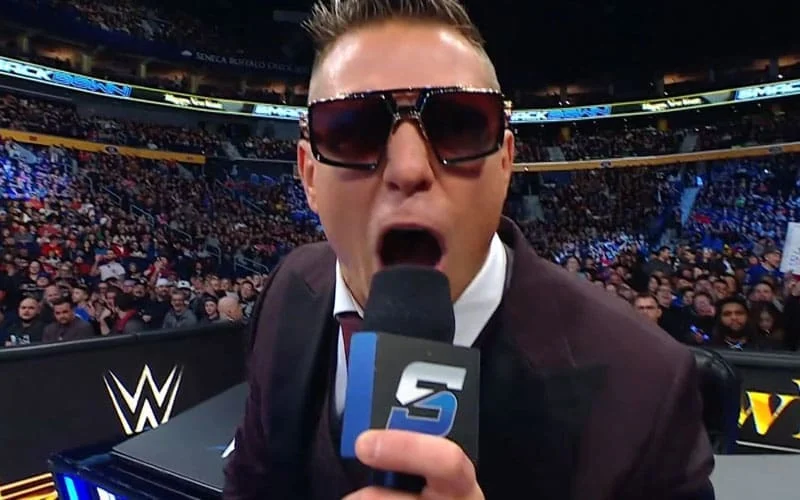
The psychological toll of a year-long losing streak became painfully evident as the promotion transitioned into 2026. On the second day of the new year, during the first SmackDown broadcast of the season, the frustration that had been simmering beneath the surface finally boiled over. Mizanin did not enter the ring for a match; instead, he took the drastic step of hijacking the commentary position to air his grievances to a global audience. The veteran was visibly agitated, his usual polished demeanor replaced by a raw and desperate intensity. He directed his ire toward the management of the company, accusing them of overlooking his contributions and failing to show him the respect a legend of his stature deserved. Specifically, he pointed to the massive fanfare surrounding John Cena’s highly publicized retirement tour. Mizanin argued that while the world was busy celebrating Cena’s farewell, he was the one who had stayed consistent, the one who had been the workhorse, and the one who truly deserved to be the focal point of the promotion’s future. He claimed with fervent conviction that he remained the true face of the organization, regardless of what the win-loss columns might suggest.
The atmosphere in the arena shifted from curiosity to tension as Mizanin’s rant continued. He seemed to be searching for any way to reclaim his lost glory, and when the legendary Randy Orton made his return to the screen, Mizanin saw an opportunity. In a move that displayed both his desperation and his lingering delusions of grandeur, he attempted to recruit the Apex Predator into a new alliance. He looked directly at the multi-time champion and proposed a partnership that he believed would dominate the landscape of SmackDown, suggesting the name MizKO. It was a pitch designed to appeal to Orton’s history of successful tag team ventures, but it was clear from the look on the Viper’s face that he was not interested in a partnership born out of Mizanin’s insecurity. Orton, true to his reputation as a cold and calculating predator, offered no verbal response to the proposal. Instead, he delivered a swift and devastating RKO that left Mizanin unconscious on the floor, a physical punctuation mark to the veteran’s verbal meltdown.
As Mizanin lay defeated on the ground while Orton walked away without a second glance, the reality of his situation became undeniable. He is now entering 2026 carrying the heavy burden of a full year without a singles victory, a shattered partnership, and a public humiliation at the hands of one of his greatest peers. For a man whose entire identity is wrapped up in the concept of being awesome, this current reality is a bitter pill to swallow. The wrestling world is now left to wonder if this is the beginning of the end for one of the most durable performers of the modern era. Is Mizanin simply in the midst of a prolonged professional slump, or has the game finally passed him by? The history of professional wrestling is filled with stories of veterans who reinvented themselves in the face of adversity, but it is equally filled with those who could not accept that their time in the spotlight had faded.
The narrative surrounding Mizanin has shifted from one of consistent excellence to one of survival. The statistics are impossible to ignore, and the psychological impact of being a stepping stone for the next generation appears to have fractured the A-Lister’s psyche. His complaints regarding John Cena’s retirement tour highlight a deep-seated jealousy that often plagues performers who have spent their lives in the shadow of icons, even when they have achieved icon status themselves. By comparing his own struggles to the celebratory atmosphere of Cena’s exit, Mizanin has positioned himself as a bitter antagonist in a story that used to be about his own perseverance. The RKO from Randy Orton served as a wake-up call, but whether Mizanin chooses to heed that call or continue down a path of self-destruction remains to be seen.
In the coming weeks and months, the focus will be on whether the veteran can secure that elusive singles win to break the curse. The locker room is watching, the fans are divided, and the pressure is mounting. Every time he steps through the ropes, the weight of 2025 follows him, a ghost of a year that saw him lose his footing in a world he once dominated. If he cannot find a way to adapt his style or regain his mental fortitude, the legacy of Mike Mizanin may be unfairly overshadowed by this period of historic struggle. For a superstar who has spent his career defying the odds and proving his critics wrong, this latest challenge may be the most difficult one yet. The road back to the top is long and treacherous, and for the man who once held the world in the palm of his hand, the canvas has never felt colder than it does right now. As 2026 unfolds, the industry will watch closely to see if the A-Lister can script a new ending to this chapter or if he is destined to remain a cautionary tale of how quickly the tide can turn in the world of professional wrestling.