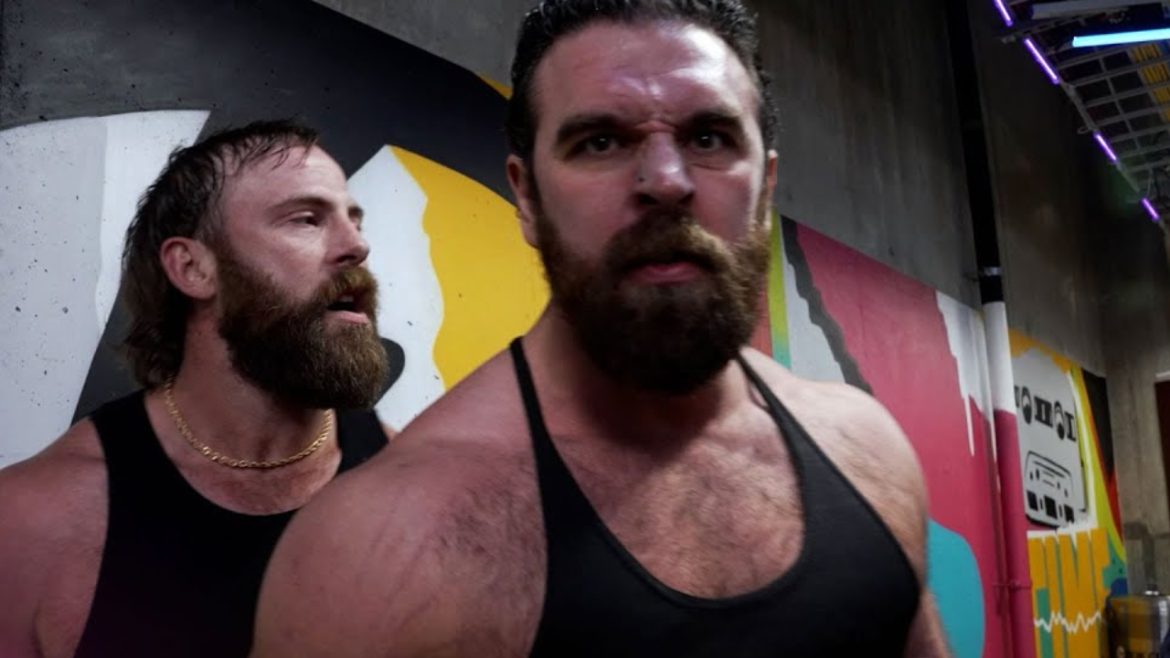
Professional wrestling, at its exhilarating core, is a delicate balance of athletic artistry and visceral impact. Every high-flying maneuver, every bone-jarring slam, carries with it an inherent risk, a constant flirtation with the precipice of injury. For every triumphant moment in the squared circle, there lies the lurking shadow of an unforeseen setback, capable of derailing the most promising of careers. This harsh reality recently cast its long shadow over All Elite Wrestling, specifically impacting one of its newest and most intriguing acquisitions, Jake Doyle. A rising force, fresh off a significant career transition, Doyle found his burgeoning momentum brought to an abrupt halt by a devastating torn bicep, sustained during a pivotal AEW World Tag Team Championship encounter on the January 28th, 2026 edition of Dynamite. The news sent a ripple of concern through the wrestling community, a stark reminder of the unforgiving nature of the sport and the ever-present dangers faced by its gladiators.
The fateful moment unfolded during a high-stakes tag team championship clash that pitted Doyle and his partner, Mark Davis, against the formidable and highly decorated duo of FTR, Cash Wheeler and Dax Harwood. The match itself was a testament to the competitive fire and technical prowess that defines AEW’s acclaimed tag team division, featuring rapid exchanges, intricate sequences, and moments of breathtaking athleticism. It was midway through this intense battle for the gold that the injury transpired, an incident as sudden as it was unfortunate. While executing an apron DDT, a particularly brutal maneuver where a wrestler’s head is driven into the ring apron, Cash Wheeler delivered the impact to Jake Doyle. In what appeared to be the precise instant of injury, Doyle was observed grasping the top rope for support as he landed, the combined forces of the impact and the unnatural strain on his arm seemingly leading to the critical bicep tear. The immediate aftermath was telling; Doyle, a man known for his toughness and composure, was audibly heard communicating the severity of his condition, reportedly exclaiming, "I just tore my bicep," a chilling testament to the sudden and intense pain he experienced. The on-air commentary and subsequent confirmation from respected wrestling journalist Bryan Alvarez solidified the gravity of the situation, signaling an immediate and indefinite period on the sidelines for the promising star.
Jake Doyle’s arrival in All Elite Wrestling had been met with considerable anticipation, marking a significant new chapter in a career that had already seen him carve out a formidable reputation across the independent circuit and, most notably, in TNA Wrestling, where he was widely recognized under the moniker Jake Something. His transition to AEW just weeks prior to this unfortunate incident represented a substantial step up, a testament to his talent, power, and burgeoning charisma. As Jake Something, he had cultivated a strong following, known for his impactful offense and imposing physical presence. His journey from the regional scenes to a nationally televised platform like TNA/Impact Wrestling had showcased his dedication and steady improvement, building him into a main event caliber talent in that promotion. The rebranding to Jake Doyle upon his AEW debut symbolized a fresh start, a new identity poised to conquer the highly competitive landscape of one of the world’s premier wrestling organizations. This carefully planned trajectory, designed to introduce a powerful new player to the AEW ecosystem, was now, at least temporarily, put on hold.
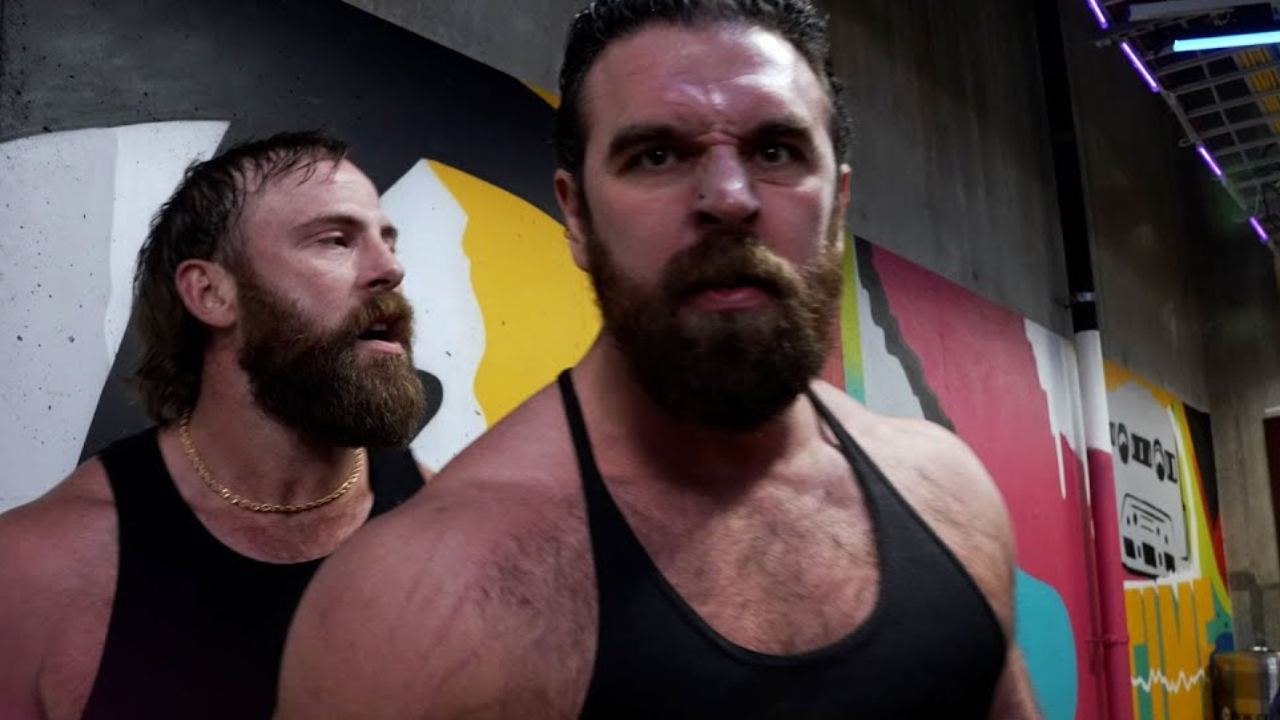
Adding another layer of intrigue to Doyle’s early AEW run was his swift integration into the notorious Don Callis Family. This faction, led by the enigmatic and often manipulative Don Callis, has become a significant force within AEW, known for its strategic alliances and ruthless pursuit of power. For Doyle, aligning with Callis and immediately forming a tag team with the equally impressive Mark Davis offered an expedited path to prominence. The Don Callis Family provides a ready-made platform for new talent, offering protection, guidance (of a sort), and immediate exposure at the top of the card. Mark Davis, a veteran tag team specialist, brought his own wealth of experience and hard-hitting style, creating a tandem that possessed both power and a growing sense of cohesion. Their challenge for the AEW World Tag Team Titles against FTR was not merely another match; it was a statement, an immediate declaration of intent from the newly formed unit and a clear indication that AEW management saw significant potential in Doyle. This rapid ascent to a championship opportunity, while exciting, also placed Doyle in high-pressure situations, which, unfortunately, sometimes come with heightened risks.
The bicep tear, a common yet severely debilitating injury in professional sports, is particularly detrimental for a professional wrestler. The biceps muscle, located on the front of the upper arm, is crucial for bending the elbow and rotating the forearm. A tear, especially a complete one, compromises a wrestler’s ability to perform fundamental actions such as grappling, lifting opponents, delivering strikes, and even bracing for impacts. The pain is often described as intense and immediate, sometimes accompanied by an audible pop or tear. For a performer like Jake Doyle, whose style relies heavily on power, strength, and explosive movements, the absence of a fully functional bicep is a profound impediment. Recovery from a torn bicep typically involves surgical repair, followed by an extensive period of rehabilitation. The general timeline for a return to full in-ring activity ranges from three to six months, though individual recovery times can vary based on the severity of the tear, the success of the surgery, and the dedication to physical therapy. This extended absence not only affects Doyle’s physical well-being but also takes a significant toll on his mental state, forcing him to endure a period of stagnation just as his career was taking flight in a major promotion.
The AEW World Tag Team Championship match against FTR on Dynamite was precisely the kind of high-profile platform that Doyle and Davis needed to cement their status. FTR, comprised of Cash Wheeler and Dax Harwood, are widely regarded as one of the finest tag teams in modern wrestling, renowned for their "no-flips, just fists" philosophy, their impeccable tag team psychology, and their numerous championship reigns across various promotions. Challenging such an esteemed duo for the industry’s top tag team prize on AEW’s flagship weekly program represented an unparalleled opportunity for Doyle and Davis to make a definitive statement. It was a chance to prove they belonged at the pinnacle of the division, to capture gold, and to elevate the Don Callis Family’s influence even further. The injury, occurring during such a crucial juncture, not only robbed Doyle of a potential championship victory but also deprived him of the chance to showcase his capabilities on the grandest stage, leaving fans to ponder what might have been had fate not intervened so cruelly.
The immediate implications of Jake Doyle’s injury extend beyond just the individual performer. For the Don Callis Family, his absence creates an unexpected void. Mark Davis, his tag team partner, is now left without his established tag team cohort, necessitating a creative shift in storyline direction for the faction. Will Callis seek a new enforcer to pair with Davis? Will Davis himself embark on a singles run, or perhaps take a temporary hiatus? These are the questions that AEW’s creative team must now address, adapting their plans to account for an unforeseen and significant roster change. The tag team division in AEW is fiercely competitive, boasting a deep roster of talented duos. Any team vying for championship contention needs consistent momentum and a clear path. Doyle’s injury disrupts that for his team, potentially altering the entire landscape of future title challenges and rivalries within the division for the coming months.

Wrestling, while a spectacle of choreographed athleticism, remains inherently dangerous. Performers are constantly pushing their bodies to the limit, executing complex maneuvers that involve high impact, falls from significant heights, and immense physical strain. Injuries are an occupational hazard, an unavoidable reality that every wrestler must contend with. From concussions and broken bones to ligament tears and spinal issues, the list of potential ailments is extensive. A torn bicep, while not always career-ending, is a significant physical and emotional challenge. It tests a wrestler’s resilience, their patience during long periods of rehabilitation, and their mental fortitude to overcome the frustration of being sidelined. Many wrestlers speak of the "darkness" that can set in during injury layoffs, grappling with feelings of isolation, self-doubt, and the fear of being forgotten. The unwavering support of their peers, their medical team, and the passionate fanbase often becomes a crucial element in their recovery journey.
Looking ahead, the path for Jake Doyle will be one of diligent recovery and unwavering determination. The initial phase will focus on surgical intervention to repair the torn bicep, followed by a rigorous rehabilitation program designed to restore strength, flexibility, and range of motion. This process is not merely about physical healing; it’s about rebuilding confidence, re-establishing muscle memory, and ensuring that when he eventually steps back into the ring, he is not only physically sound but also mentally prepared to endure the rigors of professional wrestling once more. Fans will undoubtedly rally behind him, eager to witness his triumphant return and the fulfillment of the immense potential that was so clearly evident in his brief but impactful tenure prior to the injury. The wrestling world holds its breath, hoping for a swift and complete recovery for Jake Doyle, as his journey in All Elite Wrestling, though momentarily paused, is far from over. His eventual comeback will not just be a return to action, but a testament to the unyielding spirit of a professional wrestler who refuses to be defined by adversity.