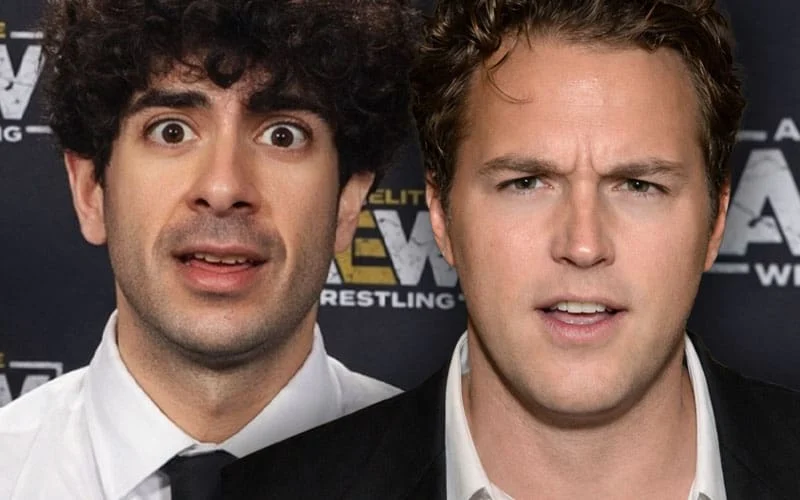
The landscape of modern professional wrestling is no stranger to heated exchanges and public disagreements, yet the recent developments involving Nick LoPiccolo have introduced a level of personal animosity and institutional scrutiny that feels entirely unprecedented. LoPiccolo, a former executive at the prominent talent agency Paradigm, has moved beyond mere professional critique to launch a series of detailed and harrowing accusations against the leadership of All Elite Wrestling and its founder, Tony Khan. What began as a dispute regarding the business metrics and television negotiations of the Jacksonville-based promotion has rapidly spiraled into a multifaceted conflict involving claims of coordinated harassment, the targeting of family members, and the weaponization of the wrestling media ecosystem. This situation serves as a stark reminder of the volatile intersection between corporate interests, fan tribalism, and the digital age, where the boundaries between professional disagreement and personal destruction are increasingly blurred.
At the heart of LoPiccolo’s recent assertions is the claim that his five-year-old daughter became the unintended victim of a vitriolic campaign designed to silence his criticisms of the promotion. According to the former executive, a social media post from mid-July featuring his daughter, Lorraine, at a WWE event was met with an overwhelming surge of hostile engagement. He describes a scenario where a simple photograph of a child enjoying a wrestling show was transformed into a lightning rod for a coordinated attack, garnering hundreds of thousands of views and over a hundred comments that went far beyond typical internet trolling. LoPiccolo alleges that the harassment included the circulation of fraudulent arrest records and, perhaps most disturbingly, suggestions that legal authorities and child protective services should intervene in his family life. The emotional weight of these claims cannot be overstated, as they suggest that the internal politics of the wrestling business have reached a point where the innocent family members of industry figures are considered fair game for reputational warfare.
The mechanics of this alleged harassment campaign, as detailed by LoPiccolo, involve a sophisticated manipulation of information. He points to the distribution of a criminal record belonging to a different individual—a man significantly larger and younger than himself—as evidence of a sloppy but malicious attempt to smear his character. The record in question allegedly cited charges of domestic and spousal abuse, which were then used by anonymous accounts to frame LoPiccolo as a dangerous individual. Despite the physical discrepancies that should have immediately discredited the records, the former executive claims the narrative was pushed aggressively to create a cloud of suspicion around his personal life. This tactic, often referred to as doxxing or character assassination, is a recurring theme in LoPiccolo’s narrative, as he argues that these efforts were timed to coincide with major wrestling events to maximize their visibility and impact on his professional standing.
Central to LoPiccolo’s frustration is the role of the wrestling media, specifically those he identifies as being within the sphere of influence of Tony Khan. He has been vocal in his disdain for the platform of X, formerly known as Twitter, characterizing it as a self-contained bubble where a "cult-like" mentality thrives under the guidance of specific journalists and newsletters. LoPiccolo argues that while the professional world he inhabits—consisting of high-level executives, clients, and colleagues—primarily utilizes platforms like Instagram for legitimate engagement, the wrestling discourse on X is dominated by a toxic synergy between the AEW leadership and certain segments of the "dirt sheet" media. He specifically names veteran journalists and their respective outlets as being complicit in amplifying a tribalistic atmosphere that rewards loyalty to the promotion while punishing dissenters with social and professional excommunication.
The timeline of these events, as reconstructed by LoPiccolo, suggests a period of intense pressure occurring in early to mid-July. He alleges that during this window, multiple reporters reached out to him claiming that Tony Khan was actively seeking "intel" or derogatory information regarding his background. This period of surveillance, if true, indicates a proactive attempt by the promotion’s leadership to manage a critic through intimidation rather than discourse. Furthermore, LoPiccolo claims that rumors regarding his departure from Paradigm were being circulated by prominent wrestling journalists before the news had even been made public or finalized. This leads him to believe that there was a concerted effort to undermine his career stability as a direct consequence of his public skepticism regarding AEW’s business dealings, particularly their ongoing negotiations with Warner Bros. Discovery.
The involvement of high-ranking officials from the broader Khan family sports empire adds another layer of complexity to these allegations. LoPiccolo has referenced communications with Megha Parekh, the Chief Legal Officer for the Jacksonville Jaguars, which he interpreted as an attempt to de-escalate a rapidly deteriorating situation. The fact that a legal executive of her stature would be involved in a dispute involving a wrestling critic suggests that the matter had reached the highest levels of the corporate hierarchy. Moreover, LoPiccolo hinted at a deeper professional history with the Jaguars organization, claiming he had been approached on several occasions to provide representation for the team, specifically in relation to sensitive matters such as the employee embezzlement scandal that made headlines earlier in the year. These details paint a picture of an individual who was once considered a potential asset to the Khan business interests, only to find himself cast as a primary antagonist once he began questioning the trajectory of All Elite Wrestling.
Legal maneuvers have also become a prominent feature of this saga. LoPiccolo alleges that following his refusal to remain silent, both Tony Khan and his associates at Activist Artists engaged in what he describes as "top-down" pressure tactics. This reportedly included contacting his employers at Paradigm and threatening litigation for defamation. The use of legal threats to stifle criticism is a contentious issue in any industry, but in the world of professional wrestling, where "kayfabe" and reality often merge, such actions can have a chilling effect on the willingness of insiders to speak candidly. LoPiccolo’s response to these threats has been one of defiance, as he maintains that his critiques are rooted in professional observation and that the retaliatory actions taken against him are far more damaging than any commentary he has provided regarding the company’s television ratings or creative direction.
The broader implications of this conflict touch upon the very nature of wrestling fandom in the digital age. LoPiccolo makes a clear distinction between the average fan who enjoys the AEW product and what he describes as a radicalized ecosystem that prioritizes the defense of the brand over human decency. He criticizes the way the promotion leans into industry awards and accolades from friendly media outlets, arguing that this behavior only serves to further entrench a "us versus them" mentality. This tribalism, he asserts, is the engine that drives the harassment campaigns he and his family have endured. By fostering an environment where any criticism is viewed as a personal attack on the promotion’s existence, the leadership arguably creates a vacuum where the most extreme elements of the fanbase feel empowered to act on the company’s behalf.
As of now, the silence from the AEW camp and Tony Khan remains absolute. There has been no formal rebuttal to the specific claims regarding the targeting of LoPiccolo’s daughter or the alleged requests for "intel" from reporters. This lack of response has only emboldened LoPiccolo, who continues to share evidence in the form of screenshots and call logs intended to validate his version of events. Whether these claims will eventually transition from the court of public opinion to a legitimate court of law remains to be seen. The potential for a defamation suit or a harassment claim looms large, and the discovery process of such a case could potentially reveal much about the inner workings of the promotion’s PR strategies and its relationships with the wrestling press.
The story of Nick LoPiccolo and his war of words with AEW is a cautionary tale for the modern era of sports entertainment. It highlights the dangers of a corporate culture that is overly sensitive to online criticism and the devastating impact that digital harassment can have on the personal lives of those involved. For the wrestling industry, which has long struggled with issues of transparency and professional conduct, this situation represents a new low in terms of the personal nature of the attacks being alleged. If even a fraction of LoPiccolo’s claims are accurate, it suggests a profound failure of leadership and a disturbing willingness to allow the most toxic elements of the internet to dictate the terms of professional engagement.
In the final analysis, the conflict serves as a mirror reflecting the current state of the wrestling business—a world divided by intense loyalties and a deep-seated mistrust of the "other side." LoPiccolo’s decision to go public with the most intimate details of the harassment he faced, specifically the involvement of his young daughter, ensures that this will not be a story that fades away quietly. It challenges the wrestling community to consider where the line should be drawn and whether the success of a promotion is worth the collateral damage of destroyed reputations and traumatized families. As the dust continues to swirl around these accusations, the industry waits to see if there will be any accountability or if this will simply become another dark chapter in the long and often sordid history of professional wrestling’s behind-the-scenes power struggles. The resolution of this matter may well define the professional legacy of Tony Khan as much as any five-star match or television contract ever could.