The dawn of a new year often brings with it a sense of renewal and anticipation, and the first installment of WWE SmackDown in 2026 was no exception. As the blue brand embarked on its latest journey, it aimed to recapture the wrestling world’s attention, promising a fresh start after a period of significant change within the WWE landscape. The return of a three-hour runtime presented both opportunities and challenges, offering more canvas for storytelling and in-ring action, but also risking dilution and viewer fatigue. This particular episode, airing on January 2nd, 2026, served as a potent microcosm of the show’s current trajectory, delivering moments that resonated deeply with the WWE Universe while simultaneously showcasing areas that left much to be desired. From the re-establishment of key rivalries to the debut of fresh faces and the controversial booking of championship contests, SmackDown provided a complex tapestry of highs and lows, setting the stage for the pivotal Road to WrestleMania.
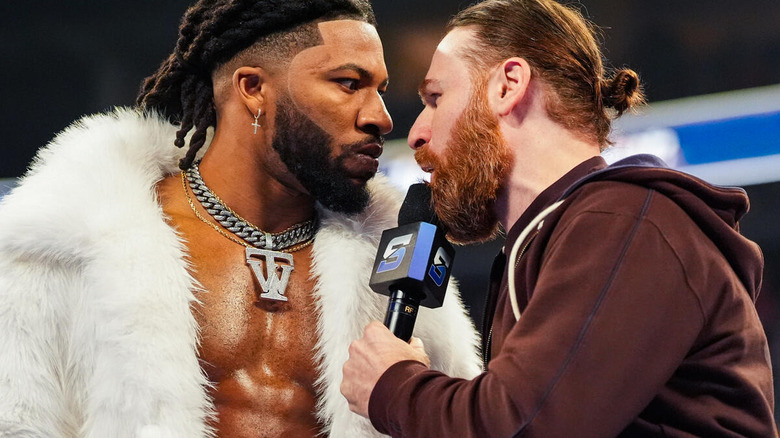
One of the evening’s most potent narrative threads was woven by the compelling verbal sparring between Sami Zayn and the newly arrived Trick Williams. Zayn, ever the fan favorite, kicked off the new year with a fervent declaration of his intentions to pursue the coveted WWE Championship, a prize that has eluded him throughout his storied career. His passionate promo, brimming with the sincerity that has endeared him to millions, set a high bar for the evening. However, his monologue was met with a charismatic interruption from Trick Williams, a rising star making his official debut on SmackDown. Williams, adorned in a striking white ensemble that exuded confidence and flair, wasted no time in introducing himself to Zayn and the wider WWE audience. He playfully declared that the "flavor and pizazz" were needed on SmackDown, positioning himself as a disruptive force ready to inject excitement into the blue brand. Zayn, demonstrating his veteran composure, allowed Williams to speak his piece before delivering a sharp retort, suggesting that "Tricky Two-Time" needed a dose of humility. Both performers excelled in their roles. Williams masterfully reintroduced himself, immediately commanding attention and establishing himself as a credible threat. Zayn, a beloved and respected figure, continued to embody the underdog spirit, his quest for the WWE Championship a narrative that continues to resonate. The seeds of a potential feud between these two have been firmly planted, with Williams set to face Rey Mysterio in his debut match next week. The prospect of this clash, fueled by their initial verbal jousting, promises an intriguing dynamic and adds a much-needed layer of fresh competition to the championship picture.
In a surprising turn of events, the United States Championship match between Carmelo Hayes and Johnny Gargano delivered an unexpected masterclass in in-ring storytelling. While both competitors are undeniably gifted athletes with a proven track record of engaging performances, the lack of significant pre-show promotion for this bout had tempered expectations. Gargano, a consistent presence in the United States Championship scene, had challenged for the title previously, leading some to believe this encounter might be more of a perfunctory defense than a show-stopping spectacle. However, the chemistry between Hayes and Gargano proved to be exceptional. Their styles, perhaps due to a shared understanding of fast-paced, technical wrestling or simply an innate connection, meshed seamlessly. This was not just a well-executed match; it was a testament to their ability to craft a narrative within the squared circle, keeping the audience captivated from bell to bell. Even the scattered interference from Candice LeRae, Gargano’s wife, served to enhance the drama rather than detract from it, a rare feat in modern WWE booking. The match unfolded with a relentless pace, brimming with exciting sequences and near falls that kept the WWE Universe on the edge of their seats. It was, by many accounts, the standout wrestling contest of the evening, a clear indication that when given the opportunity, these performers can produce truly memorable encounters. This contest underscored the potential for the United States Championship to be a focal point of compelling in-ring action, provided the booking consistently supports such quality.
The machinations within The Bloodline continued to evolve, with Tama Tonga and Shinsuke Nakamura both expressing a clear interest in the championship landscape. Since his impactful return and his role in costing Shinsuke Nakamura a United States Championship opportunity against Sami Zayn, Tama Tonga has been a keen observer of the title picture. His presence, watching Carmelo Hayes defend his United States Championship, signals a clear ambition for singles gold. While the slow burn of this storyline might test the patience of some, it is a deliberate pacing often employed by WWE to build anticipation. Tonga’s desire to explore his singles potential is a welcome prospect, and his inclusion in the championship chase promises exciting possibilities. The interaction between Tonga and Nakamura, conducted in Japanese, added a layer of intrigue. Nakamura’s subtle warning that their paths would inevitably cross if Tonga pursued the title suggests a potential future confrontation, tapping into their shared history. Solo Sikoa’s arrival, seeking to rally The Bloodline for their tag team title pursuit, subtly sidelined Tonga’s individual aspirations for the moment, hinting at internal dynamics and potential future friction within the faction. The renewed interest in the United States Championship, particularly from established veterans like Nakamura and a hungry contender like Tonga, is crucial. The title, at times, has suffered from a perceived lack of depth in its challenger pool. The open challenge format has been effective in keeping the championship relevant on a weekly basis, but establishing a robust roster of credible contenders is paramount, especially as WrestleMania season approaches. The budding rivalry between these two former New Japan Pro-Wrestling stars provides a solid foundation for compelling storylines, further solidifying the importance of the United States Championship as a stepping stone for future success.
However, not all aspects of the show managed to hit the mark, and the prolonged feud between Undisputed WWE Champion Cody Rhodes and Drew McIntyre continued to be a source of frustration. Despite the introduction of a "Three Stages of Hell" match stipulation for their upcoming encounter in Berlin, the segment failed to ignite genuine excitement. The extended nature of this rivalry, which has spanned a considerable period, has begun to feel repetitive, and this latest installment did little to break that cycle. McIntyre’s proclamation of the match stipulations, while theoretically designed to escalate the stakes, felt somewhat tame and lacked the visceral impact expected from such a contest. The progression from a standard match to a Falls Count Anywhere bout, culminating in a Steel Cage match, felt predictable. The segment’s low point arrived with McIntyre’s dramatic burning of a photograph of Rhodes and his late father, Dusty Rhodes. While the intention was clearly to provoke an emotional response and highlight the personal nature of their animosity, the execution felt forced and, frankly, a bit too soon after the significant storyline involving CM Punk’s friendship bracelet. The symbolic act, while understandable in its intent to create heat, did little to elevate the match beyond a personal vendetta that has been a mainstay for too long. The segment also highlighted a missed opportunity for the debut of Oba Femi, whose vignette aired just prior. The anticipation of his arrival, even a menacing stare from the stage, could have added a much-needed element of unpredictability and future potential to the show, contrasting sharply with the stale narrative of Rhodes and McIntyre. Overall, this segment contributed to a sense of stagnation rather than forward momentum for the blue brand’s top championship feud.
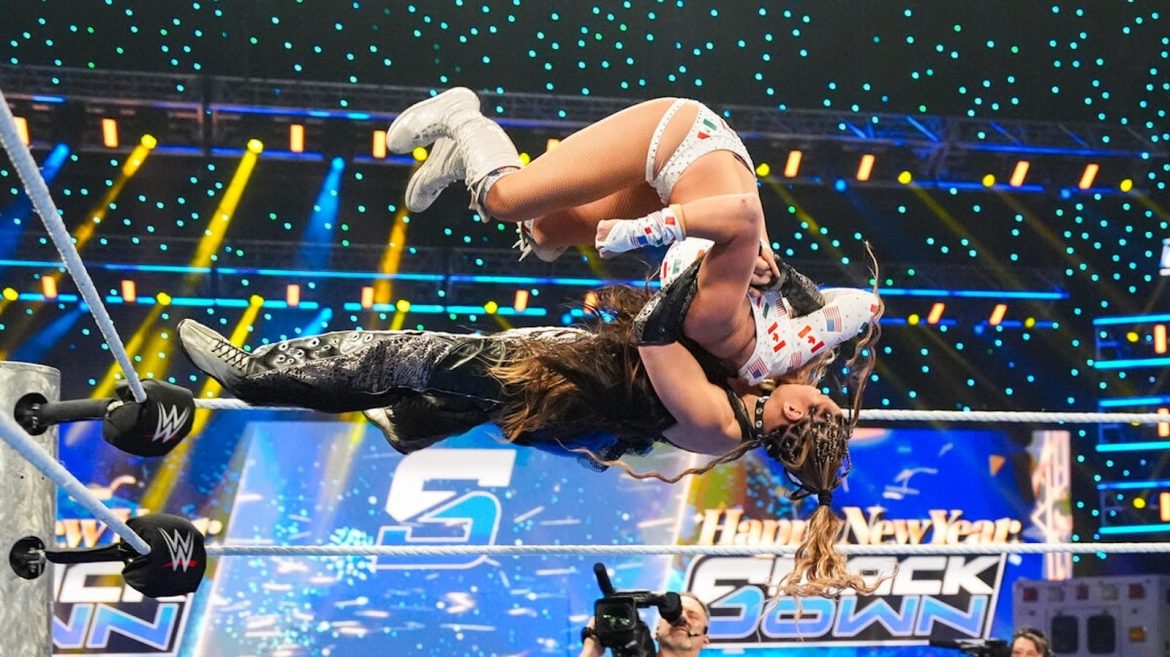
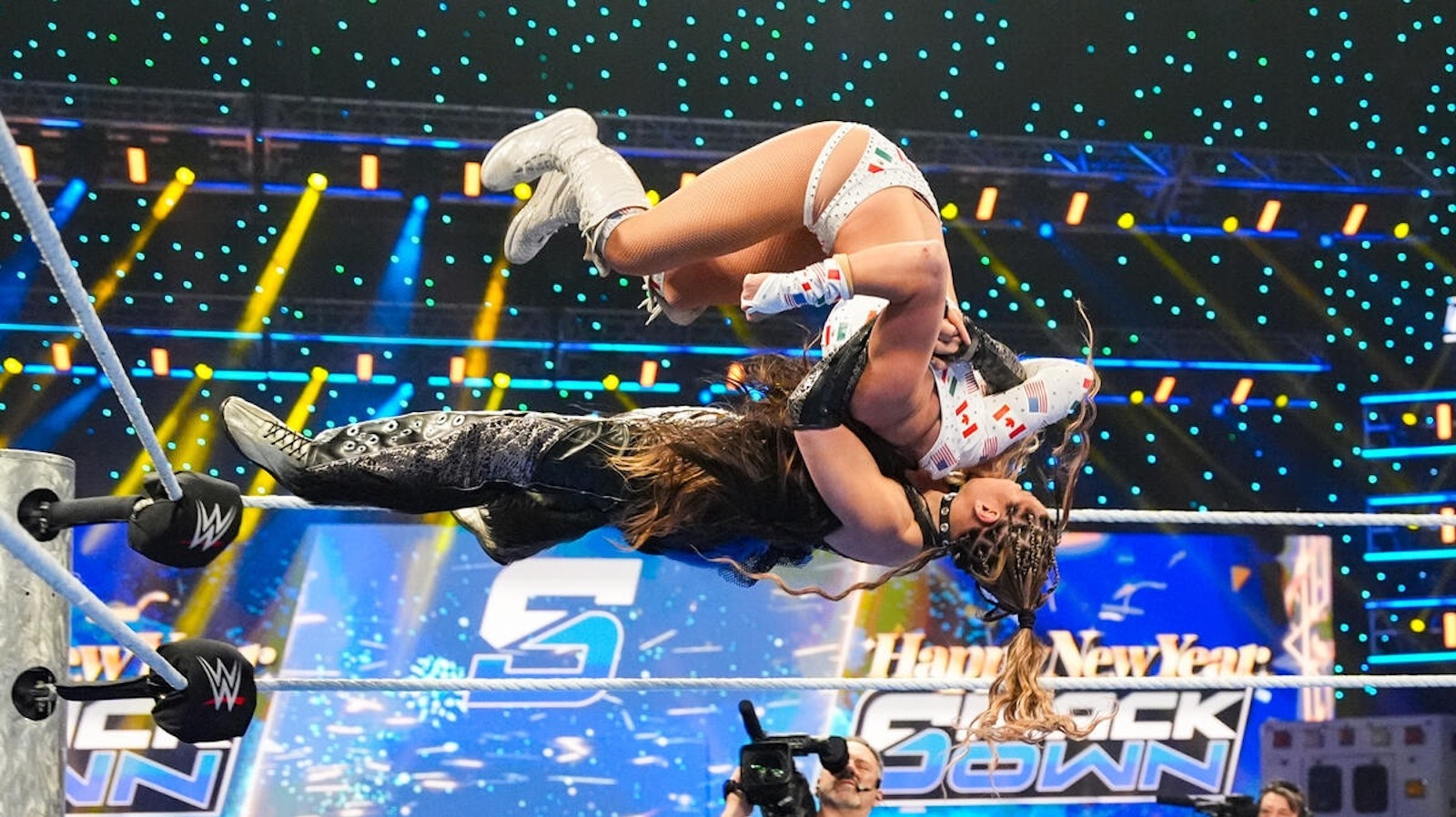
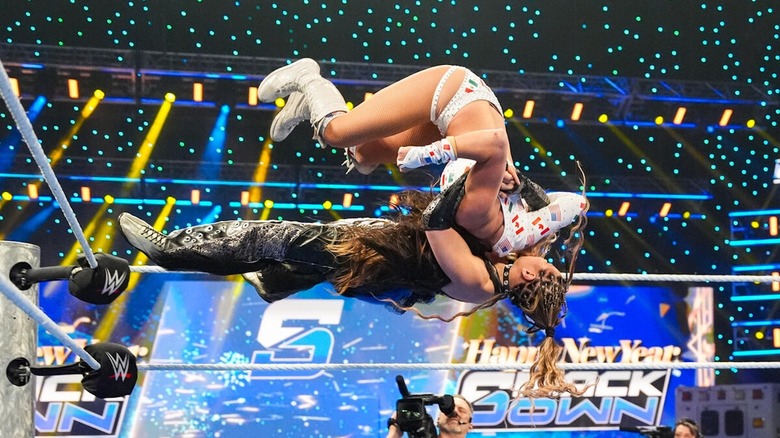
The Women’s United States Championship match, featuring Giulia and Chelsea Green, unfortunately succumbed to a pervasive sense of apathy. Despite the presence of two talented competitors, the contest failed to elicit a strong emotional response from the audience, or indeed, from this observer. Apathy, in the world of professional wrestling, is a far more detrimental force than outright dislike. It signifies a lack of investment, a disengagement that can cripple a storyline and diminish the value of a championship. While Giulia’s victory marked her second reign with the Women’s United States Championship, the outcome felt anticlimactic. The persistent reliance on the same two individuals to contest this championship has, for many, rendered the division stale. The lack of significant character development, compelling promos, or engaging video packages for the contenders has created a shallow pool of challengers. The emergence of Jordynne Grace offers a glimmer of hope, but a single championship scene cannot thrive on the strength of just two performers, especially when their individual stories are not adequately showcased. The suggestion of an open challenge series, similar to the men’s United States Championship, could inject much-needed variety and create new focal points for the division. The unfortunate placement of this match in the final hour of a three-hour SmackDown further exacerbated the issue. By that point in the broadcast, viewer fatigue is a significant factor, and any match placed in this slot faces an uphill battle to capture attention. While the extended runtime did facilitate a more substantial Carmelo Hayes vs. Johnny Gargano encounter earlier in the show, it also led to segments like the Women’s United States Championship match feeling like mere filler, lacking the urgency and impact of a truly anticipated contest. The Women’s United States Championship, in its current state, feels like a neglected accessory, hampered by a limited challenger roster and an unfortunate position on the weekly card, making it a challenge to care about its outcomes, regardless of who holds the gold.
The main event, an Ambulance Match between Damian Priest and Aleister Black, proved to be a fitting, albeit disappointing, conclusion to the night, highlighting a broader issue with this particular match stipulation. Ambulance Matches, a relic from a bygone era of wrestling, have consistently struggled to deliver compelling encounters in the modern WWE landscape. The inherent concept, requiring opponents to be incapacitated and placed inside an ambulance, often leads to slow, plodding action devoid of genuine danger or excitement. While Priest and Black undoubtedly gave their best effort, the match itself was largely uninspired. The true highlight of the contest was the surprise appearance of Rhea Ripley, whose presence generated more genuine excitement than the actual combatants. This moment underscored a critical flaw: the main event was overshadowed by a character who was not even officially involved in the match, raising questions about the booking and the overall appeal of the chosen stipulation. The match suffered from a lack of believable stakes and a sense of urgency, crucial elements for any high-impact contest. The "highlight" of the bout, Priest’s rather gentle shove of Black off the top of the ambulance into a waiting table, followed by a minor malfunction with the ambulance doors, served only to underscore the inherent limitations of the stipulation. It was a moment that elicited more bemusement than excitement. The enduring truth is that Ambulance Matches rarely, if ever, produce memorable or critically acclaimed bouts. The WWE Universe has moved beyond such antiquated stipulations, and the continued reliance on them, especially in prime main event slots, risks alienating the audience and diminishing the perceived importance of the show’s closing segment. The desire for a fresh start in 2026 was evident, but the persistent use of outdated and ineffective match types like the Ambulance Match suggests that the blue brand still has significant narrative and booking adjustments to make to truly capture the magic of wrestling’s evolving landscape.