

The neon glow of the wrestling arena, the roar of thousands, the electrifying tension before a bell rings – these are sensations that transcend generations. For over three decades, Chris Jericho has been an indelible part of this landscape, a chameleon who has consistently reinvented himself, adapting to the ever-shifting tides of professional wrestling. Now, as he navigates the later stages of a storied career, the conversation around ageism, a persistent undercurrent in many performance-based industries, has become a topic he’s willing to dissect. Rather than viewing his years as a limitation, Jericho is actively pushing back against the idea that age is a definitive ceiling, framing it instead as a testament to experience and a continuing opportunity for artistic expression.
Jericho’s perspective, articulated during a recent interview with Soundsphere Magazine ahead of his band Fozzy’s upcoming UK tour, offers a refreshing counterpoint to the often age-discriminatory environment that can permeate both the music and professional wrestling worlds. At 55 years old, Jericho, who last competed in AEW in a bout against Bandido at the 2025 AEW Dynasty pay-per-view, is far from finished. His recent absence from AEW programming has fueled speculation about potential future endeavors, with whispers of a return to WWE consistently circulating, though without official confirmation. This period of introspection and public commentary, however, allows him to address a broader theme that resonates with many performers who continue to contribute at a high level well past what might be considered traditional retirement ages.
“Age is age, and you can’t let it be a source of worry,” Jericho stated, emphasizing a pragmatic approach. “It’s not a death sentence to be in your fifties, or even your sixties and seventies. There’s still a wealth of time to pursue ambitions.” He acknowledges the existence of ageism, a subtle yet pervasive force that can lead to performers being prematurely sidelined or overlooked. However, his message is one of empowerment: the greatest obstacle often resides within the individual’s own mindset. While he humorously notes that one might not replicate the sustained, decades-long stadium-filling success of a band like The Rolling Stones, the capacity for meaningful creation and contribution remains undiminished. The ability to write a song, record a track, or audition for a role is not erased by the passage of years. Jericho champions the idea of proactive engagement: “Someone has to do it, so why shouldn’t it be you?” This philosophy, rooted in self-belief and a refusal to be defined by a number, is a powerful antidote to the creeping doubts that ageism can sow.
The professional wrestling industry, in particular, has a complex relationship with age. For decades, the narrative often dictated that wrestlers’ prime was a relatively short window, typically in their twenties and early thirties. The physical demands of the sport, the relentless travel, and the inherent risk of injury contributed to a perception that careers were inherently finite. Wrestlers who pushed past their late thirties were often seen as nearing the end, their matches becoming slower, their bodies more prone to breakdown. This narrative was reinforced by the cyclical nature of wrestling, where new talent was constantly being introduced to keep the product fresh and exciting. Veterans were often relegated to backstage roles, mentorship positions, or occasional appearances, their active wrestling days considered behind them.
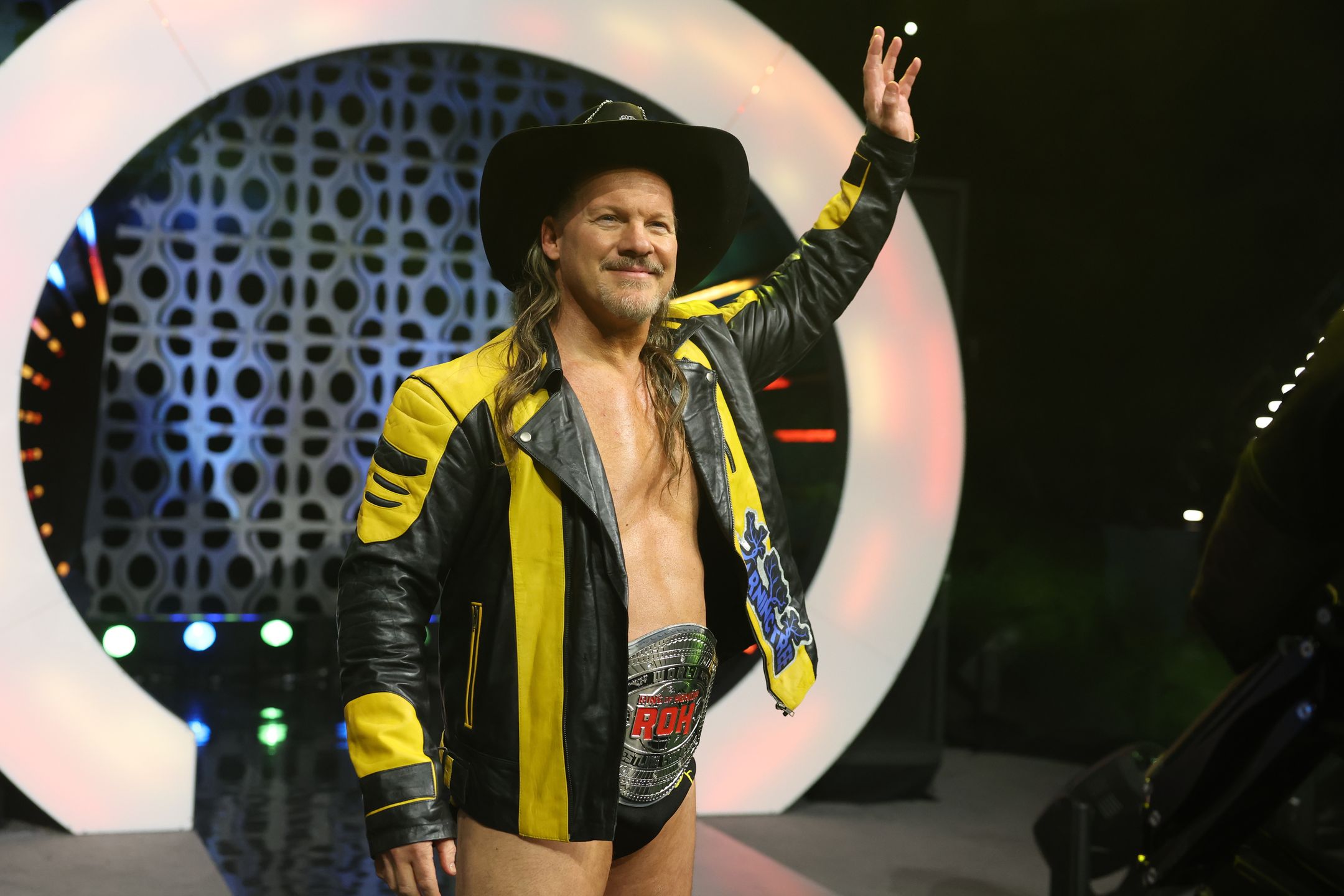
However, the landscape has demonstrably evolved. The rise of more sophisticated training methods, advancements in sports medicine and recovery techniques, and a greater understanding of nutrition and conditioning have allowed athletes across all sports, including professional wrestling, to maintain peak physical condition for longer. Furthermore, the wrestling audience itself has matured. Fans who grew up watching legends in the 80s and 90s are now in their thirties, forties, and beyond, and they have a vested interest in seeing their heroes continue to compete, provided they can still deliver a compelling performance. This has created a market and an audience that is more receptive to seeing veteran performers thrive.
Chris Jericho embodies this evolution. His career is a masterclass in reinvention. From his debut in WCW as the "Lionheart" to his iconic run in WWE as the "Ayatollah of Rock ‘n’ Rolla," and his more recent, critically acclaimed tenure in AEW, he has consistently adapted his character, his in-ring style, and his promo abilities to remain relevant and captivating. He has navigated the transition from a high-flying cruiserweight to a formidable powerhouse, and from a charismatic anti-hero to a calculating, cerebral heel and back again. This adaptability is not solely a matter of talent; it requires a deep understanding of the wrestling business, an acute awareness of audience sentiment, and a willingness to experiment and evolve. It’s a testament to his dedication not just to performing, but to the art form itself.
Jericho’s current age, 55, places him firmly in the category of veteran performers who are actively challenging traditional notions of career longevity. He is not merely going through the motions; he is still engaging in high-stakes matches, delivering memorable promos, and playing a significant role in storylines. His recent contest against Bandido at AEW Dynasty 2025, for instance, showcased his ability to still command the ring and tell a story with a younger, dynamic opponent. While he may not be performing the same high-risk aerial maneuvers he did in his twenties, he has intelligently adapted his in-ring psychology, focusing on impactful storytelling, strategic counters, and leveraging his wealth of experience to outmaneuver opponents. This is not a sign of decline, but rather a sophisticated evolution of his craft.
The "ageism" Jericho speaks of is not always overt. It can manifest in subtle ways: a commentator’s hushed tones when discussing a wrestler’s age, a booking decision that favors newer talent regardless of merit, or an internal perception within a promotion that older performers are less marketable or capable of carrying the company. This can be particularly frustrating for those who have dedicated their lives to the industry, who possess unparalleled knowledge of the business, and who continue to possess the passion and the physical capacity to perform.
Jericho’s argument is that this perceived limitation is often self-imposed or, more accurately, a societal construct that wrestling, like many other fields, has inherited. He highlights that the "biggest detriment to success that we have is ourselves." This speaks to the psychological battle that many performers face. If a wrestler internalizes the notion that their career is winding down due to age, it can lead to a decline in their motivation, their training regimen, and ultimately, their performance. Conversely, adopting Jericho’s mindset – viewing age as an asset, a source of wisdom and refined skill – can unlock new levels of performance and longevity.

Consider the broader context of wrestling history. Many of the most iconic figures in the business have had remarkably long careers. While some retired in their prime, others continued to perform and influence the industry well into their forties, fifties, and even sixties. Think of figures like Ric Flair, who wrestled for over four decades, or Terry Funk, whose legendary toughness and enduring appeal kept him in the ring for an astonishingly long period. These individuals, while perhaps not performing at the same athletic peak as their younger counterparts, possessed an undeniable charisma, a deep understanding of crowd psychology, and a unique ability to connect with audiences. They proved that experience and storytelling can, in many cases, trump raw athleticism.
Jericho’s own journey reflects this. He has consistently been a student of the game, observing trends, learning from others, and understanding what resonates with the audience. His transition into a leadership role within AEW, mentoring younger talent and contributing to creative discussions, further underscores his value beyond just in-ring performance. He is a living archive of wrestling knowledge, a seasoned storyteller, and a magnetic presence who can elevate any program he is a part of. His continued presence on screen is not a burden; it is an asset to the promotion.
The speculation surrounding a potential return to WWE is particularly interesting in this context. WWE, historically, has been a company that has embraced veteran talent, often bringing back established stars for significant matches and storylines. While they also focus heavily on developing new talent, the appeal of a proven commodity like Chris Jericho, with his name recognition and his ability to deliver a compelling performance, is undeniable. If such a move were to materialize, it would further demonstrate the enduring marketability and performative capacity of a wrestler in his mid-fifties. It would be a strategic move, capitalizing on his established legacy and his ongoing ability to draw attention and engage audiences.
Jericho’s message to Soundsphere Magazine is not just about wrestling; it’s a broader declaration of intent and a challenge to perceived limitations. It’s a reminder that passion, dedication, and a willingness to adapt are far more potent forces than the arbitrary boundaries society might impose. For fans of professional wrestling, his continued presence and his vocal stance against ageism are cause for celebration. He is a testament to the fact that a performer’s career is not a finite sprint, but potentially a marathon, where wisdom, experience, and an unwavering commitment to the art form can allow them to not just finish, but to continue to excel and inspire for decades to come. The roar of the crowd, after all, is a timeless sound, and for performers like Chris Jericho, it’s a sound they are still very much capable of hearing and commanding.