The landscape of professional wrestling has always been a volatile one, defined by the constant ebb and flow of audience engagement and the creative risks taken by those at the helm of major promotions. As we moved through the third week of January in 2026, All Elite Wrestling found itself at a fascinating crossroads, balancing the prestige of its established veterans with the rising hunger of its powerhouse contenders. The January 21 broadcast of Dynamite served as a microcosm of this era, showcasing a blend of elite-level technical wrestling and high-stakes character work that has become the hallmark of the Wednesday night tradition. While the television landscape continues to shift toward digital consumption, the traditional linear metrics remain a significant talking point among industry analysts and the dedicated fanbase alike. On this particular evening, the promotion navigated a slight dip in total viewership, yet the narrative threads woven throughout the two-hour broadcast suggested a company deeply invested in long-term storytelling and the elevation of talent who have spent years climbing the ranks of the roster.
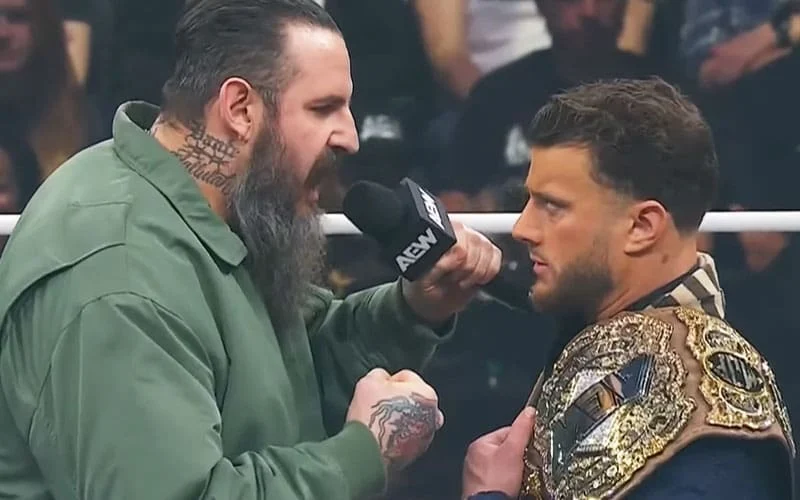
Central to the evening’s drama was the ongoing saga of the AEW World Championship, currently held by the polarizing and undeniably talented Maxwell Jacob Friedman. MJF has spent much of his career perfecting the art of the verbal assault, and this episode was no exception. Taking to the ring to celebrate his continued dominance and the longevity of his title reign, the self-proclaimed generational talent radiated the arrogance that has made him the most hunted man in the company. However, the atmosphere shifted instantly when the presence of the House of Black was felt, as Brody King emerged to challenge the status quo. King, a man whose physical presence is as intimidating as his bruising in-ring style, did not come to trade insults but to demand an opportunity. The visual of the massive King standing across from the slick, suit-wearing champion provided a stark contrast in philosophies. While King demanded a title shot based on his destructive capabilities, MJF leaned into his classic heel persona, dismissing the challenge on the grounds that King had not yet accrued the necessary win-loss record to warrant a seat at the table.
This interaction highlighted a recurring theme in modern AEW: the tension between the pure meritocracy of the rankings and the sheer force of will exerted by the locker room’s most dangerous individuals. Brody King’s role within the House of Black has often been that of the silent enforcer, the man who provides the muscle for the group’s more cerebral machinations. However, seeing him step out as a solo challenger for the world title marks a significant evolution for his character. It signals that the House of Black is no longer content with just dominating the trios division or mid-card feuds; they want the top prize in the industry. King’s physical style, a blend of international strong style and American powerhouse wrestling, makes him a unique threat to a champion like MJF, who prefers to avoid physical altercations whenever possible. This psychological game between a champion who uses the rulebook as a weapon and a challenger who uses his fists is a narrative as old as the sport itself, yet it feels fresh in the context of AEW’s modern presentation. By having MJF deny King’s request, the writers have created a clear path for King to embark on a path of destruction, racking up the necessary wins that MJF demanded. This type of episodic storytelling is designed to keep viewers coming back week after week to see if the monster will eventually get his hands on the champion.
While the world title picture simmered with tension, the in-ring action reached a fever pitch with a marquee matchup that many fans had labeled a dream bout since the rosters began to align. Kenny Omega, a man whose name is synonymous with the very foundation of All Elite Wrestling, stepped into the ring to face off against Josh Alexander. Alexander, known for his relentless technical prowess and his reputation as a "Walking Weapon," represented a significant hurdle for the former world champion. The match itself was a masterclass in pacing and psychology, as both men sought to prove who truly deserved the title of the world’s best technician. Omega, showing flashes of the persona that defined his legendary career in Japan and the early days of AEW, eventually secured the victory, but not before Alexander pushed him to his absolute limits.
This victory for Omega serves as a reminder that despite the influx of new stars, the foundational pillars of the company remain as formidable as ever. The match also underscored the depth of the 2026 roster, where a mid-card or upper-mid-card television match can often rival the quality of a pay-per-view main event. One must appreciate the sheer athleticism on display during this contest. In 2026, Kenny Omega has had to adapt his style to account for the physical toll of his long and storied career. He is more selective with his high-risk maneuvers, focusing instead on surgical precision and devastating strikes. Josh Alexander, on the other hand, represents the new guard of technical excellence. His ability to transition between submission holds and suplexes is reminiscent of the greats of the past, yet he brings a modern intensity that is uniquely his own. The fact that this match took place on a standard episode of Dynamite speaks volumes about the value AEW places on its television product. They are not content to simply tread water between pay-per-views; they want every Wednesday night to feel like a significant event.
When examining the data provided by industry trackers, the numbers for the January 21 episode offer a nuanced look at AEW’s current standing in the cable television hierarchy. The program averaged 498,000 viewers on TBS, which marked a decrease from the 526,000 viewers who tuned in the week prior on January 14. A drop of approximately 28,000 viewers, or roughly 5.3 percent, is something that analysts will certainly scrutinize, yet it is essential to look at the broader picture. In the highly coveted 18-to-49 demographic, the show maintained a steady 0.08 rating, identical to the previous week’s performance. This stability in the demo suggests that while some casual viewers may have drifted away or opted for other entertainment options, the core audience remains loyal and engaged.
Furthermore, these figures represent only the traditional linear television audience. In 2026, the way fans consume professional wrestling has fundamentally changed, with a significant portion of the audience moving toward streaming services. Since these numbers do not account for viewership on MAX or other digital platforms, they provide an incomplete picture of the total reach of the Dynamite brand. To understand the 498,000 figure, one must look at the broader ecosystem of Warner Bros. Discovery. By 2026, the integration of AEW content onto the MAX streaming platform had become a cornerstone of the partnership. While the Nielsen numbers on TBS reflect those who watch the show as it airs on traditional cable, they miss a significant portion of the younger, more tech-savvy audience that prefers to stream the show at their convenience. This shift in consumer behavior is not unique to wrestling; it is a trend seen across all of television, particularly in live sports and serialized dramas. For AEW, the 0.08 rating in the key demographic is perhaps a more vital metric than the total viewership count, as it measures the density of the audience that is most likely to purchase merchandise, attend live events, and engage with sponsors.
The dip in total viewers could be attributed to a variety of external factors, ranging from seasonal television trends to competition from other sporting events or news cycles. However, within the bubble of the wrestling world, the focus remains on the quality of the product and the ability to build toward future major events. By early 2026, AEW had solidified its place as a powerhouse in the industry, having survived the initial growing pains of a young promotion to become a staple of weekly cable programming. The roster in 2026 is a blend of the original founders, international acquisitions, and homegrown talent who have spent years in the developmental system or on the independent circuit. The January 21 episode highlighted this diversity perfectly. You had the established superstar in MJF, the legendary veteran in Omega, the technical specialist in Alexander, and the powerhouse enforcer in King. This variety ensures that the product appeals to different segments of the wrestling audience, from those who crave intricate storylines to those who want to see hard-hitting physical contests.
The decision to keep the House of Black prominent in the main event scene also reflects a commitment to the darker, more atmospheric elements of wrestling storytelling, providing a counterpoint to the more traditional sports-centric presentation found elsewhere on the show. Maxwell Jacob Friedman’s role as the anchor of the promotion cannot be overstated. By 2026, his character had evolved beyond the simple arrogant archetype into a more complex, manipulative champion who understands the intricacies of the wrestling business both in front of and behind the curtain. His refusal to fight Brody King was not a sign of cowardice in the traditional sense, but rather a calculated move to maintain his power and force his challengers to jump through hoops. This psychological warfare is what sets MJF apart from other champions. He doesn’t just beat his opponents in the ring; he beats them before they even step through the ropes. For Brody King, this rejection serves as the ultimate motivation. King has always been a force of nature, but giving him a specific target and a specific set of obstacles to overcome allows the audience to invest in his journey on a deeper level.
Looking back at the Omega and Alexander clash, the finish of the match deserves closer inspection. It wasn’t just about the three-count; it was about the struggle to get there. Omega’s use of his signature maneuvers is legendary, but Alexander’s ability to counter and apply pressure created moments of genuine uncertainty. For a few minutes, the crowd in attendance and those watching at home were led to believe that the upset was possible. This is the magic of AEW’s booking; they allow their top stars to be vulnerable, which in turn makes their victories feel more earned and their opponents look stronger in defeat. Even though Josh Alexander did not leave with the win, his stock rose significantly by virtue of the competitive nature of the contest. He proved that he belongs in the same ring as a generational talent like Omega, and that is a victory in its own right in the grand scheme of roster development.
As the dust settled on the January 21 episode, the wrestling community was left with plenty to discuss. The slight decrease in linear viewership will undoubtedly be a topic of conversation on social media and among those who track the industry’s business metrics. However, for those focused on the creative direction of the company, the episode was a resounding success. It moved key storylines forward, provided a high-level athletic showcase, and further established the stakes for the AEW World Championship. The road to the next pay-per-view is becoming clearer, with Brody King now positioned as a looming threat to MJF’s reign and Kenny Omega continuing to prove that he is still a force to be reckoned with.
All Elite Wrestling continues to navigate the complexities of a changing media landscape, but as long as they continue to deliver compelling characters and elite-level wrestling, their place at the top of the industry seems secure. The numbers may fluctuate, but the passion of the fanbase and the talent of the roster remain the true foundation of the company’s success. As we look ahead to the final weeks of January and into February, the fallout from this episode will surely continue to shape the landscape of the promotion, proving once again that in the world of professional wrestling, nothing is ever truly settled until the final bell rings. The consistency of the demographic rating suggests that the floor for the Dynamite audience is incredibly solid, providing a dependable base upon which the company can build its more ambitious projects. The journey of the AEW World Title, the redemption of its legends, and the rise of its new monsters will continue to be the heartbeat of Wednesday nights for the foreseeable future.