In the modern landscape of professional wrestling, the boundaries between the ring and the real world have become increasingly porous, creating a complex environment where performers must navigate not only their athletic careers but also the volatile waters of global socio-politics. This reality was recently brought into sharp focus following a series of events involving Priscilla Kelly, a name well-known to fans of both the independent circuit and the mainstream spotlight of World Wrestling Entertainment. Kelly, who has built a reputation as a fierce and uncompromising competitor across various promotions, found herself at the center of a firestorm that transcended the typical scripted rivalries of the squared circle. The situation began with what seemed like a standard international booking for an independent star of her caliber, yet it quickly spiraled into a controversy that would lead to her complete withdrawal from an upcoming event and, eventually, her total departure from the social media sphere.
To understand the weight of this development, one must first look at the professional trajectory of Priscilla Kelly. Throughout her career, she has been celebrated for her unique persona and her ability to captivate audiences with a style that blends technical proficiency with an edgy, gothic aesthetic. Her time in the industry has seen her compete in prestigious tournaments and secure championships, eventually leading her to a significant stint in NXT under the moniker Gigi Dolin. As a member of the highly successful faction Toxic Attraction, she reached a new level of visibility, becoming a staple of weekly television and a key player in the women’s division. Following her transition back into the broader wrestling world, her status as a high-profile free agent made her a coveted attraction for international promoters looking to bring a touch of star power to their local markets. It was this demand that led to her being scheduled for a featured appearance at a major event in Israel, a booking that would set the stage for the ensuing digital upheaval.
The event in question was the Passover Bash, organized by the Israeli Pro Wrestling Association, a promotion that has been working diligently to cultivate a thriving wrestling scene in the region. For an organization like IPWA, securing a talent with Kelly’s resume is a significant milestone, representing a bridge between the local talent pool and the international wrestling community. When the promotion officially announced her participation, it was initially met with the excitement typical of such high-profile cross-border collaborations. However, the atmosphere shifted dramatically when Kelly herself acknowledged the booking on her social media platforms. In the current global climate, where information travels instantaneously and public sentiment is often at a fever pitch, a simple confirmation of travel can become a lightning rod for debate.
The backlash was almost immediate. As news of her scheduled appearance spread, a vocal segment of the online wrestling community began to voice intense criticism. This reaction was rooted in the ongoing and deeply sensitive humanitarian situation involving the Israel-Palestine conflict. For many observers, the act of traveling to the region to perform was viewed through a political lens, regardless of the performer’s personal intentions. Critics argued that such an appearance could be interpreted as a tacit endorsement of government policies or as a distraction from the broader crisis affecting the area. This type of scrutiny is a relatively new challenge for professional wrestlers, who for decades were largely shielded from such debates by the insular nature of the business. In the contemporary era, however, every career move is subject to the court of public opinion, and the line between an entertainer and a political figure has become increasingly blurred.
Initially, Kelly attempted to navigate the situation by removing her initial post, but the momentum of the discourse had already become too great to ignore. The speed at which social media can transform a promotional announcement into a full-scale controversy is a testament to the power of digital platforms in shaping the careers of modern athletes. For an independent contractor like Kelly, whose livelihood depends on her public image and her ability to connect with fans, such a concentrated wave of negativity presents a daunting professional hurdle. The pressure reached a point where a formal response was necessitated, leading to a public statement that sought to clarify her position and address the concerns of those who felt her participation was inappropriate.
In her communication to the public, Kelly articulated a desire to distance herself from any perceived political alignment. She explained that her primary motivation was, and always has been, the art of professional wrestling and the opportunity to perform for audiences who enjoy the craft. She emphasized that her decision to accept the booking was not intended as a statement on the geopolitical landscape, but rather as a professional engagement typical of an international touring wrestler. Despite this clarification, the realization that her presence would be viewed through a political prism led her to the difficult conclusion that she could no longer move forward with the appearance. She officially withdrew from the Passover Bash, offering an apology for any distress the situation had caused and making it clear that she did not wish to be associated with the actions of any government or the ongoing humanitarian crisis.
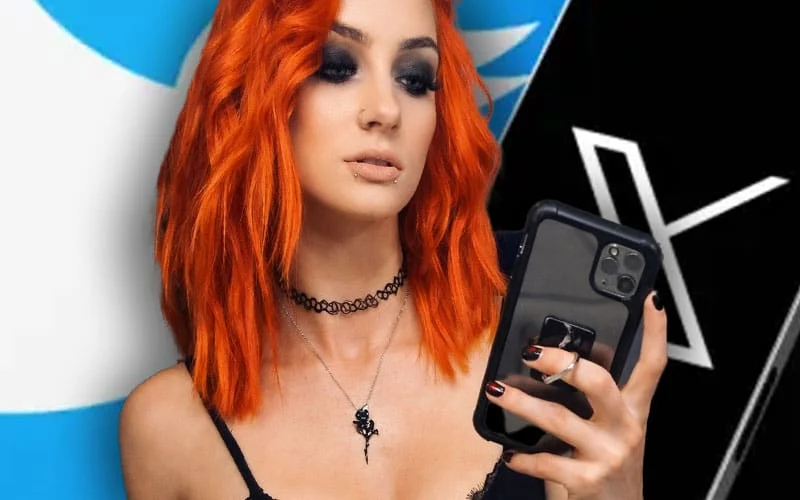
This withdrawal, however, did not mark the end of the story. While many expected the situation to settle following her apology and cancellation, the intensity of the online discourse appeared to take a significant toll. In a move that surprised many in the industry, Kelly took the drastic step of deactivating her social media presence entirely. This action is a stark reminder of the mental and emotional burden that high-profile controversies can place on individuals. In the wrestling world, social media is often viewed as an essential tool for brand building, fan engagement, and securing future bookings. To walk away from these platforms is to cut off a vital artery of one’s professional life, suggesting that the level of vitriol and the weight of the situation had become untenable.
The decision to go dark on social media is a phenomenon that has become increasingly common among public figures who find themselves at the center of a "cancel culture" storm or a geopolitical debate. For Kelly, deactivating her accounts may have been the only way to find a sense of peace amidst a relentless cycle of commentary and criticism. It highlights a growing concern within the entertainment industry regarding the mental health of performers who are expected to be accessible 24/7 while simultaneously navigating complex ethical minefields. The silence that followed her departure from the digital world has prompted a broader conversation among fans and industry insiders about the expectations placed on wrestlers to be experts on every global issue they encounter during their travels.
The Israeli Pro Wrestling Association, for its part, was left in a difficult position. Losing a marquee attraction like Priscilla Kelly just as momentum was building for their premier event is a significant blow to any promotion. The logistical challenges of finding a replacement of equal stature on short notice are immense, not to mention the potential impact on ticket sales and local interest. As of yet, the promotion has remained relatively quiet regarding the fallout, perhaps waiting for the initial wave of controversy to recede before charting a path forward for the Passover Bash. This silence from the promotional side underscores the delicacy of the situation, as organizations must balance their business interests with the sensitivities of the global audience.
Historically, professional wrestling has a complicated relationship with international politics. From the famous "Collision in Korea" event in the 1990s to WWE’s more recent and controversial long-term partnership with Saudi Arabia, the industry has often found itself at the heart of geopolitical discussions. These instances frequently spark debate over whether "sports diplomacy" is a genuine force for good or merely a way to sanitize the image of controversial regimes. For an individual performer like Kelly, being caught in the middle of such a massive debate is a far cry from the usual concerns of match psychology or storyline progression. It forces a wrestler to consider their legacy not just in terms of their work in the ring, but in terms of the ethical footprint they leave behind.
The debate surrounding Kelly’s choice has split the wrestling community into several camps. On one side are those who believe that wrestlers, as public figures with significant platforms, have a responsibility to be aware of the context in which they perform and should be held accountable for where they choose to take their talents. From this perspective, the backlash was a necessary reaction to a perceived lack of sensitivity. On the other side are those who argue that wrestlers are simply entertainers who should be allowed to work wherever there is an audience, and that expecting them to act as geopolitical arbiters is both unfair and unrealistic. This group views the pressure placed on Kelly as a form of overreach that punishes a performer for simply trying to earn a living.
As the dust begins to settle, the industry is left to contemplate the long-term implications of this incident. For Priscilla Kelly, the path back to the public eye remains uncertain. While many wrestlers have successfully returned from social media breaks, the circumstances of her departure are particularly heavy. Her absence leaves a void in the independent scene, where her presence always guaranteed a certain level of intrigue and quality. The situation serves as a cautionary tale for other performers who may be considering international bookings in regions marked by conflict. It suggests that in the age of the internet, there is no such thing as a "non-political" appearance if the public decides otherwise.
Ultimately, the story of Priscilla Kelly’s withdrawal from Israel and her subsequent digital disappearance is about more than just a cancelled wrestling match. It is a reflection of the world we live in, where the reach of the internet ensures that no corner of the globe is truly isolated and no professional decision is exempt from moral scrutiny. The wrestling ring has always been a place where we play out our struggles between good and evil, but as this situation proves, the most difficult battles often happen outside the ropes, in the complex and unforgiving arena of public discourse. Whether Kelly returns to the ring soon or continues her hiatus, her experience will likely be cited for years to come as a pivotal moment in the ongoing dialogue between the world of professional wrestling and the reality of global affairs. The silence of her deactivated accounts speaks volumes about the current state of celebrity in the digital age, leaving fans to wonder when, or if, one of the industry’s most compelling figures will choose to speak again.