The wrestling landscape, much like the human body it often mimics in its intensity, is a tapestry woven with powerful moves, enduring rivalries, and the indelible marks left by legendary performers. Within this intricate design, submission holds occupy a unique space. They are not merely physical maneuvers; they are often signature statements, extensions of a wrestler’s persona, and potent tools for storytelling. Recently, a familiar face returned to the squared circle, igniting a conversation that delved into the history and distinctiveness of a particular submission hold, drawing parallels to one of the most recognizable maneuvers in professional wrestling history. The reappearance of Nikki Bella in a high-stakes contest brought her signature move, the Fearless Lock, back into the spotlight, prompting a spirited defense of its individuality and origins.
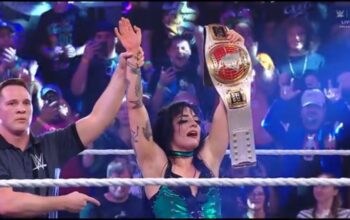
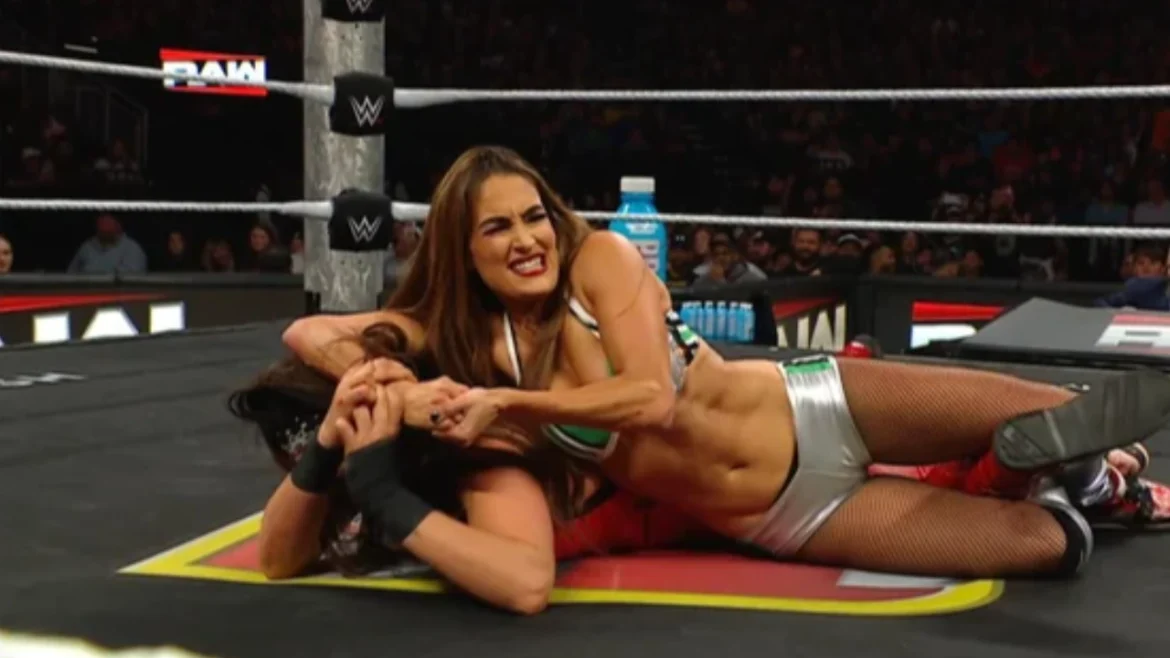
The setting for this reintroduction was the December 29th episode of Monday Night Raw, a night that saw Stephanie Vaquer put her Women’s World Championship on the line against a formidable field that included Nikki Bella and Raquel Rodriguez. It was during this triple-threat encounter that Bella executed the Fearless Lock on Rodriguez. The sight of this hold, applied with precision and intensity, immediately triggered a vocal reaction from the live audience. A wave of "Thank You Cena!" chants swept through the arena, a clear nod to John Cena and his iconic STF submission. The immediate outpouring of crowd sentiment, while seemingly a tribute, also carried an undercurrent of comparison, implying a direct lineage from Cena’s signature move. However, Bella, ever the astute performer, did not let this association go unchallenged. With a sharp retort, she declared, "No! Thank me!" This decisive interjection set the stage for a deeper exploration of the Fearless Lock and its true genesis.
In the days following the Raw event, Nikki Bella, alongside her twin sister Brie, addressed the burgeoning discussion on their podcast, "The Nikki & Brie Show." This platform provided Bella with the opportunity to meticulously dissect the nuances of her submission hold and to firmly establish its independent identity. She articulated that while the timing of its prominent use might have coincided with her relationship with John Cena, the Fearless Lock is, in fact, a distinct maneuver. Bella elaborated on the fundamental differences, pointing out that Cena’s STF typically involves him lying on top of his opponent and gripping their face, a technique that contrasts significantly with the mechanics of the Fearless Lock.
The genesis of the Fearless Lock, as explained by Bella, is rooted in her journey back from a serious injury. Following a broken neck, a life-altering setback for any athlete, Bella dedicated herself to rigorous training and rehabilitation. During this period, she spent considerable time honing her craft at the WWE Performance Center, working closely with talented individuals like Natalya Neidhart, Shayna Baszler, and Bayley. It was through these dedicated training sessions, particularly an experience at an MMA facility with Shayna Baszler, that the Fearless Lock was truly developed. Baszler, a formidable competitor with a background in mixed martial arts, introduced Bella to legitimate submission techniques. It was this collaborative effort, coupled with Bella’s personal drive and resilience, that led to the creation and refinement of her signature hold.
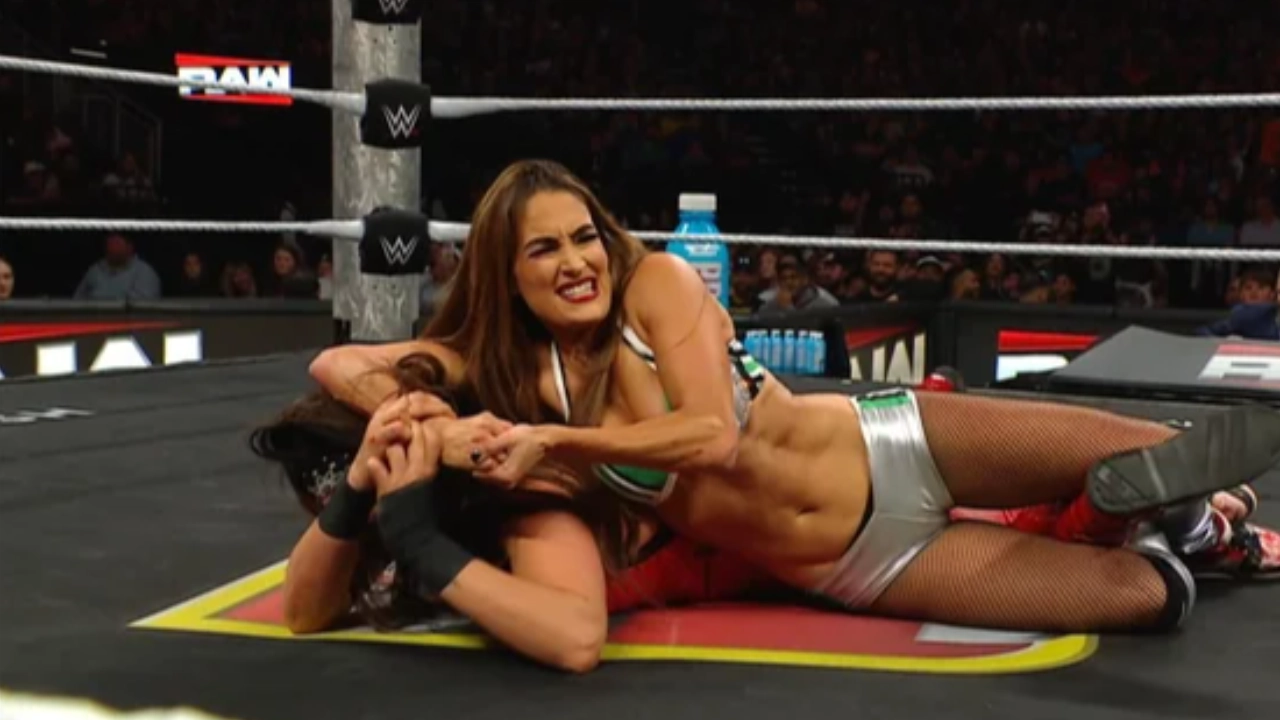
Bella further emphasized the intentionality behind the move’s design. Her goal was not merely to incorporate another submission into her arsenal, but to emerge from her injury with a unique and impactful offensive weapon. She recounted how Baszler herself acknowledged the difference, reassuring Bella that the Fearless Lock was fundamentally distinct from Cena’s STF. The visual aspect of the hold, Bella explained, clearly demonstrates this divergence. Unlike Cena’s STF, where the perpetrator is often on top, Bella’s Fearless Lock involves her positioning herself at the side of her opponent, applying pressure in a manner that is visually and mechanically dissimilar. This unique application, she argued, makes it a legitimate and distinct submission hold in its own right.
The experience of applying the Fearless Lock to a larger opponent like Raquel Rodriguez further underscored its efficacy and visual impact for Bella. She noted that the execution felt different, and the visual representation of the hold on a wrestler of Rodriguez’s stature was striking. This, she believes, served as a clear testament to the move’s individuality, even if the audience’s immediate association was with a more famous submission. The "Thank You Cena!" chants, while understandable given the shared history and the visual similarities perceived by some, reignited a competitive spirit within Bella. Her instinctive "Thank me!" response was not born of ego, but from a deep-seated pride in her own journey, her resilience, and the hard work that went into creating and mastering the Fearless Lock. It was a declaration of ownership and a reminder that while her past relationship with Cena was significant, her present accomplishments and the evolution of her in-ring repertoire stand on their own merit.
The history of wrestling is replete with examples of wrestlers developing signature submission holds that become synonymous with their personas. Hulk Hogan had the Sleeper Hold, Stone Cold Steve Austin had the Million Dollar Dream (though it was originally Ted DiBiase’s), and Bret Hart had the Sharpshooter. These holds were not just about inflicting pain; they were about building anticipation, creating dramatic moments, and providing a definitive end to a match. The STF, John Cena’s signature move, is a prime example of this phenomenon. For years, the sight of Cena applying the STF signaled the impending end of his opponent’s night and often served as the catalyst for his comeback victories. Its visual presentation – Cena’s sheer power and determination as he cinched it in – made it an iconic element of his legendary career.
Nikki Bella’s journey in professional wrestling is a testament to her dedication and evolution as a performer. As one half of the Bella Twins, she became a central figure in the Divas Revolution and played a pivotal role in the burgeoning women’s division. Her career was not without its significant challenges, including the severe neck injury that threatened to prematurely end her in-ring aspirations. Her return to wrestling after such a debilitating injury is a story of immense courage and perseverance. The development of the Fearless Lock, therefore, can be seen as more than just the creation of a new move; it represents Bella’s determination to overcome adversity and to redefine her presence in the ring. It is a symbol of her "fearless" spirit, a moniker she embraced during her career.
The collaborative aspect of wrestling, while often unseen by the casual fan, is crucial to the development of compelling characters and effective in-ring psychology. The backstage environment, where wrestlers share knowledge, refine techniques, and brainstorm ideas, is a fertile ground for innovation. Bella’s mention of working with Nattie, Shayna, and Bayley highlights this dynamic. The wrestling industry, particularly in its more developmental stages, often involves peer-to-peer learning and mentorship. Shayna Baszler’s expertise in legitimate combat sports would have provided Bella with a unique perspective, allowing her to adapt real-world grappling techniques into a professional wrestling context. This cross-pollination of skills can lead to more believable and impactful offensive maneuvers.

The distinction between the STF and the Fearless Lock, as articulated by Bella, lies in the applied pressure and the positioning of the wrestler. The STF, often depicted as a variation of a head-and-arm choke or a modified crossface, focuses on torque applied to the neck and upper body while the assailant is often positioned directly over the victim. The Fearless Lock, conversely, appears to emphasize leverage and strain on the opponent’s back and shoulder, with the assailant working from the side. This difference in mechanics, even if subtle to the untrained eye, is significant in the world of professional wrestling where the presentation of a move is as important as its effectiveness. The visual cues of the Fearless Lock – Bella’s posture, the way she manipulates her opponent’s limbs – are designed to convey a different type of struggle and pain than that associated with the STF.
The audience’s reaction, while sometimes prone to immediate associations based on familiarity, also plays a role in the ongoing narrative of wrestling. The "Thank You Cena!" chants, though initially potentially frustrating for Bella, also served to re-engage the audience with her presence and her past. Her immediate and spirited response, however, successfully shifted the focus back to her individual contribution. It was a reminder that while wrestling often draws upon established legacies and shared histories, the individual performers are constantly striving to carve out their own unique space. Bella’s assertion of her own credit for the Fearless Lock is a powerful statement of her independence and her evolution as a wrestler who has moved beyond her past affiliations to establish her own distinct identity.
In conclusion, the discussion surrounding Nikki Bella’s Fearless Lock serves as a fascinating microcosm of the intricate storytelling and performer development within professional wrestling. It highlights how moves become extensions of character, how past associations can influence perception, and how wrestlers actively work to define their legacies. Bella’s clarification on the Fearless Lock is not merely about correcting a perceived misconception; it is about asserting her agency, celebrating her resilience, and underscoring the unique journey that led to the creation of her signature submission. The Fearless Lock, born from adversity and refined through dedication, stands as a testament to Nikki Bella’s enduring impact on the wrestling world, a move that is distinctly hers, carrying the weight of her own fearless spirit.