The annals of professional wrestling history are replete with moments that have etched themselves into the collective memory of fans, some for their brilliance, others for their sheer spectacle, and a select few, for their catastrophic impact. Among these latter, the infamous "Fingerpoke of Doom," which transpired on the January 4, 1999 edition of WCW Monday Nitro, stands as a stark monument to a promotion’s self-inflicted wounds. This singular event, a supposed masterstroke of storytelling intended to reunite the fractured New World Order faction, instead served as a glaring symbol of WCW’s creative bankruptcy and ultimately hastened its demise. To understand the profound gravity of this moment, one must delve into the context of the Monday Night Wars, the creative decisions that led to this point, and the enduring perspective of those who witnessed it firsthand.
The Monday Night Wars, a fiercely competitive ratings battle between World Championship Wrestling (WCW) and the World Wrestling Federation (WWF), was at its zenith in 1999. WCW, under the creative leadership of Eric Bischoff, had enjoyed a dominant run for much of the late 1990s, captivating audiences with its edgier, more realistic presentation and the revolutionary NWO storyline. However, by the dawn of 1999, cracks were beginning to show. The NWO, once a potent force, had become bloated and diluted, its initial appeal waning under the weight of numerous splinter factions and a perceived lack of direction. The creative well seemed to be running dry, and the pressure to maintain the momentum against a resurgent WWF, led by Vince McMahon and his innovative "Attitude Era," was immense.
The "Fingerpoke of Doom" was conceived as a dramatic resolution to a storyline involving Hollywood Hogan, the leader of the NWO Hollywood faction, and Kevin Nash, the leader of the NWO Wolfpack. The narrative depicted a tense standoff, with Hogan and Nash seemingly on the verge of a brutal confrontation. In a move that would forever be etched in infamy, Hogan extended his finger and lightly poked Nash in the chest. In response, Nash, as if struck by a devastating blow, theatrically collapsed to the mat. Hogan then promptly pinned him, reclaiming the WCW World Heavyweight Championship that Nash had only recently won. The segment was intended to signify the reunification of the NWO under Hogan’s leadership, a move designed to recapture the faction’s former glory.
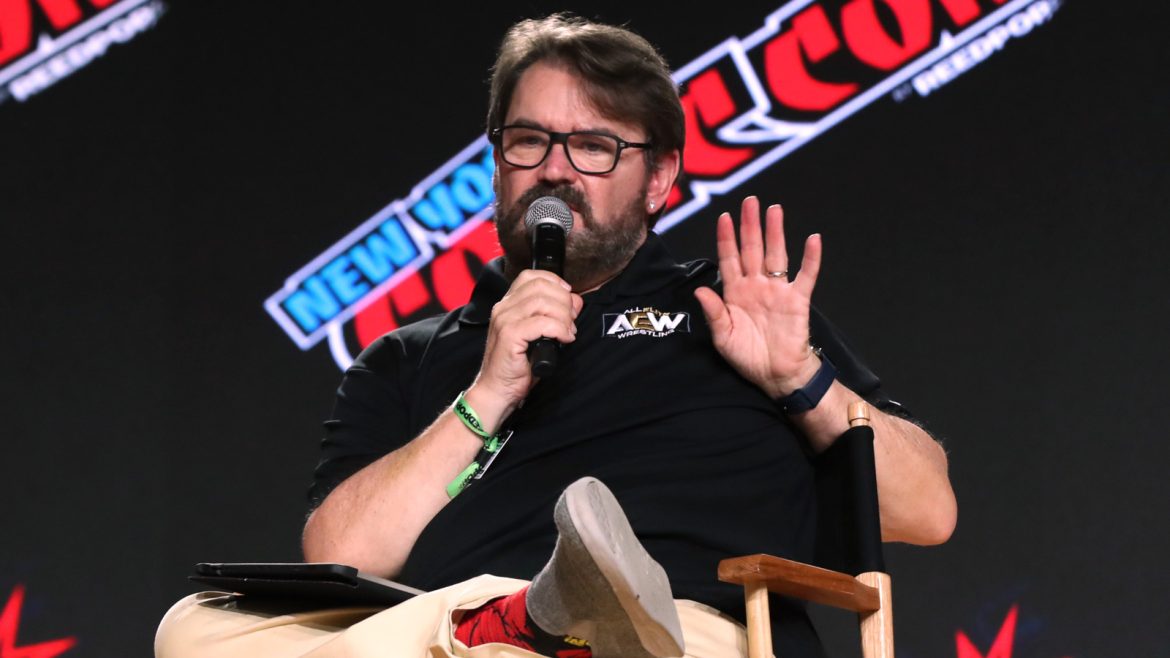
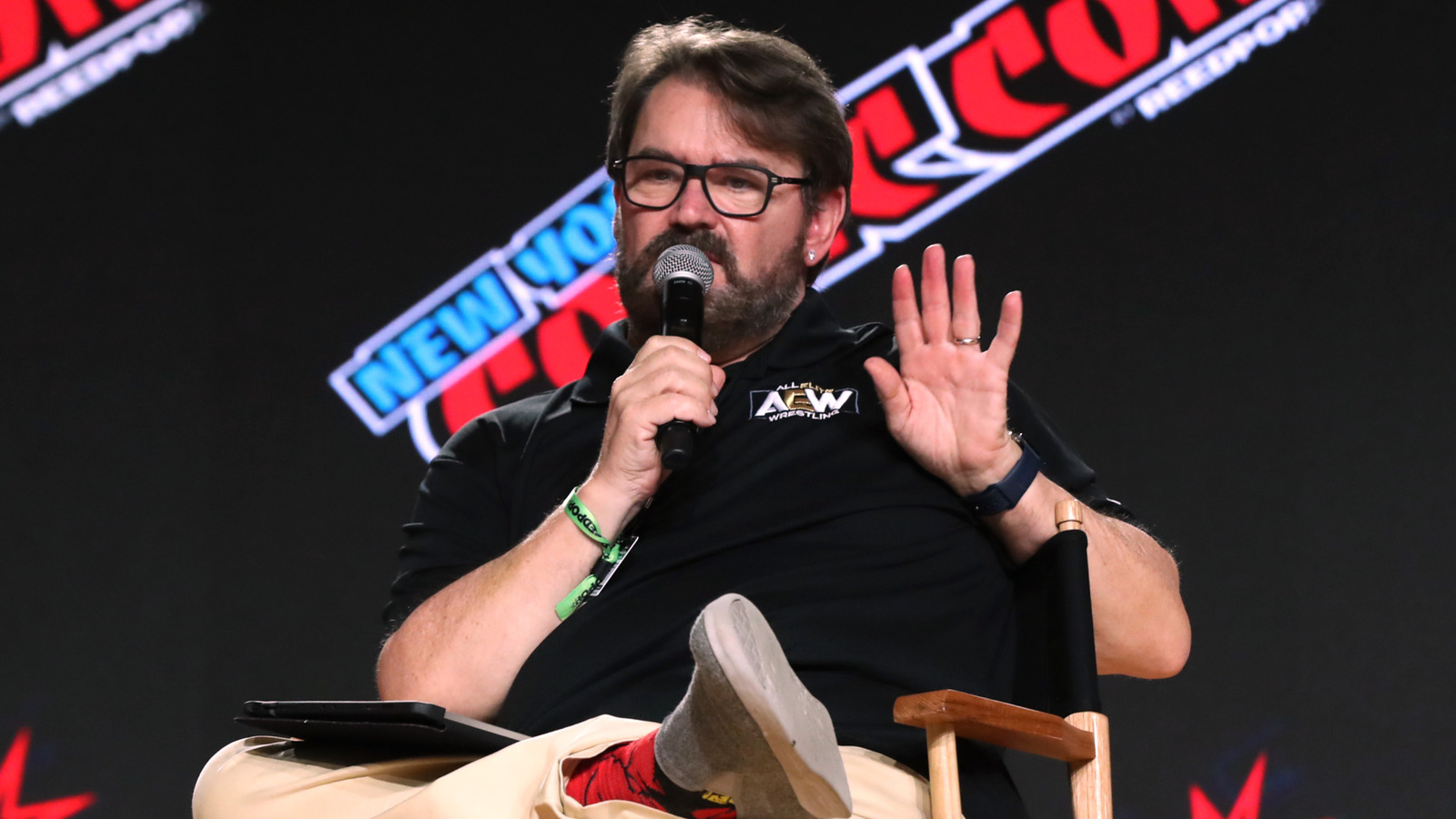
From the perspective of Tony Schiavone, a veteran commentator who was the voice of WCW for much of its golden era and its subsequent decline, the "Fingerpoke of Doom" was not merely a misstep; it was a moment of profound creative failure that he has consistently voiced his displeasure with. In his podcast, "What Happened When," Schiavone has not shied away from expressing his contempt for the segment, unequivocally labelling it as "stupid." He recognized the inherent flaw in the portrayal: the "poke" itself was presented as a significant physical act, yet it was administered by two characters who were supposedly bitter rivals. This disconnect between the action and its perceived impact was a fundamental storytelling error that undermined the credibility of the entire scenario.
Schiavone’s frustration wasn’t solely rooted in the immediate aftermath of the poke itself. He understood that Hogan and Nash were acting as villains, and the segment was intended to advance their heelish agenda. However, the execution was so clumsy and nonsensical that it failed to achieve its intended dramatic effect. Instead of eliciting shock or anticipation, it generated bewilderment and, for many, a sense of betrayal. The audience, who had invested their time and emotional energy into the unfolding drama, felt cheated by a conclusion that was so anticlimactic and illogical.
Adding another layer of ignominy to that fateful night was an unfortunate, yet ultimately less damaging, incident involving Schiavone himself. Earlier in the broadcast, in an attempt to generate buzz and perhaps a touch of perceived superiority over the competition, Schiavone had proudly announced that Mick Foley, performing under the guise of Mankind, was scheduled to win the WWF Championship on a pre-taped episode of "WWF Raw" airing concurrently. This was a direct attempt to undermine the WWF by revealing a major spoiler, a tactic that had occasionally been employed by WCW in the past, often with Eric Bischoff’s tacit approval. However, in this instance, it backfired spectacularly. While Schiavone perceived this as a strategic jab at the competition, the reaction from the viewing public was far from what was anticipated.
The revelation that Mick Foley was set to win the WWF title on a taped show, while Nitro was live, caused a significant exodus of viewers. Many fans, curious about the outcome of the WWF title match or simply loyal to the WWF narrative, switched channels to "WWF Raw," missing the lead-up to the NWO’s supposed reunification. Schiavone himself has acknowledged this blunder, noting that it was intended as a minor jab. He also pointed out that, in a testament to the residual loyalty or the sheer magnetic pull of the main event that WCW hoped to create, a portion of those viewers did eventually switch back to Nitro later in the broadcast. However, the damage to WCW’s credibility had already begun to mount, and this spoiler, while regrettable, was a mere prelude to the main event’s catastrophic failure.
Schiavone’s perspective on the "Fingerpoke of Doom" emphasizes that, despite his own actions regarding the WWF spoiler, it was the main event’s finish that represented the true catastrophe for WCW. He stated that Bischoff had a history of allowing commentary to spoil WWF matches, suggesting that this practice, while controversial, was not entirely unprecedented within WCW’s strategic playbook. However, the "Fingerpoke of Doom" transcended the realm of competitive spoiler tactics. It was a self-inflicted wound, a creative decision that actively undermined the very product WCW was trying to sell. The incident became a lightning rod for criticism, not just from Schiavone, but from fans, critics, and wrestling historians alike, all pointing to it as a pivotal moment where WCW demonstrably lost its way.
The "Fingerpoke of Doom" was more than just a poorly executed wrestling segment; it was a symptom of deeper issues within WCW. The promotion was suffering from a severe case of creative stagnation. The NWO, which had once been a groundbreaking concept, had become a tired trope, endlessly recycled and diluted. The booking decisions were becoming increasingly predictable and, frankly, nonsensical. The reliance on established stars like Hulk Hogan, while initially a draw, began to stifle the growth of new talent and innovative storylines. The NWO itself had become a sprawling, unwieldy entity, with multiple iterations and factions that blurred the lines of continuity and purpose.
Furthermore, the incident highlighted a disconnect between the creative team and the audience. The NWO’s reunification, as envisioned by the "Fingerpoke of Doom," was meant to evoke nostalgia and excitement for the original NWO. However, the audience had moved on. They were looking for fresh, compelling narratives and believable characters, not a rehash of past glories executed with such a glaring lack of logic. The "Fingerpoke of Doom" demonstrated a fundamental misunderstanding of what the audience wanted and what had made WCW successful in the first place.
The consequences of this singular event were far-reaching. It contributed to a significant decline in WCW’s television ratings, a trend that would only worsen in the following months. The loss of viewership translated directly into a loss of revenue, further exacerbating WCW’s financial struggles. The morale within the locker room also took a hit. Wrestlers who had been working hard to develop compelling storylines and deliver exciting matches saw their efforts overshadowed by nonsensical booking decisions that seemed to prioritize Hogan’s ego over the integrity of the product.
In the broader context of the Monday Night Wars, the "Fingerpoke of Doom" marked a turning point. It was a moment when the momentum, which had so strongly favored WCW, began to irrevocably shift towards the WWF. While the WWF’s "Attitude Era" was gaining steam with its controversial yet captivating storylines and its embrace of edgier content, WCW seemed to be regressing, resorting to tired tropes and illogical conclusions. The "Fingerpoke of Doom" became a symbol of this regression, a moment that many fans would later point to as the beginning of the end for the once-dominant promotion.
Looking back, the "Fingerpoke of Doom" serves as a cautionary tale for any wrestling promotion. It underscores the importance of creative integrity, logical storytelling, and a keen understanding of the audience. While moments of surprise and shock are crucial in professional wrestling, they must be grounded in a narrative that makes sense and respects the investment of the fans. The "Fingerpoke of Doom," in its utter absurdity, failed on all these fronts, cementing its place not just as a memorable moment, but as a profoundly damaging one that significantly contributed to the eventual demise of World Championship Wrestling. The memory of that seemingly innocuous poke continues to resonate, a stark reminder of how a single, ill-conceived decision can have devastating repercussions.