The calendar flipped to 2026, and with it, the professional wrestling world, particularly the landscape of World Wrestling Entertainment, anticipated a fresh chapter. Monday, January 5th, marked the first Raw of the new year, an episode touted as a special anniversary celebration, broadcast live on Netflix. Expectations were understandably high, given the expanded production capabilities and perceived freedom that the streaming giant’s partnership promised. However, what unfolded across those three hours was a curious blend of perplexing creative choices and undeniable in-ring brilliance, leaving a significant portion of the fanbase grappling with the show’s overall identity and direction as the Road to WrestleMania began to faintly glimmer on the horizon.
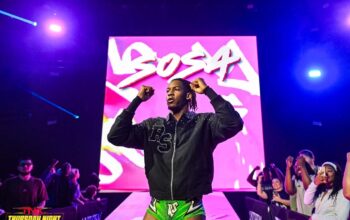
Perhaps the most baffling moment of the entire evening, a creative decision that sparked immediate discussion and head-scratching across social media, centered on the highly anticipated arrival of Je’Von Evans. For weeks, the wrestling rumor mill had churned with speculation about where this "hottest free agent" would ultimately land. Evans had cultivated a reputation as a dynamic, electrifying performer, a talent whose signing was expected to be a marquee moment, a statement of intent from whichever brand secured his services. Given the fanfare, the build-up, and the very platform Raw now occupied – Netflix, a global entertainment behemoth with seemingly limitless resources for spectacle – one would envision a grand unveiling. A dramatic entrance, a confrontational debut, a declarative promo, or even a pre-taped vignette setting the stage for his first appearance. Instead, in a move that felt almost like a deliberate subversion of expectation, or perhaps a stunning miscalculation, the announcement of Evans committing to the red brand was made during a commercial break, nestled within a Cricket Wireless advertisement. This wasn’t a pre-taped package or a subtle tease; it was a blink-and-you-miss-it textual graphic during a third-party commercial. The irony of such a significant revelation being relegated to background noise during a show with purportedly "ample time" for live production was not lost on many, immediately casting a shadow of oddity over an episode meant to be celebratory. It raised questions about the value placed on new talent introductions and whether the increased broadcast window was truly being utilized to its fullest potential, or if some fundamental principles of presentation were being overlooked in favor of fleeting, perhaps even accidental, impact.
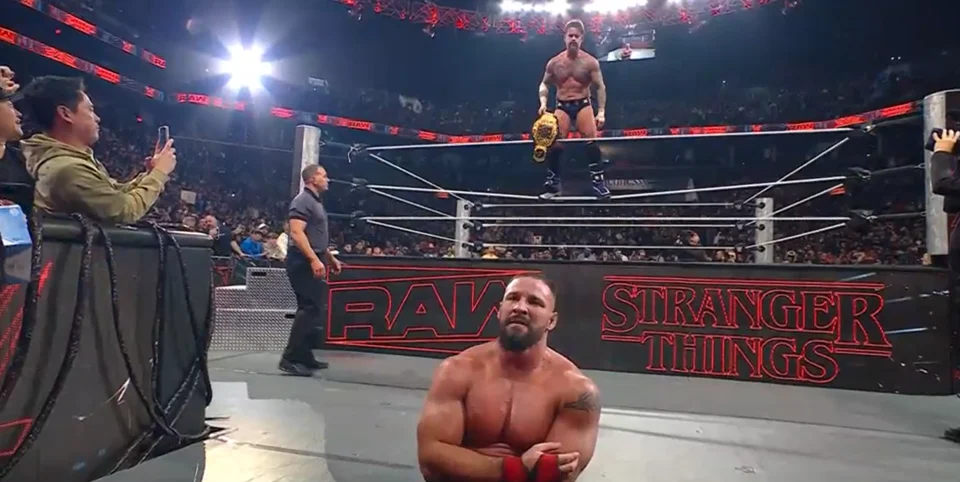
While the handling of Je’Von Evans’ debut left much to be desired, the main event of the evening largely delivered on its promise, offering a stark contrast to the earlier creative missteps. The clash between the reigning champion, CM Punk, and the formidable Bron Breakker, was a generational encounter framed by compelling narratives that had been carefully woven over preceding weeks. Punk, the veteran "old cowboy" who had defied expectations to once again capture championship gold, embodied a defiant wisdom, a champion fully aware of the ticking clock, yet determined to prove his enduring relevance. He had famously declared that someone would eventually dethrone him, but not without a fight that pushed both men to their absolute limits. Bron Breakker, on the other hand, represented the relentless, unyielding future. A powerhouse athlete with a pedigree that speaks volumes, he was the "young gunslinger" groomed for greatness, driven by a fierce desire to establish his own legacy at the expense of an established icon.
From the opening bell, the physicality was palpable. Breakker, as anticipated, came out of the gates with an explosive intensity, employing his raw power and aggressive offense to dominate the early exchanges. His strength and speed were on full display, attempting to overwhelm the champion with a barrage of impactful maneuvers. Punk, ever the strategist, weathered the storm, absorbing the punishment while patiently searching for an opening, a chink in the young challenger’s armor. The match was a testament to Punk’s veteran acumen, his ability to adapt and counter even the most formidable onslaughts. One particularly harrowing moment occurred when Breakker attempted a daring top-rope Frankensteiner, only for Punk to block it with a desperate, last-second counter, sending Breakker tumbling awkwardly to the mat. It was a nasty spill that momentarily silenced the arena, a stark reminder of the inherent risks within the squared circle, but Breakker, demonstrating his remarkable resilience, quickly recovered to continue the grueling contest. Throughout the encounter, Punk’s character work shone brightly, even down to his attire; sporting a letterman jacket in the distinct colors of the University of Michigan, a subtle yet pointed jab at his rival’s Ohio State lineage, a clear nod to the kind of "Petty Punk" that endears him to many fans who appreciate his calculated provocations.
As the match progressed into its fever pitch, the narrative expanded beyond the two combatants in the ring, drawing in other key players who had become integral to the unfolding drama. Paul Heyman’s “Vision,” a collective spearheaded by the esteemed advocate and featuring Bron Breakker and Austin Theory, had been a disruptive force on Raw, systematically targeting those they deemed obstacles to their ascent. True to form, as the main event reached its critical juncture, the rest of The Vision materialized at ringside, their presence signaling impending interference. Austin Theory, ever opportunistic, seized a moment of distraction to deliver a swift, illegal stomp to CM Punk, tipping the scales precariously in Breakker’s favor. However, the champions of justice, or perhaps simply those with a score to settle against The Vision’s tactics, were quick to respond. The high-flying trio of Dragon Lee, Penta, and Rey Mysterio surged to the ring, evening the odds and effectively neutralizing The Vision’s attempts at outright sabotage. Their timely intervention ensured the main event would, at least momentarily, return to a fair fight, but it also underscored the simmering tensions and multi-faceted rivalries that were beginning to define Raw’s landscape. The implication of a potential six-man tag team clash between these two factions in the near future loomed large, promising more high-octane, chaotic encounters that fans crave.
With the outside interference quashed and the match reverting to a one-on-one affair, Punk and Breakker launched into a series of electrifying near falls that had the audience on the edge of their seats. Each man dug deep into his arsenal, unleashing his most devastating maneuvers, only for the other to kick out at the very last microsecond, building incredible suspense. A particularly memorable sequence saw Breakker somehow summon the inner fortitude to kick out of Punk’s signature Go To Sleep (GTS), a move that has historically signaled the end for countless opponents. The crowd erupted, a collective gasp followed by a roar of approval for Breakker’s incredible resilience. Ringside, Paul Heyman, the master manipulator and orator, reacted with an uncharacteristic, almost primal scream of praise, his voice echoing through the arena as he lauded Breakker’s indomitable spirit. It was a moment that not only elevated Breakker’s standing but also subtly humanized Heyman, showing a genuine, albeit ruthless, admiration for his charge’s fighting spirit. Ultimately, despite his valiant efforts and astonishing resilience, Bron Breakker succumbed to CM Punk, losing cleanly in the middle of the ring. It was a definitive victory for the champion, one that solidified his reign and demonstrated his ability to overcome both a formidable challenger and external interference.
The clean loss for Bron Breakker, while a temporary setback, immediately ignited speculation regarding his next move and the broader trajectory of Paul Heyman’s Vision. Losing fair and square, particularly in such a high-stakes main event, rarely diminishes a talent of Breakker’s caliber; instead, it often fuels a more determined, perhaps even desperate, pursuit of redemption. The most obvious path, and one widely discussed among the wrestling faithful, would see Breakker enter the upcoming Royal Rumble match. The Rumble, a month away at this point, presents a golden opportunity for any superstar to punch their ticket to WrestleMania and a championship match. For Breakker, winning the Royal Rumble would not only provide a direct route to a rematch against CM Punk on the grandest stage of them all but would also serve as a powerful statement of his undeniable main event potential. However, the intervening weeks leading up to the Rumble present a unique creative challenge. How does The Vision maintain its momentum and Bron Breakker’s credibility during this period? Will Heyman orchestrate a series of dominant performances against other roster members? Will the animosity with Dragon Lee, Penta, and Rey Mysterio escalate into multi-man warfare, potentially culminating in a stipulation match that further solidifies The Vision’s ruthlessness? The potential for compelling storylines is immense, but the execution will be key to ensuring Breakker remains a top-tier threat.
Beyond the main event, the January 5th edition of Raw struggled to find its footing, presenting an uneven viewing experience that left many feeling underwhelmed. The broadcast began with an undeniable burst of energy, setting a promising tone, and concluded with the exceptional main event that certainly delivered on the in-ring front. However, the vast stretches of the show sandwiched between these high points largely lacked a consistent narrative drive or the special feel befitting an "anniversary show." Despite the much-hyped "Stranger Things" crossover, which primarily manifested in a visually striking, albeit largely superficial, set design, the integration felt more like a fleeting nod than a substantive collaboration. The thematic potential for a show steeped in mystery, parallel dimensions, and the unknown seemed largely untapped, leaving a sense of missed opportunities. The middle segments of the show felt indistinguishable from any other recent Raw, failing to capitalize on the unique circumstances of being the first episode of a new year, an anniversary celebration, or a Netflix-backed production. The pacing often dragged, and several matches and segments failed to generate genuine excitement or advance any significant storylines. This absence of sustained momentum and thematic resonance contributed to the overall impression that, despite the individual brilliance of its bookends, the episode ultimately fell short of the elevated expectations placed upon it. For an organization known for its ability to craft compelling narratives and deliver unforgettable moments, the creative team appeared to squander a prime opportunity to truly differentiate this Raw from its predecessors.
As the dust settled on the first Monday of 2026, the sentiment among many dedicated followers of World Wrestling Entertainment was one of cautious optimism tempered by lingering questions. While the company is still in the nascent stages of the new year, and therefore has ample time to recalibrate its creative direction, the January 5th Raw highlighted some pressing concerns. The mishandling of a major talent acquisition like Je’Von Evans underscored a potential disconnect between the hype and the execution, while the uneven quality of the overall broadcast suggested that the expanded Netflix platform hadn’t yet translated into a consistently superior product. However, the undeniable quality of the main event, and the stellar performances of CM Punk, Bron Breakker, and the supporting factions, served as a powerful reminder of the immense talent pool and storytelling potential that still resides within WWE. The foundations for exciting feuds and monumental clashes, particularly on the Road to WrestleMania, are clearly present. The challenge for WWE’s creative architects will be to ensure that the individual sparks of brilliance ignite into a cohesive, compelling, and consistently engaging narrative that lives up to the grand ambitions of a global entertainment powerhouse. The Royal Rumble, just weeks away, now looms as the next critical juncture, an opportunity for WWE to emphatically reset the narrative and truly kickstart 2026 with the sustained momentum that the January 5th Raw, despite its main event’s brilliance, ultimately struggled to maintain.