
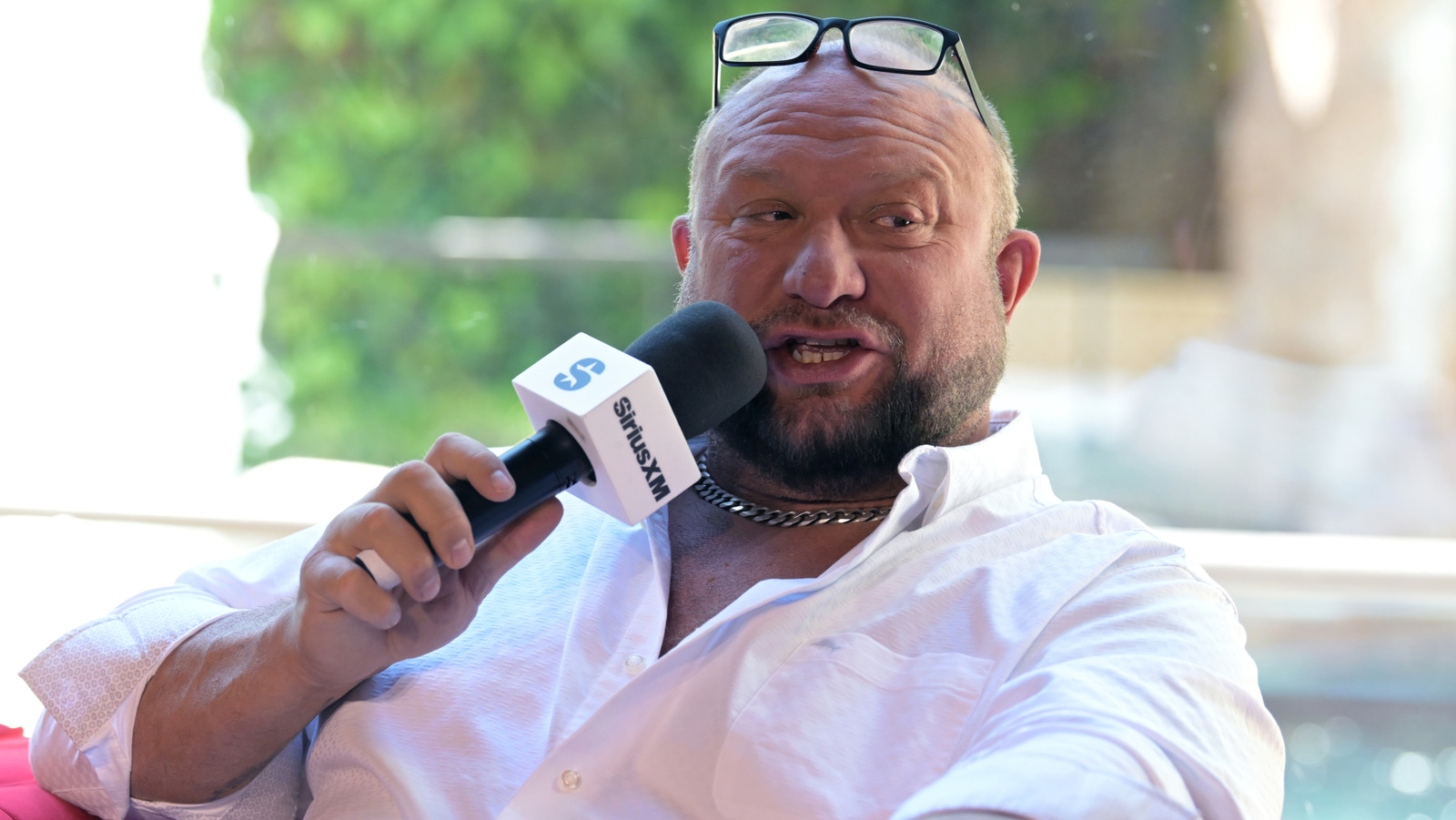
For decades, the thunderous roar of professional wrestling commentary has been a vital element, weaving narratives and amplifying the drama unfolding within the squared circle. While names like Jim Ross, Gorilla Monsoon, and Bobby Heenan are etched into the pantheon of broadcast greats, often drawing widespread acclaim for their distinct styles and evocative calls, a different perspective emerges from a veteran who has navigated the treacherous waters of the industry for years. Bully Ray, a multi-time world champion and a respected voice in wrestling discussions, has put forth a bold assertion that might surprise many: Vince McMahon, the architect of modern sports entertainment, was, in his opinion, the greatest announcer of all time. This isn’t to say McMahon was the most technically proficient in terms of play-by-play calls, but rather that his unparalleled understanding of the narratives he himself crafted allowed him to deliver a uniquely compelling broadcast experience.
McMahon’s tenure at the microphone predates his iconic "Mr. McMahon" persona by a significant margin. For approximately a quarter of a century, he was the primary voice guiding audiences through the unfolding spectacles of World Wrestling Federation events. Before the boisterous character work and the polarizing heel turns, there was a different Vince McMahon, one whose voice was synonymous with the action, albeit with a distinctive flair that often diverged from the traditional play-by-play mold. Bully Ray’s argument hinges on a crucial distinction: McMahon’s ability to tell stories. He contends that no one, not even the most celebrated announcers, could articulate the intricacies of a wrestling match or a developing storyline with the same authority and insight as the man who was, in essence, the author of those very narratives.
The power of McMahon’s announcing, according to Ray, lay in his intimate knowledge of the characters, their motivations, and the overarching sagas being presented. Because these were his creations, his brainchild, he possessed an intrinsic understanding of the emotional beats and dramatic arcs that were being conveyed. This wasn’t merely reporting on an event; it was actively participating in its presentation from a unique vantage point. He could imbue his commentary with a personal stake, a sense of ownership that translated into what Ray describes as potent "sound bites" and "snippets." These weren’t just random exclamations; they were carefully placed remarks that underscored the emotional weight of a moment, the gravity of a championship match, or the simmering animosity between rivals. McMahon’s voice, therefore, became an extension of the creative engine of the WWF, a conduit through which the intended message of the storylines was delivered with maximum impact.
It’s a perspective that challenges the conventional metrics of wrestling announcing. While commentators like Jim Ross are lauded for their ability to capture the raw athleticism, the visceral impact of a well-executed maneuver, and to convey the excitement of a fast-paced contest, McMahon’s strength lay elsewhere. He wasn’t necessarily focused on the technicalities of a suplex or the precision of a submission hold. Instead, he excelled at emphasizing the why behind the action. Why was this match so important? What were the stakes beyond the championship? Who was the true villain, and who was the wronged hero? McMahon, as the creator of these archetypes and conflicts, could answer these questions with an authenticity that others, no matter how skilled, simply couldn’t replicate. He was selling the drama, the character-driven conflict, and the overarching mythology of the WWF, and his voice was an indispensable tool in that endeavor.
Bully Ray acknowledges that McMahon’s style was indeed "over the top." In an era where wrestling was arguably leaning more towards a theatrical presentation, McMahon’s broadcasting style mirrored that evolution. He wasn’t afraid to be larger than life, to inject a dose of hyperbole, or to adopt a tone that matched the grandiosity of the characters and the events. This can be contrasted with the more grounded, sportscaster-like approach of some other prominent announcers. However, Ray argues that this very flamboyance, when rooted in an understanding of the narrative, became a strength. It allowed him to connect with the audience on an emotional level, to amplify the drama, and to ensure that the core message of the storyline resonated. He could pivot from a moment of intense action to a character-defining monologue with seamless fluidity, a testament to his deep immersion in the creative process.
The wrestling world is replete with talented broadcasters, and Bully Ray is quick to acknowledge this. He mentions Jim Ross as a personal favorite, a sentiment echoed by many wrestling fans and critics alike. JR’s distinctive Southern drawl, his ability to paint vivid pictures with his words, and his genuine passion for the sport have made him a benchmark for wrestling commentary. Ray also gives a nod to other respected figures, including Bob Caudle, a stalwart of the NWA broadcast booth, and Tony Schiavone, a familiar voice across multiple promotions. These individuals represent different eras and styles, each contributing to the rich tapestry of wrestling commentary. However, in Ray’s estimation, none possessed the unique advantage that Vince McMahon held: the author’s insight into his own creation.
The conversation, as reported, also touched upon other perspectives within the wrestling media sphere. Ray’s co-host, Dave LaGreca, for instance, put forth his own favorite, naming Michael Cole as the best play-by-play announcer in professional wrestling history. This highlights the subjective nature of such discussions and the diverse criteria that fans and industry insiders employ when evaluating broadcasting talent. Cole, a veteran of WWE, has evolved from a ringside reporter to a seasoned play-by-play commentator, known for his clear delivery and ability to keep pace with the fast-moving action. His career arc and sustained presence at the commentary table are undeniable testaments to his skill. However, even with Cole’s proficiency, the debate circles back to the fundamental question: what makes an announcer "the best"? Is it the technical execution of play-by-play, the ability to convey excitement, or the power to imbue the broadcast with the deeper meaning of the narrative?
Bully Ray’s argument for Vince McMahon transcends the typical evaluation of an announcer. It delves into the unique symbiotic relationship between a promoter, a storyteller, and a broadcaster. McMahon wasn’t just calling the show; he was a fundamental part of its creation and execution. His ability to project the intended emotional arc of a feud, to highlight the key character motivations, and to make the audience feel invested in the unfolding drama stemmed from his role as the mastermind behind it all. When McMahon announced, he wasn’t merely describing what was happening; he was reinforcing the world he had built, ensuring that every slam, every submission, and every verbal exchange served the larger narrative. This holistic approach, where the announcer is also the architect of the universe being broadcast, is a rare and powerful phenomenon.
Consider the context of McMahon’s era as an announcer. The WWF, under his guidance, was transitioning into a more mainstream entertainment product. The lines between sport and spectacle were blurring, and the emphasis was increasingly on compelling characters and engaging storylines. McMahon’s commentary style reflected this shift. He wasn’t afraid to be a character himself at times, to insert his own personality and opinions into the broadcast, further blurring the lines between observer and participant. This approach, while controversial to some, was incredibly effective in drawing the audience into the world of the WWF. He was a guiding force, an orchestrator of the emotional response, and his voice was the primary instrument.
Furthermore, McMahon’s understanding of what made wrestling work from a business and entertainment perspective was unparalleled. He knew what would get a reaction, what would build anticipation, and what would ultimately drive ticket sales and television viewership. His commentary was a strategic tool, designed to elicit specific emotional responses from the audience. He could build a star with his words, amplify a rivalry with his tone, and create moments of shock and awe with his pronouncements. This wasn’t just about calling a match; it was about managing the audience’s perception and emotional journey. This level of strategic broadcasting, rooted in a deep understanding of the industry’s mechanics, is what sets McMahon apart in Bully Ray’s eyes.
While Jim Ross may be the universally acclaimed voice of wrestling for many, and Michael Cole a highly respected modern-day play-by-play announcer, Bully Ray’s admiration for Vince McMahon highlights a crucial, often overlooked, aspect of wrestling commentary: the profound impact of the creator’s perspective. McMahon’s ability to weave the narrative threads he himself spun into the fabric of the broadcast, to infuse his commentary with an authentic understanding of the characters and conflicts he developed, gave his announcing a unique power and resonance. He wasn’t just a narrator; he was the maestro, conducting the symphony of storytelling with his own voice, and for a seasoned veteran like Bully Ray, that made him the greatest of all time. It’s a testament to the idea that in the theatrical world of professional wrestling, sometimes the most powerful voice is the one that understands the play better than anyone else.