
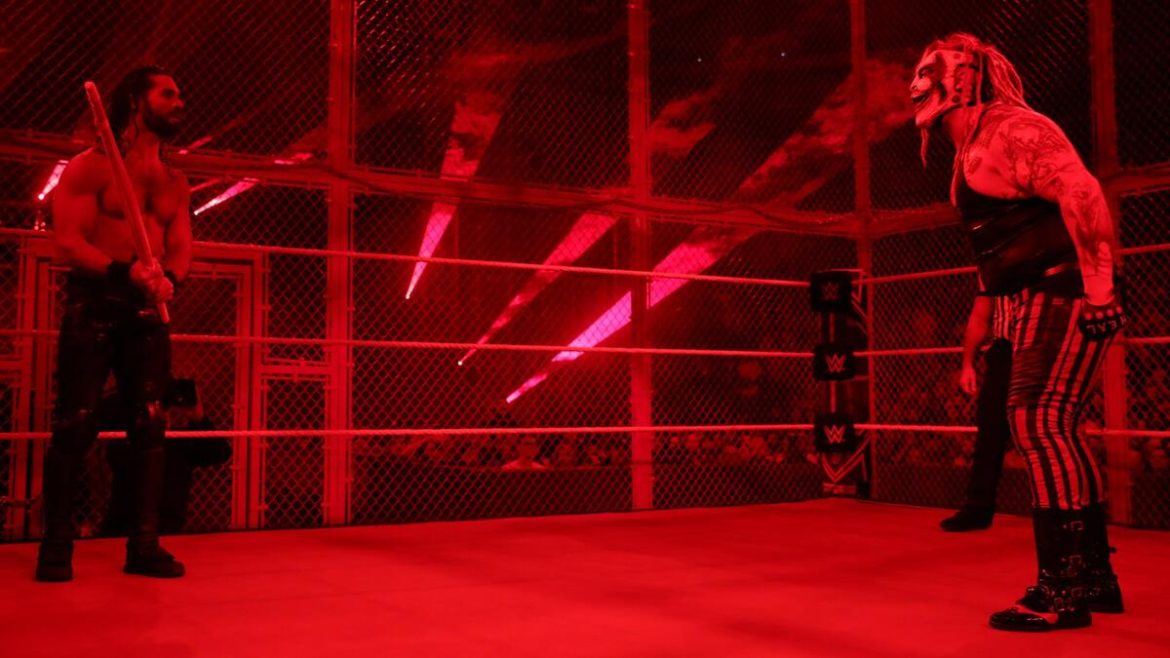
The annals of professional wrestling are replete with moments that define eras, etch themselves into memory, and sometimes, spark fervent debate. Among the most discussed and dissected contests of the modern era remains the Universal Championship clash between Seth Rollins and Bray Wyatt, then embodying his eerie "Fiend" persona, inside the Hell in a Cell structure at the namesake pay-per-view event in October 2019. This match, widely remembered for its deeply divisive conclusion and the visceral negative reaction it elicited from live audiences and digital platforms alike, has recently been brought back into the spotlight through candid reflections offered by Rollins himself. Speaking on a podcast, the esteemed multi-time world champion provided a rare glimpse into the intense circumstances surrounding that notorious night, suggesting that the full scope of what transpired, both in front of and behind the curtain, is largely misunderstood and, if fully revealed, might evoke a different sentiment from the fanbase.
The Hell in a Cell match has always carried a certain mystique, a promise of brutality and definitive resolution. Introduced in 1997, the formidable steel cage, originally designed to enclose the ring and its immediate surroundings, served as the ultimate arbiter, preventing outside interference and forcing competitors to confront their demons, often quite literally, within its unforgiving confines. Classic encounters featuring Shawn Michaels and The Undertaker, or Triple H and Cactus Jack, cemented its legacy as a career-defining, often career-shortening, crucible. Over the years, however, the structure’s potency, much like many established wrestling tropes, underwent a period of perceived dilution. The transition from a rare, intensely personal feud-ender to an annual themed pay-per-view event meant that not every rivalry could genuinely warrant such an extreme setting, leading to instances where the narrative stakes didn’t quite align with the formidable environment. This shift in booking philosophy, coupled with an evolving audience expectation for escalating violence tempered by contemporary safety protocols, set a complex stage for any contest held within the demonic structure.
Seth Rollins, at the time, was positioned as the Universal Champion, a prominent figurehead for the company, carrying the burden of being "The Guy." His journey to this point had been marked by incredible highs, from his days as a member of The Shield, through his shocking Money in the Bank cash-in at WrestleMania 31, to his reign as a dominant world champion. By 2019, Rollins had cultivated a reputation as one of the most consistent and reliable performers on the roster, capable of delivering stellar matches and captivating audiences with his athleticism and evolving character work. His persona, however, was in a transitional phase. Having been lauded as a heroic babyface, the audience’s perception of him was beginning to waver, a phenomenon not uncommon for top-tier stars who remain in the main event picture for extended periods. The pressure to maintain his standing, to consistently headline major events, and to deliver unforgettable performances weighed heavily on the champion.
His opponent, Bray Wyatt, was a performer of unparalleled creativity and innovation. Wyatt had, for years, captivated audiences with his cult leader persona, delivering cryptic promos and leading his "family" through a series of memorable storylines. However, by 2019, he had undergone a radical metamorphosis, unveiling "The Fiend" – a truly unique, horror-inspired character that transcended traditional wrestling gimmicks. The Fiend was an unstoppable, supernatural entity, impervious to pain and imbued with a terrifying, almost otherworldly presence. His entrance alone was a spectacle, and his matches were less about traditional wrestling exchanges and more about psychological warfare and visceral, almost cinematic, storytelling. This character presented an unprecedented challenge for WWE’s creative team: how do you book an unstoppable monster without making your top champions look weak, and how do you maintain the character’s mystique when it’s forced into traditional wrestling scenarios?
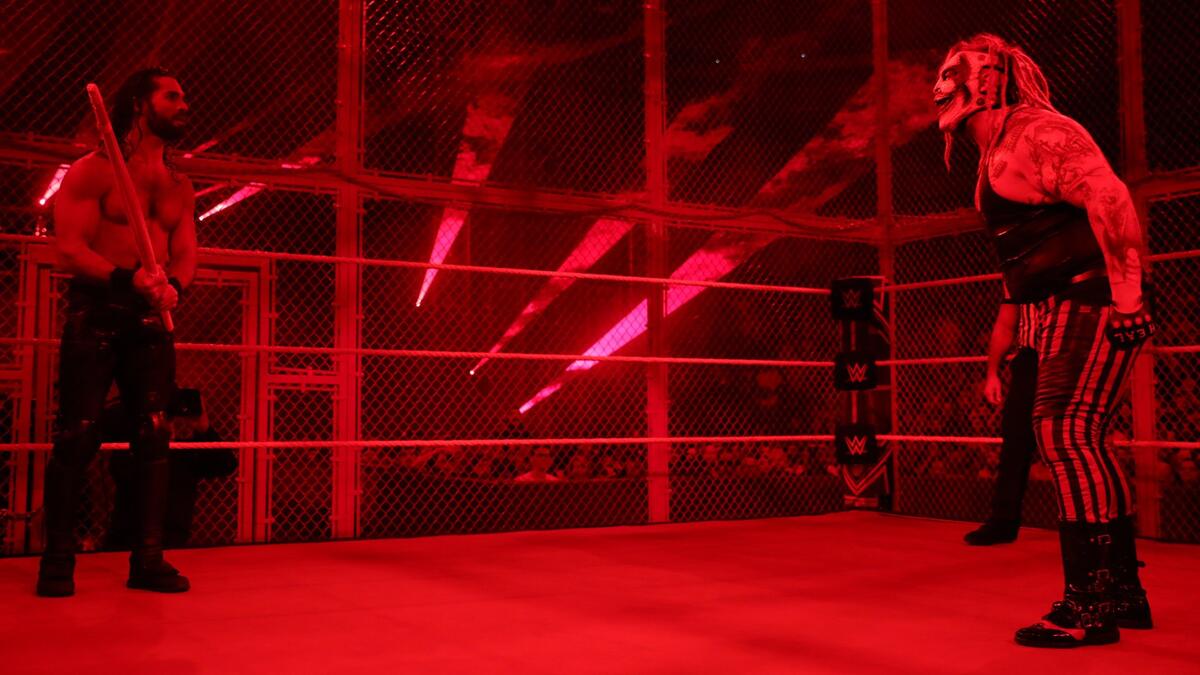
The feud leading into Hell in a Cell 2019 was fraught with these creative tensions. The Fiend had targeted Rollins with relentless psychological assaults, appearing and disappearing at will, leaving the champion increasingly unnerved. The narrative painted Rollins as a man pushed to his breaking point, forced to confront a seemingly unbeatable force of evil. The stakes were clear: Rollins needed to defend his championship and, arguably, his sanity, against a being that operated outside the conventional rules of combat. The expectation for their Hell in a Cell match was immense. Fans anticipated a brutal, definitive encounter that would either solidify Rollins’ reign by overcoming the ultimate monster or cement The Fiend as the new, terrifying face of the company. The narrative demanded a clear victor, a decisive moment that would justify the intensity of the rivalry and the unforgiving nature of the Cell itself.
As the ominous red glow bathed the arena, signaling the start of the main event, the atmosphere was electric with anticipation. The match began with the expected intensity, with Rollins attempting to use traditional wrestling offense against The Fiend, only to find it largely ineffective. The Fiend, true to his character, absorbed punishment, shrugging off chair shots and even a Pedigree, rising almost immediately. Rollins, growing increasingly desperate, escalated his offense, employing kendo sticks, steel chairs, and eventually, a ladder and a toolbox. The commentary team emphasized Rollins’ increasing frustration and willingness to do whatever it took to keep The Fiend down. The match reached its contentious climax when Rollins, after a relentless barrage of stomps and a final, brutal assault with a sledgehammer to a prone Fiend, was unable to secure a pinfall. Instead, the referee, citing "excessive violence," called for the bell, effectively stopping the match.
The immediate reaction from the live audience was a deafening chorus of boos. Chants of "AEW!" and "Restart the match!" reverberated through the arena. Fans felt robbed of a definitive conclusion, believing the match had been overbooked and the integrity of the Hell in a Cell concept compromised. The decision to stop a no-disqualification match due to "excessive violence" was widely seen as contradictory and unsatisfying. The crowd’s ire was directed squarely at Rollins, who, despite being the valiant babyface defending his title against a monstrous foe, found himself the unwitting recipient of overwhelming fan negativity. This moment marked a significant turning point in Rollins’ character trajectory, initiating a period where he struggled to reconnect with the audience, eventually leading to his "Monday Night Messiah" heel turn. For The Fiend, while he technically didn’t lose, the finish created an awkward precedent for his invincibility and led to further creative challenges in maintaining his unique aura without alienating the fanbase.
Reflecting on this polarizing event years later, Seth Rollins offered a perspective rooted in the complex realities of professional wrestling. He recently shared insights, stating his profound wish that the backstage environment during that specific period, leading up to and immediately following the Hell in a Cell match, had been extensively documented. Rollins articulated a belief that if the public had access to the full story – the internal discussions, the creative pressures, the emotional toll on the performers – their perception of the outcome might shift from outright condemnation to a more nuanced understanding, perhaps even empathy. He alluded to an "awful scenario" that unfolded for both himself and his late opponent, Windham Rotunda (Bray Wyatt), suggesting that the external perception of the event is far removed from the intricate, often challenging, behind-the-scenes realities that shaped it.
The pressure on main event performers in WWE is immense. Not only are they expected to deliver compelling in-ring performances, but they are also integral cogs in a larger storytelling machine, often tasked with executing creative visions that may not always align with their personal preferences or the audience’s expectations. The Hell in a Cell 2019 match was a prime example of a scenario where conflicting objectives likely clashed: the need to protect the unstoppable nature of The Fiend, the imperative to keep the Universal Championship on a top babyface, and the challenge of delivering a satisfying, yet safe, main event. Rollins’ comments imply that both he and Wyatt were navigating a difficult situation, trying to make the best of a challenging creative directive. The decision to stop the match, rather than allow a clear finish, was likely a last-minute compromise or a creative choice intended to serve a larger, albeit ultimately misguided, purpose.

Rollins’ defense of Bray Wyatt’s legacy is particularly poignant given Wyatt’s tragic passing in August 2023. Wyatt was a visionary, a performer who consistently pushed the boundaries of character work and storytelling. His "Fiend" persona, despite the booking challenges, resonated deeply with a segment of the audience and demonstrated his unparalleled ability to reinvent himself and captivate imaginations. Rollins’ remarks underscore the mutual respect and camaraderie that existed between the two competitors, despite the on-screen animosity and the contentious nature of their feud. He expressed a desire to have worked with Wyatt again, to have had another opportunity to craft a better, more satisfying narrative that showcased their chemistry and talent without the constraints that marred their Hell in a Cell encounter. This sentiment highlights the professional pride wrestlers take in their craft and the desire to leave audiences with truly memorable, positively received moments.
The bond between performers, often forged through shared experiences and the unique demands of the industry, runs deep. Rollins’ words serve as a testament to the character of Windham Rotunda, portraying him as someone who was genuinely bothered by the negative reception of that particular match. It suggests that even for a performer embodying a seemingly unfeeling monster, the impact of audience feedback and the desire to deliver a quality product weighed heavily. For Rollins, speaking out now is not just about defending his own actions or the creative choices made; it’s also about honoring a fallen colleague and ensuring that his complex legacy is understood through a lens of empathy and context, rather than solely through the prism of a single, controversial match.
In hindsight, the Hell in a Cell 2019 match stands as a fascinating case study in professional wrestling booking and fan psychology. It demonstrates the delicate balance required to satisfy a passionate audience while navigating the complexities of character protection, championship reigns, and evolving storytelling paradigms. Rollins’ recent reflections illuminate the human element often overlooked in the post-match dissection: the performers themselves, caught between creative directives, audience expectations, and their own professional aspirations. His call for empathy, particularly in defense of Bray Wyatt, serves as a powerful reminder that behind every controversial moment in the squared circle, there are individuals grappling with pressures and circumstances that are rarely fully visible to the outside world. The memory of that night might forever be tinged with boos and frustration, but Rollins’ words encourage a deeper consideration, urging fans to look beyond the surface and appreciate the untold story of two dedicated performers striving to deliver, even when the deck was stacked against a universally satisfying outcome. The desire for a second chance, a redo that could erase the sour taste, speaks volumes about the enduring commitment to their art and the profound bond between wrestlers, even those on opposing sides of a deeply divisive rivalry.


