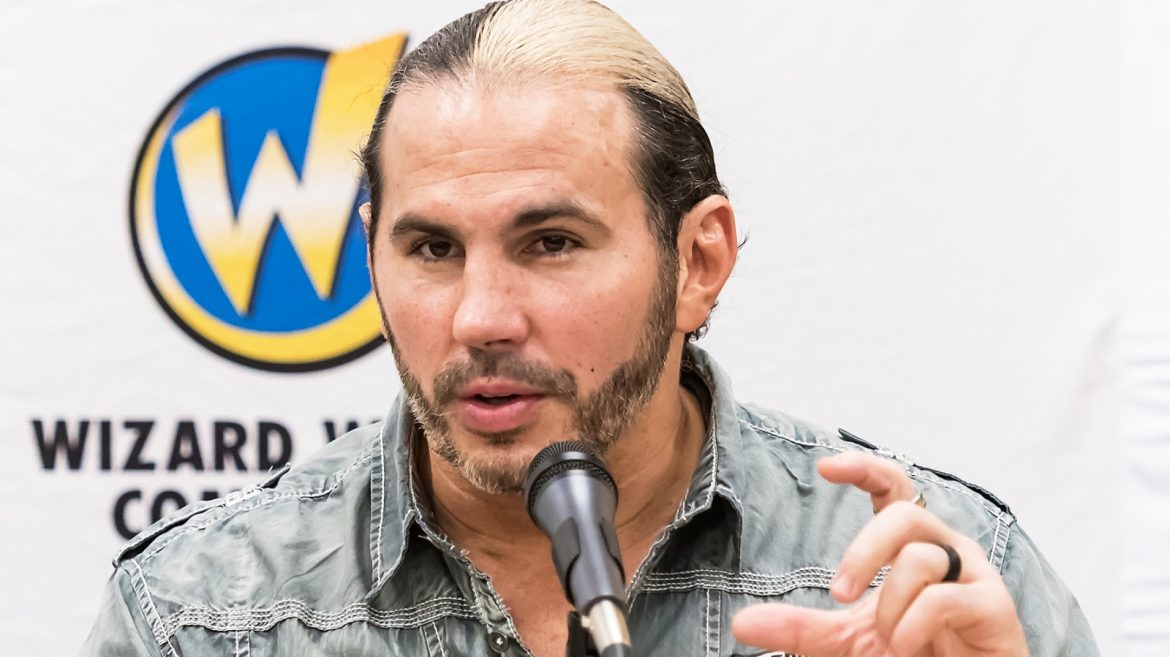
In the ever-evolving landscape of professional wrestling, where spectacle often eclipses substance and raw athleticism can overshadow the intricate dance of character development, it’s rare to find a veteran voice championing the nuanced art of storytelling. Yet, Matt Hardy, a man whose own career has been a masterclass in reinvention and narrative longevity, has recently offered a compelling perspective on a former AEW World Champion, suggesting that his contributions to the narrative fabric of professional wrestling are significantly undervalued. The subject of Hardy’s praise is none other than the acclaimed "Cleaner," Kenny Omega, a performer whose in-ring exploits have often dominated the conversation, sometimes to the detriment of appreciating his deeper narrative capabilities.
Hardy, speaking on his widely respected podcast, "The Extreme Life of Matt Hardy," addressed the question of Omega’s potential to reclaim the AEW World Championship. While acknowledging the significant health challenges that have intermittently sidelined the Japanese wrestling icon, Hardy’s response transcended mere physical resilience. He posited that Omega possesses a far greater aptitude for constructing compelling narratives, both within the confines of a single match and on a broader, overarching storyline level, than is often credited by fans and critics alike. This assertion challenges the prevalent perception of Omega as primarily an in-ring technician, a virtuoso of the high-impact, breathtaking athletic contest, and instead highlights a more cerebral, strategic approach to his craft.
The wrestling world has, for years, been captivated by Kenny Omega’s unparalleled ability to deliver five-star classics. His matches, particularly during his tenure in New Japan Pro-Wrestling and his initial run in AEW, were often characterized by their intricate sequences, innovative offense, and relentless pacing. These performances cemented his reputation as one of the greatest wrestlers of his generation, a performer who consistently pushed the boundaries of what was thought possible within the squared circle. However, Hardy’s observation suggests that this singular focus on Omega’s athletic prowess has, perhaps, obscured the subtler, yet equally vital, elements of his character and storytelling.
Hardy elaborated on this point, suggesting that while Omega is undeniably known for the "die-hard style" – a moniker often associated with the intense, hard-hitting matches popularized in Japan – his capacity for crafting broader, more encompassing narratives is often overlooked. This distinction is crucial. The "storytelling in the ring" Hardy refers to is the organic progression of a match, the ebb and flow of momentum, the selling of offense, and the building of drama within a single contest. Omega excels at this, weaving a compelling yarn through his physical performance. But Hardy is speaking to a different, perhaps more profound, level of narrative construction: the ability to imbue a character with depth, to create motivations that resonate with an audience, and to guide a storyline towards a satisfying conclusion, even beyond the immediate gratification of a spectacular match.
Consider Omega’s career trajectory. While his in-ring performances have consistently been lauded, his character work, particularly his "Cleaner" persona, has always possessed an underlying darkness and a sophisticated, almost theatrical, presentation. The meticulousness with which he crafted his entrance, his mannerisms, and his post-match pronouncements all contributed to a larger-than-life character that transcended mere athleticism. He presented himself not just as a great wrestler, but as an elite being, a force of nature, and a purveyor of a unique brand of wrestling perfection. This persona, while sometimes understated, was a deliberate narrative choice, a carefully constructed layer that added significant depth to his championship reigns and his major feuds.
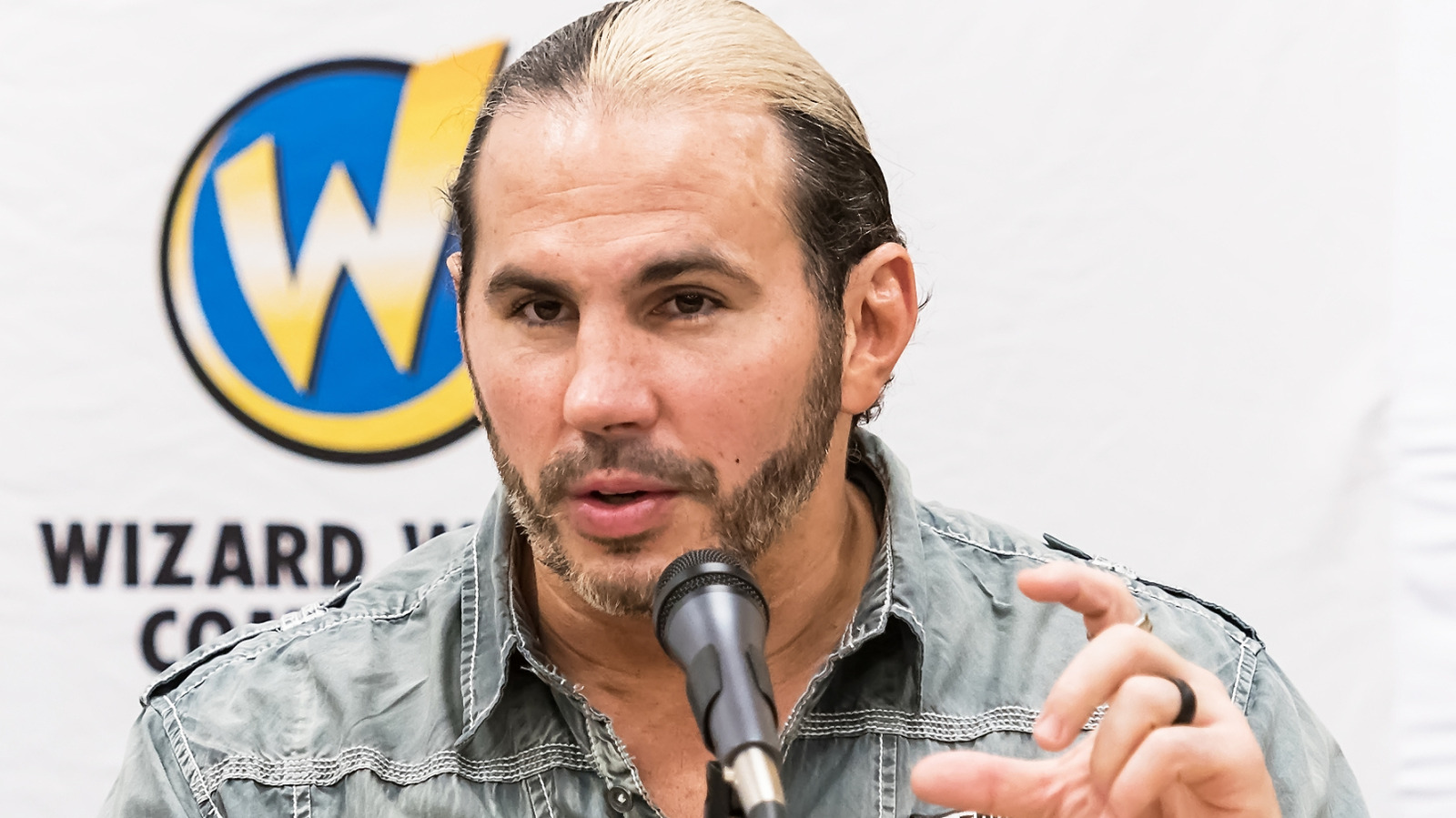
Hardy’s perspective is particularly valuable given his own extensive experience in professional wrestling. Having navigated multiple eras and promotions, from the Attitude Era of WWE to TNA’s burgeoning national presence and now AEW, Hardy has witnessed firsthand the evolution of wrestling storytelling. He himself has undergone numerous character transformations, from the brash "Hardy Boyz" member to the enigmatic "Broken" Matt Hardy, a character that became a cultural phenomenon precisely because of its unique narrative arc and surreal storytelling. His understanding of how to build a character, develop a feud, and connect with an audience on an emotional level is deeply ingrained. When a veteran of Hardy’s caliber speaks about another performer’s storytelling abilities, it carries significant weight.
The former AEW Champion’s championship reigns, particularly his record-breaking tenure as AEW World Champion, were not solely built on a series of memorable matches, although those were certainly present. They were also underpinned by compelling rivalries against performers like Jon Moxley, Bryan Danielson, and Adam Page. In each of these feuds, Omega brought a distinct narrative flavor. Against Moxley, it was a clash of contrasting styles and philosophies, a brutal, no-holds-barred war. Against Danielson, it was a battle of technical wizards, a chess match played out with fists and suplexes. And his legendary feud with Adam Page was a masterclass in long-term storytelling, building towards a cathartic, emotionally charged climax. Hardy seems to be suggesting that Omega’s contributions to these narratives, his ability to sell the importance of the feud and his character’s place within it, are sometimes taken for granted, overshadowed by the sheer brilliance of his in-ring output.
Hardy’s advice on how Omega should be utilized further emphasizes this point. He advocates for a more strategic deployment of the star, suggesting that Omega should be used sparingly, making his appearances feel more significant and special. This approach is not about diminishing Omega’s talent, but rather about maximizing the impact of his narrative presence. When a performer is presented as a rare commodity, their actions and their words carry greater weight. This strategy, often employed for performers of immense caliber, allows their feuds and their matches to feel like major events, building anticipation and investing the audience more deeply in the unfolding storyline. It suggests that Omega’s unique blend of in-ring excellence and narrative potential is best showcased when it’s not overexposed, allowing the "storytelling" aspect to breathe and resonate more powerfully.
The "die-hard style" Hardy mentions is, in many ways, a double-edged sword for performers like Omega. It attracts a dedicated fanbase that appreciates the sheer physicality and technical complexity of their matches. However, it can also create a perception that these performers are solely focused on the in-ring product, potentially neglecting the more traditional elements of character work and long-term narrative arcs that have defined wrestling for decades. Hardy’s comments serve as a gentle reminder that Omega is a more well-rounded performer than that narrow perception allows. He possesses the intellect and the foresight to weave narratives that extend beyond the bell, creating a more complete and satisfying wrestling experience for the audience.
The current landscape of professional wrestling, particularly in AEW, is undergoing a period of intense scrutiny and evolution. With the rise of new stars and the constant demand for fresh storylines, the importance of performers who can consistently deliver engaging narratives becomes even more pronounced. Kenny Omega, despite his recent battles with injury and his current positioning outside the immediate world title picture, remains one of AEW’s most valuable assets. His return to contention, as Hardy suggests, would be a significant event. But for that return to be truly impactful, it needs to be coupled with a narrative that leverages his full skillset, including his often-underestimated storytelling prowess.
Hardy’s endorsement of Omega’s narrative abilities is not just a personal opinion; it’s a testament to a broader understanding of what makes professional wrestling truly compelling. It’s the combination of breathtaking action and believable characters, of thrilling contests and engaging storylines, that captures and holds the audience’s attention. Kenny Omega, by Hardy’s assessment, has the capacity to excel in both arenas, and it’s time that his contributions to the narrative side of the business receive the recognition they deserve, allowing fans to appreciate the full depth of "The Cleaner’s" artistry. The potential for another championship run is certainly there, but it’s the integration of his narrative vision that could elevate it beyond just another title reign, transforming it into a truly memorable chapter in AEW history.