
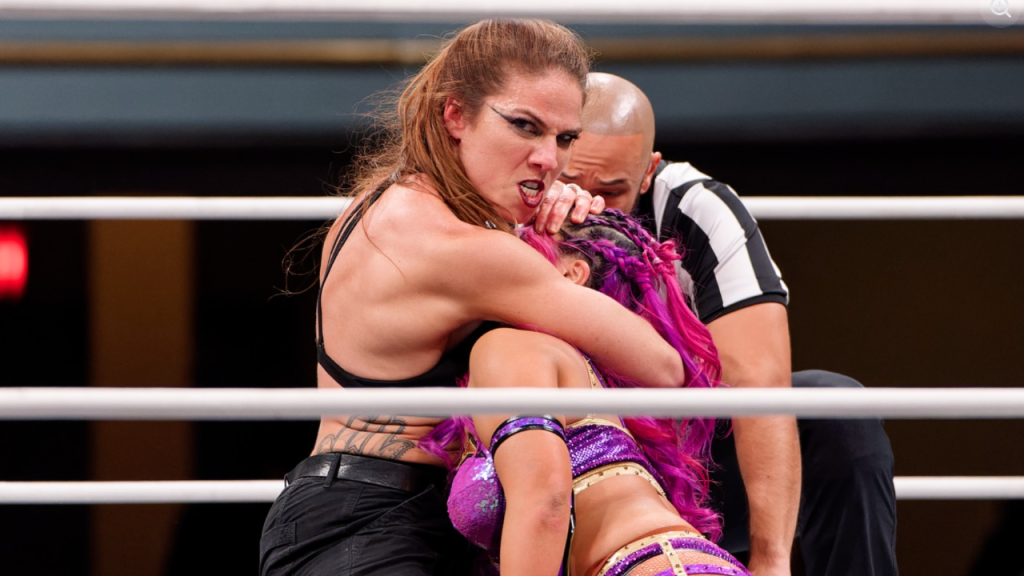
Marina Shafir’s journey to the squared circle is a testament to resilience, a refusal to conform, and a deep-seated understanding of her own formidable presence. Emerging from the intense crucible of mixed martial arts, where she honed her skills and carved out a significant career before transitioning to the world of professional wrestling, Shafir’s path has been anything but conventional. Her initial foray into the WWE, from 2018 to 2021, was a period of learning and adaptation, marked by infrequent appearances that didn’t fully showcase the raw power and intensity she possessed. It wasn’t until her arrival in All Elite Wrestling that Shafir truly began to find her footing, and more importantly, to define her unique niche within a diverse and dynamic roster.
Shafir’s transition to AEW was met with a degree of anticipation, given her athletic pedigree. However, the early stages of her tenure saw her operating somewhat in the periphery. This period, while perhaps frustrating, allowed her to observe, to strategize, and to identify precisely where her unique skillset could best be applied. The wrestling landscape, particularly within a promotion like AEW that embraces a variety of styles, provided fertile ground for her to cultivate a persona that eschewed the typical bells and whistles often associated with female performers. Her narrative arc began to truly coalesce when she aligned herself with Jon Moxley and the formidable faction known as the Death Riders. This alliance provided a platform, a sense of belonging, and an opportunity to operate within a group that valued grit, intensity, and a no-nonsense approach to competition – qualities that align perfectly with Shafir’s own ethos.
Speaking candidly on "Close Up with Renee Paquette," Shafir articulated her core philosophy and her understanding of her purpose within the wrestling world. Her MMA background is not merely a footnote; it is the bedrock of her wrestling identity. She emphatically rejects the label of a "flashy, flippy toy," a deliberate distancing from performers who rely solely on high-flying acrobatics or intricate sequences. Instead, Shafir proudly embraces the persona of a "GI Jane" type of character, a warrior forged in combat, embodying a raw, unyielding strength. This distinction is crucial to her. She acknowledges that she is "very different from the rest of the roster," and instead of attempting to assimilate or dilute her distinctiveness, she has focused on fortifying it. This self-awareness is a key component of her strategic approach to her career; she understands her strengths and is committed to leaning into them, rather than trying to mimic styles that do not come naturally to her.
Shafir’s declaration that she is "good at fucking people up" is not a boast; it is a statement of fact and a declaration of her intended impact. This visceral, direct approach to competition is precisely what sets her apart. She isn’t interested in elaborate storytelling through dance-like maneuvers; her narrative is conveyed through the sheer force of her physicality and her unwavering resolve. Her objective is to tap into a primal, almost feral aspect of the women’s division, to bring forth a rawness and a messiness that can sometimes be overshadowed by more polished performances. This desire to elicit a "feral, messy, and dirty" response from her opponents, and by extension, from the audience, is what she identifies as her purpose. It is a call to arms for a more unadulterated form of combat within the professional wrestling arena.
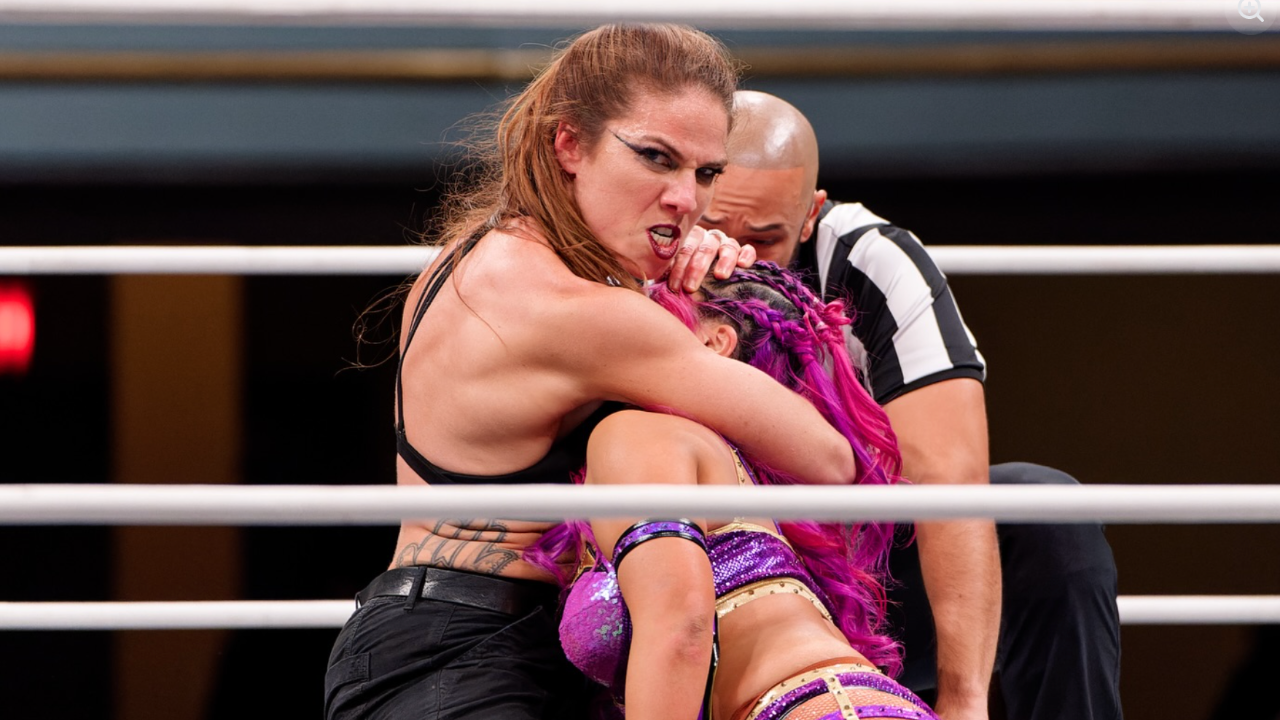
Beyond her prominent role within the Death Riders, Shafir has actively sought out further tag team opportunities, notably forming a partnership with Megan Bayne. This collaborative spirit, while seemingly at odds with her individualistic persona, allows her to amplify her impact and explore different dynamics within matches. Her current involvement in a heated rivalry with Toni Storm and Mina Shirakawa positions her squarely in the spotlight, providing ample opportunity to showcase the intensity and aggressive style she champions. These feuds are not just about wins and losses; they are about establishing dominance and asserting her presence as a legitimate threat within the women’s division.
At 37 years old, Shafir carries the weight of experience and the wisdom of countless battles, both real and simulated. Her reign as the DEFY Women’s Champion, a remarkable tenure spanning over 614 days, serves as undeniable proof of her championship mettle and her sustained impact on the independent wrestling scene. This lengthy reign is not a statistical anomaly; it is a testament to her ability to consistently deliver compelling performances and to hold the attention of a discerning audience. It demonstrates a dedication to her craft and a commitment to holding a top prize with authority. This championship success on the independent circuit provides a valuable foundation and a tangible demonstration of her capabilities, bolstering her credibility as she continues to make her mark on a larger stage.
The MMA background that Shafir brings to wrestling is a significant differentiator. Unlike many who transition from amateur wrestling or other athletic pursuits, Shafir’s combat sports experience is deeply rooted in striking, grappling, and the strategic application of force. This translates into a wrestling style that is characterized by a brutal efficiency, a focus on leverage, and a palpable sense of danger. When Shafir enters the ring, there is an expectation that the match will be a contest of wills as much as a display of athleticism. Her movements are deliberate, often economical, but imbued with an underlying power that can end a contest in an instant. She doesn’t waste energy on unnecessary flourishes; every strike, every hold, is designed to inflict maximum damage and to control her opponent.
This approach often leads to matches that are less about intricate sequences and more about the raw power struggle. Shafir excels at grinding down her opponents, using her strength and grappling acumen to wear them down. Her submissions are often applied with a vice-like grip, designed to elicit a tap-out through sheer discomfort and pain. The intensity she brings is palpable, and it’s this unvarnished authenticity that resonates with a segment of the wrestling audience that craves something more visceral than the typical. She represents a departure from the idealized, often sanitized, presentation of female athletes in some corners of the wrestling world, offering instead a portrayal of fierce, unapologetic strength.
Her association with Jon Moxley and the Death Riders is more than just a stable alignment; it’s a philosophical synergy. Moxley himself is known for his aggressive, no-holds-barred style and his commitment to a grittier form of professional wrestling. Within this group, Shafir finds a natural home where her intensity is not just accepted but celebrated. The Death Riders embody a sense of shared purpose, a collective understanding that the path to victory is often paved with sacrifice and unwavering determination. This environment allows Shafir to fully embrace her "GI Jane" persona without fear of being pigeonholed or misunderstood. She is part of a unit that values the same principles of combat and resilience that she has cultivated throughout her career.

The feuds Shafir is involved in, particularly with figures like Toni Storm and Mina Shirakawa, provide excellent opportunities to showcase the contrast in styles and philosophies within the women’s division. Storm, known for her own tough-as-nails persona, and Shirakawa, representing a different, perhaps more vibrant, aesthetic, offer Shafir the perfect foils to highlight her unique brand of aggression. These rivalries are not just about championship aspirations; they are about establishing dominance and leaving an indelible mark. Shafir’s goal in these confrontations is to impose her will, to break down her opponents, and to prove that her raw power and ferocity are insurmountable.
Shafir’s long-term championship reign in DEFY is a significant achievement and a crucial element of her wrestling narrative. Holding a title for over 614 days signifies a period of consistent excellence and a deep connection with the promotion’s audience. It demonstrates that she is not just a participant but a dominant force, capable of carrying a division and inspiring loyalty. This success on the independent circuit provides a vital proving ground, allowing her to refine her craft and build a dedicated fanbase before making more significant impacts on national television. It’s a testament to her dedication and her ability to connect with audiences on a fundamental level, proving that her unvarnished style has broad appeal.
In essence, Marina Shafir is not just a wrestler; she is a force of nature. Her journey from the MMA octagon to the AEW ring is a compelling narrative of self-discovery and unwavering commitment to her authentic self. She has carved out a space for herself by refusing to compromise her core identity, by embracing her raw power, and by declaring her purpose with unshakeable conviction. Her ambition is not to be another face in the crowd, but to be the one who stands her ground, the one who delivers the decisive blow, the one who embodies the feral, messy, and dirty essence of true combat. In a landscape often dominated by polished presentations, Marina Shafir stands out as a stark reminder of the enduring power of unadulterated ferocity and the profound impact of a warrior who knows her purpose.