When Mark Henry signed a landmark ten-year contract with the World Wrestling Federation in 1996, he was not just another recruit entering the developmental system. He was a genuine American hero, a world-class powerlifter, and a two-time Olympian who possessed a level of raw physical strength that few human beings in history could ever hope to match. However, the transition from the world of competitive weightlifting to the shark-infested waters of the professional wrestling locker room was anything but smooth. During the mid-to-late 1990s, the WWF was defined by a cutthroat backstage culture where veteran talent often tested the resolve of newcomers through relentless hazing, psychological warfare, and physical "ribbing." For a man of Henry’s stature and athletic pedigree, being treated as a secondary citizen by established stars was a recipe for disaster. The tension eventually reached a boiling point during a legendary confrontation involving the most powerful backstage faction of the era, resulting in a moment of genuine peril that nearly altered the trajectory of wrestling history forever.
To understand the gravity of the situation, one must first look at the landscape of the locker room during the New Generation era moving into the Attitude Era. At the top of the food chain was a group known as The Kliq, a tight-knit circle of friends consisting of Shawn Michaels, Kevin Nash, Scott Hall, Triple H, and Sean Waltman. While their influence on the product was undeniable, their reputation for gatekeeping and political maneuvering was equally notorious. To many rookies, they were the ultimate hurdle to clear. Mark Henry, despite his massive frame and legitimate "tough guy" credentials, was viewed as an outsider who had been handed a lucrative contract without "paying his dues" on the independent circuit. This resentment created a volatile atmosphere. Henry was already struggling to adapt to the grueling travel schedule and the nuances of in-ring performance when he suffered a significant setback: a broken ankle. In the world of wrestling, an injury is often seen as a moment of vulnerability, and for certain members of the roster, it was viewed as an opportunity to push the young powerhouse to his limit.
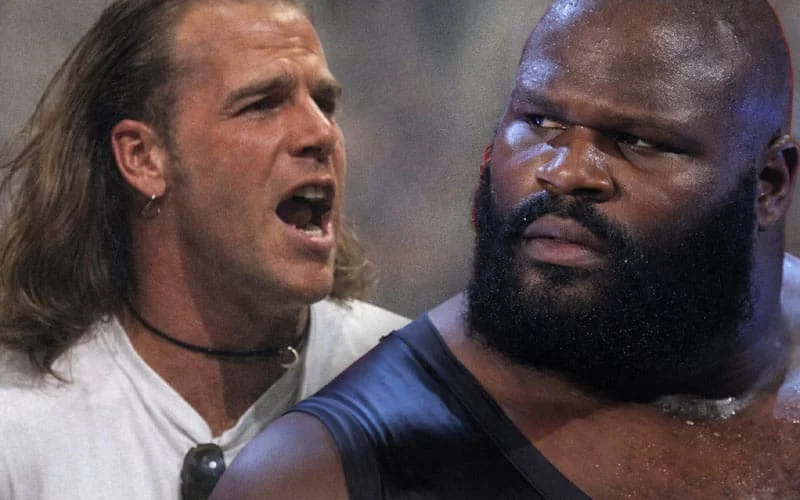
The specific incident that sparked Henry’s legendary meltdown occurred during a television taping where the young Olympian was already at his wit’s end. Dealing with the physical pain of his fractured limb and the frustration of being sidelined, Henry became the target of a particularly cruel prank. Several wrestlers decided to hide his crutches, effectively immobilizing him and forcing him to navigate the backstage area in a state of helpless discomfort. This was not merely a lighthearted joke; it was a targeted act of disrespect toward a man who prided himself on his self-sufficiency and strength. As Henry struggled to find a way to move, he was confronted by a group of the company’s top stars, including Shawn Michaels and his associates. Rather than offering assistance or showing professional courtesy, the veterans began to mock his predicament, leaning into the "hazing" culture that was so prevalent at the time. They underestimated the fact that while Henry was new to the business, he was a man who had spent his life dominating the physical realm and was not accustomed to being bullied.
As the taunting continued, the atmosphere shifted from annoyance to legitimate danger. Henry, who had tried to remain professional despite the constant agitation, finally reached a psychological snapping point. He made it clear to the group, and specifically to Shawn Michaels, that he was no longer interested in playing along with their backstage games. The verbal exchange escalated quickly, with Henry informing the top-tier stars that their status in the company would not protect them from his physical wrath. He issued a chilling ultimatum, suggesting that the sheer number of people surrounding Michaels would not be enough to prevent a catastrophe if Henry decided to retaliate. The intensity of the moment was so palpable that the usual bravado of the locker room evaporated. Henry was not performing a character or cutting a promo for a television audience; he was a legitimate world-class athlete expressing a sincere intent to defend his honor through extreme measures. He even singled out the massive Sid Vicious, indicating that he was prepared to go through the largest men in the room to get to those who had wronged him.
The reaction from the veterans was one of immediate shock and genuine fear. Shawn Michaels, usually known for his confidence and ability to navigate any situation, reportedly realized that he had pushed the wrong man too far. He attempted to deflect the situation by labeling Henry as unstable, calling for others in the locker room to intervene before things turned violent. However, Henry remained steadfast, asserting that his reaction was a direct result of the toxic environment they had created. He made it clear that if he were to be pushed out of the business, he would ensure that those who forced his hand would pay a heavy price. This was a "shoot" moment in every sense of the word, a rare instance where the scripted world of wrestling was pierced by the very real threat of physical harm from a man capable of lifting over 900 pounds. The locker room, which usually thrived on chaos, was suddenly silenced by the realization that they were dealing with a man who had nothing left to lose.
The fallout from this confrontation reached the highest levels of management. Vince McMahon, the chairman of the WWF, was suddenly faced with a massive dilemma. On one hand, he had Mark Henry, a multi-million dollar investment and a potential future superstar who had just threatened the life of the company’s reigning top draw. In almost any other professional environment, such a threat would have resulted in immediate termination and potential legal consequences. However, McMahon also understood the nuances of his locker room. He knew that Henry had been subjected to months of mistreatment and that the "strongest man in the world" had finally been pushed to his breaking point. Instead of firing Henry, McMahon took a more strategic approach. He recognized that Henry needed to be removed from the poisonous atmosphere of the main roster and placed in an environment where he could learn the craft of wrestling with the respect and discipline it deserved.
The solution was to send Mark Henry to Calgary, Alberta, Canada, to train with the legendary Hart family. At the time, Bret "The Hitman" Hart was the antithesis of the Kliq. He valued technical proficiency, respect for the business, and a more traditional approach to locker room conduct. By placing Henry under the tutelage of the Hart family, specifically the patriarch Stu Hart in the infamous "Dungeon," McMahon was effectively saving Henry’s career. The Dungeon was a place of legend, a basement training facility where some of the greatest wrestlers in history had been stretched and broken until they possessed the mental and physical fortitude required for the industry. For Henry, this was a turning point. He was no longer a target for petty pranks; he was a student of the game, learning from a family that viewed wrestling as a sacred craft rather than a playground for political gamesmanship.
During his year in Canada, Henry underwent a total transformation. Away from the distractions and the bullying of the American locker room, he developed the "weaponry" that would define his later years. He learned how to use his immense size and strength effectively, but more importantly, he regained his confidence. Bret Hart, who was also dealing with his own well-documented tensions with Shawn Michaels and the Kliq, took Henry under his wing. This mentorship was crucial. It provided Henry with a blueprint for how a top star should carry themselves—with dignity, skill, and a quiet intensity. Henry has since admitted that if he had not been sent to Calgary, he almost certainly would have walked away from professional wrestling entirely. The constant disrespect from his peers had nearly drained his passion for the sport before he even had a chance to truly begin.
The long-term impact of this incident cannot be overstated. Mark Henry went on to have one of the most remarkable and enduring careers in WWE history, spanning over two decades. He eventually transitioned from the "World’s Strongest Man" rookie to the "Sexual Chocolate" persona, and ultimately to the terrifying "Hall of Pain" era where he became the World Heavyweight Champion. Throughout his journey, he became a locker room leader himself, known for his wisdom and his willingness to help younger talent. He became the very thing his tormentors were not: a respected veteran who used his power to build the business up rather than tear individuals down. The man who once threatened to end the lives of the company’s top stars eventually became one of the most beloved and honored figures in the industry, culminating in his induction into the WWE Hall of Fame in 2018.
Looking back at that explosive night in the locker room, it serves as a stark reminder of how much the wrestling industry has changed. The "wild west" days of the 1990s, characterized by unchecked egos and dangerous hazing rituals, have largely been replaced by a more corporate and professional structure. While the competitive nature of the business remains, the level of personal animosity that led to Henry’s meltdown is far less common in the modern era. The story of Mark Henry and Shawn Michaels is a testament to the fact that even the strongest men have their limits, and that respect is something that must be earned on both sides of the curtain. It also highlights the pivotal role of leadership; Vince McMahon’s decision to send Henry to the Harts rather than cutting ties preserved a legacy that would eventually provide the wrestling world with some of its most memorable moments. Henry’s survival of the Kliq’s gauntlet was not just a victory for him personally, but a victory for anyone who has ever had to stand their ground against those who would seek to diminish them. In the end, Mark Henry didn’t have to kill anyone to prove he was the strongest man in the room; he simply had to outlast them.