The landscape of professional wrestling in early 2026 continues to be a fascinating study of brand loyalty, viral sensations, and the shifting habits of modern television audiences. When the dust settled on the February 3 edition of WWE NXT, the headlines were dominated by a monumental shift in the title picture, yet the numerical data trailing behind the event told a more nuanced story of viewership trends. For months, the buzz surrounding the developmental-turned-third-brand has been centered on its residence on The CW Network, a move that significantly altered the show’s accessibility and demographic reach. On this particular Tuesday night, the program centered its narrative energy on a high-stakes, chaotic scramble for the top prize in the promotion, resulting in a coronation that many fans had been anticipating for nearly a year. However, despite the crowning of a new champion who has become a global pop-culture phenomenon, the total number of fans tuning in via traditional broadcast means saw a noticeable decline compared to the previous week’s performance.
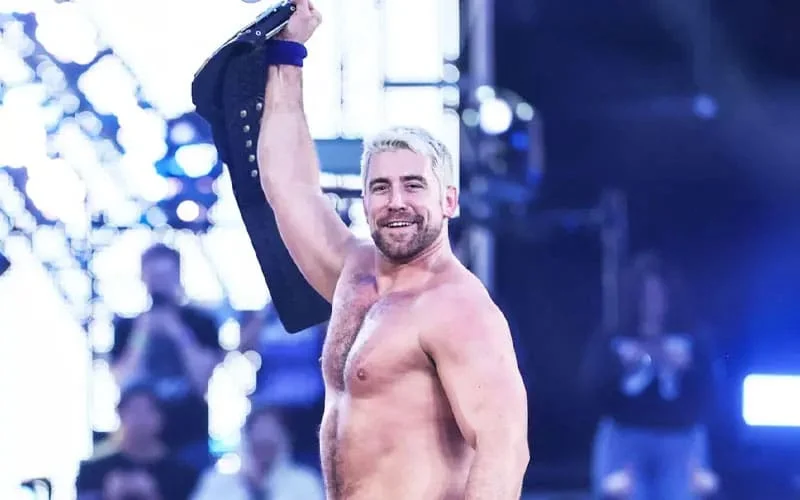
The centerpiece of the broadcast was undoubtedly the crowning of Joe Hendry as the new NXT Champion. To understand the weight of this moment, one must look at the unprecedented trajectory of Hendry’s career over the past two years. Originally a standout in the international circuit and a cornerstone of the TNA Wrestling roster, Hendry’s arrival in the WWE ecosystem represented a groundbreaking era of collaboration between major promotions. His "Believe in Joe Hendry" mantra and viral musical parodies had already cemented him as a household name among the internet wrestling community, but the February 3 episode sought to validate him as a top-tier world champion within the WWE umbrella. The match itself was a grueling seven-man ladder match, a format known for its inherent danger and high-octane spots that typically draw significant eyeballs. In the world of professional wrestling, a ladder match for a vacant or contested title is a "tentpole" attraction, designed to create highlight-reel moments that live on in social media clips for years. Hendry’s victory was a testament to his rising stock, proving that his appeal transcends mere novelty and enters the realm of legitimate main-event status.
Despite the emotional payoff of seeing Hendry climb the rungs and seize the gold, the data provided by linear television tracking told a different tale of audience engagement. The episode averaged 629,000 viewers on The CW, a figure that represents a departure from the momentum established in the final week of January. On January 27, the program had managed to attract 674,000 viewers, meaning that the championship-focused episode saw a loss of approximately 45,000 people. In terms of percentage, this constitutes a 6.7% drop in the total audience. Such fluctuations are common in the volatile world of weekly episodic television, yet they often spark intense debate among analysts who try to reconcile the quality of the on-screen product with the quantitative results of the ratings. The drop suggests that while the "hardcore" audience remains invested in the long-term storytelling of the brand, the "casual" or "fringe" viewers who might have sampled the previous week’s show did not feel compelled to return for the ladder match festivities.
However, the total viewership figure is only one part of the equation that networks and advertisers use to gauge the health of a program. The key demographic, consisting of viewers aged 18 to 49, tells a story of stability amidst the total audience decline. For the February 3 broadcast, NXT maintained a 0.08 rating in this crucial bracket. This number remained completely unchanged from the January 27 episode, indicating that the core audience that advertisers covet most stayed loyal to the product. In the modern era of television, where the median age of linear TV viewers continues to rise, holding a steady rating in the younger demographic is often viewed as a victory by network executives. It suggests that the brand has a "floor" of dedicated young fans who will tune in regardless of the specific matches advertised, even if the total number of older or more passive viewers fluctuates.
It is also vital to consider the technological context in which these numbers are presented. The figures reported for the February 3 episode reflect only those watching on traditional, linear television through The CW’s broadcast signals. They do not account for the vast and growing number of fans who consume NXT content through digital platforms, The CW app, or delayed viewing on various streaming services. In 2026, the traditional Nielsen-style rating is increasingly seen as an incomplete metric. For a brand like NXT, which leans heavily into viral moments and social media engagement, the true reach of Joe Hendry’s title win likely extends far beyond the 629,000 people who watched it live. The "Hendry effect" is often measured in YouTube views, TikTok trends, and digital interactions, which frequently outpace the brand’s traditional television footprint. Nonetheless, for the stakeholders at The CW, the linear numbers remain a primary yardstick for the show’s immediate commercial viability.
Beyond the championship drama involving Joe Hendry, the February 3 episode was bolstered by the strategic return of one of the brand’s most consistent performers, Tony D’Angelo. Known as the "Don of NXT," D’Angelo has carved out a unique niche for himself by blending a classic "tough guy" persona with modern, cinematic storytelling. His return to the screen this week was framed as a calculated move, with the character revealing that his recent absence and subsequent re-emergence were part of a larger, master-planned scheme. D’Angelo’s character work has long been a highlight of the Tuesday night program, providing a narrative depth that complements the high-flying athleticism of the younger roster. By weaving his return into the fabric of the episode, WWE creative attempted to provide a multi-layered show that offered both the spectacle of a ladder match and the intrigue of a long-form character drama. The fact that the ratings dipped despite these significant narrative beats suggests that there may be external factors at play, such as seasonal television trends or competition from other broadcast networks.
Analyzing the 6.7% decrease in viewership also requires a look at the broader calendar. The transition from late January into early February often sees a shift in television viewing habits as sports seasons evolve and mid-season replacements on other networks begin to find their footing. Following a particularly strong showing on January 27, it is possible that the "hook" for the following week was not strong enough to overcome the natural attrition that occurs in a long television season. Furthermore, the ladder match, while prestigious, was a multi-man affair that may have lacked the singular, focused rivalry that typically drives peak ratings. While Joe Hendry is a massive star, the wrestling world is currently in a state of high saturation, and even the most significant title changes can sometimes struggle to break through the noise of the broader entertainment landscape.
The evolution of NXT since its move to The CW cannot be understated. Once a small-scale show filmed in the intimate setting of Full Sail University, the brand has grown into a touring powerhouse that serves as a vital bridge between the independent wrestling scene and the main roster spectacles of Raw and SmackDown. The pressure to perform on a major broadcast network like The CW is immense, as the show is no longer tucked away on a cable niche but is now available in nearly every American household with an antenna. This increased visibility brings both opportunity and scrutiny. When a show sees a week-to-week drop of 45,000 viewers, it becomes a point of analysis for those wondering if the "CW era" of NXT is maintaining its initial luster. However, looking at the history of the brand, NXT has always been a "slow burn" product, relying on the development of new stars over months and years rather than chasing immediate, short-term spikes.
Joe Hendry’s reign as NXT Champion marks a new chapter for the brand, one that embraces the "forbidden door" philosophy of talent sharing and cross-promotion. His victory in the seven-man ladder match is not just a win for him personally, but a signal that WWE is willing to experiment with its championship hierarchy to keep the product feeling fresh and unpredictable. The drop in viewership on February 3 may simply be a minor stumble in a much longer journey. If Hendry can leverage his massive social media following to bring new eyes to the product in the coming weeks, the temporary dip in linear ratings will likely be forgotten. The focus now shifts to how the brand will sustain interest during the "Hendry Era" and whether the calculated maneuvers of characters like Tony D’Angelo can provide the consistent viewership floor that the network requires.
As the wrestling industry moves further into 2026, the metrics for success continue to evolve. While the headline of a 6.7% decline might seem discouraging at first glance, the stability of the 18–49 demographic suggests that the core of the NXT audience is as firm as ever. The challenge for the creative team moving forward will be to translate the viral success of performers like Joe Hendry into consistent, appointment-viewing television that can grow the linear audience back toward the 700,000-viewer mark. With a new champion at the helm and several major storylines brewing in the wake of the February 3 episode, the coming weeks will be critical in determining the long-term trajectory of NXT on its new broadcast home. The numbers may fluctuate, but the ambition of the brand remains clear: to provide a high-energy, unpredictable alternative to the traditional wrestling formula, regardless of how many people are watching through a traditional television set. The true test of Hendry’s championship mettle will not just be his performance in the ring, but his ability to act as a lighthouse for a brand navigating the complex waters of modern media consumption.