The hallowed squared circle of professional wrestling has long been a stage for the extraordinary, a canvas where athletic prowess meets theatrical narrative, culminating in contests designed to push the boundaries of sports entertainment. Rarely, however, does a single match encapsulate the spirit of innovation, the ferocity of a deeply personal rivalry, and the sheer audacity of its promotion quite like the groundbreaking Guitar Case Casket Match that headlined TNA Impact on February 19, 2026. This unique spectacle saw Elijah face off against Mustafa Ali, a clash that promised not just a victory, but a definitive, metaphorical burial of one man’s ambitions at the hands of another. The very concept, a macabre twist on a classic stipulation, spoke volumes about TNA’s commitment to delivering fresh, compelling content, ensuring that this encounter would be etched into the annals of the company’s history as a night of unprecedented action and significant consequence.
The path to this unprecedented main event was paved with a simmering animosity that had been building for weeks, if not months, between two distinct personalities vying for supremacy within the TNA roster. Mustafa Ali, since his arrival, had positioned himself as a self-proclaimed visionary, a man with a "plan" to revolutionize TNA. His rhetoric was polished, his demeanor confident, and his actions often ruthless, supported by a burgeoning entourage known as Order 4, which included the loyal Great Hands and the cunning Agent Zero. Ali’s initial success had been undeniable, capturing the TNA Digital Media Championship and projecting an image of unshakeable dominance. He presented himself as the future, a harbinger of a new era, and anyone who stood in his way was deemed an obstacle to be swiftly removed. His calculated, almost political approach to professional wrestling grated on many, but his results spoke for themselves, making him a formidable force and a compelling antagonist.
Elijah, on the other hand, represented a more traditional, rugged sensibility. A performer known for his resilience, raw power, and an unyielding spirit, he became the antithesis to Ali’s polished, manipulative persona. Their rivalry escalated dramatically following a pivotal encounter at TNA Genesis, where Mustafa Ali secured a significant victory over Elijah. That defeat fueled Elijah’s determination, transforming the loss from a setback into a burning desire for retribution. The Genesis loss was not merely a notch in Ali’s win column; it was a perceived slight, a challenge to Elijah’s very identity within the promotion. For Elijah, this wasn’t just about evening the score; it was about proving that Ali’s carefully constructed "vision" was nothing more than a fragile illusion, capable of being shattered by true grit and unwavering resolve. The stakes had transcended a simple win or loss; they now encompassed pride, respect, and the very narrative direction of TNA itself.
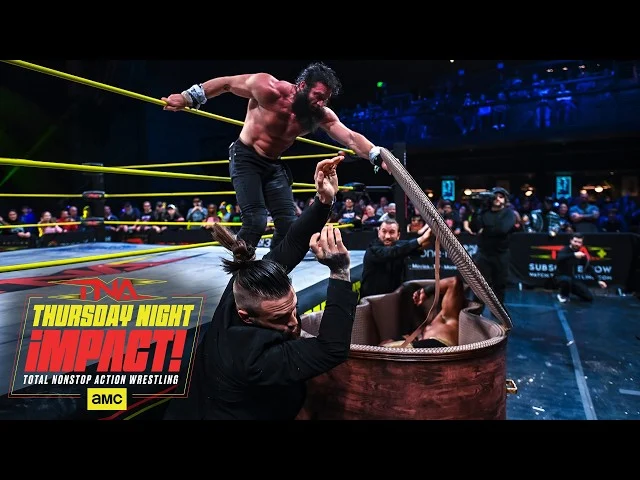
The choice of a "Guitar Case Casket Match" for their ultimate showdown was a stroke of creative genius by TNA, blending the grim finality of a traditional casket match with a distinctly TNA-esque flair. Casket matches themselves have a storied, often eerie, history in professional wrestling, popularized by legends like The Undertaker, whose supernatural aura was intrinsically linked to the dark, imposing wooden box. The objective is simple yet brutal: force your opponent into the casket and slam the lid shut, signifying not just a defeat, but a symbolic interment of their career or aspirations within the context of the storyline. TNA’s decision to modify this classic stipulation, reshaping the casket into an oversized guitar case, added a layer of intrigue and thematic resonance, particularly given Elijah’s musical persona and the potential for a new, memorable visual. It signaled TNA’s intent to honor wrestling’s past while boldly forging its own path, creating moments that resonate uniquely with its audience.
As the February 19, 2026 edition of Impact approached, the anticipation for this main event reached a fever pitch. Director of Authority Santino Marella, recognizing the volatile nature of the feud and Ali’s propensity for external aid, took a decisive step: he formally banned Order 4 from ringside. This decree was intended to level the playing field, ensuring that the two combatants would settle their differences without the usual machinations of Ali’s faction. Marella’s authority, however, had been tested repeatedly by Ali’s brazen disregard for rules and regulations, creating a narrative tension where the effectiveness of his banishment order remained a critical, unspoken question. The stage was set for a confrontation where brute force, cunning, and an element of the unknown would decide the victor.
From the moment the opening bell tolled, the match was a chaotic, brutal affair, instantly living up to the promise of its unique stipulation. The guitar case casket, an ominous presence at ringside, loomed as a constant reminder of the match’s ultimate goal. Elijah, fueled by the Genesis defeat and the weight of expectation, attacked Ali with unbridled intensity. The fight quickly spilled out of the ring, transforming the entire arena into a battleground. One particularly harrowing moment saw Elijah execute a devastating back body drop on Mustafa Ali, sending his rival careening off the stage and crashing onto a pile of unforgiving chairs. This early, high-impact maneuver immediately established Elijah’s dominance and his willingness to inflict maximum punishment, setting a tone of violence and desperation that would permeate the entire contest.
Ali, though, was not one to be easily subdued. His resilience and agility, coupled with his innate sense of timing, allowed him to weather the storm and launch his own formidable offense. He showcased his high-flying prowess with a breathtaking 450 splash, driving Elijah through a strategically placed table, a move that momentarily shifted the momentum and left the TNA faithful gasping. This incredible aerial assault demonstrated Ali’s commitment to winning by any means necessary, pushing his body to the limit in pursuit of victory. However, the momentary advantage Ali gained was quickly overshadowed by the expected, yet still frustrating, interference from his allies. Despite Santino Marella’s explicit ban, Order 4, a collective of Ali’s devoted followers, brazenly ignored the Director of Authority’s ruling and swarmed the ringside area, seizing the opportunity to turn the tide in their leader’s favor.
Agent Zero, a key member of Ali’s faction, wasted no time attempting to secure an illicit victory. With Elijah dazed from Ali’s table-smashing splash, Zero maneuvered the powerful competitor towards the open guitar case casket, intending to load him in and seal the lid, handing Ali the win. But Elijah, ever resourceful, found a desperate, yet effective, countermeasure. From within the confines of the casket, he produced a hidden packet of powder, flinging it directly into Agent Zero’s eyes. The blinding assault bought Elijah precious seconds, allowing him to escape the clutches of the faction and launch into a furious counter-attack. The arena erupted as Elijah, now revitalized and enraged, systematically dismantled Ali’s "goons," showcasing a burst of adrenaline and an unyielding will to fight through the odds. He wasn’t just fighting Ali; he was fighting an entire army.
As the match raged on, the drama intensified with each passing moment. In a subtle yet impactful callback to their Genesis encounter, Tasha Steelz, another associate of Mustafa Ali, emerged at ringside, brandishing a guitar – a clear intent to replicate a previous strategy. Elijah, however, proved to be one step ahead. Displaying incredible ring awareness and a sharp tactical mind, he swiftly snatched Steelz, executing a brutal piledriver that neutralized her threat. In the ensuing chaos, as Ali swung the guitar with malicious intent towards Elijah, the ingenious competitor, with a split-second decision, turned his body, causing the weapon to connect squarely with Steelz instead. This quick thinking not only saved Elijah from further damage but also showcased Ali’s desperation and his willingness to sacrifice his allies in his pursuit of victory.
With Steelz incapacitated and his other cronies scattered, Elijah seized the advantage, delivering a thunderous tombstone piledriver to Mustafa Ali. The crowd roared as Elijah then attempted to hoist Ali into the guitar case casket. Yet, the Great Hands, Ali’s unwavering enforcers, once again intervened, physically preventing the lid from closing. Their interference bought Ali crucial time, allowing him to recover just enough to land a low blow on Elijah, a desperate, underhanded tactic that briefly stalled Elijah’s momentum and reignited a glimmer of hope for the "visionary." The Great Hands, further solidifying their role as Ali’s protective unit, then placed a sturdy door over the casket entrance, creating an additional barrier, a makeshift shield to prevent Elijah from completing his objective.
The Great Hands’ actions, while frustratingly effective in the short term, only served to ignite a deeper fire within Elijah. He regained control of the match, his determination unwavering. With a surge of power, Elijah smashed Mustafa Ali with the guitar that had previously been intended for him, the instrument shattering in a symbolic act of defiance. He then systematically dealt with the remaining interference, hammering the Great Hands off the apron and sending them crashing through a table, a devastating blow that finally cleared the path to victory. With Ali’s support system completely decimated and his path to the casket clear, Elijah delivered the decisive blow: a thunderous chokeslam. The impact sent Ali plummeting through the makeshift door and directly into the waiting guitar case casket. The sight of Ali disappearing into the abyss of the guitar-shaped coffin, his "vision" seemingly extinguished, was a darkly comedic yet utterly satisfying visual for the fans who had witnessed the struggle.
With Ali trapped within, Elijah wasted no time, slamming the lid shut with a resounding thud that echoed through the arena, signaling the definitive end of the contest. The referee’s immediate signal confirmed it: Elijah had won the first-ever TNA Guitar Case Casket Match. The victory was more than just a notch in Elijah’s win column; it was a profound statement. It represented the triumph of perseverance over arrogance, of traditional wrestling grit over cunning manipulation. For Mustafa Ali, it was a humiliating defeat, a symbolic burial of his self-proclaimed "vision" and a significant blow to his standing within TNA. The guitar case casket, once a unique prop, became a vessel for Ali’s shattered ambitions, a testament to Elijah’s unwavering will.
The implications of this match reverberated throughout TNA. For Elijah, the victory solidified his position as a main event player, a resilient force capable of overcoming seemingly insurmountable odds. He had not only defeated Mustafa Ali but had also outsmarted his entire faction, proving that true strength lay not just in power, but in intelligence and an unbreakable spirit. This win undoubtedly propelled Elijah to new heights, opening doors to future title opportunities and even more prominent feuds. It validated his journey and underscored his potential as a top-tier competitor in the company.
Conversely, for Mustafa Ali and his Order 4, the loss was catastrophic. The "visionary" had been exposed, his carefully constructed facade of invincibility shattered. The banishment of Order 4 by Santino Marella, though initially defied, ultimately led to their downfall, highlighting the consequences of undermining authority. Ali’s faction, once a symbol of his power, now seemed vulnerable, their effectiveness questioned after failing to secure a victory for their leader. This defeat could force Ali to re-evaluate his strategies, perhaps leading to an even more desperate and ruthless version of his character, or, conversely, a period of introspection and rebuilding. The TNA Digital Media Championship, which Ali still held, now seemed less a symbol of his dominance and more a consolation prize in the wake of such a significant, humiliating loss.
Beyond the immediate consequences for the two competitors, this match served as a powerful testament to TNA’s creative direction. The company demonstrated its willingness to innovate, to take a classic wrestling stipulation and infuse it with a fresh, contemporary twist that resonated with its audience. The Guitar Case Casket Match was not just a one-off gimmick; it was an example of TNA’s broader commitment to delivering memorable, high-stakes encounters that captivate viewers and leave a lasting impression. In an industry constantly seeking fresh narratives and compelling action, TNA proved that it could deliver on both fronts, pushing boundaries and solidifying its reputation as a promotion that consistently offers a unique and exciting brand of professional wrestling.
In the end, the TNA Impact main event on February 19, 2026, delivered on all fronts. It was a brutal, dramatic, and ultimately satisfying conclusion to a bitter rivalry. Elijah’s triumph in the inaugural Guitar Case Casket Match was a defining moment, a decisive blow against Mustafa Ali’s self-serving agenda. As the guitar case casket was wheeled away, carrying the defeated Ali and his shattered "vision," it was clear that a new chapter had begun in TNA, one where resilience and heart had overcome the machinations of a self-proclaimed revolutionary. The echoes of that final thud, signifying the closing of the lid, would surely resonate through TNA for months to come, a powerful reminder of a night where innovation met intensity, and a competitor’s future was symbolically laid to rest.