The landscape of professional wrestling has undergone a radical transformation over the last decade, shifting from the smoke-filled arenas and territorial television broadcasts of the past into a hyper-connected digital ecosystem where the narrative is often shaped as much by social media interactions as it is by the action inside the squared circle. In this modern era, the line between the private lives of executives and their public-facing personas has become increasingly blurred, leading to unprecedented levels of scrutiny and direct confrontation between industry figures and their critics. At the center of this evolving storm is the ongoing and highly publicized friction involving Nick LoPiccolo and the leadership of All Elite Wrestling, specifically the promotion’s founder and president, Tony Khan. What began as a series of isolated disagreements has spiraled into a complex web of accusations, digital detective work, and the birth of a new lexicon designed to categorize and criticize those who staunchly defend the Jacksonville-based wrestling organization.
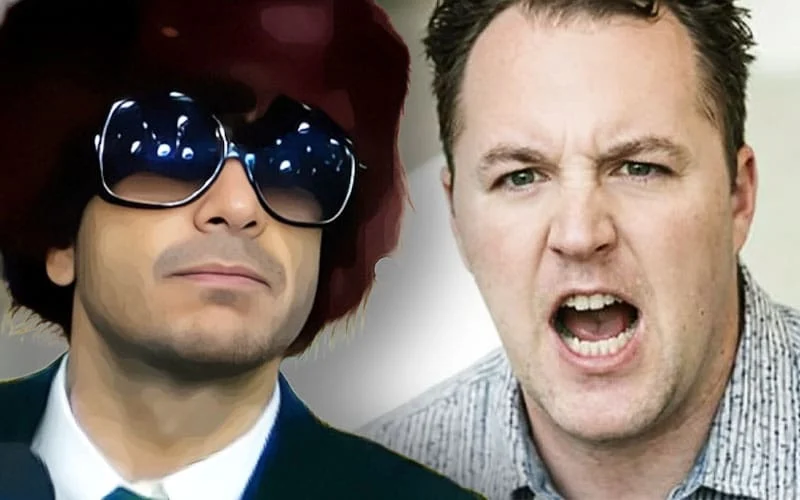
On the second day of February in 2026, this simmering tension reached a new boiling point when LoPiccolo took to social media to further his campaign against what he perceives as a coordinated effort to manipulate public opinion in favor of All Elite Wrestling. The catalyst for this latest escalation was a provocative comparison that seeks to redefine the traditional terminology used to describe wrestling fans and observers. For nearly a century, the term mark has served as a ubiquitous, if sometimes derogatory, label for fans who believe in the scripted drama of the sport or who display an overzealous enthusiasm for the product. However, LoPiccolo suggested that a new era of online discourse required a new classification. He proposed that while traditional wrestling enthusiasts might still fall under the historical umbrella of marks, the specific demographic of individuals who aggressively defend Tony Khan—whom he characterizes as a mixture of automated bot accounts, burner profiles, and unwavering apologists—should henceforth be known as Rons.
This linguistic pivot is not a random choice of names but rather a pointed reference to a deeper conspiracy theory that has plagued the AEW president for several months. The origin of the Ron moniker stems from LoPiccolo’s previous assertions that Khan has personally operated a clandestine social media presence under the pseudonym of Ron. According to these claims, this now-defunct account was used to bolster the promotion’s image, attack detractors, and engage in the kind of granular wrestling debate that would be deemed unprofessional for a high-ranking executive to participate in publicly. LoPiccolo has pointed toward what he describes as suspiciously specific content posted by the Ron account, noting a pattern where the profile’s targets and talking points aligned perfectly with the personal and professional interests of the AEW leadership. By labeling Khan’s supporters as Rons, LoPiccolo is effectively branding them as extensions of this alleged deceptive behavior, suggesting that they are either literal duplicates of the owner or metaphorical clones who parrot a centralized script.
The gravity of these accusations extends far beyond the typical banter found in wrestling forums or on social media platforms. Tony Khan is a man who wears many hats, serving not only as the creative force behind All Elite Wrestling but also holding significant positions within the infrastructure of the Jacksonville Jaguars in the National Football League and Fulham FC in the English Premier League. Because of these cross-industry ties, LoPiccolo’s crusade has taken on a more litigious and formal tone. He has previously gone as far as to involve the NFL and the NFL Players Association in his grievances, tagging these organizations in posts that highlight the alleged use of burner accounts. The implication is that such behavior, if proven true, would reflect poorly on the professional standards expected of a Chief Football Strategy Officer and could potentially violate the ethical guidelines of major sports leagues. This intersection of professional wrestling drama and corporate sports governance has added a layer of complexity to the feud that is rarely seen in the industry, moving the conversation from the realm of kayfabe into the world of corporate accountability.
The specific interaction that led to the coining of the Ron term involved a digital exchange where a user questioned whether the traditional mark label was being phased out in favor of this new identifier. LoPiccolo’s response was an emphatic confirmation, doubling down on his theory that there is a distinct difference between a general fan of the sport and what he views as a manufactured army of online operatives. He estimated that a significant portion of the pro-AEW discourse is driven by a relatively small number of accounts, some of which he believes are shifting between various aliases to create the illusion of a massive, grassroots groundswell of support. This narrative of a bot army is one that Tony Khan himself has touched upon in the past, though from the opposite perspective, having once famously claimed that an independent study suggested a large-scale automated campaign was being used to disparage his company. The irony of these two sides using the same digital-warfare terminology against one another has not been lost on the wider wrestling community.
To understand why this conflict has resonated so deeply, one must look at the psychological state of modern wrestling tribalism. The rivalry between fans of different promotions has always existed, but the advent of social media has weaponized this loyalty. Fans often feel a personal stake in the success or failure of a brand, leading to the formation of online silos where any criticism is viewed as an act of war. LoPiccolo’s introduction of the Ron label is an attempt to weaponize this tribalism back against the promotion. By creating a derogatory term for defenders, he is attempting to delegitimize their arguments by framing them as disingenuous or artificial. It is a tactic designed to shift the power dynamic of online debates, forcing defenders to first prove they are real people with independent thoughts before their opinions on the wrestling product can be taken seriously.
Throughout this ongoing saga, the official response from the All Elite Wrestling camp has been one of strategic silence. Neither Tony Khan nor the promotion’s public relations team has issued a formal statement regarding the burner account allegations or the specific insults lobbed by LoPiccolo. In the world of high-stakes corporate management, this is often the standard operating procedure, as engaging with such accusations can often give them more oxygen and legitimacy than they would otherwise have. However, in the fast-paced world of social media, silence can also be interpreted by critics as a sign of avoidance or even an admission of guilt. This lack of a rebuttal has allowed LoPiccolo to continue his narrative largely unchecked, building a dedicated following of skeptics who are eager to see if any concrete evidence will ever emerge to support the claims of executive-led digital manipulation.
The debate over what constitutes a Ron versus a mark also highlights a broader shift in how wrestling fans consume information. We are living in an era where the behind-the-scenes machinations of the business are often more interesting to the audience than the matches themselves. The fascination with burner accounts, legal filings, and executive conduct is a testament to the fact that the fourth wall of professional wrestling has not just been broken; it has been completely demolished. For a figure like Nick LoPiccolo, the goal appears to be the exposure of what he sees as a fundamental lack of authenticity at the top of the AEW hierarchy. Whether his claims are rooted in reality or are the product of an intense digital rivalry remains a subject of fierce debate, but the impact of his rhetoric is undeniable. He has successfully introduced a new concept into the wrestling vernacular, one that will likely be used by critics of the promotion for years to come.
As the industry moves further into 2026, the repercussions of this digital feud will likely continue to manifest in various ways. If LoPiccolo persists in his attempts to involve major sports organizations like the NFL, it could eventually force a more public confrontation or a legal resolution. For now, the battle remains largely confined to the digital sphere, a war of words fought in the replies and quote-posts of a global audience. The term Ron has become a symbol of this conflict, representing the deep-seated distrust that exists between different factions of the wrestling world. It serves as a reminder that in the age of the internet, a promoter’s reputation is no longer just built on the quality of their shows, but on their perceived honesty and conduct in the virtual space.
Ultimately, the story of Nick LoPiccolo and his crusade against the Rons is a microcosm of the larger tensions currently defining the entertainment industry. It is a story about the power of labels, the anonymity of the internet, and the enduring passion of a fanbase that refuses to be quiet. Whether one views LoPiccolo as a whistleblower seeking the truth or a provocateur looking to stir the pot, his influence on the current discourse is significant. He has tapped into a vein of skepticism that exists within a portion of the audience, giving them a voice and a vocabulary to express their frustrations. As long as the mystery of the Ron account remains unsolved and the digital interactions between promoters and fans continue to be a primary source of news, the shadow of this feud will loom large over the professional wrestling landscape, proving that sometimes the most intense rivalries don’t happen in the ring, but on a smartphone screen.