Monday Night Raw, broadcast on February 9, 2026, served as a crucial waypoint on the long and winding road to WrestleMania. With the Elimination Chamber premium live event rapidly approaching, the flagship show of World Wrestling Entertainment had the significant task of solidifying storylines, advancing feuds, and qualifying participants for the aforementioned Chamber matches. The episode, emanating from its usual broadcast location, delivered a mixed bag of compelling wrestling action, character development, and narrative progression, interspersed with moments that left audiences questioning creative decisions. As the dust settled, it became clear that while certain elements of the show soared, others faltered, leaving a definitive impression on the landscape of WWE programming leading into the company’s biggest event of the year.
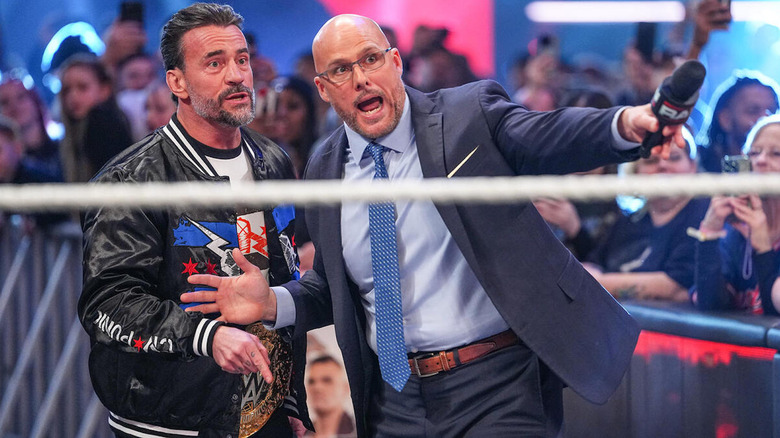
One of the consistent bright spots on any given episode of Raw, particularly in recent memory, has been the portrayal of General Manager Adam Pearce. His tenure as the on-screen authority figure has evolved into a masterclass of sympathetic exasperation. Pearce appears perpetually caught in the crossfire of the locker room’s volatile personalities and increasingly convoluted storylines. This week was no exception. The former NWA Worlds Heavyweight Champion found himself subjected to a barrage of verbal jabs and seemingly impossible situations, a dynamic that has become an unintentional comedic anchor for the show. Whether it was navigating the fallout of a major championship match stipulation or attempting to impose order amidst backstage chaos, Pearce’s beleaguered demeanor and his expressions of sheer bewilderment are a testament to his effectiveness in the role. Unlike the sometimes overly cool disposition of AEW’s Tony Khan or the somewhat chaotic leadership of NXT’s Ava Raine or interim GM Robert Stone, Pearce embodies the quintessential overwhelmed middle manager of professional wrestling. His weekly suffering, while perhaps a source of dismay for him, has inadvertently become a highly entertaining aspect for viewers who appreciate the human element of wrestling’s often fantastical narratives. He absorbs the criticism and the chaos with a palpable weariness that makes the more outlandish moments of Raw feel grounded, even if only by his reactions. This week, his discomfort with the idea that Finn Bálor challenging for the World Heavyweight Championship might somehow diminish the prestige of a WrestleMania main event perfectly encapsulated this. It’s a thankless job, presiding over the madness, but Pearce performs it with a dedication that deserves recognition, making him an unlikely, yet indispensable, pillar of the Raw brand.
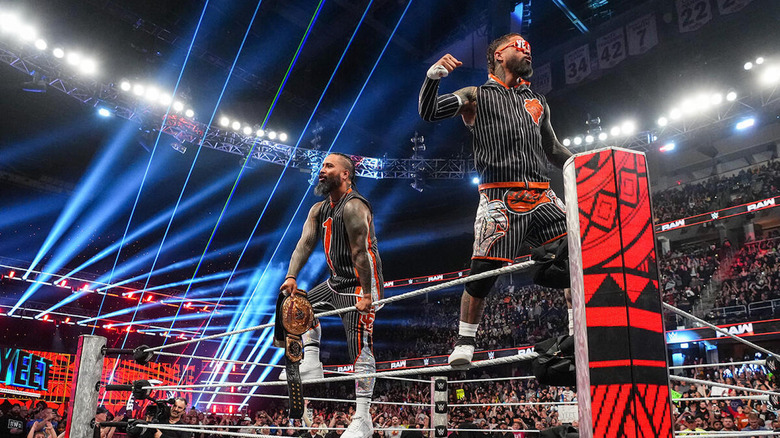
Conversely, a significant point of contention for many viewers was the decision to feature a reigning Tag Team Champion in singles competition for an Elimination Chamber qualifier. Jey Uso, one half of the current World Tag Team Champions alongside his brother Jimmy Uso, was prominently featured in a triple-threat qualifier for the Men’s Elimination Chamber match. While the narrative flexibility of wrestling often allows for such overlaps, this particular instance felt jarring. The Usos had only recently claimed the tag team titles, and their reign had been notably absent from significant defense or storyline development since their December 29th victory over Alpha Academy. This lack of focus on their tag team championship obligations made Jey’s sudden pivot to singles contention feel disconnected. The underlying circumstances of Jimmy Uso reportedly dealing with personal matters likely contributed to this creative shift, a factor that should be acknowledged. However, the execution left much to be desired. It’s a peculiar choice to have a prominent tag team champion, whose current storyline should inherently revolve around the tag division and its championship, suddenly enter a high-stakes singles tournament. The men’s singles division on Raw boasts a plethora of talent, such as the emerging Je’Von Evans or the ever-present Dominik Mysterio, who could have more logically filled this qualifying spot. These individuals could have genuinely benefited from the spotlight and the gravitas of an Elimination Chamber storyline. Furthermore, the visual of Jimmy Uso encouraging Jey to pursue singles glory, rather than focusing on defending their newly won tag team championships, felt incongruous with their established characters and motivations. The entire scenario felt arbitrarily constructed, lacking a cohesive narrative through-line and undermining the importance of the World Tag Team Championship in the process.
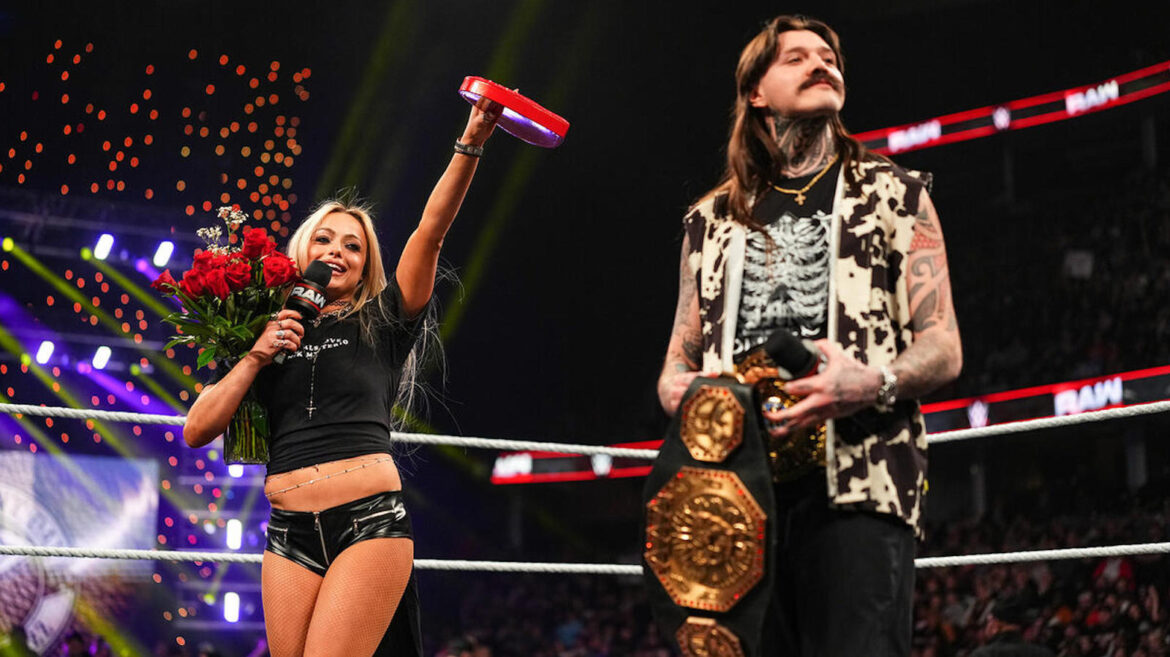
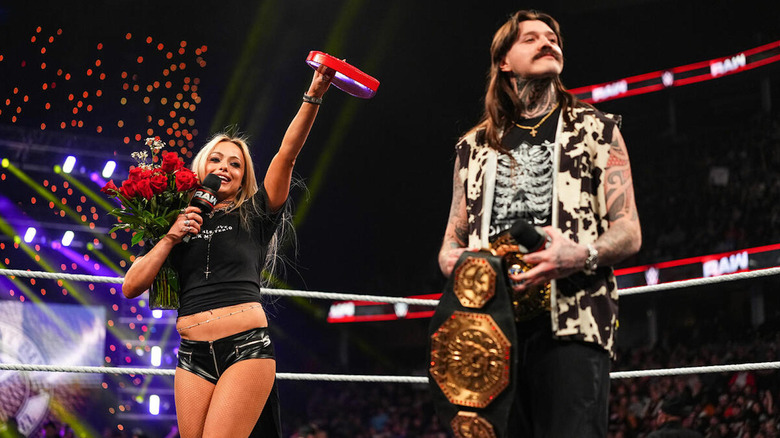
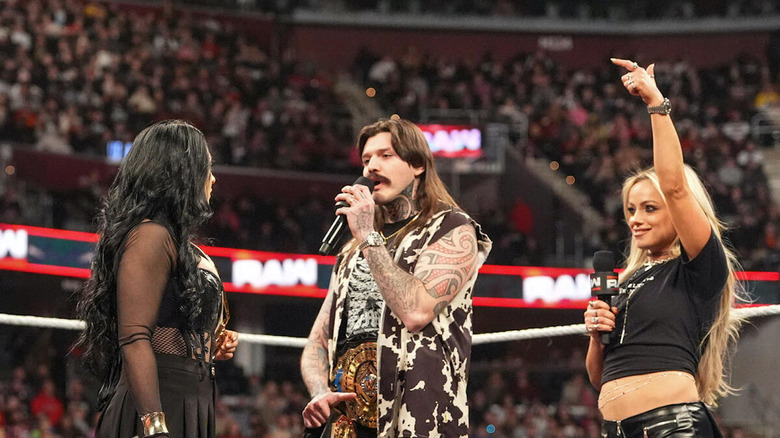
On a more positive note, the segment involving Liv Morgan, Dominik Mysterio, and the emerging contender Stephanie Vaquer offered a refreshing departure from the usual narrative tropes. The build-up had been intriguing, with Morgan hinting at her WrestleMania opponent after a tense confrontation with Jade Cargill on SmackDown. This week, Morgan received romantic overtures from "Dirty Dom" Mysterio in the form of flowers and chocolates, a classic wrestling power play. Her subsequent declaration that both Vaquer and Cargill were afraid to face her, lest they lose their titles, set the stage. The ensuing segment saw Vaquer confront Morgan, leading to a captivating exchange that was elevated by the inclusion of Mysterio. Their brief, yet impactful, conversation in Spanish, which Mysterio pointedly refused to translate for Morgan, added a layer of mystique and authenticity. In an era where cultural representation is increasingly important, this moment felt genuinely innovative. The subsequent physical altercation, culminating in Vaquer slapping Mysterio, injected palpable tension. Morgan’s measured approach to selecting her opponent, acknowledging the need for a substantial build-up to her eventual match at WrestleMania, was also a smart creative decision. With the highly anticipated CM Punk vs. Roman Reigns clash dominating headlines, granting Morgan the time and space to craft a compelling narrative for her championship match is a wise strategy. This approach ensures that both the Women’s Championship and the Women’s World Championship are presented with equal importance, making Morgan’s eventual choice and subsequent championship defense all the more impactful.
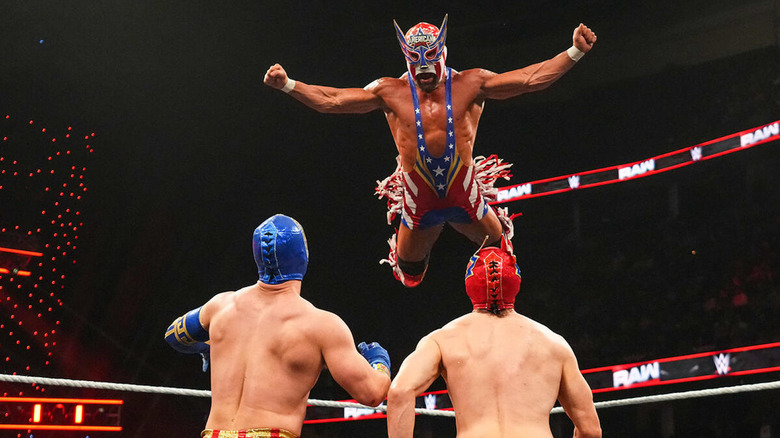
However, the proliferation of the "Los Americanos" gimmick proved to be a significant misstep. The concept, which sees various international wrestlers donning luchador-inspired personas, has been a recurring point of contention for many, myself included. This week’s iteration, featuring Ludwig Kaiser, Tyler Bate, and Pete Dunne as "Americanos" alongside an returning Chad Gable as the original "El Grande Americano," felt particularly egregious. The core issue isn’t the use of masks or the adoption of characters, but rather the perceived parody of lucha libre and Latin culture. The stereotypical accents, the exaggerated rolling of ‘R’s, and the transformation of ‘Y’s into ‘J’s felt less like a creative homage and more like a tasteless caricature. It’s perplexing that WWE would opt for this approach when numerous legitimate luchadors are present within their roster. The narrative surrounding Gable’s return, his entry into the Royal Rumble to eliminate Kaiser, and the subsequent tag team match against Je’Von Evans and an unnamed partner (revealed to be Gable) felt convoluted. While the match itself, featuring talented individuals like Bate and Dunne, wasn’t inherently bad, the overarching story was fundamentally flawed. In the current socio-political climate, where the head of creative’s public stance has been perceived by some as dismissive of the very cultures being parodied, this booking choice felt particularly tone-deaf and insensitive. The potential for a Mask vs. Mask match between Gable and Kaiser, hinted at by their post-match scuffle, only further solidified the problematic nature of the entire segment.
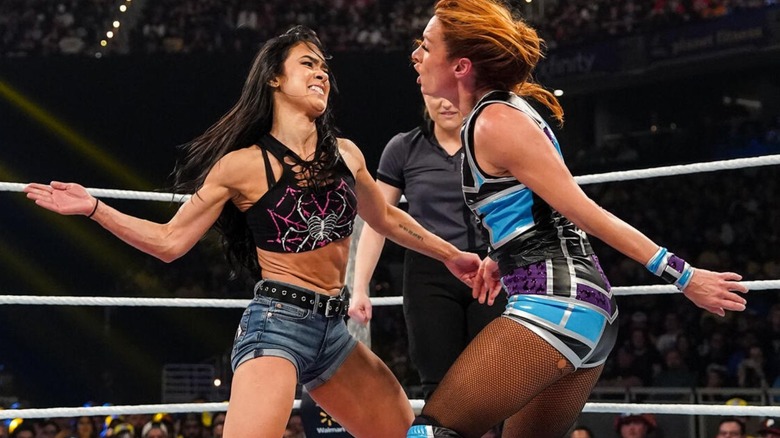
A definite highlight of the evening was the official commencement of the singles program between AJ Lee and Becky Lynch. The anticipation for this feud had been building, especially after Lee’s surprise appearance during CM Punk’s entrance. Lynch’s fiery interruption of Corey Graves’ opening monologue, fueled by her anger over Lee’s return, immediately established the stakes. Lee’s measured response, acknowledging her past victories over Lynch, including a submission at Wrestlepalooza and a role in WarGames, effectively reminded the audience of their history. The verbal sparring between the two was sharp and engaging, culminating in their agreement to a one-on-one contest for the Women’s Intercontinental Championship at Elimination Chamber. This booking decision to hold the championship match at the upcoming premium live event, rather than saving it for WrestleMania, felt strategically sound. It allowed Lee to make her first singles match in over a decade feel significant, being contested for championship gold. While the program is likely to extend through to WrestleMania, having Lynch’s potential first defense against Lee in Chicago, CM Punk’s hometown, adds a layer of narrative intrigue. The possibility of Lee winning in Chicago, further escalating Lynch’s perceived downfall, and carrying that momentum into a WrestleMania clash, presents a compelling long-term story. Regardless of the ultimate booking direction, the initiation of this feud was a welcome development, providing a much-needed focal point for the women’s division and a strong reason for fans to invest in Lee’s return.
On the other end of the spectrum, Natalya’s debut of her new, edgier persona, "Nattie," failed to make the desired impact. Introduced with new, Rage Against The Machine-inspired entrance music, the expectation was for a powerful and dominant showcase. However, her singles match against Maxxine Dupri, while featuring a nascent storyline, lacked the decisive victory needed to establish her new character. Dupri, despite her recent role as Women’s Intercontinental Champion, is not yet positioned as a top-tier threat, and a squash match would have better served to immediately elevate Nattie. The post-match angle, where Nattie seemingly snapped after evading Dupri’s offense and cleared the announce table, felt disjointed. The continuation of the AJ Lee and Dupri storyline, with Lee running down to intervene, further diluted Nattie’s spotlight. Lynch’s subsequent appearance to confront Lee, while continuing their feud, effectively pushed Nattie further to the periphery of her own debut. This complex sequence of events, involving multiple wrestlers and interwoven storylines, ultimately diminished the intended impact of Nattie’s character reveal. While she is slated for an Elimination Chamber qualifying match next week against Bayley and Asuka, the hope for a strong, definitive showing on this night was unfortunately not met. It’s a minor point in the grand scheme of WrestleMania preparations, but for Natalya, a wrestler who has consistently performed at a high level, this missed opportunity for a significant character launch was disappointing.