The landscape of professional wrestling is a constantly shifting tableau, a dynamic canvas where narratives are painted week after week, and the February 10, 2026, broadcast of NXT from the Performance Center in Orlando, Florida, offered a compelling, if somewhat disjointed, glimpse into its current state. While the evening concluded with a dramatic flourish that set the stage for a pivotal women’s championship opportunity, the prevailing sentiment across the two-hour broadcast underscored a deeper concern: the developmental brand’s struggle to consistently cultivate and present its talent as truly significant figures in the wrestling ecosystem. This episode, therefore, became a microcosm of NXT’s ongoing journey, showcasing moments of undeniable brilliance juxtaposed against a backdrop of perceived creative stagnation, all while the critical juncture of Stand & Deliver looms large on the horizon.
At the heart of the night’s most resonant action was the high-stakes tag team main event, a bout that pitted the intriguing, if fractious, duo of Zaria and Sol Ruca, collectively known as Zaruca, against the formidable pairing of Wren QCC and Kendal Grey. The stakes were clear and compelling: the individual who secured the pinfall victory for their team would earn a coveted shot at the NXT Women’s Championship. This stipulation alone injected a palpable tension into the contest, particularly given the simmering animosity between Zaria and Sol Ruca that had been brewing for weeks. Their alliance, born more out of convenience than genuine camaraderie, was always a fragile one, and the match served as the ultimate crucible for their partnership, or lack thereof.
From the opening bell, Zaria’s reluctance to fully commit to her tag team partner was evident. Her movements were precise, her attacks aggressive, but her interactions with Sol Ruca were characterized by a visible disdain. Tags were made with a begrudging slap to the back, tandem maneuvers executed with a palpable lack of synchronization, and moments of potential cooperation often dissolved into individualistic pursuits. This underlying narrative tension was masterfully woven into the fabric of the match, elevating it beyond a mere athletic contest. Zaria, a competitor known for her intense focus and unwavering ambition, clearly viewed Sol Ruca as an impediment, a necessary evil in her pursuit of gold, rather than a genuine ally. Her frustration manifested itself in increasingly overt ways, culminating in a pivotal moment where she physically pulled Sol Ruca off a potential pin attempt, seemingly driven by a desire to secure the victory for herself, or perhaps, a misguided sense of control.
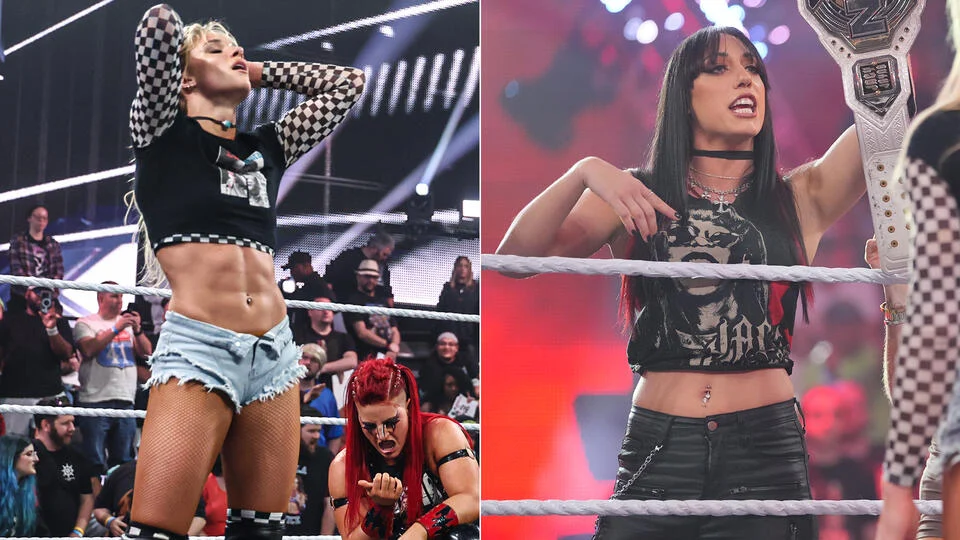
The dramatic climax of the main event was a sequence of events that will undoubtedly be replayed and dissected in the coming weeks. As the match reached its frenetic conclusion, Zaria found herself cornered, colliding with her own turnbuckle. Unbeknownst to her, or perhaps in the heat of the moment, the referee interpreted this contact as a legal tag. As Zaria continued to engage Wren Sinclair, believing herself to be the legal competitor, Sol Ruca, now officially the active participant, seized her opportunity. She unleashed her signature Soul Snatcher maneuver on Kendal Grey, swiftly securing the three-count. The sight of both Zaria and Sol Ruca simultaneously attempting pinfalls on their respective opponents, only for the referee to confirm Sol Ruca as the legal woman and the victor, was a brilliant piece of storytelling. The immediate aftermath was electric. Zaria’s face, contorted in a mask of incandescent fury, told a story of shattered aspirations and simmering resentment. Her nostrils flared, her eyes burned with an almost primal rage, directed not at the opposition, but squarely at the unwitting architect of her frustration, Sol Ruca.
Sol Ruca, meanwhile, found herself thrust into the spotlight, not just as the victor, but as the beneficiary of a chaotic, almost accidental, turn of events. Her win, while legitimate, was shrouded in the controversy of Zaria’s perceived betrayal and the contentious tag. This sets up a fascinating dynamic for her championship challenge. Sol Ruca, with her unique blend of athleticism and an infectious, if sometimes naive, exuberance, has been steadily building momentum within the women’s division. Her "Soul Snatcher" finisher, a visually striking and impactful move, has become a highlight of her matches. This victory positions her as a legitimate threat to the NXT Women’s Champion, injecting a fresh face into the title picture. The immediate post-match confrontation, a tense staredown between Sol Ruca and the ever-present, ever-scheming Jacy Jayne, further solidified the complex web of relationships in the women’s locker room. Jayne, a veteran presence and former champion herself, represents a different kind of challenge for Ruca, one built on cunning and mind games rather than brute force. With Zaria’s seething anger still palpable in the background, the road to the championship for Sol Ruca promises to be anything but straightforward.
While the main event delivered a much-needed jolt of drama, the broader sentiment echoing throughout the wrestling community following this episode was one of concern regarding the overall presentation of the NXT brand. A prevalent critique suggests that, at present, very few individuals on the roster genuinely resonate as "big deals." This isn’t a new observation, but it felt particularly acute after this week’s offering. Even in moments where significant events transpired, such as Ricky Saints’ post-match assault on Joe Hendry following Hendry’s first successful title defense, there was a sense that the moments, while impactful, struggled to elevate the participants to a truly compelling status.
This challenge isn’t entirely unprecedented for NXT. The brand, by its very nature, is a developmental territory, a crucible where future main roster stars are forged. However, there’s a growing feeling that the current iteration of NXT is struggling to strike the right balance between development and compelling television. Comparisons are often drawn to previous eras, particularly the "Black & Gold" period under Triple H’s creative leadership. During that time, talents like The Undisputed Era, Johnny Gargano, Tommaso Ciampa, and the Four Horsewomen of NXT (Charlotte Flair, Sasha Banks, Becky Lynch, Bayley) were presented with such gravitas and meticulously crafted storylines that they felt like major stars even before their main roster call-ups. Their feuds were epic, their characters deeply entrenched, and the sense of anticipation surrounding their matches was palpable.
Even the subsequent "NXT 2.0" era, despite its polarizing aesthetic and creative shifts, managed to produce individuals who commanded attention. Stars like Bron Breakker, with his undeniable lineage and explosive power, Carmelo Hayes, whose self-proclaimed "A-Champ" persona and undeniable in-ring prowess quickly established him as a top-tier talent, and the dominant faction of Toxic Attraction, comprised of Mandy Rose, Gigi Dolin, and Jacy Jayne, were all given significant platforms and consistent booking that allowed them to feel like genuine stars. Their presentations were grand, their characters well-defined, and their trajectories clear. The argument is not necessarily to replicate those eras, but to understand why those talents transcended the "developmental" label and felt like significant draws. It often came down to sustained, consistent storytelling, clear motivations, and the unwavering commitment of the creative team to position them as top-tier talent.
The current challenge for NXT is multifaceted. One significant factor is the consistent drain of talent to the main roster. While this is the ultimate goal for many NXT performers, the frequency and scale of recent call-ups have left the brand in a perpetual state of rebuilding. This rapid turnover makes it difficult to establish long-term storylines and build enduring connections between the audience and the performers. Just as a talent begins to gain traction and resonate with the viewership, they are often moved to Raw or SmackDown, leaving a void that needs to be filled. While this is an inherent part of the developmental system, questions arise about whether WWE is adequately preparing the NXT roster for such a continuous "purge" of its top-tier talent. Is there a sufficient pipeline of compelling new characters and in-ring savants ready to step into those vacated main event slots?
The lack of standout feuds and captivating characters is another contributing factor to the perceived creative lull. Beyond the immediate drama of the women’s main event, many of the ongoing storylines feel somewhat underdeveloped or lack the emotional investment that characterized previous NXT narratives. The product, at times, struggles to find its consistent rhythm, leading to episodes that, despite individual moments of athleticism, can feel flat. The absence of a clear, compelling "top guy" or "top woman" who can anchor the entire brand and generate widespread buzz is noticeable. While potential exists within the roster, the consistent elevation and protection of these talents appear to be an ongoing struggle.
The segment involving Joe Hendry and Ricky Saints, however, offers a glimmer of hope for a more engaging future. Hendry, fresh off his inaugural defense of a championship (the specific title was not mentioned in the broadcast, but implied to be a significant one within the NXT ecosystem), was met with a brutal, unprovoked assault by Ricky Saints. This attack was swift, decisive, and immediately established Saints as a credible threat and Hendry’s next major challenger. Such clear-cut, impactful angles are vital for building compelling feuds. If this rivalry is given the necessary time and creative investment, it could certainly elevate both competitors and provide the kind of captivating narrative that NXT currently needs. Hendry, a performer with a strong connection to the audience and solid in-ring skills, now has a clear antagonist, and Saints, with this aggressive display, has firmly planted his flag as a force to be reckoned with. This storyline has the potential to become one of those "feuds that truly pop," a necessary component for the brand to regain its footing.
As the road to Stand & Deliver grows shorter, the pressure mounts on NXT to deliver a compelling product. The flagship event of the brand, traditionally held during WrestleMania weekend, demands a card filled with matches that carry significant weight and a narrative drive that justifies their place on such a prestigious stage. Without a stronger foundation of established stars and deeply entrenched rivalries, the build to Stand & Deliver risks feeling disjointed and lacking the customary gravitas. The potential for a standout event is always present, given the inherent talent on the roster, but the creative framework needs to solidify.
In essence, the February 10, 2026, episode of NXT served as a microcosm of the brand’s current state: a show capable of delivering high-octane drama and significant storyline advancements, particularly evidenced by the chaotic main event and its ramifications for the women’s championship picture. Sol Ruca’s accidental ascent to a title opportunity, Zaria’s simmering rage, and Jacy Jayne’s predatory gaze all point towards a potentially explosive future for the women’s division. Similarly, the immediate establishment of a new rivalry between Joe Hendry and Ricky Saints promises a compelling men’s championship narrative. However, these individual bright spots are currently shining within a broader context of creative inconsistency. For NXT to truly regain its former glory and once again be seen as a consistent producer of "big deals," it must redouble its efforts in crafting sustained, emotionally resonant storylines, nurturing its talent with consistent booking, and ensuring that every character, regardless of their position on the card, feels like they matter. The journey to Stand & Deliver is a critical period for the brand to demonstrate its capacity for compelling storytelling and star creation, proving that the future of professional wrestling is still being forged in the crucible of NXT.