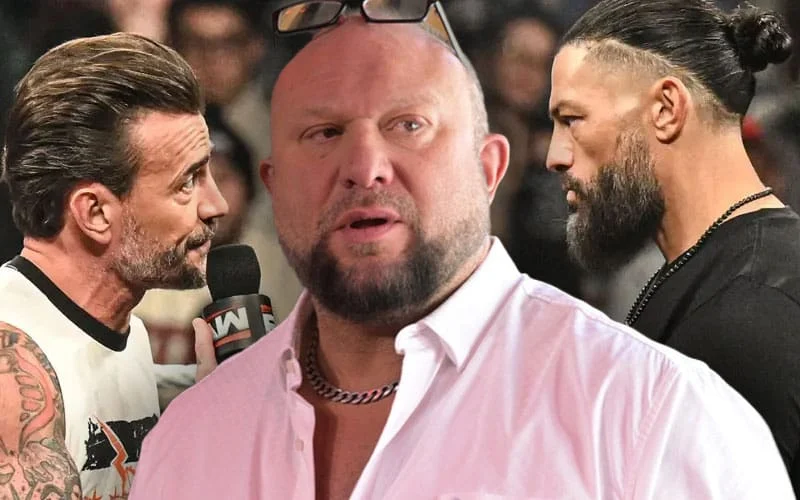
The landscape of professional wrestling has always been a delicate tightrope walk between the scripted narratives of the ring and the visceral realities of the performers’ personal lives. As the industry marches toward the grand spectacle of WrestleMania 42, the tension between CM Punk and Roman Reigns has reached a boiling point that transcends the typical boundaries of a championship rivalry. During a recent high-stakes broadcast of Monday Night Raw, a single sentence uttered by the Second City Saint sent shockwaves through the locker room and the global audience alike, sparking a heated debate regarding the ethics of using deceased family members to generate heat in a modern wrestling storyline. The moment occurred during a closing segment designed to solidify the personal animosity between the two icons, but according to several industry insiders and seasoned veterans, the inclusion of a jab directed at the late Sika Anoa’i may have been a step too far, or at the very least, a jarring departure from the established tone of the program.
The verbal exchange between CM Punk and the Tribal Chief was originally framed as a collision of legacies, pitting the rebellious spirit of the Voice of the Voiceless against the calculated, dynastic dominance of the Anoa’i family. For weeks, the two have traded barbs that focused on their respective places in history, their drawing power, and their diametrically opposed philosophies on what it means to lead the industry. However, the atmosphere shifted dramatically when Punk invoked the name of Roman Reigns’ father, the legendary Sika, who passed away in the summer of 2024. Punk’s declaration that he intended to bury the Tribal Chief alongside his father at WrestleMania 42 was intended to be a knockout blow in their war of words, yet the immediate aftermath suggested that the line landed with a thud for those who value the nuance of wrestling psychology.
Among the most vocal critics of the segment is a man who built his entire career on the art of the heel turn and the mechanics of a perfect promo. Bully Ray, a multi-time tag team champion and a mainstay of the industry for decades, shared his perspective on the matter during a deep-seated analysis of the Raw episode. From his vantage point, the segment was progressing with an organic intensity that showcased both men at the top of their game until the final moments. He noted that the specific reference to the grave felt incongruous with the rest of the dialogue, suggesting that the remark seemed out of place within the broader context of the exchange. For a veteran like Bully Ray, who has navigated the ultra-violent world of extreme wrestling and the polished halls of global promotions, the issue wasn’t necessarily the "edginess" of the comment, but rather its lack of cohesion with the story being told.
The critique offered by the veteran performer centers on the idea of "forced" storytelling. In professional wrestling, a promo is often compared to a musical composition; it requires a steady build, a consistent rhythm, and a logical progression toward a crescendo. When a performer introduces an element that feels disconnected from the previous ten minutes of dialogue, it can break the immersion of the audience. Bully Ray pointed out that the verbiage used by Punk leading up to that moment was sophisticated and grounded in the competitive nature of their feud. By suddenly pivoting to a literal threat involving a deceased parent and a burial plot, the segment took a turn into a realm of melodrama that didn’t quite mesh with the gritty realism established earlier in the night. The veteran questioned the logic of the threat itself, wondering aloud if the audience was truly expected to believe that a wrestling match would result in a literal fatality, or if the hyperbole simply missed the mark of effective psychological warfare.
Beyond the technical aspects of promo delivery, the fallout from Punk’s comments has had real-world implications for the Anoa’i family, a dynasty that views the business with a sacred reverence. The Samoan wrestling lineage is one of the most respected and tightly knit groups in the history of the sport, and the loss of Sika was a profound moment for the entire community. When those personal tragedies are mined for "cheap heat"—a term used to describe easy, often lazy ways to get a crowd to boo—it often results in a backlash that goes beyond the scripted world of the show. Reports have surfaced indicating that members of the extended Anoa’i family were less than pleased with the mention of their patriarch in such a derogatory fashion. In an era where the "fourth wall" is thinner than ever, the line between a character’s motivations and a performer’s professional conduct becomes increasingly blurred.
The debate also touches upon the evolution of CM Punk as a character and a person since his return to the WWE fold. Punk has always been known for his "Pipebomb" style—a raw, unfiltered approach to promos that incorporates real-life grievances and backstage politics. This unpredictability is what made him a superstar, but it also requires a high degree of sensitivity to the current climate of the locker room. When he targets a figure as central to the company’s history as Sika Anoa’i, he isn’t just attacking Roman Reigns; he is poking a hive that includes some of the most influential people in the industry. For some fans, this is exactly what they want to see—a return to the "Attitude Era" style of shock value where nothing is off-limits. For others, it feels like a desperate attempt to add gravity to a feud that was already doing perfectly well on its own merits.
The psychology of a WrestleMania main event often requires a "blood feud" atmosphere, where the stakes are higher than just a championship belt. WWE creative frequently utilizes personal family history to ensure that the audience feels a deep emotional investment in the outcome. We have seen this throughout history, from the exploitation of Eddie Guerrero’s name in the mid-2000s to more recent examples involving the families of stars like Rey Mysterio or Cody Rhodes. However, the effectiveness of these tropes depends entirely on the execution. If the audience perceives the line as a natural extension of a character’s descent into madness or desperation, it works. If they perceive it as a writer or a performer trying too hard to be "edgy," the result is often a collective eye-roll from the more seasoned segments of the fan base.
Bully Ray’s skepticism also highlights a broader concern regarding the "logic" of modern wrestling promos. He questioned whether the audience is supposed to take the "bury you" comment literally, which brings up an interesting point about the suspension of disbelief. In the 1980s or 1990s, a wrestler might say they were going to "kill" their opponent, and it was accepted as part of the hyperbolic language of the era. In today’s more grounded, reality-based presentation, such comments can feel like a relic of a different time, or worse, a lack of creativity. When Punk tells Reigns he will put him in the ground next to his father, it shifts the focus away from the wrestling match and toward a dark, macabre scenario that the company has no intention of actually portraying in the ring.
As we look toward WrestleMania 42, the ripple effects of this segment will likely continue to be felt. The rivalry has undeniably moved into a more hostile territory, and the heat between the two men is now palpable. Whether this was the intended goal or a byproduct of a miscalculation remains to be seen. Roman Reigns, for his part, has maintained the composure of the Tribal Chief, but the fire in his eyes during the Raw segment suggested that the words of his opponent had indeed found their mark. This is the double-edged sword of personal promos: they generate massive amounts of interest and social media engagement, but they also risk alienating the performers themselves and the families who support them behind the scenes.
The role of a veteran voice like Bully Ray in these situations is to provide a reality check for the industry. Having been in the ring with the best of all time, he understands that the most effective heat is often the kind that doesn’t need to rely on the graves of the fallen. He pointed out that the substance of the promo was already strong enough to carry the weight of a WrestleMania main event. The exchange of ideologies, the battle for the top spot on the mountain, and the clashing of two massive egos provided more than enough fuel for the fire. Adding the element of Sika Anoa’i felt, in his estimation, like an unnecessary garnish on a dish that was already perfectly seasoned.
In the coming weeks, the WWE Universe will be watching closely to see if CM Punk doubles down on this line of attack or if the creative direction pivots back toward the athletic and professional competition between the two. There is a fine line between being a "heel" who people want to see get beaten and being a performer who people feel has crossed a moral boundary. In the case of CM Punk, he has spent his entire career walking that line, often with great success. However, the Roman Reigns of today is not the same man he was years ago; he is the centerpiece of a multi-generational legacy, and any attack on that legacy is an attack on the very foundation of the modern WWE.
Ultimately, the controversy surrounding the "bury you" line serves as a reminder of the power of the spoken word in professional wrestling. A single sentence can redefine a feud, ignite a controversy, and spark a debate that lasts for weeks. As the road to WrestleMania 42 continues, the pressure on both CM Punk and Roman Reigns to deliver a masterpiece will only intensify. They are two of the greatest storytellers of their generation, and while this particular chapter may have been polarizing, it has ensured that the eyes of the world are firmly fixed on their eventual collision. Whether the line was a stroke of genius designed to unsettle the champion or a "forced" moment of shock value, its impact is undeniable. The ghost of Sika Anoa’i now hangs over this rivalry, and the consequences of invoking his name will be settled in the middle of the ring on the grandest stage of them all. In the end, the success of the promo will be judged not by the immediate backlash, but by the quality of the story it helps to produce and the emotional resonance of the final bell. For now, the wrestling world remains divided, dissecting every word and every motivation as the countdown to the showcase of the immortals begins in earnest.