The hallowed grounds of New Japan Pro-Wrestling’s annual New Japan Cup tournament, a grueling single-elimination gauntlet designed to forge future champions and test the mettle of its most formidable competitors, rolled into Aichi for its seventh night of electrifying action. This pivotal evening, held on a Saturday, marked a crucial juncture in the prestigious competition, poised to clarify the path to the coveted quarterfinal round. With the stakes escalating and the tournament bracket narrowing, the anticipation among the dedicated NJPW faithful was palpable, each participant driven by the singular ambition of securing a shot at the illustrious IWGP World Heavyweight Championship. The tournament, a proving ground where legends are often made and careers irrevocably shaped, demands nothing less than absolute dedication and a relentless pursuit of victory from every wrestler brave enough to enter its unforgiving structure.
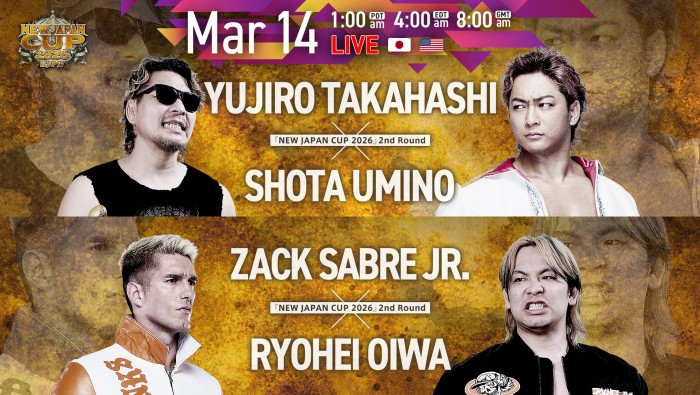
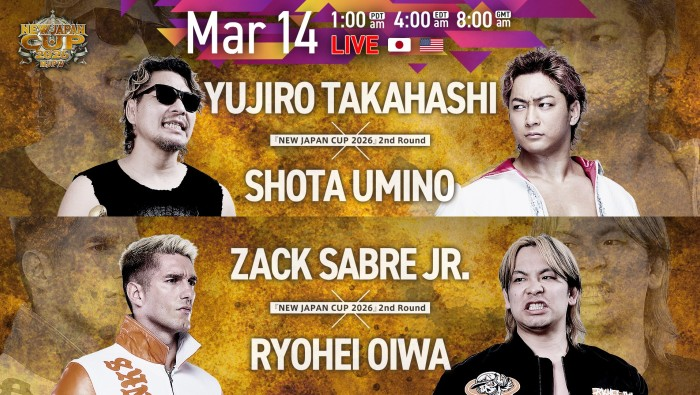
Headlining the evening’s high-stakes proceedings was a second-round encounter that promised a clash of styles and generations, pitting the two-time New Japan Cup laureate, Zack Sabre Jr., against the burgeoning talent of Ryohei Oiwa. Sabre Jr., a technical savant whose submission prowess has earned him global acclaim and a reputation as one of professional wrestling’s most intricate mat technicians, entered the contest as a heavy favorite. His track record in the New Japan Cup is exceptional, having hoisted the trophy in both 2018 and 2022, demonstrating an innate understanding of the tournament’s demands and an almost unparalleled ability to navigate its treacherous waters. However, even a competitor of Sabre Jr.’s caliber is not immune to upsets, as evidenced by his elimination in last year’s semi-finals at the hands of David Finlay, a defeat that undoubtedly still stings and fuels his current quest for a third tournament victory. His path through the New Japan Cup is not merely a series of matches, but a strategic masterclass, each hold and counter-hold a calculated move in a complex chess game played out on the canvas.
Opposite the seasoned veteran stood Ryohei Oiwa, a graduate of NJPW’s rigorous Young Lion system, now returned from his overseas excursion brimming with renewed confidence and an enhanced skill set. Oiwa represents the future of New Japan, a testament to the company’s commitment to cultivating homegrown talent. While still finding his footing on the main roster, his journey through the ranks has instilled in him an indomitable fighting spirit and a relentless drive to prove himself against the very best. Facing Zack Sabre Jr. in such a prominent position was a monumental opportunity for Oiwa, a chance to make a definitive statement and potentially carve out his own legacy within the Cup’s storied history. A victory over a two-time winner would not only propel him into the quarterfinals but would also serve as a definitive declaration of his arrival as a serious contender, signaling a significant shift in his career trajectory from promising prospect to legitimate threat.
The other crucial second-round tournament bout scheduled for the Aichi card featured another compelling clash of personalities and factions: Shota Umino, a prodigy with undeniable main event potential, against the veteran Yujiro Takahashi, a notorious member of the House of Torture stable. Umino, like Oiwa, represents the next generation, carrying the weight of expectation that often accompanies those earmarked for future stardom. His own excursion abroad refined his aggressive, hard-hitting style, making him a formidable opponent for anyone in the tournament. Takahashi, on the other hand, embodies a more cynical, opportunistic approach, often relying on the interference and underhanded tactics characteristic of House of Torture. His role in the tournament is often that of a spoiler, a disruptive force capable of derailing the aspirations of more conventionally skilled opponents through any means necessary. This match promised not just a test of physical prowess, but also a battle of wills and ethics, with Umino’s integrity potentially pitted against Takahashi’s willingness to bend the rules. The winner of this encounter was slated to face the victor of the Sabre Jr. versus Oiwa match in the quarterfinals, a tantalizing prospect that added an extra layer of strategic importance to both Saturday night’s contests. The path to the semifinals, and ultimately the final, was beginning to crystallize, with each victory pushing the competitors closer to the grand prize.
As the evening unfolded, the undercard delivered its customary blend of multi-man tag team action, designed to warm up the crowd and provide a platform for various roster members to showcase their talents and further existing storylines. An eight-man tag team contest saw the formidable United Empire faction – comprising the imposing Great-O-Khan, the hard-hitting HENARE, the agile Francesco Akira, and the burgeoning Zane Jay – take on the collective known as Unbound Co., represented by Yuto-Ice, OSKAR, Drilla Moloney, and Daiki Nagai. These preliminary bouts, while not carrying the same direct tournament implications as the main events, are vital in establishing character dynamics, building momentum for stables, and sometimes even setting the stage for future singles feuds.
The opening moments of the tag team contest immediately crackled with intensity, as Yuto-Ice and HENARE locked horns in a fiery exchange. Their animosity was evident from the outset, a simmering rivalry threatening to boil over. Ice, known for his explosive power, attempted to unleash his devastating Bomboclat maneuver, only for HENARE, ever the resilient warrior, to deftly thwart the attempt with a powerful shoulder tackle, sending a clear message of his own strength and defiance. Meanwhile, on the periphery of the main action, OSKAR and Francesco Akira engaged in their own spirited tussle, their interaction spilling out onto the entrance ramp itself, a chaotic prelude to the official contest. Akira, with his cunning and speed, quickly sought to gain an advantage, a tactical mindset that would prove crucial throughout the match.
The narrative threads continued to intertwine as Drilla Moloney found himself reunited, albeit briefly and antagonistically, with his former War Dogs stablemate, Francesco Akira. This encounter brought a layer of history and unresolved tension to the match, hinting at past allegiances and betrayals. Akira, ever the opportunist, exploited OSKAR’s notoriously short temper, using the distraction to his advantage. With the referee’s attention momentarily diverted by the heated exchange involving OSKAR, Akira seized the moment, delivering a series of vicious stomps to Moloney’s midsection, a move designed to inflict maximum pain and psychological damage outside the purview of the official. This display of underhanded tactics perfectly encapsulated Akira’s strategic approach to competition, highlighting his willingness to bend the rules to secure an advantage, a trait that makes him a formidable, if sometimes controversial, competitor.
As the match progressed, Daiki Nagai, showcasing his youthful exuberance and impressive agility, proved to be a challenging opponent for Francesco Akira. Nagai’s spry energy and quick movements made him a difficult target to contain, constantly keeping Akira on his toes and forcing the United Empire member to dig deep into his arsenal. However, despite Nagai’s spirited efforts and commendable resilience, Akira ultimately proved too cunning and too precise. He methodically wore down his opponent, culminating in a decisive blow – his signature Fireball Knees – which connected with brutal accuracy, securing the victory for United Empire. The move, a testament to Akira’s blend of aerial prowess and striking power, put an emphatic end to the contest, showcasing his ability to deliver impactful finishers when the moment demanded it.
The conclusion of the tag match, however, did not signify an end to the hostilities. The animosity that had been brewing throughout the contest immediately reignited in the post-match chaos. Yuto-Ice and HENARE, their earlier confrontation clearly unresolved, resumed their intense brawl, their fight spilling out beyond the ring and into the ringside area, a clear indication that their rivalry was far from over. Simultaneously, OSKAR, still incensed by Akira’s earlier tactics and perceived disrespect, gave chase to the United Empire member, pursuing him out of the arena and then back in, a frantic pursuit that spoke volumes about the lingering resentment and potential for future confrontations. These post-match skirmishes are a crucial element of NJPW storytelling, often serving as fertile ground for seeding future singles feuds and keeping the audience invested in the ongoing sagas between wrestlers and factions. The energy and passion displayed in these moments underscore the deeply personal nature of professional wrestling rivalries, transforming casual encounters into deeply personal battles.
The Aichi event was not merely another stop on the extensive New Japan Cup tour; it represented the final hurdle before the tournament truly entered its high-stakes quarterfinal phase. The following day, Sunday, promised two more compelling quarterfinal clashes: the powerful Yuya Uemura, a rising star with a strong physical presence, was set to face the formidable Shingo Takagi, a former IWGP World Heavyweight Champion and one of NJPW’s most explosive performers. Their encounter guaranteed a hard-hitting affair, a true test of strength and endurance. The other quarterfinal on Sunday would see the Olympian Oleg Boltin, a relative newcomer making significant waves, square off against the fiercely intense Ren Narita, a product of the NJPW dojo known for his strong style and unwavering fighting spirit. Both of these matches held immense implications for the shape of the semi-finals, with each victor moving one step closer to challenging for the prestigious cup.
Looking further ahead, another quarterfinal match was already slated for Tuesday, following both men’s successful navigation of the second round on the preceding Friday’s show. This highly anticipated bout would pit the veteran Hirooki Goto, a perennial contender and multiple-time champion, against the dynamic Callum Newman, a newer face in NJPW who has quickly impressed with his athleticism and aggressive style. Goto, with his vast experience and championship pedigree, would undoubtedly present a stern challenge for Newman, who would be looking to make a significant statement by overcoming such a respected figure. The staggered scheduling of these quarterfinal matches built suspense and allowed each contest to be highlighted as a standalone, crucial event within the larger tournament narrative.

The New Japan Cup itself holds a unique and revered place within the landscape of professional wrestling. Unlike the G1 Climax, which is a round-robin league tournament, the New Japan Cup is a pure single-elimination bracket, making every match a do-or-die scenario. This format amplifies the drama, as a single misstep or a moment of hesitation can lead to immediate elimination and the crushing end of championship aspirations. The ultimate prize for the winner is not just the cup itself, but a coveted opportunity to challenge for the IWGP World Heavyweight Championship, the pinnacle of achievement in New Japan Pro-Wrestling, often taking place at a major event like Dominion or Sakura Genesis. This direct path to the top title imbues the tournament with an unparalleled level of significance, transforming it into a pressure cooker where only the most resilient and skilled competitors can hope to prevail.
Zack Sabre Jr.’s pursuit of a third New Japan Cup victory is a narrative rich with ambition and historical significance. A third triumph would further cement his legacy as one of the most dominant tournament performers in NJPW history, placing him in an elite category. His technical style, a mesmerizing blend of intricate submissions, joint manipulation, and lightning-fast transitions, is often described as a human pretzel-making machine. Every movement is calculated, every hold applied with surgical precision, designed to systematically dismantle his opponents. His ability to turn seemingly innocuous positions into debilitating submission attempts makes him a constant threat, and his matches are often masterclasses in wrestling psychology, as he patiently works to find and exploit weaknesses. His experience in the high-pressure environment of the Cup, combined with his unparalleled skill set, makes him a daunting obstacle for any competitor, especially for a rising star like Ryohei Oiwa who is still forging his identity.
Ryohei Oiwa’s journey to this point is a classic NJPW tale of perseverance and growth. As a Young Lion, he endured the rigorous training, the humble beginnings, and the character-building experience of performing in black trunks and boots, learning the fundamentals of strong style. His subsequent excursion, a rite of passage for many NJPW talents, allowed him to hone his craft, gain international experience, and return to Japan as a more complete and confident wrestler. Facing Sabre Jr. was a test of the highest order, a true gauge of how far he had come. It was a chance to demonstrate not just his improved technique, but also his heart and his ability to withstand the pressure of a main event spotlight. For a young wrestler, these are the moments that define a career, regardless of the outcome. The sheer act of competing on equal footing with a globally renowned talent like Sabre Jr. provides invaluable experience and exposure, a testament to NJPW’s faith in his future potential.
The narrative of Shota Umino, meanwhile, is one of a prodigy stepping into his own. Often seen as a potential future ace of the company, Umino carries a lineage that connects him to wrestling royalty. His aggressive offense and fiery personality resonate with the NJPW audience, who recognize in him the qualities of a future standard-bearer. His match against Yujiro Takahashi, however, was not just about showcasing his skills, but about navigating the treacherous waters of House of Torture’s influence. Takahashi, a veteran who has long been a fixture in NJPW, now plays a crucial role as an enforcer and agitator within the villainous stable. His matches are rarely clean, often involving distractions, cheap shots, and direct interference from his stablemates. For Umino, overcoming Takahashi would not only be a victory in the bracket but a moral triumph, a demonstration of his ability to withstand the dark arts of House of Torture and emerge victorious through sheer wrestling ability and fighting spirit. Such a victory would bolster his credentials as a legitimate contender and reinforce his image as a heroic figure capable of standing up to injustice.
The New Japan Cup 2026, even in its early stages, was already living up to its reputation for delivering unexpected thrills and defining moments. Aichi’s night seven contributed significantly to this legacy, not just through the decisive tournament matches but also through the foundational building blocks laid in the undercard. The spirited brawls and burgeoning rivalries from the eight-man tag match, particularly the post-match intensity between HENARE and Yuto-Ice, and OSKAR’s pursuit of Francesco Akira, hinted at future singles encounters that could ignite further excitement down the line. These preliminary skirmishes serve as a vital backdrop, adding layers of interpersonal drama and setting the stage for subsequent chapters in the NJPW narrative. The meticulous planning of such a tournament, where every match, regardless of its position on the card, contributes to the overall tapestry of ongoing storylines, is a hallmark of New Japan Pro-Wrestling’s storytelling prowess.
As the tournament progresses, the stakes will only continue to intensify. Each quarterfinal match is a monumental test, bringing the winner tantalizingly close to the grand final and the ultimate opportunity to challenge for the IWGP World Heavyweight Championship. The paths carved out in Aichi, whether through a veteran’s experience or a young star’s breakout performance, are now integral to the unfolding drama. The New Japan Cup is more than just a competition; it is a journey of self-discovery, a crucible where character is forged under immense pressure, and where the next generation of wrestling superstars often announces its arrival on the grandest stage. With the quarterfinals now firmly in sight, the wrestling world eagerly anticipates who will seize this incredible opportunity and etch their name into the illustrious history of the New Japan Cup.