
As the wrestling world hurtles toward WrestleMania 42, the anticipation surrounding Cody Rhodes and his defense of the Undisputed WWE Championship against Randy Orton has reached a fever pitch. Amidst the swirling speculation and fervent discussions, Rhodes himself recently offered a revealing insight into his current mindset and the evolving identity he envisions for his championship tenure. In a candid conversation with a prominent wrestling media outlet, the reigning champion spoke openly about a particular descriptor—the "golden boy"—a label he initially encountered with a hint of condescension but has now chosen to not only accept but actively embody, intending to channel its essence into his performance and presentation at the colossal premium live event. This deliberate embrace of a potentially double-edged moniker signifies a pivotal moment in Rhodes’ storied career, suggesting a deeper understanding of his place within the modern wrestling landscape and a bold declaration of intent for his legacy.
Rhodes’ journey to this point has been anything but conventional, marked by incredible highs, devastating lows, and a persistent, almost cinematic pursuit of a singular objective: capturing the world championship that eluded his legendary father. His return to World Wrestling Entertainment in 2022 was met with an unprecedented ovation, a testament to the connection he had forged with fans during his time away, during which he played a foundational role in establishing a competing promotion. The narrative of "finishing the story" became intertwined with his very being, resonating deeply with audiences who saw in him a reflection of their own struggles and aspirations. Yet, despite his undeniable popularity and the emotional investment of millions, the path to undisputed gold has been fraught with challenges. His heartbreaking loss at a prior WrestleMania, followed by another near miss, only solidified his resolve, making his eventual triumph and current reign all the more significant.
The path to WrestleMania 42 for Cody Rhodes was paved through a crucial encounter on SmackDown, where he faced off against the formidable Drew McIntyre. This contest was not merely another match; it was a high-stakes battle to secure his spot on the grandest stage of them all, with the Undisputed WWE Championship hanging in the balance. McIntyre, a former WWE Champion himself, represented a significant hurdle, known for his relentless aggression and unyielding spirit. Rhodes, however, showcased the grit and determination that have become hallmarks of his persona, ultimately prevailing in a hard-fought contest to cement his main event position against "The Viper," Randy Orton. This victory wasn’t just about retaining the title; it was about validating his position at the top of the industry and demonstrating his capability to overcome elite competition, proving that his reign was no fluke but the earned culmination of years of dedication.
The "golden boy" archetype has a rich and complex history within professional wrestling. Historically, it refers to a performer handpicked by management, often possessing undeniable charisma, a marketable look, and strong in-ring skills, positioned at the forefront of a company as its perceived future or current face. Figures like Hulk Hogan in the 1980s, Bret Hart in the 90s, and John Cena in the 2000s, to varying degrees, occupied this role, becoming synonymous with their respective eras. However, the term often carries a subtle undertone of resentment, particularly among sections of the fanbase or within the locker room, suggesting that their rise was perhaps more a product of favoritism than pure merit. For a wrestler to be labeled a "golden boy" can imply that their push is manufactured, their success predetermined, potentially undermining the perception of their legitimate hard work and talent. Yet, for Rhodes, this label, uttered initially with a hint of disdain, has become a source of unexpected affirmation. He confessed to blushing upon hearing it, a reaction that speaks volumes about his self-awareness and willingness to subvert expectations. He recognizes the power of such a designation and, rather than shying away from it, intends to infuse it with his own unique blend of grit, showmanship, and undeniable skill.
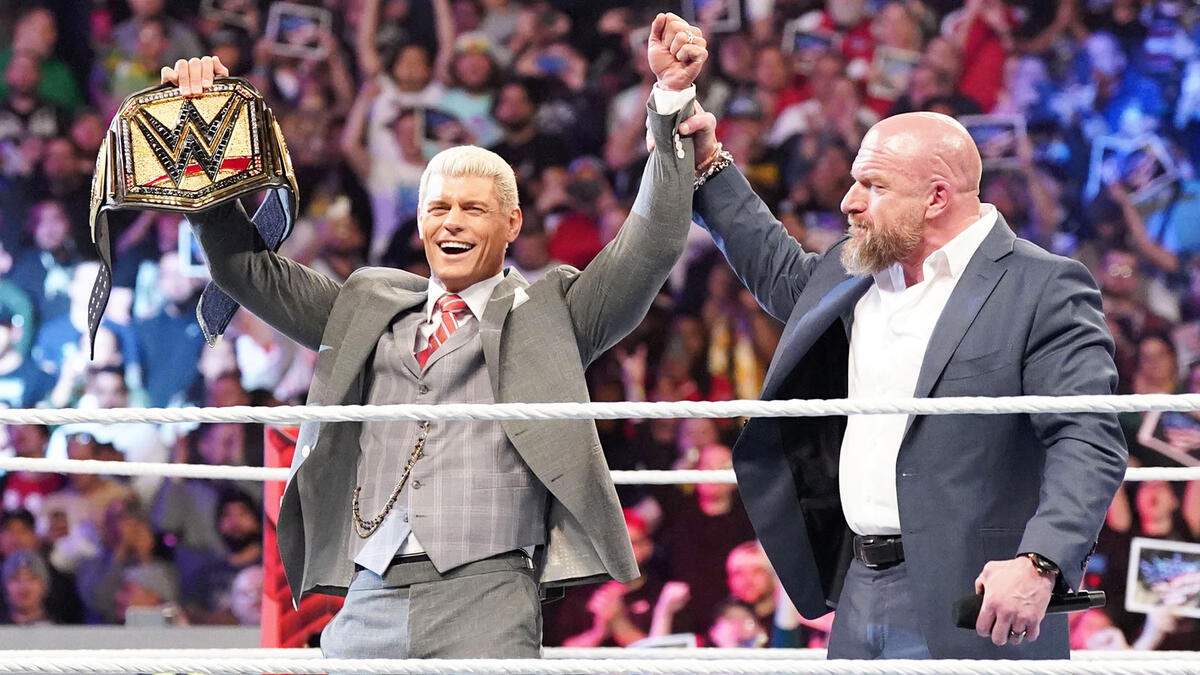
This choice to embrace the "golden boy" identity is particularly poignant given Cody Rhodes’ unconventional journey. For years, he toiled within WWE under the shadow of his legendary father, Dusty Rhodes, adopting various personas, including the elaborate and often ridiculed Stardust character. His decision to depart from the company in 2016 was a bold move, a defiant rejection of a path he felt limited his potential. During his time away, he meticulously rebuilt his brand, refined his craft, and, crucially, proved his worth as a top-tier talent and a visionary businessman. He wasn’t handed opportunities; he created them. His return to WWE was not as a returning prodigal son seeking redemption, but as a conquering hero, having proven his value on his own terms. Therefore, for him to now accept a label that often implies a privileged ascent, after having fought so hard against the perception of being merely a legacy act, adds layers of intrigue to his character. It suggests a confidence in his own accomplishments, a belief that he has earned the right to be seen as the company’s premier attraction, irrespective of how that position is framed.
Rhodes articulated a profound desire for this particular championship reign to be the one that truly defines him. Every champion seeks to leave their mark, to imbue their time with the gold with a unique character that transcends the physical belt itself. Bruno Sammartino’s reigns were defined by their unprecedented longevity and his incredible strength, embodying the resilience of the working class. Ric Flair’s multiple world championships spoke to his jet-setting, extravagant persona and unparalleled in-ring mastery. John Cena’s numerous tenures were characterized by his unwavering commitment to the company’s ethos and his incredible connection with the younger demographic. For Cody, defining his reign means establishing an identity that solidifies his place not just as a champion, but as a generational talent. It’s about more than just winning matches; it’s about crafting a narrative, delivering consistently high-quality performances, and embodying the spirit of what it means to be the Undisputed WWE Champion in the modern era. His current reign, leading into WrestleMania 42, is his canvas, and the "golden boy" moniker, far from being a constraint, might just be the central theme of his masterpiece.
A key aspect of Rhodes’ commentary involved his assertion of unparalleled dedication and output. He remarked on "outrunning everybody on the treadmill," even acknowledging a competitor he considers his primary rival. This statement speaks volumes about his work ethic and commitment to being the absolute best. In an industry where the demands are constant and the competition fierce, such a declaration is not mere bravado but a reflection of a punishing schedule and an unwavering focus on performance. A champion’s reign isn’t just measured by victories; it’s measured by consistency, by the quality of matches delivered, by the engaging nature of their promos, and by their presence across all media platforms. Rhodes’ words suggest a relentless pursuit of excellence, an almost obsessive drive to push his own boundaries and set a new standard for what it means to be a top champion. This relentless grind, this commitment to "outrunning" his peers, is arguably the true foundation upon which his "golden boy" status is built, demonstrating that his position is earned through sheer effort, not merely bestowed.
The challenge awaiting Cody Rhodes at WrestleMania 42 in the form of Randy Orton is significant. "The Viper" is a future Hall of Famer, a multi-time world champion, and a master of in-ring psychology. Orton’s own career has seen him embody various facets of the "golden boy" archetype, particularly during his early days as the "Legend Killer" and later as the youngest world champion in WWE history. His journey, too, has been one of evolution, from a protégé in Evolution, to a ruthless villain, to a revered veteran. The history between Rhodes and Orton adds another layer of intrigue; Rhodes was once a member of "The Legacy" alongside Ted DiBiase Jr., a faction led by Orton. This past provides a rich narrative tapestry for their upcoming encounter, turning it into more than just a championship match, but a clash of generations and legacies. Orton’s cunning, experience, and ability to exploit any weakness will test Rhodes in ways few others can, forcing the "American Nightmare" to fully embody his champion persona and prove that his "golden boy" status is not just a label, but a reflection of his undeniable prowess.
Rhodes’ hint about "dialing up" his WrestleMania attire to further lean into the "golden boy" theme underscores the theatricality inherent in professional wrestling. Attire in wrestling is rarely just clothing; it’s an extension of character, a visual representation of a performer’s narrative. From Ric Flair’s elaborate robes to The Undertaker’s somber trench coats, gear plays a crucial role in enhancing the spectacle and reinforcing a wrestler’s persona. For Rhodes, whose entrance gear has always been meticulously crafted and symbolic – often featuring elements of Americana and references to his family legacy – the idea of incorporating a "golden boy" motif suggests a deliberate evolution. It could manifest as more gold, more elaborate embellishments, or a design that overtly communicates his elevated status. This attention to detail demonstrates his understanding of the bigger picture, recognizing that every element, from his in-ring performance to his visual presentation, contributes to the overall story he is telling and the identity he is forging for his championship reign.

WrestleMania, the "Showcase of the Immortals," is the ultimate proving ground for any professional wrestler. It’s where legends are made, legacies are cemented, and moments become indelible parts of history. The pressure to perform on such a grand stage, under the brightest lights, is immense. For Cody Rhodes, defending the Undisputed WWE Championship against a legend like Randy Orton, while consciously embracing the "golden boy" persona, adds an extra layer of expectation. He’s not just defending a title; he’s defending a concept, a chosen identity. This WrestleMania 42 represents a crucial juncture for Rhodes, an opportunity to validate his entire journey and solidify his position at the apex of the industry. The performance he delivers, the narrative he crafts, and the way he embodies this "golden boy" moniker on the biggest night of the year will undoubtedly shape the perception of his reign and his enduring legacy.
Beyond the Undisputed WWE Championship clash, WrestleMania 42 is set to feature another monumental title defense, as CM Punk is slated to put his World Heavyweight Championship on the line against Roman Reigns. This highly anticipated encounter further elevates the prestige and magnitude of the event, ensuring that fans will witness multiple main event-caliber matchups. The presence of these two high-profile championship contests underscores the depth of talent within the company and the significance of WrestleMania as the pinnacle of the wrestling calendar, a night where the very fabric of professional wrestling is redefined through epic confrontations and unforgettable moments.
In conclusion, Cody Rhodes’ decision to embrace the "golden boy" label is a fascinating and strategic move, indicative of a champion who is not only confident in his abilities but also acutely aware of the power of perception and narrative. His journey, marked by rebellion and redemption, now enters a phase where he actively shapes the narrative around him, transforming a potentially pejorative term into a badge of honor. As he prepares to face Randy Orton at WrestleMania 42, the eyes of the wrestling world will be fixed not just on the Undisputed WWE Championship, but on Cody Rhodes himself – the self-proclaimed "golden boy" who has fought tooth and nail to define his own destiny, and who now stands ready to etch his unique identity into the annals of wrestling history on the grandest stage of them all. His reign, he hopes, will not just be remembered for its victories, but for the profound evolution of the man behind the title, fully embracing the spotlight he so rightfully earned.


