
The air in the arena crackled with the familiar electricity of a WWE Monday Night Raw broadcast, a weekly ritual that, for all its predictability, still manages to weave moments of genuine engagement and utter bewilderment. As the calendar page turned to March 9th, 2026, the show delivered a potent cocktail of storytelling, athleticism, and, inevitably, segments that left the discerning fan scratching their head. This particular episode served as a microcosm of the wider wrestling landscape, showcasing both the creative sparks that ignite passion and the missteps that can dim the flame. From the chaotic opening salvo to the poignant closing moments, Raw offered a narrative tapestry rich with both celebrated triumphs and frustrating detours. Examining the broader implications of these individual segments provides a clearer picture of the ongoing creative direction and the emotional resonance these performances aim to achieve. The journey through this week’s Raw is not merely a recap of events, but an exploration of the craft, the storytelling, and the audience’s evolving connection to the spectacle.
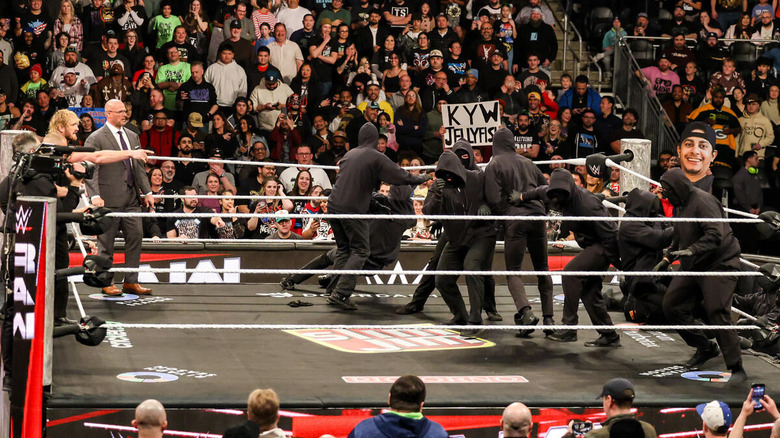
One of the most perplexing divergences from coherent storytelling occurred in the night’s opening segment. The broadcast kicked off with a bewildering tableau: a phalanx of masked individuals, eerily reminiscent of a less menacing iteration of a cult, encircled the ring, creating an atmosphere of immediate confusion rather than anticipation. Their presence seemed entirely detached from the ongoing narrative involving Adam Pearce and Seth Rollins. Rollins, the supposed focal point of this burgeoning conflict, eventually made his entrance, but the initial preamble with his costumed entourage offered no discernible plot advancement. It felt as though the writers were attempting to inject a sense of impending doom or a calculated escape plan for Rollins, but the execution was so muddled that the intended impact was lost. This lack of clarity extended beyond the masked men; the segment spiraled into an ill-conceived brawl involving LA Knight and The Usos, individuals whose inclusion felt arbitrary and served only to overcrowd an already chaotic scene. The segment appeared to be an overstimulation tactic, an attempt to gauge audience reaction to a flurry of action without a clear narrative anchor. This kind of disjointed booking, where elements are thrown together with little regard for logical progression, can alienate viewers who invest in the intricacies of wrestling narratives. The promise of a confrontation between Pearce and Rollins was overshadowed by a chaotic melee that achieved little beyond highlighting the perceived need for Rollins to have a diversionary force.
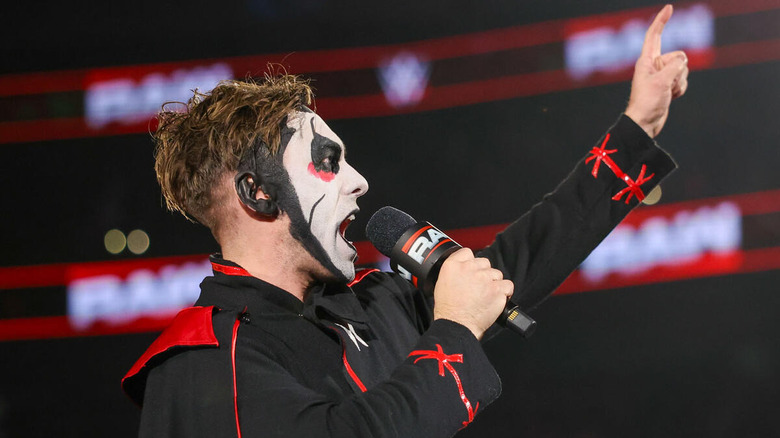
In stark contrast to the opening segment’s disarray, the emergence of Danhausen on this episode of Raw was a shining beacon of character work and fan engagement. After a somewhat shaky debut following his arrival in the promotion, Danhausen has steadily cultivated a devoted following through his unique persona and his undeniable charisma. His prior interactions, including a humorous list of demands presented to Adam Pearce and a curse directed at Dominik Mysterio that preceded the latter’s Intercontinental Championship loss, demonstrated a clear understanding of how to integrate his eccentricities into ongoing storylines. His appearance on Raw, following a brief foray onto SmackDown where he sought a mentor and was seemingly paired with The Miz, showcased a dynamic character who is not confined by brand limitations. The interaction with "OG Grande Americano" (a character whose own narrative arc will be discussed later) saw Danhausen deploy his signature curse, which, as predicted, led to the former’s defeat. However, it was his mid-commercial break engagement with the "Seattlehausen" faithful, complete with the distribution of complimentary t-shirts and a playful threat of curses for those who didn’t patronize the merchandise stands, that truly cemented his appeal. This segment was a masterclass in character immersion, transforming a mere promotional break into an extension of his established gimmick. What makes Danhausen’s current trajectory so promising is the apparent creative strategy behind his booking. While his in-ring prowess may not be his primary strength, his unique character and the WWE Universe’s growing familiarity with it have made him a refreshing presence. This is a stark contrast to some other recent signings who appear to lack a defined direction, making Danhausen’s consistent and entertaining integration a welcome development for fans who appreciate originality.
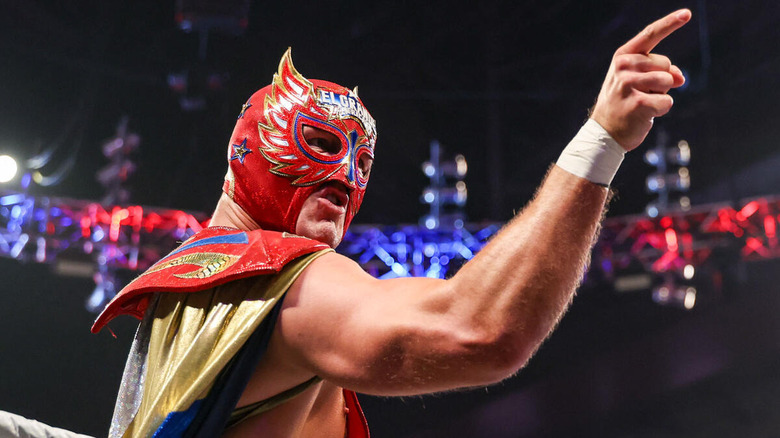
The persistent storyline surrounding Chad Gable’s "El Grande Americano" character continued to be a source of frustration, feeling increasingly like a prolonged exercise in futility. The character, born from Gable’s perceived annoyance with the influx of luchadors into the company, has evolved into a parody that has arguably overstayed its welcome. The decision to build a significant feud between Gable’s Americano and Ludwig Kaiser’s portrayal of an "impostor" Americano, particularly on the road to WrestleMania 42, felt like a creative miscalculation. The construction of this rivalry has been particularly egregious, epitomizing what many perceive as some of the less inspired ideas to emerge from WWE’s creative team. The narrative has been characterized by nonsensical plot developments, most notably the convoluted setup for a match involving the impostor Americano. After an earlier segment where Danhausen cursed "OG Americano," leading to a backstage encounter where Pete Dunne and Tyler Bate (whose Spanish accents were, to put it mildly, unconvincing) stealthily approached Gable, the narrative took a bizarre turn. Despite the clear physical discrepancies and the obvious presence of an impostor, the match proceeded with the stand-in Americano ultimately taking the loss. The lack of accountability, the apparent oversight by Adam Pearce in sanctioning such a questionable bout, and the referee’s failure to recognize the discrepancy all contributed to a deeply unsatisfying viewing experience. The entire affair felt like a colossal waste of time, detracting from the potential of the wrestlers involved and the overall quality of the show.
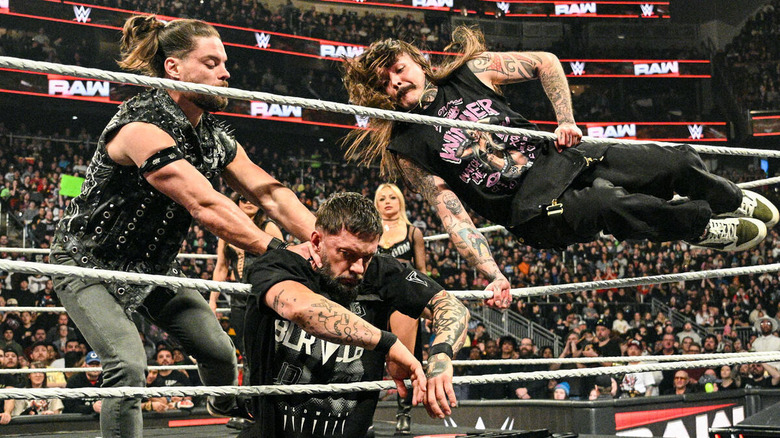
On a more positive note, the long-anticipated separation of Finn Bálor from The Judgment Day faction provided a much-needed jolt of narrative momentum. The constant teases of dissension within the group had become a tired trope, and the official confirmation of Bálor’s departure offered a sense of closure and opened new avenues for storytelling. The segment that led to this separation was particularly effective, stemming from Dominik Mysterio’s frustration over his Intercontinental Championship loss. Mysterio’s belief that Finn Bálor was solely to blame for his defeat, stemming from Bálor’s refusal to allow JD McDonagh to interfere on his behalf, set the stage for a confrontation. Bálor’s recent insistence on allowing Mysterio to fight his own battles, a philosophy he seemed to adopt after his high-profile encounters with CM Punk, added layers to his motivations. While Mysterio hoped for a rematch, Bálor explained his actions as a lesson, emphasizing the need for Mysterio to learn to stand on his own two feet. This philosophical divergence, coupled with Bálor’s pointed critique of Mysterio’s character, led to a physical altercation. The subsequent turning of the entire Judgment Day faction against Bálor, including McDonagh, and the involvement of Liv Morgan and Raquel Rodriguez, created a dramatic visual and narrative statement. This implosion, while signaling the end of an era for Bálor within the group, also sets the stage for a highly anticipated showdown between Bálor and Mysterio at WrestleMania 42. The culmination of this storyline, even if it signals the continuation of the Judgment Day’s internal drama, offers a satisfying resolution for Bálor’s arc and promises an engaging conflict on the grandest stage.
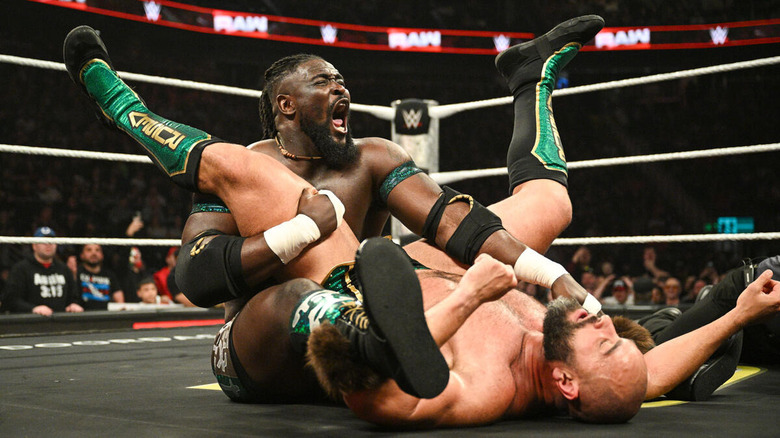
Despite the potential of a promising call-up, Oba Femi’s trajectory on the main roster continued to be a significant disappointment, marked by a conspicuous lack of direction. While his recent match against Rusev showcased Femi’s imposing physique and impressive power, demonstrating his capability in the ring, it did little to alleviate concerns about his overall storyline integration. Rusev, while a credible opponent, felt like another stepping stone in a series of matches that have lacked any substantial narrative depth. Femi’s debut on the main roster, which began with a squash match against the War Raiders on SmackDown, has been characterized by a series of victories without compelling storytelling. The brief narrative involving Kit Wilson’s poems about Femi’s "toxic masculinity" did little to advance a meaningful program. The expectation following his relinquishment of the NXT Championship was a prominent feud, perhaps even against Brock Lesnar at WrestleMania 42. However, the current booking suggests this was never a concrete plan, leaving Femi in a precarious position without a defined brand or a clear path forward. While he is performing better than some other recent NXT call-ups, the lack of a cohesive strategy for his development is disheartening. The potential for Femi to become a dominant force is evident, but without a clear creative vision, his impact risks being diminished.
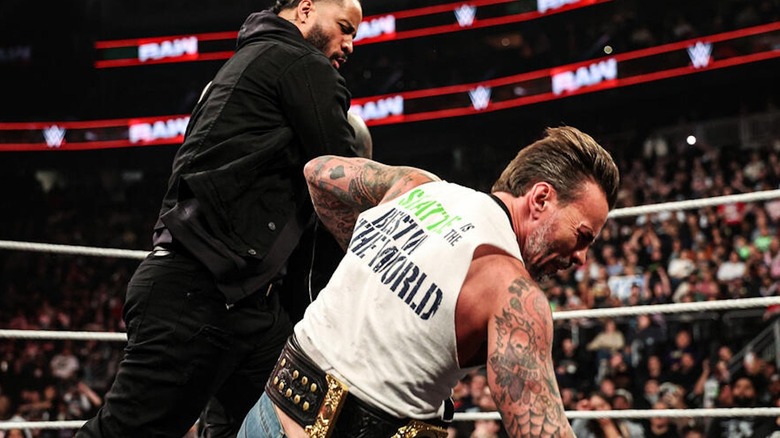
The closing segment of the evening provided a nuanced and compelling angle that effectively set the stage for future conflict. CM Punk’s address to the WWE Universe, building upon his previous vow to "bury Roman Reigns," initially threatened to fall flat before the arrival of The Usos. Their demand for an apology from Punk, rooted in his controversial comments about Reigns’ deceased father, provided a crucial point of contention. Jey Uso’s impassioned plea was met with Jimmy Uso’s more reasoned explanation, highlighting the hypocrisy of Punk’s "Voice of the Voiceless" persona when he attacked a deceased individual who could not defend himself. Punk’s initial struggle to offer a sincere apology, attempting to deflect by referencing Reigns’ past transgressions against The Usos, was characteristically on-brand. However, his eventual apology, seemingly conceding to the Usos’ demand, was quickly subverted. Punk’s twisted apology framed Reigns’ actions as making the Usos his "errand boys" and disrespecting Dusty Rhodes, before he ultimately struck Jey Uso with a microphone. This act of aggression, while shocking, also served to highlight the ongoing tension surrounding Roman Reigns’ reign as "Tribal Chief" and his treatment of his family. The subsequent physical altercation, with Jimmy Uso intervening to prevent Jey from escalating the situation further, underscored the Usos’ commitment to defending their family’s honor. This segment expertly navigated complex character dynamics, exploring the intricate relationships within the Anoa’i family and Punk’s own checkered history. The promising development of this angle suggests a proxy feud between Punk and The Usos, offering a compelling narrative thread for the weeks leading up to future major events.