
The hallowed ground of Korakuen Hall in Tokyo recently bore witness to the ceremonial opening of one of professional wrestling’s most esteemed tournaments, the New Japan Cup. On a pivotal Wednesday, the venerable arena pulsed with an energy unique to its history, as New Japan Pro-Wrestling commenced its annual single-elimination gauntlet, a grueling test of skill, endurance, and will designed to identify the next contender for the illustrious IWGP World Heavyweight Championship. This tournament isn’t merely a series of matches; it is a narrative crucible, forging new stars and reaffirming the legacies of established icons, all vying for the ultimate prize that promises a shot at the pinnacle of the wrestling world.
The New Japan Cup stands as a cornerstone of the NJPW calendar, a vital spring tradition that sets the stage for the major championship events later in the year, most notably Dominion. Inaugurated in 2005, the tournament quickly established itself as a proving ground where every victory propels a competitor closer to destiny, and every defeat spells the end of a championship dream. Unlike the G1 Climax, which is a round-robin league, the New Japan Cup’s sudden-death format intensifies the pressure, demanding flawless execution and unwavering resolve from the first bell. Past winners include a pantheon of NJPW legends – Hiroshi Tanahashi, Kazuchika Okada, Shinsuke Nakamura, Tetsuya Naito, and SANADA, among others – each of whom leveraged their Cup triumph into a shot at the company’s top gold, often successfully. The stakes, therefore, could not be higher for every participant embarking on this arduous journey, especially for those stepping into the fray for the very first time.
Korakuen Hall itself adds another layer of gravitas to the proceedings. More than just a venue, it is an institution, a spiritual home for professional wrestling in Japan. Its distinctive tiered seating, intimate atmosphere, and the palpable roar of the crowd have sanctified countless moments of triumph and despair. For decades, it has been the backdrop for legendary bouts, pivotal storyline developments, and the debut of countless future stars. To kick off the New Japan Cup within its storied walls is to imbue the tournament with a sense of tradition and importance, reminding both the competitors and the fans of the rich history they are collectively a part of. The energy inside Korakuen on the opening night is always electric, a buzzing anticipation for the drama that is about to unfold.
Headlining the inaugural night of tournament action was a highly anticipated clash pitting the enigmatic Great-O-Khan of the United Empire against the fiery, returning prodigal son, Yuya Uemura. This encounter represented a fascinating stylistic contrast and a significant moment for both men. Great-O-Khan, with his imposing presence, unique Mongolian chops, and deliberate, almost ritualistic grappling style, has firmly established himself as a formidable force within NJPW. As a key member of the dominant United Empire faction, led by Will Ospreay, O-Khan carries the weight of his stable’s reputation for ruthlessness and efficiency. His path in NJPW has been one of consistent, if sometimes unconventional, ascension, marked by his distinctive ring attire and an unwavering commitment to his persona. A New Japan Cup victory would undoubtedly elevate him further, potentially positioning him as a legitimate main event threat and a worthy standard-bearer for the United Empire.
Across the ring stood Yuya Uemura, a wrestler whose journey embodies the classic NJPW narrative of growth and perseverance. Having completed his extensive excursion in North America, primarily with AEW and ROH, Uemura returned to Japan not as a Young Lion, but as a fully-formed, aggressive, and incredibly hungry competitor. His time abroad honed his craft, adding layers of intensity and unpredictability to his already impressive arsenal. For Uemura, this match against a top-tier opponent like Great-O-Khan in his first New Japan Cup represented a colossal opportunity to stake his claim as a future cornerstone of the company. His fighting spirit, a hallmark of the NJPW Young Lion system, combined with his newfound experience, made him a dangerous underdog, eager to prove that his excursion had transformed him into a genuine threat. The clash between O-Khan’s methodical, power-based offense and Uemura’s high-octane, resilient style promised a main event rich in drama and potential upset, a true litmus test for Uemura’s post-excursion trajectory and a crucial early hurdle for O-Khan’s championship aspirations.
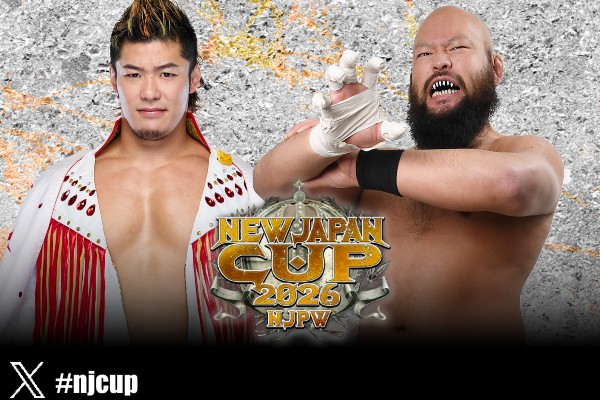
The night’s opening round of tournament competition also featured another intriguing matchup, with the relatively new face to NJPW, Aaron Wolf, making his New Japan Cup debut against the colossal veteran enforcer of House of Torture, Don Fale. For Aaron Wolf, this was a significant moment, marking his first foray into the prestigious tournament, a clear indicator of NJPW’s investment in his potential. Wolf, known for his athleticism and unique skill set, faces the daunting task of navigating the NJPW landscape, which is notoriously competitive. A strong showing in the Cup would be instrumental in building his momentum and establishing his presence on the roster.
His opponent, Don Fale, presents a stark contrast in style and experience. As a founding member of the notorious Bullet Club and now a key, imposing figure within the villainous House of Torture faction, Fale is a seasoned, powerful antagonist. His immense size and brutal tactics, often supplemented by the interference of his stablemates, make him a difficult opponent for anyone, let alone a tournament newcomer. House of Torture, comprising EVIL, Yujiro Takahashi, SHO, Dick Togo, and Ren Narita, operates on a principle of win-at-all-costs, frequently resorting to underhanded tactics and overwhelming numbers to secure victories. For Wolf, overcoming Fale wouldn’t just be a win; it would be a statement, a demonstration of his ability to withstand the dark arts of one of NJPW’s most despised factions. This match was more than just an opening round; it was a test of character and resilience for the burgeoning career of Aaron Wolf against the entrenched, menacing presence of Don Fale.
Beyond the two pivotal tournament encounters, the Korakuen Hall card was brimming with multi-man tag team contests, each designed to showcase the diverse talent across the NJPW roster and further ongoing factional rivalries. These undercard bouts, far from being mere filler, often serve as crucial battlegrounds where grudges simmer and future singles matches are foreshadowed.
One such contest was a substantial 10-man tag team affair, bringing together a mix of veterans and rising stars. On one side, the cunning Gedo teamed with the dynamic Yota Tsuji, the high-flying Robbie X, the agile Taiji Ishimori, and the promising Yuto-Ice. This eclectic group faced off against members of the formidable TMDK faction. TMDK, known for its strong style and technical prowess, features an impressive lineup of talent, and their presence ensures a hard-hitting, competitive encounter. Matches like these allow various factions and individual wrestlers to test their chemistry, establish dominance, and build momentum for their respective stables. Yota Tsuji, in particular, has been on an upward trajectory since his return from excursion, and his involvement in such a high-profile tag match against a unit like TMDK is a testament to his growing stature.
Another intense six-man tag team match saw the resilient Tomoaki Honma, the spirited Master Wato, and the charismatic Taichi unite to confront a trio from the dreaded House of Torture: the ever-scheming Dick Togo, the unpredictable DOUKI, and the intensely focused Ren Narita. This bout promised a chaotic encounter, with the virtuous team attempting to overcome the notorious tactics of House of Torture. Honma, a fan favorite known for his never-say-die attitude; Master Wato, a junior heavyweight with incredible aerial skills; and Taichi, a senior heavyweight whose cunning and technical ability are matched only by his flair, represent a formidable challenge. However, against the underhanded methods of Togo, DOUKI, and especially Ren Narita, who has fully embraced the dark side with House of Torture, victory is never assured. Narita’s transformation from a promising Young Lion into a ruthless antagonist has been one of the more compelling character arcs in recent NJPW history, and his continued involvement in high-stakes faction warfare further solidifies his new persona.
The eight-man tag team match on the card offered another glimpse into the depth of NJPW’s talent pool, featuring a compelling mix of established mainstays and emerging prospects. Daiki Nagai, Drilla Moloney, the powerful Shingo Takagi, and the imposing OSKAR formed one unit, poised against Zane Jay, HENARE, the formidable Jake Lee, and the athletic Callum Newman. Shingo Takagi, a former IWGP World Heavyweight Champion and one of the most explosive wrestlers in the world, brings undeniable star power and intensity to any match he’s in. His presence elevates his team, providing a blend of power and experience. HENARE, from the United Empire, and Jake Lee, a recent high-profile acquisition for NJPW, bring their own significant credentials and physicality to the opposing side. This match served as a platform for newer faces like Nagai, Moloney, OSKAR, Jay, and Newman to gain valuable exposure and experience alongside seasoned veterans, showcasing their skills and potentially catching the eye of the NJPW faithful.

Further tag team action saw the eccentric Toru Yano partner with the powerful Boltin Oleg to face the veteran Bullet Club duo of Jado and El Phantasmo. Yano, renowned for his comedic antics and unconventional strategies, often manages to find a way to win despite – or perhaps because of – his unique approach. Boltin Oleg, a formidable physical specimen, brings raw power and intensity, making for an interesting dynamic with Yano. Their opponents, Jado, the mastermind strategist of Bullet Club, and the flamboyant, rule-bending El Phantasmo, represent a crafty and dangerous tandem. This match was a classic clash of styles and personalities, with Yano’s trickery often providing a welcome dose of levity amidst the intense tournament atmosphere.
Another tag team bout featured Masatora Yasuda and Shota Umino taking on the Bullet Club combination of Yujiro Takahashi and Chase Owens. Shota Umino, having returned from his excursion and quickly established himself as a future main eventer, is a prominent figure on the NJPW roster, known for his hard-hitting style and undeniable charisma. Partnering with Yasuda, they faced a duo known for their underhanded tactics and veteran experience. Yujiro Takahashi, the "Tokyo Pimp," and Chase Owens, the "Crown Jewel," are cunning and opportunistic, always looking for an advantage. This match provided Umino with another opportunity to showcase his growth and leadership against a pair of seasoned, villainous opponents.
Finally, the card also included a significant singles debut, as Tasei Nakahara stepped into the ring for his first official NJPW match against Tetsuya Matsumoto. Young Lion debuts are always a momentous occasion in NJPW, marking the culmination of years of rigorous training in the dojo. These matches are not just about winning or losing; they are about showcasing the fundamental skills, resilience, and fighting spirit that are ingrained in every NJPW-trained wrestler. Nakahara’s debut against a peer like Matsumoto is a crucial first step in what NJPW hopes will be a long and successful career, offering fans a glimpse into the future of the company.
The opening night of the New Japan Cup, therefore, was far more than just a collection of matches. It was a meticulously constructed tapestry woven with narratives of ambition, legacy, resilience, and the relentless pursuit of glory. From the high-stakes main event between Great-O-Khan and Yuya Uemura, emblematic of the clash between established power and hungry potential, to the challenging tournament debut of Aaron Wolf against the formidable Don Fale, every bout served a purpose. The undercard tag matches, populated by the intricate web of NJPW factions, provided a platform for simmering rivalries and the continued development of both seasoned veterans and the company’s vibrant youth movement. As the tournament unfurls over the coming weeks, each elimination will sharpen the focus, bringing the IWGP World Heavyweight Championship shot ever closer into view for the last man standing. The path to destiny is a brutal one, but for the competitors of the New Japan Cup, the promise of ultimate glory makes every sacrifice, every grueling minute in the ring, undeniably worth it. The journey has just begun, and the wrestling world watches with bated breath to see who will emerge victorious from this unforgiving crucible.


