
The landscape of professional wrestling is perpetually in flux, with each week bringing new developments, unexpected turns, and the constant pursuit of building anticipation for its grandest spectacles. All Elite Wrestling’s "Dynamite," a flagship program that has carved out a significant niche in the industry, delivered its latest installment from El Paso, Texas, on March 4, 2026. As the company barrels toward its highly anticipated "Revolution" pay-per-view event, this episode served as a crucial stepping stone, aiming to solidify storylines and generate buzz. The El Paso crowd, a passionate contingent known for its fervent energy, was treated to a card that, in true "Dynamite" fashion, offered a compelling mix of exhilarating action and perplexing creative choices. While some segments resonated deeply, leaving fans buzzing with excitement, others unfortunately fell short, prompting head-scratching and debate among the wrestling faithful. This review delves into the standout moments and the head-scratching decisions that defined AEW’s March 4th broadcast, exploring the threads that held the show together and those that threatened to unravel it.
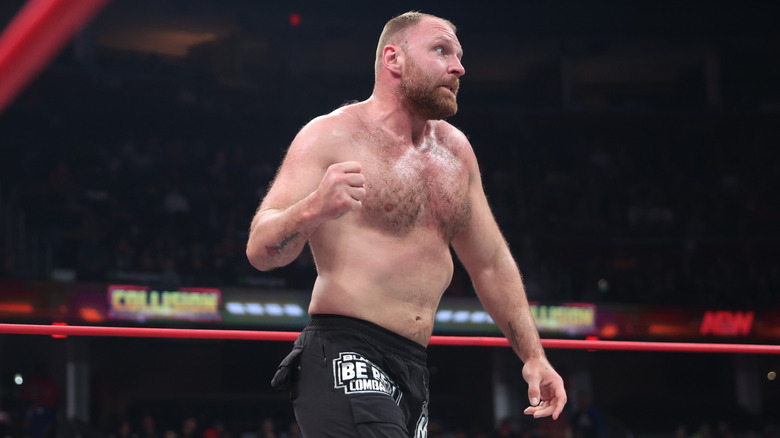
Jon Moxley’s enduring presence as a cornerstone of AEW’s competitive spirit continues to be a source of unwavering admiration. Even as the wrestling world witnesses seismic shifts in talent rosters and the retirement of established legends, Moxley remains a consistent force, a testament to his dedication and passion for the craft. His recent Continental Championship Eliminator matches have become a staple of his television appearances, providing a platform for him to engage in compelling bouts that often steal the show. This week’s encounter against the skilled Hechicero was no exception. Despite already having a confirmed challenger for the Revolution pay-per-view, Moxley’s commitment to these exhibition matches underscores his desire to keep the championship relevant and to provide opportunities for a diverse range of opponents. In an era where marquee matches are meticulously planned months in advance, Moxley’s approach injects an element of unpredictability, suggesting that even established stars are not immune to the possibility of a challenger earning their shot through sheer merit. The Continental Title, by its nature, doesn’t demand the same monumental build as a world championship, allowing for a more fluid and organic challenger acquisition process. This flexibility opens doors for talents like Hechicero, or even a formidable presence like Lance Archer, to conceivably vie for the belt.
The Continental Championship Eliminator Match featuring Moxley possessed a palpable electricity that, at times, felt conspicuously absent from other segments of the broadcast. There’s an undeniable allure in witnessing Moxley’s relentless pursuit of excellence, a quality that seems deeply ingrained in his wrestling DNA. One could envision him continuing this pattern of competitive encounters well into his later years, perhaps even emulating the grizzled veterans like Minoru Suzuki or Yoshiaki Fujiwara, offering a gruff mentorship and a stern test to the younger generation. His ability to consistently deliver high-quality matches, regardless of the opponent or the stakes, has become a defining characteristic of his AEW tenure. In a show that presented a somewhat uneven viewing experience, Moxley’s reliable performance served as a much-needed anchor, a constant reminder of the raw, unadulterated wrestling that fans crave. His dedication to the sport transcends mere obligation; it is a genuine passion that resonates with the audience, solidifying his status as one of AEW’s most valuable assets.
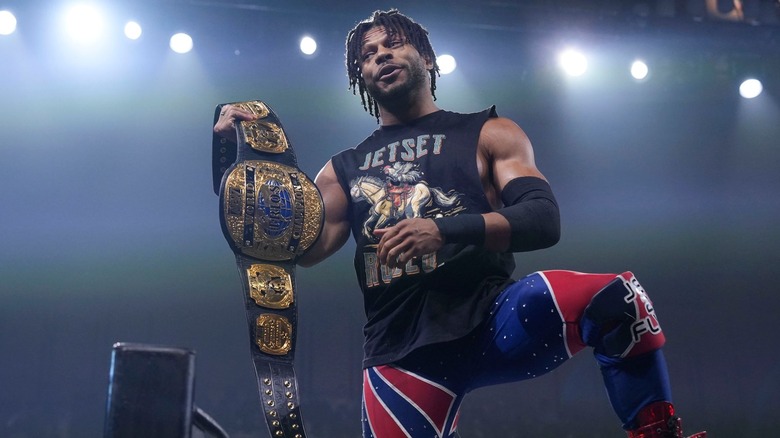
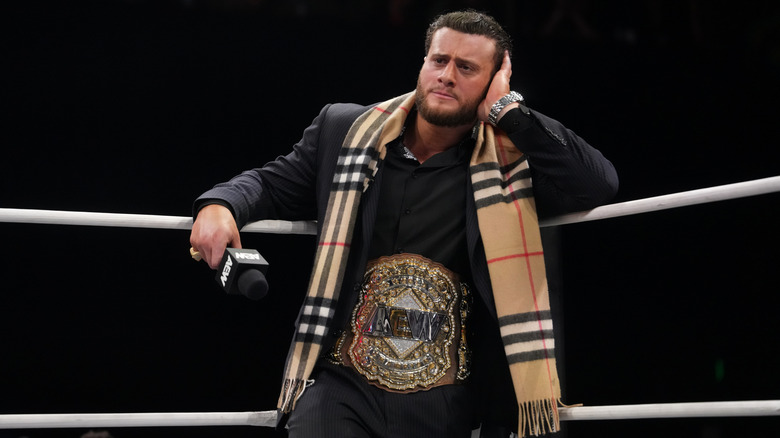
Conversely, the opening bout of the evening, pitting reigning AEW World Champion Maxwell Jacob Friedman against the then-holding AEW World Trios Champion Kevin Knight, proved to be a significant point of contention. While the match served as a somewhat indirect setup for the evening’s Trios Championship main event, its placement and nature raised serious questions about the suspension of disbelief. Booking a world championship match, or any high-stakes title bout, on free television mere weeks before a major pay-per-view where the championship’s future is already definitively charted is a precarious creative decision. The inherent predictability of such a match, particularly when the World Championship is on the line and a major grudge match has already been advertised for the upcoming PPV, severely diminishes its impact.
Despite Knight’s commendable performance and his growing popularity among the fanbase, the narrative simply did not support the notion of him emerging victorious against MJF. The specter of MJF’s imminent Texas Death Match against "Hangman" Adam Page at Revolution loomed large, making any potential Knight victory feel like a fantasy that the audience could not invest in. For a promotion that frequently utilizes "eliminator" matches to build contenders, this encounter felt like a missed opportunity. A more strategically sound approach would have been to frame this as an eliminator bout, perhaps involving Page or Mike Bailey, thereby providing a more plausible pathway for Knight to gain momentum and potentially challenge for the Trios titles at a later, more opportune time. The inclusion of a brief, seemingly throwaway match involving "Hangman" Adam Page, which concluded with a swift Buckshot Lariat, further underscored the show’s sometimes disjointed pacing. While this squash match did serve to set up the main event by leading to the post-match assault by the Don Callis Family, its minimal impact highlighted a broader issue of how significant upcoming PPV matches were being presented. The lead-up to Revolution, as has been the case with previous major AEW events, appears to be a period where the television product sometimes falters in its ability to consistently engage, despite the promise of the eventual pay-per-view itself.
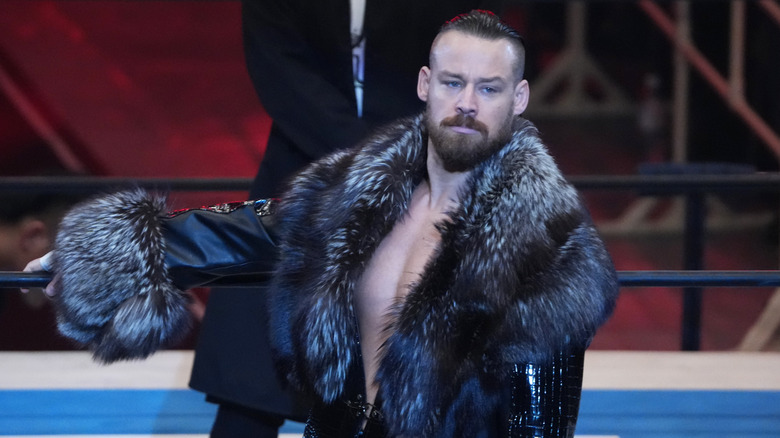
The wrestling world in 2026 has been a hotbed of movement, with established stars transitioning between promotions and new talent making their mark. The recent retirements of icons like AJ Styles from WWE and Hiroshi Tanahashi from his long-standing NJPW tenure have opened up significant voids, while the influx of talent like Royce "Powerhouse" Hobbs and Danhausen into WWE, and the subsequent reshuffling of factions like Los Ingobernables de Japon, have reshaped the competitive landscape. Amidst this whirlwind of change, Tony Khan has been remarkably active in signing available talent, and the March 4th edition of "Dynamite" witnessed the arrival of a performer who possesses the potential to be a true game-changer for All Elite Wrestling: David Finlay.
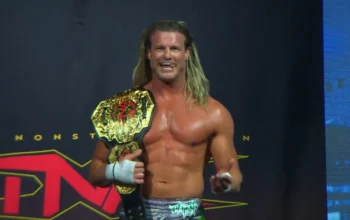
Finlay’s evolution over the past few years has been nothing short of remarkable. The son of wrestling stalwart Fit Finlay, who once navigated the challenging waters of Japanese professional wrestling, has transformed into one of the most respected foreign-born talents in the industry. He breathed vital new life into the storied Bullet Club faction by forming The War Dogs, and departed New Japan Pro-Wrestling earlier this year as a fully realized character, poised for the grandest stages. While the allure of WWE, where his father and brother ply their trade, was a clear consideration, Finlay’s decision to join Gabe Kidd and Clark Connors in AEW speaks volumes about his priorities and his belief in the promotion’s trajectory. The immediate reaction in the arena, while not an earth-shattering ovation, was understandable given the increasing frequency of NJPW talent appearing on AEW programming. However, Finlay’s choice to align with AEW over WWE represents a significant statement of intent. His proven success in Japan, coupled with his formidable presence, suggests that his arrival in AEW could quickly lead to impactful storylines and championship pursuits. The prospect of Finlay clashing with established AEW mainstays like Orange Cassidy and Darby Allin, two wrestlers renowned for their ability to elevate their opponents, is particularly enticing. AEW has demonstrated a willingness to take creative risks in 2026, with instances like Brody King defeating MJF in under two minutes, Andrade El Idolo besting Kenny Omega and Swerve Strickland, and Tommaso Ciampa capturing the TNT Championship in his debut match, all highlighting a penchant for unexpected turns. Finlay’s arrival feels perfectly timed within this dynamic environment. While the main event scene appears to have its direction for the remainder of the year, AEW’s deep roster provides ample opportunity for Finlay to establish himself as a formidable force. With his allies, Kidd and Connors, by his side, the "Savage King" could very well ascend to the top of the AEW hierarchy. This is a wrestler to watch closely; Finlay is a true competitor.
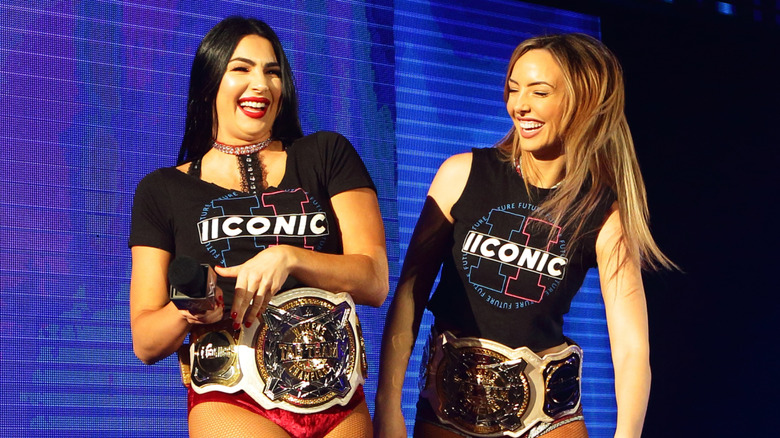
In stark contrast to the exciting debut of David Finlay, the performance of The IInspiration proved to be a significant disappointment, living up to a rather uninspired moniker. While it might have been more palatable for Cassie Lee and Jessie McKay to absorb a loss to The Brawling Birds in a match that allowed them sufficient time to showcase their abilities, their AEW debut on the March 4th "Dynamite" was a far cry from that. Their introduction to the AEW audience culminated in a loss to Jamie Hayter and Alex Windsor that lasted mere seconds, a decision that effectively rendered their initial appearance on the program a non-event.
This abrupt defeat did little to endear Lee and McKay to the AEW fanbase, providing no compelling reason for viewers to invest in them as a tag team – precisely the opposite of what should have been achieved. The IInspiration are recognizable names within the women’s wrestling circuit, and their immediate relegation to such a short, decisive loss felt like a squandered opportunity to build their credibility within AEW. For a promotion that aims to establish new talent, particularly those with existing accolades, this booking choice was perplexing. It marked the lowest point of an episode that could generously be classified as mediocre, and it significantly undermined the initial impact of Lee and McKay in their most prominent AEW match to date.
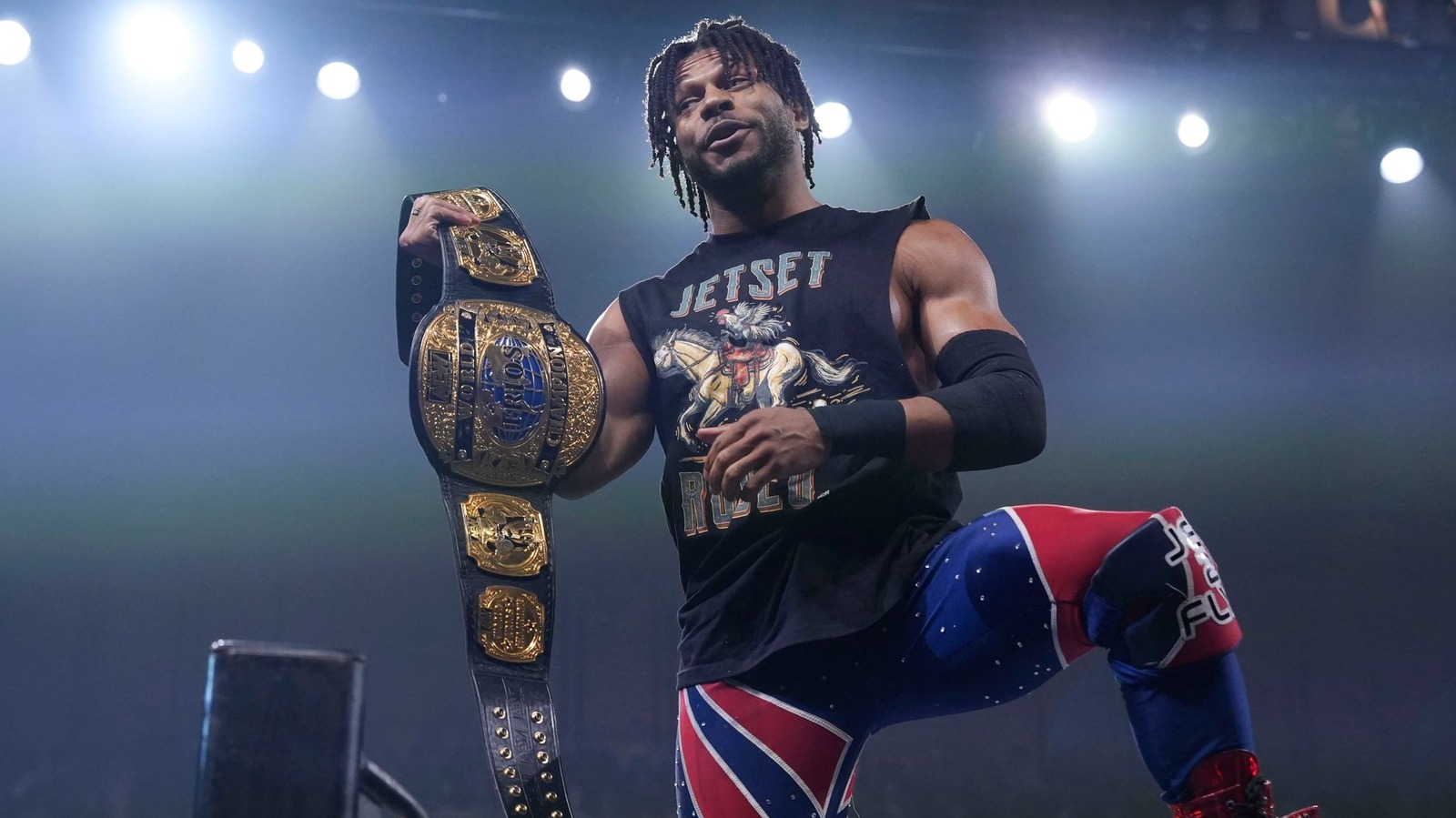
The main event of the evening provided a much-needed jolt of excitement with a dramatic Trios Championship change. Kevin Knight, who had endured a difficult night, beginning with a loss to MJF and culminating in taking the pinfall in the Trios title bout, saw his team—along with Mike Bailey and "Hangman" Adam Page—surrender the belts to the formidable Don Callis Family unit of Kyle Fletcher, Kazuchika Okada, and Mark Davis. The narrative leading into the main event was classic wrestling storytelling: after Page had secured a swift victory in a squash match and issued a challenge to MJF, the Don Callis Family launched a decisive ambush. This interference, coupled with Callis’s subsequent call for a title match, effectively set the stage for the championship handover.
The match itself was a display of high-octane action, but the result was equally significant in its implications. The title loss effectively frees "Hangman" Adam Page to focus solely on his pursuit of the AEW World Championship at Revolution, unburdened by the responsibilities of the Trios division. For Kevin Knight, the back-to-back losses on this single night could serve as a catalyst for individual storylines, potentially leading to a divergence within the "Jet Set Rodeo" collective. Swerve Strickland’s previous endorsements of Knight hint at a possible heel faction forming, with Knight potentially at its forefront. This scenario also allows Mike Bailey to continue his pursuit of singles gold and potentially engage in a feud with Knight. Crucially, this shift injects a renewed sense of jeopardy for the babyface contingent heading into future contests. The relinquishing of the Trios titles, while perhaps a minor concern given that Okada and Fletcher already hold singles championships, resolves a self-imposed booking dilemma for AEW. The "Jet Set Rodeo" team had served its purpose, primarily as a vehicle to transition the belts following Powerhouse Hobbs’ departure, and this change now allows for the potential overexposure of a wrestler poised for a potential World Championship run and frees up the immensely talented Bailey and Knight to pursue their individual aspirations. A championship change on free television, when executed effectively and with a clear vision for the future, is always a welcome development, and this particular instance certainly earned its "loved" designation.
Conversely, the presentation of a significant match slated for the upcoming Revolution pay-per-view left much to be desired. The contest between Andrade El Idolo and Bandido, advertised as a major showdown for the March 15th event, received minimal attention on the March 4th "Dynamite." While Excalibur’s announcement of the match, emphasizing its importance, highlighted the potential quality, the broadcast failed to capitalize on this. The build-up consisted of a brief and underwhelming backstage verbal confrontation, a far cry from the level of hype a bout featuring two of the world’s premier luchadores should command.
Considering the broadcast’s extensive overrun and the inclusion of two superfluous squash matches designed to elevate The Brawling Birds and "Hangman" Adam Page, there was ample time to dedicate more attention to generating anticipation for the El Idolo-Bandido encounter. Both wrestlers have carved out reputations as exceptional performers in the lucha libre style, and their impending clash promises a high-quality wrestling match. However, by relegating their interaction to a backstage segment, its perceived significance was diminished. A more impactful approach would have involved transitioning their verbal exchange into the ring, even if it meant a limited in-ring performance, to underscore the magnitude of their upcoming confrontation. This missed opportunity highlights a recurring issue in AEW’s pre-pay-per-view programming, where critical build-up for major matches sometimes takes a backseat to less consequential segments, ultimately impacting the overall momentum heading into their biggest events.