The world of professional wrestling, much like its combat sports brethren, thrives on compelling narratives, personal vendettas, and the lingering echoes of past confrontations. Even when direct competition never materializes, the psychological warfare and the passionate declarations of athletes can fuel a fire that burns for years. Such is the case with the simmering tension between former UFC phenom Ronda Rousey and the dominant featherweight queen Cris “Cyborg” Justino. Recently, Rousey, amidst the build-up to a highly anticipated exhibition match against Gina Carano, reignited this long-standing feud with a series of pointed remarks directed at Cyborg, dredging up their shared history and casting a shadow over the current proceedings.
The origins of this particular animosity can be traced back to the peak of both women’s careers within the Ultimate Fighting Championship. While they never officially shared the octagon, the seeds of conflict were sown through a complex web of shared opponents, divisional politics, and contrasting career trajectories. Rousey, the undisputed queen of the bantamweight division, was a cultural phenomenon, a trailblazer who brought a new level of mainstream attention to women’s mixed martial arts. Her aggressive, submission-focused style and unparalleled aura of invincibility made her a must-see attraction. Cyborg, on the other hand, had carved out her own legacy as the most dominant force in women’s featherweight history, a powerhouse striker who had systematically dismantled every opponent put in front of her under various promotions, most notably Strikeforce and later the UFC.
The indirect connection between Rousey and Cyborg became a significant talking point. Gina Carano, Rousey’s opponent in the upcoming exhibition bout, was a pivotal figure in the early days of women’s MMA, holding the inaugural Strikeforce Women’s Featherweight Championship. Her career-defining victory in that inaugural championship bout came against none other than Cris Cyborg in August 2009, a decisive performance that cemented Cyborg’s status as a future superstar. Tragically, that match would also prove to be Carano’s final professional outing to date, a premature end to a career that held immense promise. This shared opponent, therefore, provided an immediate point of reference and a foundation for Rousey’s recent verbal assault. Furthermore, Rousey’s close friend and fellow combat sports athlete, Shayna Baszler, had also faced Cyborg in a catchweight bout under the Strikeforce banner in 2008, a fight that resulted in a victory for Cyborg. This intertwining of their respective circles added another layer of personal investment to the rivalry, turning it into something more than just a hypothetical matchup.
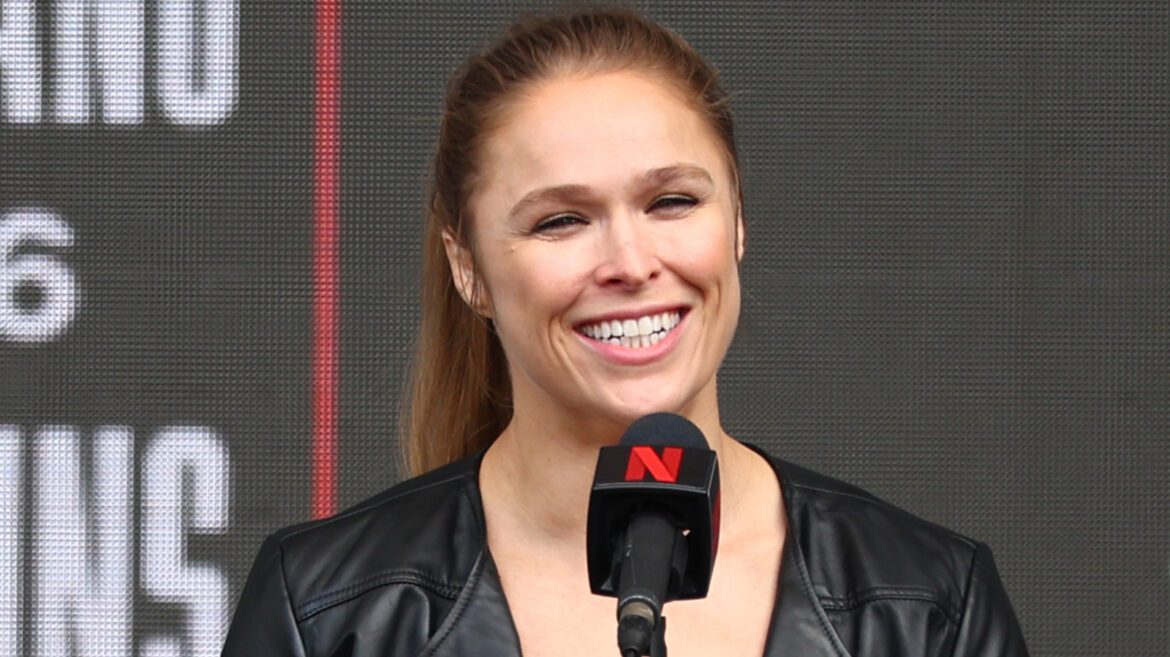
The spark that ignited Rousey’s latest tirade occurred when Carano, during a press conference hyping her upcoming exhibition match, was asked about her last professional opponent. In response, Rousey, stepping in to answer on Carano’s behalf, did not hold back. She referred to Cyborg in deeply unflattering terms, labeling her a "cheating b" who had artificially enhanced her performance, implying that Cyborg’s victories, particularly her defeat of Carano, were tainted. Rousey’s exact phrasing was unequivocally aggressive, accusing Cyborg of being a "roided-up cheating b that totally cheated you out of your title that was deservingly yours." This was not subtle; it was a direct and forceful accusation, intended to provoke a reaction and reignite the embers of their long-standing, albeit indirect, feud.
The accusation of performance-enhancing drug use is a sensitive and historically charged topic in combat sports, and Cyborg has indeed had a past encounter with this issue. In 2011, Cyborg tested positive for a banned substance following her Strikeforce bout against Hiroko Yamanaka. She received a one-year suspension and a fine for the infraction. At the time, Cyborg maintained that the substance was an ingredient in a weight-loss supplement she was given in Brazil, and that she was unaware it was banned for athletes in the United States. She has since undergone extensive and frequent drug testing under UFC’s Anti-Doping Program, consistently returning clean results for over a decade, and has often spoken about her commitment to clean sport and her role in educating younger athletes about the dangers of performance-enhancing drugs.
Cyborg, no stranger to public discourse, did not remain silent in the face of Rousey’s inflammatory comments. She issued a measured, yet firm, response, highlighting the passage of time since her infraction and the lessons learned. She pointed out that the incident occurred fifteen years prior, in a different era of sports testing and awareness. Cyborg emphasized her adherence to rigorous anti-doping protocols for over fifteen years since that solitary failed test, showcasing a history of clean competition. She also drew a stark contrast between her own handling of past adversities and what she perceived as Rousey’s less dignified responses to defeat. Cyborg alluded to Rousey’s well-documented emotional struggles following her knockout loss to Holly Holm at UFC 193, suggesting that Rousey had not handled that significant setback with the same grace and composure that Cyborg herself had displayed after her own difficult moments.
Furthermore, Cyborg directly addressed Rousey’s persistent avoidance of a potential superfight between them, even when both were active and dominant champions in their respective divisions. Cyborg suggested that Rousey’s verbal attacks were a substitute for actual confrontation, implying that Rousey would speak boldly but would ultimately shy away from facing her in a legitimate contest. This jab at Rousey’s perceived reluctance to engage in a high-stakes matchup underscored the persistent "what if" scenario that has long fascinated MMA fans: the hypothetical clash between the dominant judoka and the devastating striker. Cyborg’s closing remarks conveyed a sense of empathy tempered with a challenge, expressing a hope that Rousey could find personal peace, while simultaneously highlighting Rousey’s tendency towards public vitriol over substantive action.
The upcoming exhibition match between Ronda Rousey and Gina Carano, promoted by MVP and scheduled for streaming on Netflix on May 16th, serves as the immediate backdrop for this rekindled animosity. While this contest is presented as an exhibition, the historical significance of both fighters, particularly Carano’s legacy as a pioneer and Cyborg’s victory over her, provides a rich tapestry for narrative building. Rousey’s intervention, therefore, is not merely a random outburst but a strategic deployment of past grievances to add intrigue and generate buzz for her own upcoming appearance. It taps into the existing narrative threads of Carano’s career, her rivalry with Cyborg, and Rousey’s own place in the pantheon of female combat sports icons.
This situation also offers a fascinating microcosm of how rivalries can evolve and persist in the absence of direct competition. In professional wrestling, feuds are often manufactured and driven by storylines, but in combat sports, they can arise organically from shared experiences, perceived slights, and the competitive spirit that defines elite athletes. The Rousey-Cyborg dynamic, even if it never culminates in a physical confrontation, remains a potent reminder of the psychological warfare that can accompany athletic excellence. It highlights how past events, even those that occurred years ago and involved different circumstances, can continue to shape present-day perceptions and fuel ongoing discourse. Rousey’s comments, while harsh and controversial, serve to keep the narrative alive, reminding fans of the potential dream match that never was and the lingering animosities that continue to define these two formidable athletes. The echoes of their hypothetical clash continue to resonate, a testament to the enduring power of a compelling rivalry, even in its phantom form.