The landscape of professional wrestling has always been defined by its borders, both physical and metaphorical. From the localized territories of the mid-twentieth century to the explosive global expansion of the eighties and the high-stakes television ratings battles of the nineties, the industry has thrived on the concept of "us versus them." In the modern era, that friction is most palpable in the ongoing competition between World Wrestling Entertainment and All Elite Wrestling. Fans on social media platforms engage in relentless debates, dissecting every quarter-hour rating and attendance figure as if they were soldiers on the front lines of a cultural conflict. However, beneath the surface of this perceived hostility lies a sophisticated network of professional respect that often goes unnoticed by the general public. This curtain of tribalism was recently pulled back by none other than the AEW World Champion, Maxwell Jacob Friedman, who offered a rare and candid glimpse into the reality of life at the top of the mountain.
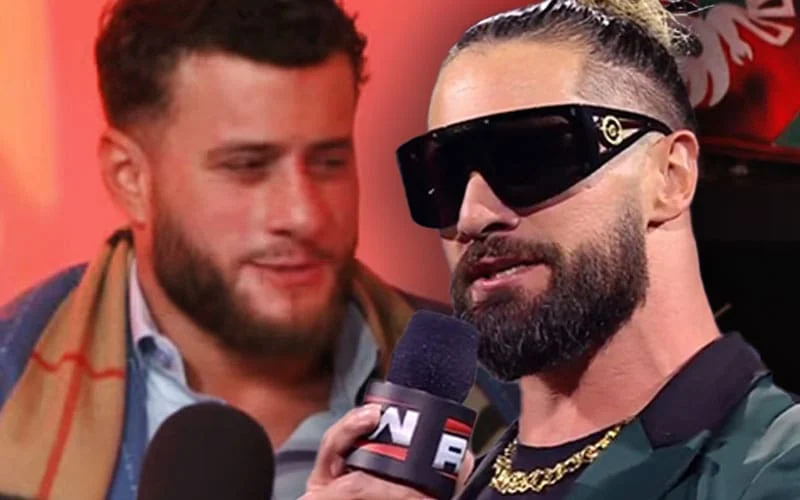
Maxwell Jacob Friedman, more commonly known by his initials MJF, has built a legendary reputation on his refusal to break character. For years, he was the rare throwback who lived his persona twenty-four hours a day, insulting fans at airports and maintaining a haughty, elitist demeanor in every public appearance. Yet, as his career has progressed and his responsibilities as the primary face of AEW have grown, the man behind the "Salt of the Earth" moniker has occasionally allowed the world to see the astute professional who takes the craft of wrestling with the utmost seriousness. During a recent high-profile media appearance, the conversation shifted toward his interactions with the stars of the rival promotion, specifically the reigning WWE World Heavyweight Champion at the time, Seth "Freakin" Rollins. Rather than leaning into his trademark vitriol, MJF opted for a tone of profound admiration, signaling a shift in how the elite tier of performers view their contemporaries across the aisle.
The meeting between these two titans of the industry took place in a neutral media environment, a setting where the usual barriers of television storylines are momentarily lowered. Observers noted that when MJF and Rollins crossed paths, there was no tension or manufactured drama. Instead, there was a visible sense of camaraderie and mutual recognition. For the fans who spend their days arguing about which company is superior, this might seem like a betrayal of the competitive spirit. For the performers themselves, however, it is a recognition of a shared burden. Carrying a major national promotion on one’s shoulders is a task that very few individuals in the history of the business can truly understand. It requires a level of mental fortitude, physical sacrifice, and creative brilliance that transcends the logo on the ring apron. MJF pointed out that when someone reaches the level of success that Seth Rollins has achieved, their talent becomes undeniable, regardless of which company they work for.
Seth Rollins is a particularly interesting figure for someone like MJF to praise. Rollins has spent the better part of two decades establishing himself as one of the most versatile and reliable performers in the world. From his beginnings on the independent circuit as Tyler Black to his meteoric rise as the "Architect" of The Shield and his eventual evolution into the flamboyant, high-energy "Visionary," Rollins has consistently reinvented himself to stay at the forefront of WWE. He is widely considered the "workhorse" of the company, the man the office calls upon when they need a five-star match or a compelling narrative to anchor their flagship program. MJF, despite his younger age, sees a mirror image of that dedication in his own career. He views himself not just as a wrestler, but as the standard-bearer for a new generation. By acknowledging Rollins’ status, MJF was essentially acknowledging a peer who operates on the same elite frequency.
The AEW World Champion emphasized that the "war" between the two companies is largely a construct of the fan base and the media. While the corporate entities certainly compete for market share and advertising dollars, the locker rooms are filled with people who have traveled the same roads, trained in the same gyms, and shared the same dreams. In the modern era, the movement of talent between WWE and AEW has become common, further blurring the lines. Wrestlers who were once rivals in the indies might find themselves on opposite sides of the promotional divide, but the friendships and professional bonds remains intact. MJF explained that when two people who are considered the "faces" of their respective organizations get together, the conversation isn’t about ratings or spiteful competition. Instead, it is an opportunity to pick each other’s brains and discuss the nuances of a craft they both love.
This exchange of ideas is a vital part of the industry’s evolution. When top-tier minds like MJF and Rollins discuss the business, they are talking about the psychology of a crowd, the pacing of a long-term storyline, and the pressures of being a public figure in an age of instant social media feedback. MJF noted that it is a significant occasion when he gets to spend time with someone of Rollins’ caliber. He described it as a "big deal" for both parties, highlighting the fact that even at the pinnacle of the sport, there is always more to learn. This humility is a stark contrast to the MJF we see on Wednesday nights, but it speaks to the reality of why he has been so successful. He is a student of the game who recognizes greatness when he sees it, even if that greatness is wearing a WWE title belt.
The term "undeniable" was a recurring theme in MJF’s comments. In the subjective world of professional wrestling, where "quality" is often a matter of opinion, being undeniable is the ultimate goal. It means that even your harshest critics cannot argue with your results. Seth Rollins has reached that stage through years of consistent excellence. He has main-evented WrestleManias, held every major title in the company, and remained a top draw through multiple eras of WWE programming. MJF, meanwhile, has achieved undeniable status by becoming the youngest world champion in AEW history and proving that he can carry the company through its most turbulent periods. When these two men look at each other, they don’t see an enemy; they see a fellow member of an exclusive club.
This mutual respect also serves as a reminder of the shifting dynamics of the "Bidding War of 2024," a long-running narrative thread in MJF’s career. By publicly praising the top stars of WWE, MJF cleverly keeps the door open for future possibilities while simultaneously elevating his own brand. He positions himself as a global commodity who is on the same level as the biggest names in the industry. It is a masterclass in professional positioning. By saying that he and Rollins are the faces of their respective promotions, he is elevating AEW to the same status as WWE in the eyes of the listener, while also cementing his own place as the undisputed leader of the AEW roster.
Furthermore, the rapport between MJF and Rollins highlights a broader trend in the industry where the "Forbidden Door" is not just a specific event, but a state of mind. While a formal talent exchange between WWE and AEW remains unlikely in the current corporate climate, the intellectual exchange is happening constantly. Performers are watching each other’s work, learning from each other’s successes, and maintaining a level of professional etiquette that was often missing in previous generations. The days of locker room leaders demanding that their subordinates hate the competition are largely over. Today’s stars realize that a healthy industry is good for everyone. If Seth Rollins is doing great work in WWE, it pushes MJF to do even better work in AEW, and vice versa. The competition is real, but it is a competition based on excellence rather than animosity.
As the interview concluded, MJF reiterated his stance with a sense of finality. He made it clear that while he is fiercely loyal to his own path and his own promotion, he will never be so blinded by tribalism that he fails to recognize a "hell of a talent." This level of honesty is refreshing in a business that is so often shrouded in smoke and mirrors. It provides the audience with a more nuanced understanding of the people behind the characters. They are athletes, artists, and businessmen who are dedicated to pushing the boundaries of what professional wrestling can be.
The story of MJF and Seth Rollins is a testament to the fact that greatness recognizes greatness. In a world that often feels divided, the shared passion for the squared circle remains a unifying force for those who have dedicated their lives to it. Whether they ever share a ring in a competitive capacity remains to be seen, but the respect they share is already a matter of record. For the fans, perhaps the takeaway is that it is possible to support one "team" without hating the other. If the AEW World Champion can find common ground and mutual admiration with the face of WWE, then the wrestling world is in a much healthier place than the internet comments sections would have us believe. The industry continues to move forward, driven by the brilliance of men like MJF and Rollins, who understand that being undeniable is the only way to truly leave a legacy.