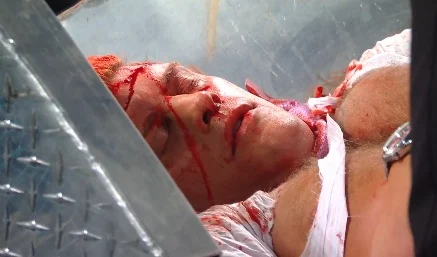
The landscape of World Wrestling Entertainment, particularly on the blue brand, SmackDown, underwent a seismic and deeply unsettling shift on the evening of March 13th. What began as a seemingly respectful, albeit tense, ceremonial signing for the WWE Championship match at WrestleMania 42 between the reigning champion, Cody Rhodes, and his formidable challenger, Randy Orton, devolved into a savage, blood-soaked spectacle that will forever redefine their impending clash. This wasn’t merely a turning point; it was a brutal, definitive declaration from a man long known for his unpredictable nature, a stark reminder that beneath the veneer of camaraderie, the most dangerous instincts of the "Apex Predator" still lurk, ready to strike without mercy.
For months, the trajectory of both Cody Rhodes and Randy Orton had been on a collision course with destiny, each man navigating a unique path towards the grandeur of WrestleMania. Cody Rhodes, the "American Nightmare," had finally achieved his lifelong dream, culminating a generational ambition by capturing the coveted WWE Championship. His reign had been marked by hard-fought victories and a profound connection with the WWE Universe, a testament to his relentless pursuit of greatness and his unwavering commitment to the fans who had witnessed his arduous journey. He carried the weight of his legacy with pride, embodying the spirit of a champion who had overcome every obstacle placed before him. The anticipation for his title defense at WrestleMania 42 against a legend of Orton’s caliber was palpable, promising a main event steeped in history, skill, and personal stakes.
Randy Orton, on the other hand, had recently re-emerged from a significant period of absence, a hiatus that had seen him grapple with serious injuries. His return to the squared circle was met with thunderous applause, a welcome sight for legions of fans who had missed the "Viper’s" signature RKO and his menacing presence. Initially, Orton seemed to embrace a more heroic persona, aligning himself with former adversaries and showcasing a newfound respect for the locker room. Yet, the shadows of his past, the echoes of the "Legend Killer" persona, always lingered just beneath the surface, a constant reminder of the darkness he could summon at will. His path to the WrestleMania main event was hard-earned, battling through a gauntlet of top-tier talent to earn the right to challenge for the industry’s most prestigious prize. The narrative seemed to be one of mutual respect, a clash of titans where the best man would win, but as the events of that fateful SmackDown unfolded, it became horrifyingly clear that Orton harbored far more sinister intentions.
The tradition of the contract signing in professional wrestling is a well-worn trope, a narrative device designed to heighten tension and often serve as a precursor to violent confrontation. Rarely do these segments proceed without incident, and tonight’s gathering in the ring was no exception. With WWE officials, including the General Manager, overseeing the proceedings, the stage was set for the official sealing of the WrestleMania 42 main event. Cody Rhodes, ever the consummate professional, entered the ring with a confident stride, his championship proudly displayed over his shoulder. He greeted Orton with a warm embrace, a gesture indicative of their shared history, their past as mentor and protégé during the early days of Cody’s career. The champion spoke with genuine emotion, reflecting on their journey together, expressing his profound respect and pride in having been "Orton’s boy," a protégé who had now ascended to the pinnacle of the sport. His words were a blend of admiration and a firm declaration of his readiness for the challenge ahead, acknowledging the formidable opponent he faced in the ring.
However, a subtle unease permeated Randy Orton’s demeanor. His movements were slightly stiff, his gaze less direct, hinting at an internal struggle or a carefully constructed facade. When it was his turn to address the WWE Universe and his opponent, Orton’s voice carried an unsettling edge. He dismissed Cody’s sentimental reflections with a chilling bluntness, stating that Cody "simply didn’t comprehend" the gravity of the situation. For Orton, this wasn’t about sentimentality or past allegiances; it was about the championship, a prize he needed to reclaim. He articulated a stark, almost desperate, desire to win the title at WrestleMania, emphasizing his personal imperative. In a moment that now feels like a premonition, he expressed a subtle frustration, noting that this confrontation was "supposed to be straightforward," implying his expectation that his opponent would be Drew McIntyre, a foe against whom he presumably felt more prepared or less emotionally invested. This seemingly innocuous comment, at the time, was a whisper of the venom to come, a sign that the "Viper" felt a sense of grievance, perhaps even betrayal, that Cody stood in his way instead of another.
Cody, attempting to bridge the growing chasm of tension, interjected with a resolute assurance. He declared his full understanding of what awaited him when the opening bell tolled at WrestleMania. He spoke of facing the ruthless "Legend Killer," the man behind "the three most dangerous letters in WWE," acknowledging the unpredictable and often brutal nature that defined Randy Orton’s most feared incarnation. The champion’s words were intended to convey readiness, a refusal to be intimidated, and an acceptance of the fierce challenge ahead. Yet, in hindsight, Cody’s confidence was a tragic miscalculation, for he truly did not grasp the depths of Orton’s impending treachery. The "Viper" had no intention of waiting five more weeks for the grandest stage; his strike was imminent, calculated, and devastating.
The moment the final signature was scrawled on the contract, signifying the official agreement for their WrestleMania encounter, the atmosphere in the arena shifted from tense anticipation to outright horror. Without a flicker of hesitation, Randy Orton erupted. The shift was instantaneous, brutal, and utterly without remorse. He seized Cody Rhodes, slamming his head with sickening force against the unforgiving surface of the contract table. The impact resonated through the arena, a grotesque punctuation mark to their agreement. Before Cody could even register the assault, Orton delivered a vicious, illicit strike below the belt, a cruel blow that instantly crippled the champion, leaving him gasping for air and doubled over in agony. This was not the act of a competitor; it was the calculated cruelty of a predator.
What followed was a relentless and deeply disturbing onslaught. Orton, now fully unchained, continued his merciless assault, driving Cody into the ring post, battering him against the barricade, each impact designed to inflict maximum pain and psychological damage. The crowd watched in stunned silence, their cheers turning to gasps of disbelief and shouts of concern. Amidst the chaos, a gash appeared on Cody Rhodes’ forehead, a crimson river beginning to flow freely down his face, staining his blonde hair and painting a gruesome tableau across his features. The sight of the champion’s own blood, smeared across Orton’s arms as he continued his brutalization, cemented the visceral reality of this profound betrayal. This was no longer a wrestling match in the making; it was a savage, personal vendetta. The "Apex Predator" had reverted to his most primal, destructive form, and his former protégé was merely prey.
As Orton continued to administer a savage beating, a familiar figure emerged from backstage, attempting to intervene. It was Jelly Roll, Randy Orton’s former tag team compatriot, a man who had shared the ring and the locker room with the "Viper" during his more recent, seemingly reformed, tenure. Jelly Roll, clearly distraught by the unfolding violence, tried to appeal to Orton’s humanity, to reason with the man he once called partner. His pleas were met with cold indifference. Without breaking stride, Orton violently shoved Jelly Roll to the mat, a dismissive gesture that underscored his complete abandonment of any past allegiances or friendships. The message was clear: no one would stand in his way, and no past bond held any sway over his newfound, terrifying purpose.
For a brief, agonizing moment, Orton paused. He surveyed the wreckage he had wrought, the champion lying prone and bleeding, the officials scrambling in panic. He then slowly exited the ring, walking up the ramp, leaving the impression that his horrific work was done. The collective sigh of relief from the shocked audience was premature. This momentary retreat was merely a strategic withdrawal, a calculated move to allow the dread to fester, to amplify the psychological impact of his eventual return. True to his moniker as the "Viper," Orton was merely recoiling before striking again, with even greater lethality.
He reappeared at ringside, a steel chair clutched in his hands, its cold, hard metal glinting under the arena lights like an instrument of pure malice. The sight sent a fresh wave of terror through the venue. With chilling precision, Orton returned to the fallen champion, who was still being tended to by frantic medical personnel. Disregarding their pleas and desperate attempts to shield Cody, Orton lifted the chair and, with a sickening thud, mercilessly drove Cody Rhodes’ head into the unforgiving steel steps. Not once, but repeatedly, each impact echoing with brutal finality, signifying a deliberate intent to not just defeat, but to utterly destroy. The champion’s body convulsed with each strike, his resistance long gone, replaced by the grim reality of a man pushed to his physical and emotional breaking point.
Having completed his gruesome task, Orton calmly re-entered the ring. With a chilling display of triumph and dominance, he picked up the WWE Championship, the very title Cody Rhodes had fought so hard to obtain and defend. He didn’t hoist it in celebration; instead, he sat down in the center of the ring, the gold resting casually in his lap, his gaze fixed on the broken, bleeding form of Cody Rhodes being attended to by a swarm of officials. It was a silent, powerful, and utterly terrifying image – a man who had embraced his darkest self, asserting his control, his supremacy, over everything and everyone, including the aspirations of the "American Nightmare." The message was delivered with brutal clarity: the Viper was back, more dangerous than ever, and the WWE Championship was his ultimate obsession.
The implications of this heinous act reverberate deeply through the fabric of WWE, casting a long, crimson shadow over WrestleMania 42. Cody Rhodes, the champion known for his resilience and heart, now faces not just a challenger, but a tormentor. The psychological scars of this assault may prove as debilitating as the physical ones. How does a champion recover from such a profound betrayal, from being so savagely dismantled by a man he once respected, even admired? The narrative of their main event has been irrevocably altered from a respectful contest into a deeply personal, blood feud. Cody Rhodes now has a score to settle, a burning desire for retribution that transcends mere championship glory.
For Randy Orton, this re-embrace of his darker side solidifies his position as one of the most compelling and dangerous villains in professional wrestling history. His career has been defined by these sudden, shocking shifts in alignment, each one more impactful than the last. From his early days in Evolution, through his "Legend Killer" reign, and his infamous punt kicks, Orton has consistently proven his willingness to cross any line for personal gain. This latest transformation is a chilling reminder of his mastery over malevolence, a calculated move designed to shatter Cody Rhodes’ spirit before their monumental clash. The WWE Universe, which had embraced Orton as a returning hero, is now forced to confront the chilling reality that the "Viper" truly is a creature of pure instinct and ruthless ambition.
This incident will undoubtedly be etched into the annals of WWE history as one of the most shocking and brutal contract signings ever witnessed. It evokes memories of other infamous betrayals and bloodlettings that have fueled legendary rivalries – from the early days of wrestling’s most vicious feuds to more recent examples of unexpected turns that ripped apart established alliances. The sight of a champion’s blood, particularly in an era often characterized by more PG-rated content, underscores the extreme nature of Orton’s actions and the depth of his malice. It transforms WrestleMania 42 from a mere championship match into a potential war, a visceral struggle for dominance, honor, and perhaps, even survival. The road to the biggest show of the year has taken a dark, perilous turn, ensuring that when Cody Rhodes and Randy Orton finally meet in the center of the ring, it will be far more than just a fight for a title; it will be a battle for legacy, for vengeance, and for the very soul of the WWE Championship.