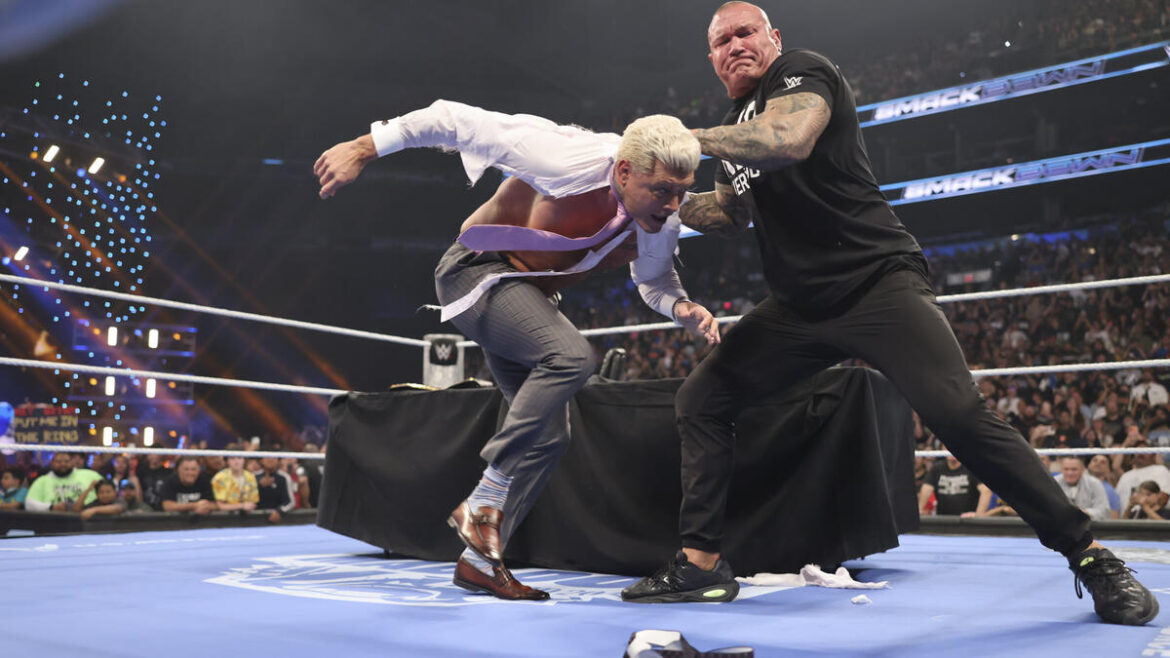
WrestleMania, the grandest spectacle in sports entertainment, consistently demands narratives of unparalleled drama and consequence. Each year, the road to this revered event is paved with speculation, unexpected twists, and the meticulous crafting of storylines designed to culminate in unforgettable moments. For months leading into WrestleMania 42, the landscape surrounding the coveted WWE Championship seemed shrouded in a fog of uncertainty, with potential main event scenarios failing to ignite the fervent excitement typically associated with the industry’s biggest stage. However, a sudden, decisive shift in direction, epitomized by a legendary superstar embracing his darker impulses, has not only clarified the championship picture but has also injected a profound sense of personal stakes into what promises to be an epic confrontation. The revelation of Cody Rhodes standing opposite his former mentor, Randy Orton, for the WWE Championship has transformed a once-tepid narrative into one brimming with emotional resonance and unpredictable intensity.
Initially, whispers and reports suggested a familiar path for the WWE Championship bout at WrestleMania 42: a third encounter between "The American Nightmare" Cody Rhodes and "The Tribal Chief" Roman Reigns. While their previous two encounters at WrestleMania had delivered high-octane drama, the prospect of a third consecutive main event featuring the same two titans, particularly after Reigns had twice emerged victorious, generated a lukewarm reception among a significant portion of the fanbase. The concern was not a lack of talent or capability from either competitor, but rather a perceived lack of fresh narrative impetus. After two years of "finishing the story" attempts against Reigns, the narrative felt somewhat exhausted, and a rubber match, without a truly compelling new angle, risked feeling like a rehash rather than a fresh chapter. The demand for innovation and new blood at the top of the card was palpable, and this proposed continuation seemed to fall short of those expectations.
Following the muted response to the potential Reigns trilogy, an alternative vision began to circulate, positioning Cody Rhodes against "The Scottish Warrior" Drew McIntyre. McIntyre, with his reinvigorated, cynical persona and a string of impressive performances, had certainly earned a prominent spot. His recent character development had seen him shed his previous heroic facade, embracing a more aggressive, self-serving attitude that resonated strongly with audiences. However, even this pairing, while offering a fresh opponent for Rhodes, still felt somewhat transitional. While a hard-hitting affair was guaranteed, it lacked the historical depth and personal animosity that often elevates a WrestleMania main event to legendary status. The discussion also included the possibility of adding Jacob Fatu to the mix, potentially evolving the match into a multi-man contest. While Fatu’s inclusion would introduce a dynamic new element, it also carried the risk of overcomplicating a championship narrative that ideally required a clear, emotionally charged one-on-one focus. The core issue remained: how to craft a championship match that transcended a mere contest and became a defining moment in the careers of its participants, captivating the global audience.
The answer, as it often does in professional wrestling, lay dormant in the annals of history, a storyline patiently waiting for its opportune moment to unfurl. The narrative threads between Cody Rhodes and Randy Orton stretch back well over a decade, intertwining their careers during the formative years of Rhodes’ journey. As part of the notorious Legacy faction alongside Ted DiBiase Jr., Rhodes learned directly at the feet of "The Viper," absorbing lessons in ruthlessness, strategy, and the psychological warfare that defines Orton’s craft. This mentor-mentee dynamic, though long since dissolved, always held the latent potential for a grand reunion, or perhaps, a devastating collision. This deeply embedded history provided the perfect foundation for a championship narrative that felt not only earned but also inherently personal, transcending the typical hero-versus-villain archetype. It was a story that had been brewing beneath the surface, a slow burn waiting for the precise catalyst to ignite.
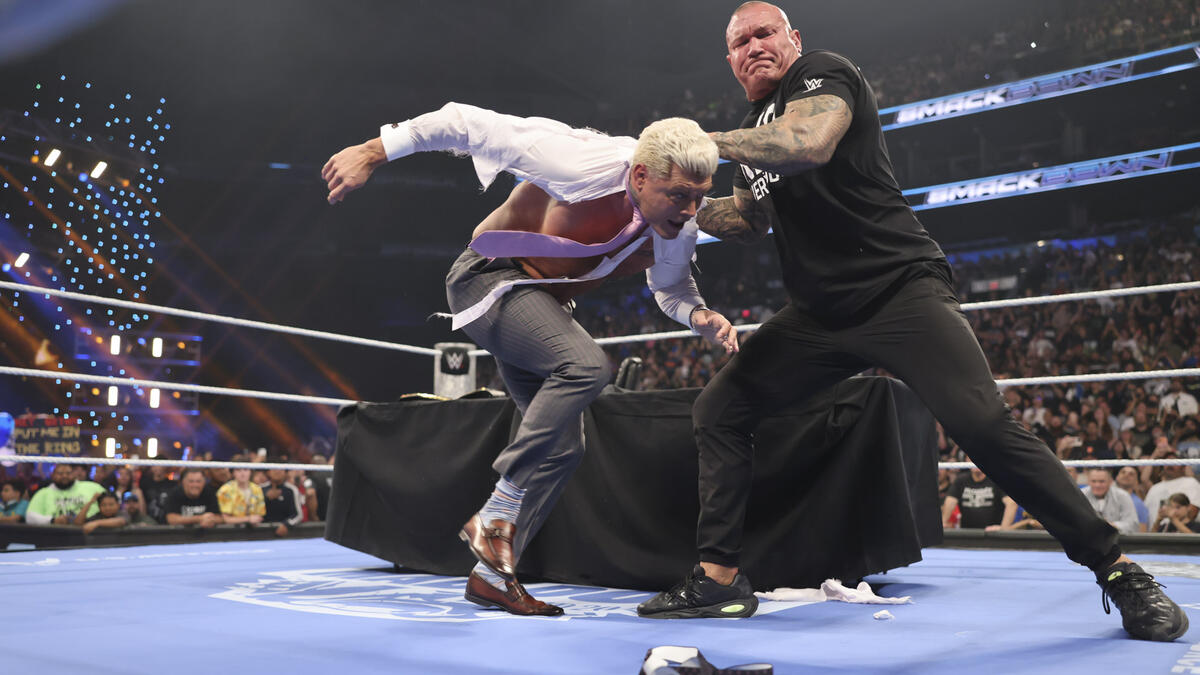
That catalyst arrived with chilling precision during the closing segment of the March 13 episode of SmackDown. The atmosphere was charged as Cody Rhodes and Randy Orton stood in the ring, poised to formally sign the contract for their WWE Championship match at WrestleMania 42. Rhodes, ever the earnest and honorable competitor, approached the moment with a palpable sense of respect and admiration for his former leader. He articulated his profound pride in having once been "his boy," acknowledging the profound influence Orton had exerted over his career. Rhodes envisioned a respectful clash between two top-tier babyfaces, a testament to their shared history and mutual reverence for the industry. He spoke of anticipating the emergence of "The Legend Killer" – the ruthless, calculated version of Orton – but only once the bell tolled, implying a clean, competitive contest devoid of pre-match hostilities.
Cody’s words painted a picture of a competitor eager to face the absolute best iteration of Randy Orton, the man who had recently triumphed in a grueling Elimination Chamber match, the youngest World Champion in company history, the master of the devastating RKO, which he reverently referred to as "the three most dangerous letters in all of WWE." Yet, through all this admiration, Cody maintained a clear boundary: the intense, predatory side of Orton was to be unleashed strictly within the confines of the squared circle. He concluded his heartfelt address with an emotional declaration, affirming his enduring affection for Orton, even after their monumental battle concluded. It was a declaration of unwavering loyalty and profound respect, setting the stage for what Cody believed would be a historic, yet honorable, encounter between friends turned rivals, a true exhibition of sportsmanship at its highest level.
However, Orton’s response quickly shattered Cody’s idealized vision, pulling back the curtain on a far more sinister and desperate ambition. "The Viper" stood before Rhodes, his expression a complex tapestry of internal conflict and burgeoning resolve. He acknowledged Cody’s words, but his own pronouncements conveyed a raw, almost apologetic ruthlessness. Orton articulated a profound, visceral "need" for the WWE Championship, a hunger so consuming that it superseded any lingering sentiment or historical bond. His voice betrayed a struggle, almost a reluctant justification for the betrayal he was about to unleash. He confessed that this particular path was not his original intention, lamenting that "this wasn’t supposed to be hard," and that "Drew [McIntyre] was supposed to be out here." This revealing admission starkly positioned Cody not as a revered opponent, but merely as an unforeseen obstacle in Orton’s relentless pursuit of gold. The subtext was clear: Cody was now just another target, standing between Orton and his ultimate desire.
The internal battle within Orton was palpable, yet the "voices in his head," as he famously describes them, were clearly winning. The Apex Predator, the colder, more calculating version of Randy Orton, was resurfacing with a vengeance. His almost apologetic tone only served to underscore the depth of his resolve; he was sorry for what he had to do, but he was going to do it nonetheless. This subtle yet profound shift marked the definitive turning point in Orton’s character, signaling a full-blown return to his heel alignment for the purposes of this championship feud. It was a moment of chilling realization for Cody and for the audience: the respectful, babyface Orton was gone, replaced by a man driven by an insatiable, almost primal, need for the ultimate prize, willing to discard friendships and history to achieve it.
To cement this heel turn beyond any shadow of a doubt, the segment required one final, undeniable act of villainy, and it came in the most unexpected form. Grammy Award-winning country music singer/rapper Jelly Roll, a genuine friend of Cody Rhodes, made an appearance, seemingly to show support for "The American Nightmare." As the contract signing concluded and the tension in the ring mounted, Jelly Roll innocently approached Orton, extending a hand in camaraderie, genuinely believing in the mutual respect that Cody had championed. He uttered words of friendship, a clear gesture of goodwill in a volatile environment. Yet, in a brutal display of his newly embraced ruthlessness, Orton responded by callously shoving the unsuspecting musician to the ground, a blatant act of aggression against a non-combatant.

This calculated assault on a helpless bystand served as the definitive exclamation point on Orton’s transformation. It was a moment designed to elicit a visceral reaction, instantly galvanizing fan sentiment against "The Viper." Wade Barrett’s commentary, remarking that "Jelly Roll is a braver man than most," perfectly encapsulated the shocking nature of the moment. The act was unnecessary, unprovoked, and utterly devoid of sportsmanship, leaving no ambiguity about Orton’s intentions. Any lingering doubts about his alignment were dispelled; Randy Orton was no longer the sympathetic, grizzled veteran, but a ruthless, selfish competitor willing to betray anyone, even a seemingly innocent outsider, to further his own agenda. This calculated move not only solidified Orton’s heel persona but also instantly elevated the emotional stakes of his impending clash with Cody Rhodes, ensuring that the audience would be fully invested in seeing "The American Nightmare" overcome his treacherous former mentor.
The ramifications of this dramatic shift extend far beyond the immediate segment. This unexpected narrative twist has fundamentally revitalized the entire WWE Championship picture, breathing fresh air into a storyline that was previously struggling to find its footing. Where earlier proposed matchups risked feeling predictable or less impactful, the personal animosity and historical depth of Orton versus Rhodes instantly elevate the contest to a premier attraction. It is no longer just about a championship; it is about betrayal, legacy, and the ultimate test of a protégé against his master. This deeply personal rivalry resonates with the core tenets of professional wrestling storytelling, drawing upon years of shared history to craft a narrative that feels both earned and incredibly compelling.
For Cody Rhodes, this feud adds an incredibly complex and poignant layer to his ongoing quest to "finish the story." His journey has been defined by overcoming formidable obstacles and proving himself worthy of the top prize. Now, he faces a challenge unlike any other: confronting a figure who once guided him, someone he genuinely respects and cares for, who has now chosen to betray that bond for personal glory. This isn’t merely a fight for a title; it’s a battle to reconcile his past, to prove that he can surpass the very person who helped mold him, even as that person succumbs to their darkest impulses. The emotional weight of this encounter will undoubtedly test Cody’s resolve in unprecedented ways, making any eventual triumph all the more meaningful.
Randy Orton, too, benefits immensely from this character re-alignment. His career has been marked by a masterful ability to transition between hero and villain, always remaining one of the most compelling figures on the roster. This return to his "Apex Predator" roots feels authentic and true to his established persona, reminding audiences of the chilling ruthlessness that lies just beneath the surface. Orton’s current narrative of "needing" the championship, even at the expense of friendship and loyalty, showcases his unparalleled ability to embody a character driven by desperate ambition. It adds a layer of unpredictable menace to his already formidable presence, ensuring that his role in this WrestleMania main event will be etched into memory.
Ultimately, the decision to pivot towards Cody Rhodes versus Randy Orton for the WWE Championship at WrestleMania 42 has proven to be a stroke of storytelling genius. It has injected a much-needed shot of adrenaline into the main event scene, replacing potential fatigue with genuine excitement and emotional investment. The intricate tapestry of their shared history, the dramatic contract signing, and Orton’s definitive heel turn, punctuated by the shocking assault on Jelly Roll, have coalesced into a narrative powerhouse. As the Grandest Stage of Them All approaches, all eyes will be fixed on this deeply personal, high-stakes encounter, eager to witness whether "The American Nightmare" can finally complete his odyssey by overcoming not just an opponent, but a cherished yet treacherous part of his own past. The WWE Championship match at WrestleMania 42 is no longer just a contest; it is a captivating saga, promising a conclusion worthy of the greatest show on earth.