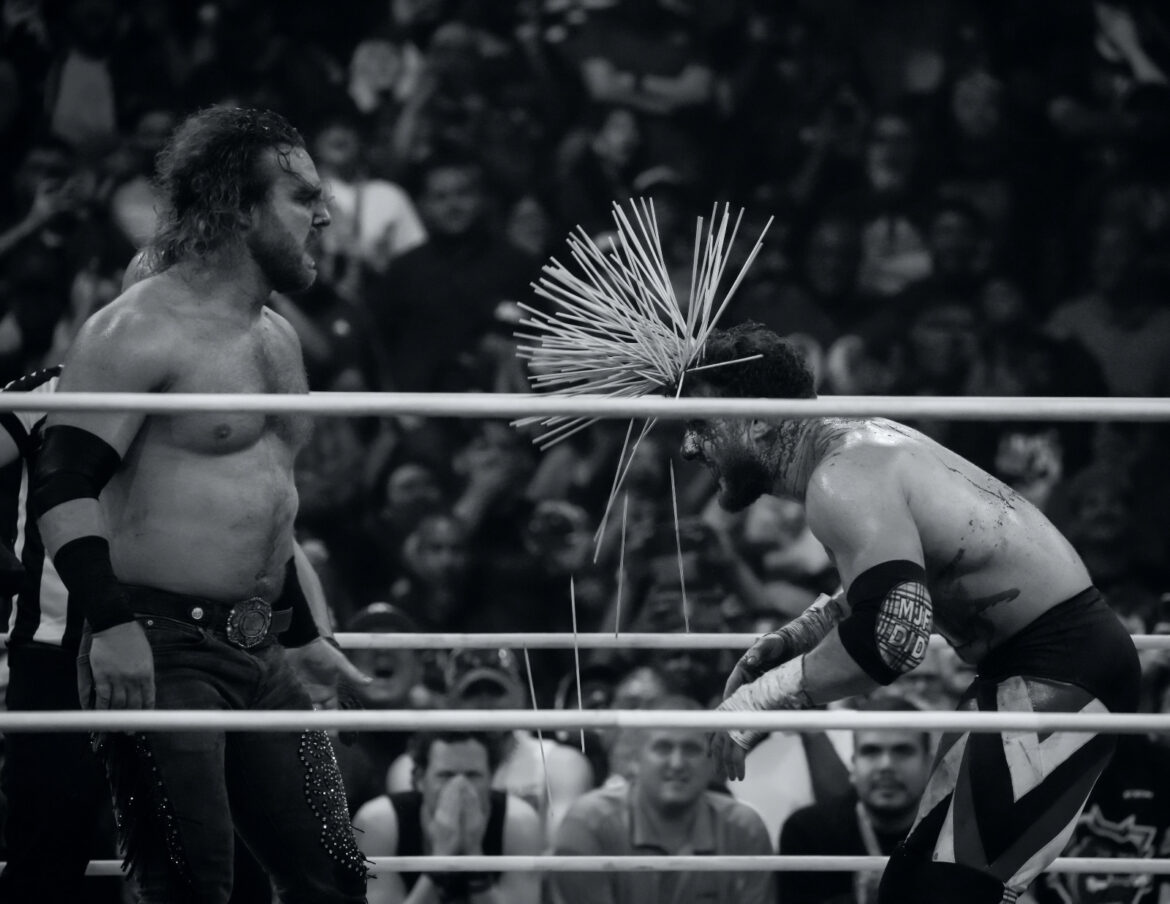
The early months of 2020 presented a fascinating, albeit rapidly changing, tableau for the professional wrestling industry, a period marked by both monumental triumphs and stark reminders of the sport’s inherent risks. From the burgeoning momentum of a new major player in All Elite Wrestling, delivering what many hailed as its finest pay-per-view offering to date, to the calculated brutality of a legendary WWE antagonist solidifying his villainous reign, and the enduring traditions of international promotions grappling with critical safety concerns, the landscape was a vibrant, often volatile, tapestry of athletic spectacle and deeply personal narratives. This era, on the precipice of unprecedented global disruption, showcased the diverse strengths and perpetual challenges within the squared circle.
At the forefront of the industry’s discourse during this time was All Elite Wrestling’s Revolution, an event that transcended mere expectation to deliver a truly landmark experience for the promotion. Staged on February 29th, 2020, at the Wintrust Arena in Chicago, Illinois, Revolution arrived as AEW was still finding its definitive rhythm, a relatively young organization striving to establish its identity and prove its mettle against established giants. The buzz surrounding the event was palpable, fueled by meticulously crafted storylines and the promise of high-stakes encounters. What transpired over the course of that evening was a masterclass in varied wrestling styles, emotional storytelling, and genuine suspense, cementing its place in the annals of AEW history as arguably its most complete and compelling pay-per-view up to that point.
The main event pitted the rebellious Jon Moxley against the inaugural AEW World Champion, Chris Jericho, a rivalry steeped in animosity and a clash of distinct ideologies. Jericho, leading his formidable Inner Circle faction, had enjoyed a dominant reign, embodying the establishment figure Moxley had sought to dismantle since his arrival in AEW. The narrative was simple yet potent: Moxley, the unhinged renegade, driven by a thirst for anarchy and gold, against the cunning, arrogant veteran who believed himself untouchable. Their build-up was intense, featuring psychological warfare and brutal assaults, culminating in a match that delivered on all fronts. Moxley, having overcome numerous obstacles, including a prolonged eye injury angle, finally dethroned "Le Champion" in a hard-fought contest, capturing the most coveted prize in the company. This victory was more than just a title change; it was a symbolic moment for AEW, signifying a changing of the guard and validating Moxley as a top-tier main event player capable of carrying the brand’s highest honor. The crowd’s reaction, a deafening roar of approval, underscored the profound connection Moxley had forged with the fanbase, solidifying his position as a true anti-hero champion.
Beyond the main event, Revolution boasted a card brimming with excellence, nowhere more evident than in the emotional saga of The Elite. The AEW World Tag Team Championship match between the defending champions, Kenny Omega and Hangman Adam Page, and the challengers, The Young Bucks (Matt and Nick Jackson), was a storytelling masterpiece. This wasn’t merely a contest for gold; it was the culmination of a year-long narrative arc exploring themes of friendship, loyalty, resentment, and identity within one of wrestling’s most iconic factions. Hangman Page, having steadily drifted from his Elite brethren, found an unlikely kinship with Omega, leading them to capture the tag titles. However, the underlying tensions with The Young Bucks, who felt Page was holding Omega back, created a powder keg of emotions. The match itself was a breathtaking display of athleticism, innovation, and psychological warfare, with both teams pulling out all the stops. Every near fall, every desperate kick-out, every subtle glance conveyed layers of history and unspoken feelings. The bout was a brutal, beautiful ballet of violence and betrayal, pushing the boundaries of tag team wrestling and leaving fans emotionally invested in every twist and turn. Omega and Page ultimately retained their championships in a decision that extended the simmering internal drama of The Elite, further enriching the promotion’s long-form storytelling capabilities.
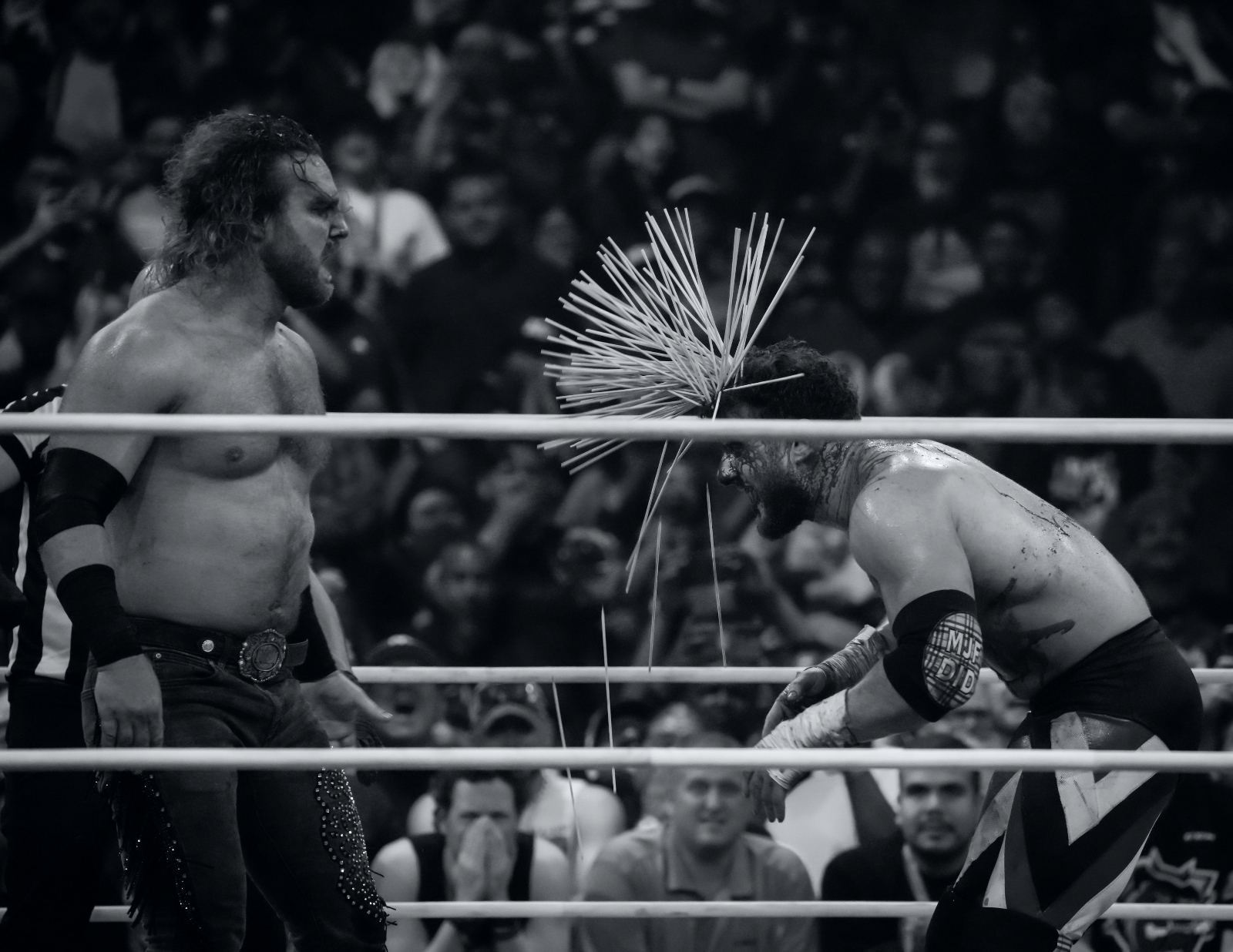
Another intensely personal feud that reached its boiling point at Revolution was the grudge match between Cody Rhodes and Maxwell Jacob Friedman (MJF). This rivalry was a masterclass in heel work and babyface sympathy, meticulously built over several months. MJF, Cody’s former protégé, had betrayed him in spectacular fashion, costing him his AEW World Championship opportunity and delivering a low blow that reverberated through the wrestling world. The stipulations for this match were incredibly high: Cody had to endure ten lashes with a leather belt from MJF on an earlier Dynamite episode, and then, in a desperate bid for a fight, he agreed to MJF’s terms, including a no-touch clause leading up to the pay-per-view. The build created genuine hatred for MJF and immense sympathy for Cody, positioning him as the ultimate fighting babyface. At Revolution, MJF, ever the opportunist and master manipulator, cheated to win, using a diamond ring to strike Cody and secure the victory. This outcome, while frustrating for Cody’s legions of fans, further cemented MJF’s status as one of wrestling’s most detestable villains, ensuring their rivalry would continue to fester and provide compelling television for months to come.
Beyond these marquee attractions, Revolution showcased the depth and diversity of the AEW roster. Darby Allin clashed with Sammy Guevara in a high-octane affair that highlighted the athleticism and fearless nature of both young stars, two pillars of AEW’s future. Allin emerged victorious in a dynamic contest that set a high bar for the younger generation. The "Big Man" battle between Jake Hager and Dustin Rhodes delivered a hard-hitting, physical encounter, demonstrating Hager’s power and Rhodes’s enduring veteran resilience. In the women’s division, Kris Statlander challenged Nyla Rose for the AEW Women’s World Championship. Rose, the dominant "Beast of Burden," retained her title in a powerful performance, solidifying her reign and showcasing the evolving women’s division. Even the unorthodox stylings of Orange Cassidy facing PAC provided a unique flavor, proving that character-driven matches could deliver compelling in-ring action and further elevate Cassidy’s burgeoning popularity. PAC, the "Bastard," eventually overcame Cassidy’s nonchalant antics with his superior technical prowess, but not before Cassidy had once again endeared himself to the audience. The blend of high-flying, technical grappling, hard-hitting brawling, and intricate storytelling across the entire card contributed to Revolution’s reputation as a near-perfect event, showcasing AEW’s vision for professional wrestling.
As AEW was charting a new course with innovative storytelling, World Wrestling Entertainment saw a familiar face revert to a well-worn, yet always effective, persona. Randy Orton, a man whose career has been defined by his ability to embody the "Apex Predator," unleashed a truly venomous heel turn around the same period, meticulously targeting Edge in a storyline that captivated audiences and elicited genuine emotional responses. Orton, a sixteen-time world champion, has long been celebrated for his effortless transition between hero and villain, but his actions in early 2020 showcased a level of cold, calculated cruelty that harkened back to his most nefarious periods.
The catalyst for this renewed villainy was the deeply personal feud with Edge, who had made a miraculous return to the ring at the Royal Rumble after a nine-year retirement due to a severe neck injury. What initially appeared to be a reunion of former tag team partners and Rated-RKO stablemates quickly dissolved into one of the most brutal and emotionally charged rivalries in recent memory. Orton, seemingly welcoming Edge back with open arms on Monday Night Raw, then shockingly attacked him, delivering a Con-Chair-To that echoed the viciousness of Edge’s own past. However, the true turning point, solidifying Orton’s status as a pure antagonist, came when he targeted Edge’s wife, Beth Phoenix. In a segment designed to twist the knife, Orton delivered a sickening RKO to the WWE Hall of Famer and former Women’s Champion, leaving her laid out in the ring. This act transcended typical wrestling villainy; it was a deeply personal affront, a violation of the sanctity of family and a direct assault on the beloved wife of a returning legend.
The impact of this heel turn was immediate and profound. Orton’s actions were universally condemned by the fanbase, transforming him into arguably the most hated figure on the roster. This kind of visceral reaction is precisely what a great heel aims for. By attacking Beth Phoenix, Orton tapped into a genuine human emotion: the protection of loved ones. It made the feud with Edge exponentially more compelling, imbuing it with a level of personal stakes that few wrestling rivalries achieve. Orton’s delivery, his cold demeanor, and his seemingly unrepentant attitude further cemented his status as a master manipulator and sadist. He wasn’t just winning matches; he was psychologically dismantling his opponents and their families. This renewed ruthlessness set the stage for a blockbuster encounter at WrestleMania, where the audience desperately wanted to see Edge exact his revenge. It was a testament to Orton’s enduring ability to evoke strong reactions and reminded everyone why he remains one of the most compelling and effective antagonists in professional wrestling history, capable of drawing genuine ire and driving compelling narratives.

While North American wrestling giants were making headlines, the global landscape offered its own compelling narratives and crucial lessons. In Mexico, Lucha Libre AAA Worldwide was gearing up for its annual Rey de Reyes (King of Kings) tournament, a cornerstone event in the promotion’s calendar. The Rey de Reyes tournament holds immense historical significance in Mexican wrestling, serving as a prestigious platform where luchadores vie for supremacy and the coveted sword trophy, symbolizing their reign as the "King of Kings." This event is not just about a single match; it’s a multi-stage tournament often featuring unique rules and a diverse array of competitors, from high-flying technical marvels to powerful brawlers. For AAA, Rey de Reyes is a vital tradition that helps to establish new stars, reaffirm the status of veterans, and ignite fresh storylines heading into the busiest parts of their year. The tournament structure inherently creates drama, with upsets and unexpected victories often paving the way for future championship opportunities and major feuds. It highlights the unique blend of athleticism, theatricality, and cultural resonance that defines Lucha Libre, where every mask and every move tells a story. The build-up to Rey de Reyes always generates considerable excitement, as fans speculate on who will rise to claim the prestigious title and carry the momentum into future events, showcasing the vibrant and competitive spirit of Mexican wrestling.
Simultaneously, a somber note emerged from the developmental ranks of Ohio Valley Wrestling (OVW), reminding the industry of the inherent dangers lurking within the ring, even for those not directly competing. A concerning incident involving a referee injury at an OVW event prompted a public statement from the promotion’s head, Al Snow. While specific details of the injury were not widely publicized at the time, the mere acknowledgment by a veteran like Snow underscored the seriousness of the situation. Professional wrestling, by its very nature, is a dangerous endeavor. Even with meticulous planning, highly trained athletes, and stringent safety protocols, accidents can and do happen. Referees, though not direct combatants, are integral to the flow and safety of a match; they are in close proximity to the action, often taking bumps themselves, and are susceptible to errant moves or unforeseen circumstances.
Al Snow’s public address was a crucial demonstration of accountability and transparency. In an industry where injuries are an unfortunate reality, how promotions respond to such incidents speaks volumes about their commitment to the welfare of their personnel. Snow’s statement would have undoubtedly focused on ensuring the injured referee received the best possible care, reviewing safety procedures, and reinforcing the importance of a secure working environment for everyone involved, from the main event stars to the backstage crew and officials. Such incidents serve as stark reminders that the spectacle of professional wrestling, while captivating, carries genuine risks that demand constant vigilance and a proactive approach to safety from all promotions, large and small. It highlights the human element behind the performance, underscoring that beyond the storylines and championships, the health and well-being of every individual involved must always remain paramount.
The confluence of these events — AEW’s triumphant Revolution, Randy Orton’s chilling heel turn, the enduring tradition of AAA’s Rey de Reyes, and the sobering reality of an OVW referee’s injury — painted a comprehensive picture of professional wrestling in early 2020. It was a period defined by dynamic evolution, both creatively and structurally. AEW was proving its viability as a major player, offering a fresh alternative rooted in compelling long-form storytelling and diverse in-ring action. WWE, leveraging its deep roster and established stars, demonstrated the timeless appeal of a well-executed villainous turn, capable of generating immense heat and driving massive interest in its flagship programs. Meanwhile, promotions like AAA continued to uphold rich traditions while contributing to the global tapestry of wrestling styles. Yet, underlying all the athletic prowess and dramatic narratives was the ever-present shadow of physical risk, a sobering reminder that the world of professional wrestling, with all its highs and lows, demands respect for its dangers and a continuous commitment to safety. This period, just before the world shifted dramatically, encapsulated the multifaceted appeal and inherent challenges that define the sport, leaving an indelible mark on its narrative and future trajectory.