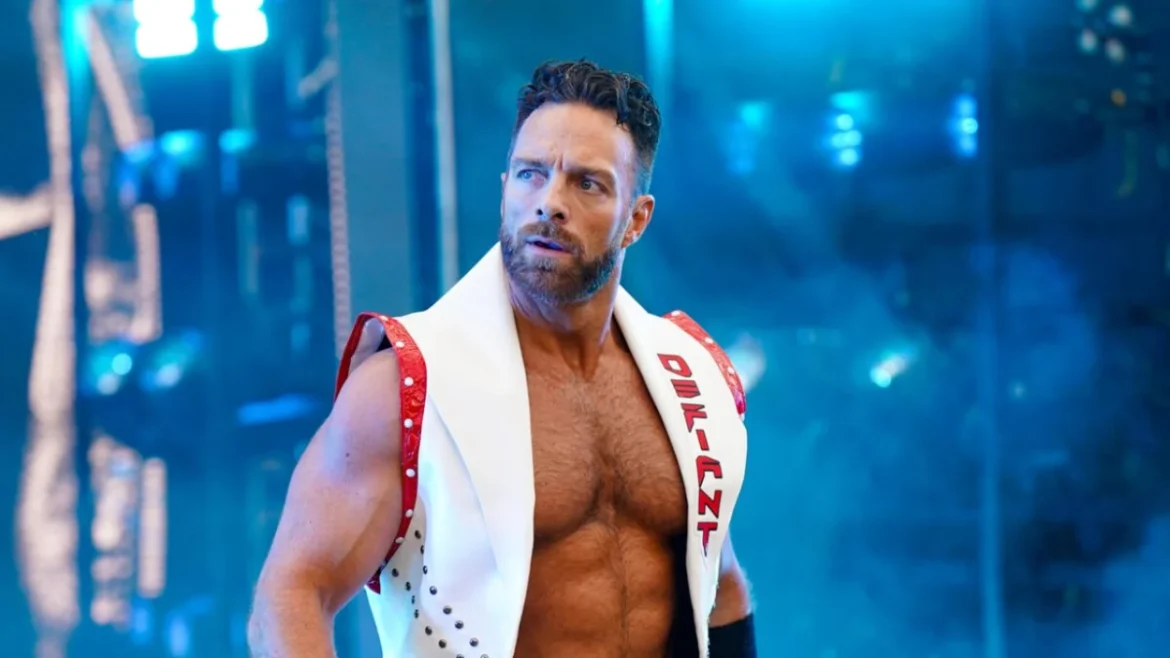
The fiercely independent spirit of LA Knight, a persona forged in the fires of ambition and an unwavering belief in his own magnetic appeal, has long resonated with the global WWE audience. His journey to the upper echelons of sports entertainment has been anything but conventional, marked by relentless hustle, a distinctive verbal cadence, and an undeniable connection with the crowd that often feels organic rather than manufactured. Yet, even for a performer as outwardly self-assured as Knight, the intricate ecosystem of WWE’s behind-the-scenes operations can present unexpected challenges. A recent revelation from the charismatic superstar himself has pulled back the curtain on a subtle, yet significant, adjustment he implemented in his post-match routine, a direct consequence of a moment inadvertently captured and broadcast to the world through the popular Netflix docuseries, WWE Unreal. This candid admission sheds light not only on Knight’s personal approach to his craft but also on the evolving landscape of privacy and accountability within the high-stakes world of professional wrestling, especially as more intimate, unscripted content becomes a staple of fan engagement.
Knight’s rise through the ranks is a testament to perseverance, a narrative arc that endears him further to a fanbase hungry for genuine, hard-earned success stories. After years navigating various independent circuits and making his mark in other promotions, he arrived in WWE’s NXT brand with a fully formed character and a clear vision. While his initial run in NXT showcased his considerable talent, it was his eventual transition to the main roster that truly ignited his supernova ascent. In a company often criticized for over-scripting and micromanaging its talent, Knight’s character felt like a breath of fresh air. His catchphrases, delivered with an unmistakable swagger and impeccable timing, quickly became fan favorites, chanted in unison across arenas worldwide. From merchandise sales to crowd reactions, LA Knight transformed into one of WWE’s most unexpectedly popular figures, a man who, despite not always being in the main event picture, consistently garnered a main event level of engagement. This groundswell of support often positioned him as a dark horse contender in major matches and storylines, leading to significant opportunities, including his participation in the coveted Money in the Bank ladder match.
The Money in the Bank concept, introduced in 2005, has long stood as one of WWE’s most thrilling and unpredictable annual spectacles. More than just another multi-person contest, it offers a tangible prize: a briefcase containing a contract guaranteeing a championship opportunity at any time, any place, for an entire year. The winner of this high-stakes ladder match is instantly elevated to a position of immense power, holding the keys to the kingdom, capable of derailing any champion’s reign with a surprise cash-in. Over the years, the Money in the Bank briefcase has been a launchpad for numerous legendary careers, including those of Edge, CM Punk, Seth Rollins, and Brock Lesnar, among others. The match itself is a chaotic ballet of athleticism and danger, with multiple competitors battling not just each other, but the unforgiving steel ladders that serve as both weapons and the means to victory. The psychological warfare, the dramatic near-wins, and the sheer physical toll make it a pivotal event on the WWE calendar, often serving as a critical turning point for any superstar involved. In 2025, LA Knight found himself amidst this prestigious fray, a testament to his burgeoning popularity and the company’s recognition of his undeniable connection with the audience. For a competitor like Knight, whose entire persona is built on seizing opportunities and proving doubters wrong, the Money in the Bank ladder match was not merely a contest, but a potential coronation, a direct pathway to championship gold and undisputed main event status.
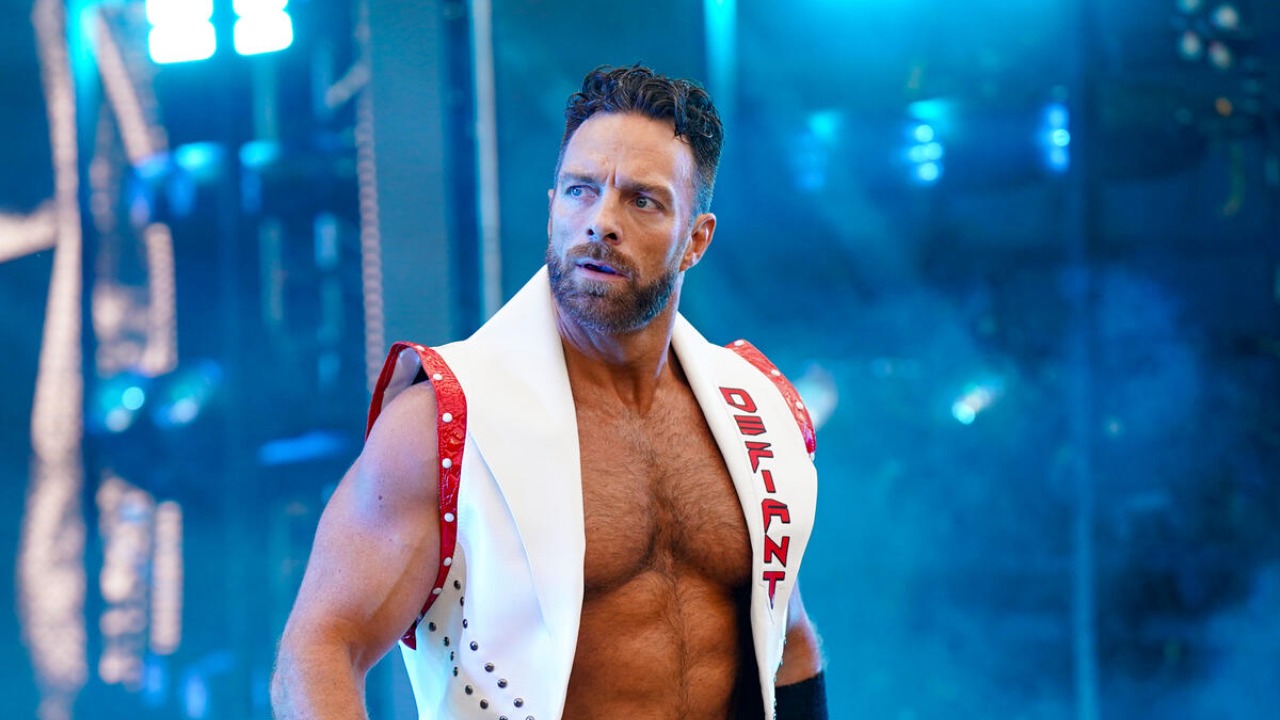
It was in the aftermath of this very Money in the Bank ladder match in 2025 that the now-infamous incident, captured by the WWE Unreal cameras, unfolded. The docuseries, a Netflix venture designed to offer an unprecedented, behind-the-scenes look at the inner workings of WWE, inadvertently provided a glimpse into a moment of tension and creative friction. Viewers witnessed Knight in the immediate post-match environment, specifically in the hallowed and often intense space known as the Gorilla position. This area, located directly behind the entrance curtain, is the nerve center of any WWE live production. It’s where Vince McMahon traditionally held court, and where now, under the creative stewardship of Chief Content Officer Triple H, key decisions are made, last-minute instructions are given, and talent receives immediate feedback – positive or negative – after their performances. In this particular instance, Knight was seen absorbing a stern reprimand from Triple H, the company’s creative architect, regarding a deviation from the agreed-upon finish for the Money in the Bank match. Earlier in the episode, veteran WWE producer Chris Park, known to fans as the legendary Abyss, had been shown explaining the planned conclusion to Knight, underscoring the importance of adherence to the script. Yet, something in the heat of the moment, or perhaps a calculated decision, led to a departure from that plan. As Triple H delivered his admonishment, Knight remained notably silent, his expression unreadable, a picture of quiet contemplation amidst the surrounding backstage chaos. This televised moment sparked considerable discussion among fans and industry observers, offering a rare, unvarnished look at the pressures and protocols that govern the world of professional wrestling.
The Gorilla position has historically been a place of immediate reckoning for WWE superstars. It’s the first point of contact after the adrenaline of a live performance subsides, where the weight of a match’s success or failure, its adherence to creative directives, and its overall execution are assessed. For decades, it has been a sacred space, privy only to those directly involved in the production – the talent, the producers, the agents, and the top brass. Receiving feedback, whether it’s a congratulatory handshake or a critical critique, in Gorilla has always been an integral part of a WWE performer’s experience. It’s a rapid-fire debriefing, essential for maintaining the meticulous timing and storytelling coherence that define a WWE broadcast. The very nature of this environment, with its intense focus and high-pressure atmosphere, often makes it a crucible for both professional growth and moments of profound frustration. The decision by WWE Unreal to film in this sensitive area, while providing unparalleled access for viewers, inherently introduced a new layer of scrutiny and potential discomfort for the talent operating within it.
Knight, reflecting on that specific interaction during a recent interview on the Bootleg Kev Podcast, provided crucial context to the silent stoicism he displayed on screen. He admitted that his apparent silence was, in fact, a deliberate act of restraint. "I was majorly holding my tongue in that scenario, if you could tell," Knight revealed, indicating that his outward composure masked a deeper, internal struggle. He acknowledged that he harbored his own frustrations concerning the situation, frustrations that extended beyond the immediate issue of the match’s altered conclusion. While the finish itself contributed to his discontent, Knight alluded to an "overarching theme" that had been a source of ongoing concern, a broader narrative he chose not to delve into further during the podcast. This allusion to deeper, systemic frustrations resonates with many veteran performers who, at various points in their careers, grapple with creative direction, perceived opportunities, or the general trajectory of their character within a large, corporate structure like WWE. Such "overarching themes" often represent the delicate balance between a performer’s artistic vision and the company’s creative plans, a perennial challenge in the collaborative yet hierarchical world of professional wrestling.
Crucially, Knight also disclosed that he had been completely unaware that he was wearing a live microphone during the entire exchange with Triple H. This lack of knowledge fundamentally altered his perception of the interaction and ultimately became the catalyst for his subsequent procedural adjustment. For a performer accustomed to the implicit understanding that certain conversations, particularly those involving critical feedback or creative differences, are private and off-the-record, the realization that such a moment was being captured for broadcast was a significant breach of an unwritten code. This unintended exposure underscored the evolving dynamics of reality television and documentary-style content within the wrestling industry. While such programming offers fans an unparalleled glimpse into the often-mysterious world behind the curtain, it simultaneously blurs the lines between public and private, performance and reality, potentially compromising the candidness of backstage interactions.

In response to this revelation, Knight implemented a straightforward but impactful change to his routine: he no longer pauses in the Gorilla position after his matches or segments conclude. Instead, he proceeds directly to the locker room. This deliberate bypassing of the traditional post-match debriefing zone is a clear statement of his desire to reclaim a degree of privacy and control over his professional interactions. "I don’t even stop there in Gorilla anymore," Knight affirmed. "When my match is over, my segment is over, I go straight through and I go to the locker room." His reasoning is pragmatic and rooted in a desire to maintain the traditional boundaries of professional communication. He expressed a preference for discussing match outcomes, creative decisions, or any other pertinent feedback in an environment free from the intrusive presence of cameras and microphones. "If they want to talk to me about my match or whatever happened out there, sure, let’s talk about it when there’s not a microphone or camera around. Because that’s how it’s always been," Knight explained, emphasizing his belief in maintaining established professional norms. His decision is a proactive measure to prevent himself from being "susceptible" to similar situations in the future, where sensitive professional discussions might inadvertently become public consumption.
This shift in Knight’s routine highlights a broader discussion within the wrestling industry regarding performer agency and the boundaries of reality-based content. While shows like WWE Unreal undoubtedly boost fan engagement and provide a deeper appreciation for the intricate world of sports entertainment, they also place talent under an unprecedented level of scrutiny. Wrestlers, by nature of their profession, are accustomed to performing in front of audiences, but the expectation of privacy in backstage areas has historically been a given. Knight’s action, therefore, can be viewed as a veteran performer asserting his right to control his personal and professional space, choosing to engage in critical dialogue on his own terms, away from the prying eyes and ears of a documentary crew. It underscores the fine line that WWE and other promotions must walk when producing such content – balancing the desire for authenticity and access with the need to protect the privacy and comfort of their talent. The implication is clear: while the curtain may be pulled back, certain sacred spaces and modes of communication should remain inviolable, preserving the sanctity of professional discourse without the added pressure of being perpetually "on camera."
The decision by LA Knight, a celebrated and popular figure, to alter his backstage conduct due to the pervasive nature of reality television cameras carries significant weight. It serves as a potent reminder that even in an era of unprecedented access and transparency, performers retain a fundamental right to dictate the terms of their professional interactions. His quiet protest, manifested in a simple change of route after a match, speaks volumes about the value of privacy in a public-facing career. It also raises questions about the future of such behind-the-scenes programming. While fans crave the unfiltered reality, the cost of that reality for the talent might be too high if it compromises their ability to engage in honest, unrecorded dialogue with management. Knight’s move, therefore, isn’t just about a personal preference; it’s a subtle but powerful statement about boundaries, respect, and the enduring quest for authenticity in a business that constantly blurs the lines between what is real and what is presented. For a superstar whose entire career has been about carving his own path, this latest adjustment to his professional life is perfectly in character, a testament to his unwavering commitment to doing things his way, on his terms, even when the cameras are rolling.