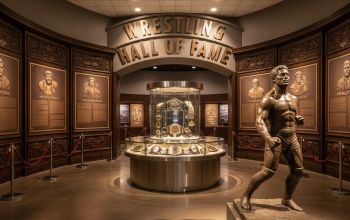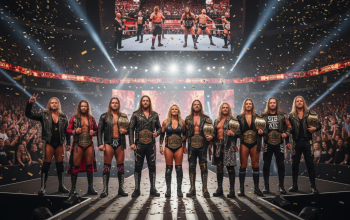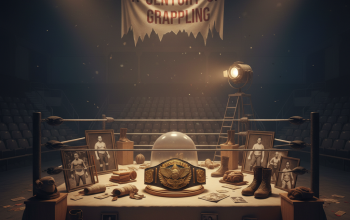

Wrestling stands as one of the most primal and enduring forms of combat in human history. It is a physical competition between two competitors who attempt to gain and maintain a superior position. There are a wide range of styles with varying rules, with both historic and modern applications. From the clay tablets of ancient Sumer dealing with the sport’s earliest depictions to the high-definition broadcasts of modern pay-per-view events, wrestling has evolved significantly while retaining its core essence of grappling and physical dominance. It is a sport that transcends borders, existing in some form in almost every culture on Earth.
The Ancient Origins of Grappling
The history of wrestling can be traced back 15,000 years to cave drawings in France. Babylonian and Egyptian reliefs show wrestlers using most of the holds known in the present-day sport. In Ancient Greece, wrestling occupied a prominent place in legend and literature; wrestling competition, brutal in many aspects, was the supreme contest of the Olympic Games. The Greeks viewed it as a science and a divine art, representing the ultimate test of strength and technique. This era gave birth to Pankration, a no-holds-barred mixture of wrestling and boxing that laid the groundwork for modern mixed martial arts.
During the Roman Empire, wrestling borrowed heavily from Greek traditions but became less about athletic virtue and more about entertainment for the masses. However, the technical aspects survived through the Middle Ages and the Renaissance, particularly in royal courts where grappling was considered an essential skill for knights and nobility. Treatises from this period illustrate sophisticated techniques that are still recognizable in today’s catch wrestling and Brazilian Jiu-Jitsu.
Olympic Disciplines: Greco-Roman and Freestyle
In the modern era, amateur wrestling is dominated by two international styles governed by United World Wrestling (UWW): Greco-Roman and Freestyle. Greco-Roman wrestling is strictly defined by its prohibition of holds below the waist. This restriction forces athletes to rely entirely on upper-body strength, throws, and leverage. It creates a distinct upright stance and emphasizes explosive power, as competitors must maneuver their opponents to the mat without the aid of leg trips or takedowns.
Freestyle wrestling, conversely, allows the use of the wrestler’s own legs and holds on the opponent’s legs. This style is generally faster-paced and includes a wider variety of takedowns, such as the double-leg and single-leg takedown. Freestyle is the most popular form of international amateur wrestling and draws heavily from the ‘catch-as-catch-can’ traditions of Great Britain and the United States. The scoring systems in both styles reward control, exposure of the opponent’s back to the mat, and high-amplitude throws.
Folkstyle: The American Collegiate System
Distinct from the international styles is Folkstyle (or Collegiate) wrestling, practiced primarily in the United States at the high school and university levels. While similar to Freestyle, Folkstyle places a massive emphasis on controlling the opponent on the mat. The rules encourage riding time and mat control, whereas international styles incentivize quick turns and exposure points. This fundamental difference often requires American wrestlers to adjust their strategies significantly when transitioning to the Olympic stage.
Traditional Styles Around the World
Beyond the Olympic mats, indigenous wrestling styles flourish globally, reflecting deep cultural heritages.
- Sumo (Japan): Steeped in Shinto ritual, Sumo is a collision of massive force where the objective is to force the opponent out of a ring or touch the ground with any body part other than the soles of the feet.
- Sambo (Russia): Developed by the Soviet Red Army, Sambo combines judo and wrestling with a focus on submission holds and combat efficiency.
- Pehlwani (India): Also known as Kushti, this mud-wrestling tradition emphasizes spiritual discipline, diet, and strength training.
The Birth of Professional Wrestling
The transition from legitimate athletic contests to the staged spectacles of today began in the late 19th and early 20th centuries. Carnival strongmen and catch wrestlers began to realize that prolonged, legitimate grappling matches were often boring to the uneducated spectator. To maintain audience interest, matches began to be ‘worked’ or predetermined. This evolution birthed the concept of Kayfabe—the portrayal of staged events as reality—which became the industry’s golden rule for decades.
The Golden Era and Mainstream Explosion
The 1980s marked a pivotal turning point for professional wrestling, largely driven by the World Wrestling Federation (now WWE). This era, often called the ‘Rock ‘n’ Wrestling Connection,’ saw the industry move from regional territories to a national and global powerhouse. Figures like Hulk Hogan became pop culture icons, blurring the lines between sports and entertainment. The production values increased, character gimmicks became larger than life, and wrestling became a staple of cable television.
The Attitude Era and The Monday Night Wars
In the late 1990s, professional wrestling reached its zenith of popularity during the ‘Monday Night Wars’ between WWE and WCW. This period, known as the Attitude Era, shifted the content toward more edgy, adult-oriented themes. Storylines became complex, anti-heroes like ‘Stone Cold’ Steve Austin rose to prominence, and the illusion of kayfabe was frequently shattered for dramatic effect. The fierce competition forced both companies to innovate, resulting in some of the highest television ratings in the history of the genre.
Modern Professional Wrestling
Today, the landscape of professional wrestling is more diverse than ever. While WWE remains the global market leader, the emergence of All Elite Wrestling (AEW) and the continued prestige of New Japan Pro-Wrestling (NJPW) offer alternatives. Modern wrestling places a higher premium on athleticism and work rate—the physical quality of the match—than the character-heavy eras of the past. Performers are expected to be elite athletes capable of high-flying acrobatics and technical precision.
The Psychology of the Ring
At its core, professional wrestling is about storytelling. The physical moves are merely the vocabulary used to tell a story of good versus evil, or the underdog versus the giant. The dynamic between the Babyface (the hero) and the Heel (the villain) drives the emotional investment of the crowd. A successful match is not just about the moves performed, but about ‘working the crowd’—manipulating audience reaction to build tension and release it at the perfect moment.
Physicality, Risk, and Safety
Despite the predetermined nature of professional wrestling outcomes, the physical risks are undeniably real. Wrestlers perform without off-seasons, taking repeated bumps on hardwood reinforced with thin padding. The industry has faced significant scrutiny regarding concussions, chronic traumatic encephalopathy (CTE), and the long-term health of performers. Modern wellness policies and a shift away from unprotected chair shots to the head reflect a growing awareness of these dangers, though the physical toll remains high.
The Evolution of Women in Wrestling
One of the most significant developments in recent decades is the evolution of women’s wrestling. Historically relegated to side attractions or managed as ‘valets,’ female competitors have fought for and achieved equality in billing. The ‘Women’s Revolution’ saw female athletes main-eventing WrestleMania and showcasing technical skills on par with their male counterparts. Stars like Becky Lynch, Charlotte Flair, and Sasha Banks have redefined what it means to be a superstar in the industry.
The Future of Wrestling
As wrestling moves into the streaming era, its accessibility continues to grow. Independent promotions can now reach global audiences through digital platforms, bypassing traditional television deals. The blending of styles—lucha libre, strong style, and technical grappling—is creating a hybrid form of performance art that appeals to a sophisticated, internet-savvy fanbase. Whether through the pure sport of the Olympics or the theatrics of the squared circle, wrestling remains a testament to the human fascination with combat and storytelling.