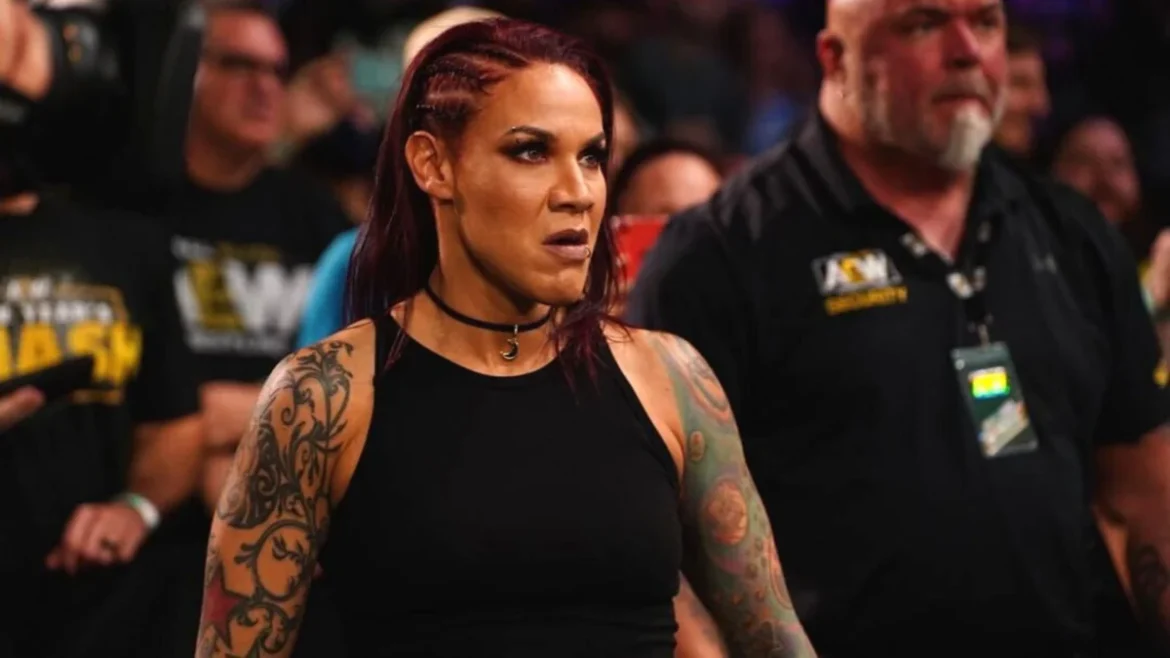
Mercedes Martinez, a revered and unyielding presence within professional wrestling for over two decades, recently offered an unfiltered look into her experience with All Elite Wrestling, revealing a profound sense of underutilization and creative stagnation that shadowed her final years with the promotion. Her reflections shed light not only on her personal journey but also on the broader challenges faced by seasoned performers navigating the rapidly evolving landscape of modern wrestling, particularly within a burgeoning roster like AEW’s. Martinez, a powerhouse known for her hard-hitting, no-nonsense approach, articulated a deep-seated frustration stemming from prolonged periods of inactivity and a perceived lack of meaningful opportunities to showcase the full breadth of her extensive talent and expertise.
For Martinez, a veteran who has carved out an indelible legacy across countless promotions since her recorded debut in 2001, the path to AEW was another chapter in a storied career defined by resilience and relentless pursuit of excellence. Her tenure with the company, while initially promising, gradually transitioned into a frustrating waiting game. She conveyed a feeling of being consistently sidelined for a significant portion of her time there, specifically noting that for nearly two years of her four-year association, she felt disconnected from the active roster, unable to contribute in a substantial way. This extended period of being out of the spotlight, she admitted, took a considerable mental toll, leading to self-doubt and questions about her value within the organization. Such sentiments are not uncommon for professional wrestlers, whose identities are often intrinsically linked to their in-ring performances and their connection with an audience. To be a competitor of Martinez’s caliber and find oneself without a consistent creative direction or a regular presence on television can be profoundly disheartening, especially for someone who has dedicated their life to the craft.
Martinez’s wrestling style itself became a focal point of her introspection. She characterized her in-ring persona and technique as distinctively raw, rugged, and rooted in an old-school philosophy, emphasizing power and a strong-style approach. This style, she mused, might not have aligned perfectly with what she termed the "TV style" prevalent in contemporary wrestling, or perhaps it was simply too intense for some of her potential opponents. In an era where high-flying acrobatics, intricate sequences, and fast-paced action often dominate mainstream programming, a more grounded, impactful, and methodical style can sometimes be perceived as a niche. However, Martinez firmly believes in the enduring appeal and necessity of her unique brand of wrestling, arguing that there remains a demand for performers who bring a palpable sense of grit and realism to their matches. She questioned whether the perceived disinterest in her style was a deliberate creative choice or a reflection of preferences among her peers on the roster.
The conversation naturally led Martinez to draw parallels between her own situation and that of Eddie Kingston, another respected veteran known for his unpolished, authentic, and strong-style delivery. Kingston, like Martinez, boasts a deep independent wrestling background, a penchant for impactful strikes, and a character that feels genuinely rooted in the struggles and triumphs of a working-class fighter. Despite their similar stylistic foundations and their shared journey through the wrestling circuit, Kingston has achieved significant success and prominence within AEW, consistently featuring in high-profile feuds and championship pursuits. Martinez pondered why, if Kingston’s authentic, hard-hitting style resonated so strongly with the AEW audience and creative team, a female performer embodying similar characteristics couldn’t find an equally impactful role. This comparison highlights a broader discussion within professional wrestling regarding the perceived differences in how male and female veterans are booked, the opportunities afforded to them, and the diverse range of archetypes that are deemed viable for main event or prominent positions across the gender divide. The "Mad King" has carved out a beloved niche, showcasing that a departure from the typical "TV-friendly" aesthetic can indeed lead to widespread acclaim and significant storytelling avenues. Martinez’s point implicitly questions whether the same creative latitude and appreciation for rugged authenticity are consistently extended to women in top-tier promotions.
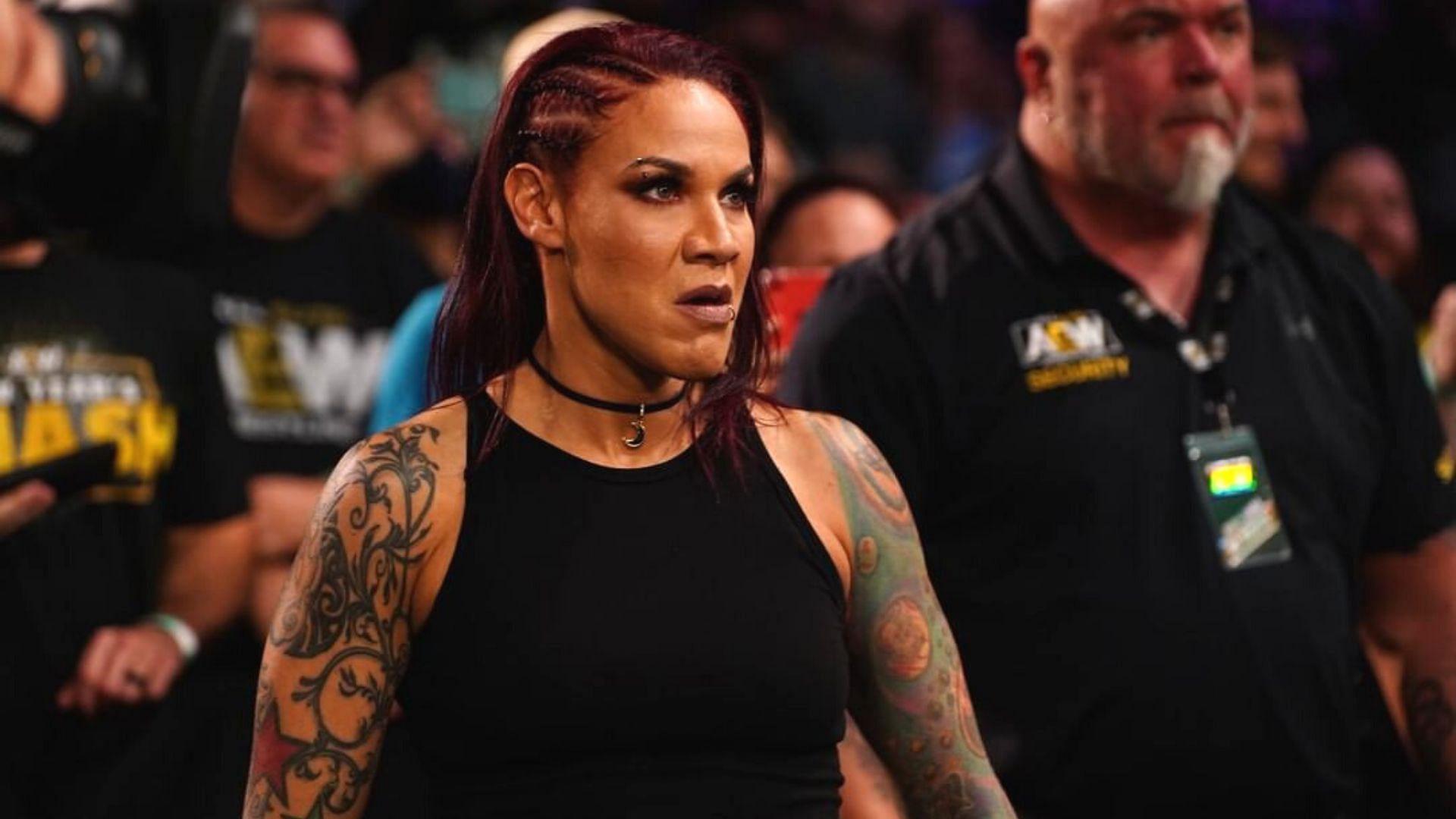
Age, too, was a factor Martinez openly considered in her assessment. At 45 years old, she acknowledged being in an age bracket where questions about a performer’s ability to maintain pace with a younger, rapidly evolving generation often arise. While many male wrestlers continue to thrive and even main event well into their late 40s and 50s, the narrative surrounding female wrestlers and their longevity in prominent roles can sometimes differ. Martinez expressed her concern that her age might have been a subtle, unspoken reason for her exclusion from significant creative storylines or the reluctance to invest in her character. She mused on whether the company perceived her as past her prime for a consistent, high-profile spot, despite her undeniable in-ring prowess and physical conditioning. This contemplation reflects a common struggle for veterans in any sport or performance art – the internal and external pressures to justify their continued presence and prove their enduring relevance against the backdrop of emerging talent. It is a testament to Martinez’s dedication that even at this stage of her career, she believes she can still compete at the highest level and contribute meaningfully to any roster.
Throughout her tenure, Martinez confirmed that she actively pitched creative concepts and storylines to the AEW management, seeking to define her character’s direction and secure a more consistent on-screen presence. The wrestling industry thrives on compelling narratives, and experienced performers like Martinez often bring a wealth of ideas, understanding of character development, and a keen sense of what resonates with an audience. However, despite her efforts, these proposals seemingly did not come to fruition, leaving her without the desired creative outlets. The process of getting storylines approved in a major promotion with a vast roster is notoriously complex, involving multiple layers of creative input and strategic planning. For a performer, seeing their well-intentioned pitches go unacknowledged or unadopted can be incredibly frustrating, especially when they feel they have much more to offer. This experience highlights a perennial challenge in wrestling: balancing the creative visions of individual performers with the overarching direction of the booking team and the demands of television programming.
Martinez’s candid remarks also connect with a previous announcement she made earlier in the year, where she shared her intention to embark on a "final run" as a full-time wrestler, aiming to conclude this chapter of her career by 2026. This declaration of a finite timeline adds a poignant layer to her current reflections. Her desire to end her active, full-time career on her own terms, with purpose and impact, underscores the disappointment of her AEW experience. The prospect of her contract not being renewed, which she admitted she had already anticipated, became less about ending her time with a specific company and more about ensuring that her remaining years in the ring are spent meaningfully, leaving an undeniable final impression on the wrestling world. It’s a testament to her passion that even facing such a professional crossroads, her focus remains on the quality and significance of her future in-ring endeavors, rather than dwelling on past frustrations.
Mercedes Martinez’s career journey is a remarkable tapestry woven with threads of dedication, hard work, and an unwavering commitment to her craft. Emerging from the vibrant independent scene, she built a reputation as one of the most reliable and intense competitors in women’s wrestling. Before her arrival in AEW, Martinez had already left an indelible mark on various promotions, including multiple stints with WWE in their NXT brand, where she showcased her veteran leadership and powerful style. Her initial tenure in WWE’s developmental system in the mid-2010s, though brief, gave a glimpse of her potential on a larger stage. Her return to NXT in 2020 saw her align with the Robert Stone Brand and later with the Retribution faction on the main roster, albeit for a short period. These experiences, coupled with her extensive work in Ring of Honor (ROH), SHIMMER, and countless other promotions, solidified her status as a respected figure who could seamlessly adapt to various environments while maintaining her signature intensity.
Her arrival in AEW in late 2021, initially under a per-appearance deal before signing a full-time contract, seemed like a natural fit for a company that prided itself on featuring a diverse array of talent. She quickly found herself in the thick of things, particularly within the ROH Women’s World Championship picture after Tony Khan acquired the promotion. Martinez captured the ROH Women’s World Championship in May 2022, defeating Willow Nightingale at an ROH taping and later unifying it with the interim title by beating Deonna Purrazzo on an episode of Dynamite. This reign, lasting 133 days, was a highlight of her time under the AEW/ROH banner, allowing her to showcase her championship pedigree and strong in-ring work. She eventually dropped the title to Athena at ROH Death Before Dishonor in July 2022. This period represented a significant opportunity for Martinez to establish herself, not just as a formidable competitor, but as a standard-bearer for a revitalized women’s division within ROH.

However, after losing the ROH Women’s World Championship, Martinez’s appearances on AEW programming, particularly Dynamite and Rampage, became increasingly sporadic. While she continued to wrestle on AEW Dark and Elevation (prior to their discontinuation) and occasional ROH shows, the visibility and prominence she once enjoyed began to wane. This is where her sense of being "sidelined" truly began to manifest. For a performer who thrives on consistency and momentum, the transition from holding a major championship to infrequent appearances can be incredibly challenging, both professionally and personally. The wrestling world moves at a rapid pace, and maintaining relevance requires regular exposure and compelling storylines. When those elements are absent, even the most talented individuals can feel their contributions diminishing.
The broader context of AEW’s women’s division also plays a role in understanding Martinez’s frustrations. Since its inception, the division has faced both praise and criticism regarding its depth, booking, and television time. While it has undoubtedly grown and featured some incredible talent, the sheer size of the AEW roster means that not everyone can be consistently featured. Talents like Dr. Britt Baker D.M.D., Thunder Rosa, Toni Storm, Jamie Hayter, Hikaru Shida, and Saraya have often dominated the main storylines and championship picture. For a veteran like Martinez, finding a consistent, meaningful spot amidst such a competitive and evolving landscape, especially when her style might be seen as less "mainstream" than others, presented a unique set of obstacles. The division aims to cater to a wide range of styles, from high-flying to technical, but the allocation of screen time and significant creative investment remains a constant point of contention for many performers and fans alike.
Martinez’s reflections serve as a poignant reminder that even for the most accomplished and respected figures in professional wrestling, the journey is rarely without its bumps and detours. Her honesty about the mental toll of inactivity, the perceived mismatch of her style with prevailing trends, and the challenges of being a veteran in a youth-driven industry resonates deeply. It underscores the passion that drives performers to continue, even when faced with professional disappointments, and the desire to control their narrative and legacy. As Mercedes Martinez looks towards her declared "final run" in 2026, her hope is undoubtedly to conclude her illustrious career not just on her own terms, but with the impact and recognition that a performer of her caliber so richly deserves, leaving no doubt about the immense potential she always possessed. Her story is a powerful testament to the enduring spirit of a wrestler who always sought to wrestle her way, proving that raw power and authenticity will always have a place in the squared circle.