In the vibrant, ever-evolving landscape of professional wrestling, the squared circle is merely one stage for a performer’s artistry. Beyond the roar of the crowd and the glare of arena lights, a new, equally crucial battleground has emerged: the digital realm. Social media platforms have become indispensable tools, allowing wrestlers to deepen their characters, engage directly with their global fanbase, perpetuate intricate storylines, or simply offer glimpses into the unique blend of athleticism and theatricality that defines their lives. From the overtly comedic to the subtly strategic, these online interactions provide a continuous extension of the wrestling narrative, blurring the lines between kayfabe and reality in ways that enrich the entire experience for enthusiasts worldwide.
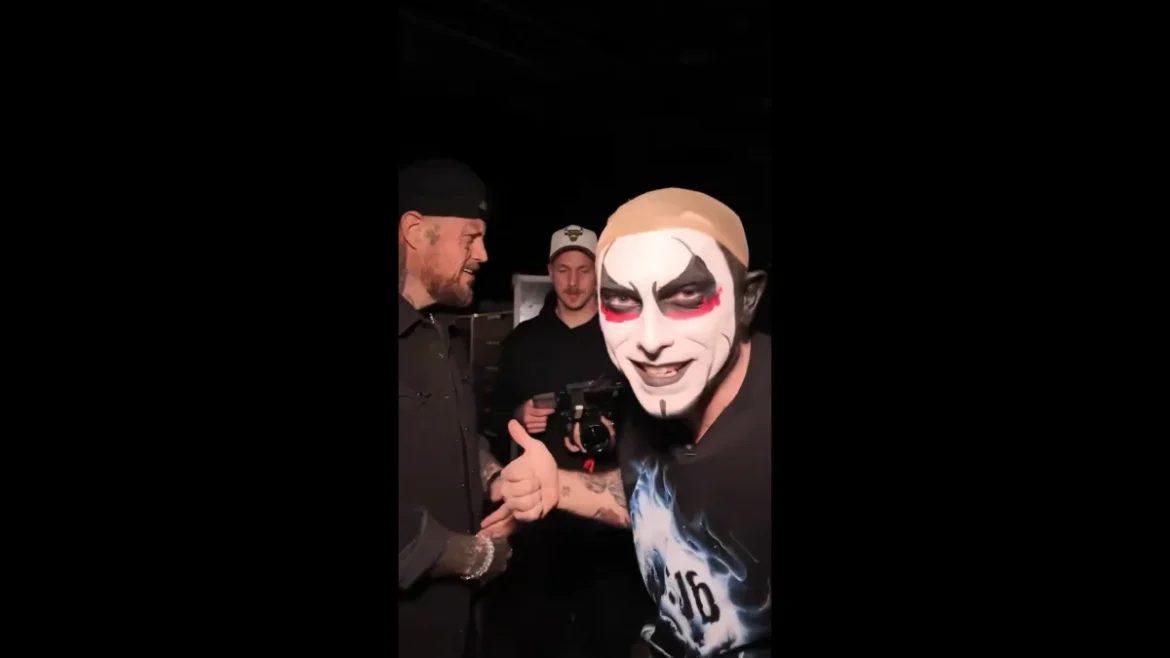
One of the most distinctive figures leveraging the internet to amplify his peculiar persona is the "Very Nice, Very Evil" Danhausen. Known for his pale complexion, face paint reminiscent of a demonic clown, and a vocal cadence that blends menace with childlike wonder, Danhausen has carved a niche unlike any other. His online presence is a seamless extension of his on-screen character, constantly engaging with fans and fellow wrestlers in a style that is uniquely his own. Recently, Danhausen embarked on a whimsical tribute to one of professional wrestling’s most iconic figures, "Stone Cold" Steve Austin. Mimicking Austin’s signature "3:16" catchphrase and beer-swilling antics, Danhausen attempted to embody the Texas Rattlesnake’s rebellious spirit. This playful homage, however, encountered a minor snag when country music sensation Jelly Roll, himself a fan and occasional participant in the wrestling world, demonstrated an uncanny ability to see through Danhausen’s mischievous charade. The exchange, though brief, highlighted Danhausen’s commitment to his bit and the universal recognition of Austin’s enduring legacy. Austin’s anti-authority persona defined an entire era of wrestling, and Danhausen’s nod to it, even in jest, speaks to the deep roots of wrestling history that modern performers often draw upon. Danhausen’s pervasive digital footprint extends beyond direct interactions, often finding its way into the content of others. For instance, Kit Wilson, one half of the NXT tag team Pretty Deadly, known for their flamboyant fashion and theatrical entrances, frequently shares behind-the-scenes glimpses of his attire. It’s in these very videos that Danhausen’s spectral, yet endearing, presence has been noted, proving that his "very evil" charm can infiltrate even the most polished of presentations. This organic cross-pollination of content serves to further intertwine the narratives of different performers, creating a richer, more interconnected wrestling universe that transcends brand loyalties.
The developmental territory of NXT serves as a fertile ground for budding superstars to hone not just their in-ring skills but also their character work and social media presence. Among these emerging talents, the "Americanos" – Bravo Americano and Rayo Americano – have been building their dynamic, with Rayo often encouraging Bravo to step outside his comfort zone. A recent highlight saw Rayo egging on Bravo to engage in some playful flirtation with the highly athletic and charismatic Sol Ruca. Sol Ruca, recognized for her innovative offense and undeniable athleticism, brings a vibrant, energetic presence to the NXT roster. Such interactions, whether scripted or spontaneous, help to flesh out the personalities of these newer stars, giving the audience more reasons to invest in their journeys. It’s a subtle yet effective way for NXT competitors to build a rapport with the audience before they even reach the main roster, showcasing their ability to connect and entertain beyond the confines of a wrestling match.
Meanwhile, on the main roster, the lines between personal and professional narratives often playfully blur, especially for couples whose real-life relationships become part of their on-screen personas. Rhea Ripley, the dominant "Mami" of The Judgment Day, and her real-life partner Buddy Matthews, a formidable presence in AEW, occasionally share glimpses into their lives outside the wrestling spotlight. One recent instance involved the popular wellness trend of cold water immersion. Buddy Matthews, initially hesitant to fully commit to the icy depths of a cold bath, found himself playfully challenged by Ripley. Demonstrating her characteristic resilience and toughness, Ripley bravely plunged into the freezing water, showcasing how it’s done. Later, Matthews would redeem himself, proving he could face the chill. These shared moments not only humanize these larger-than-life figures but also offer fans an intimate, often humorous, look at their dynamics, reinforcing their respective characters – Ripley as the indomitable force, and Matthews as a powerful, yet relatable, individual.
Other performers also use the digital space to connect through shared cultural touchstones. Harley Cameron, known for her dual career as a wrestler and musician, recently offered her unique perspective on the popular "what were you like in the 90s" meme. These nostalgic memes often invite individuals to reflect on their past selves, and Cameron’s interpretation likely resonated with many, adding another layer to her public persona. Similarly, Wren Sinclair, a rising talent, shared a universally relatable moment familiar to any pet owner: the seemingly endless quest to retrieve a beloved toy from underneath a piece of furniture. These everyday occurrences, when shared by wrestlers, foster a sense of connection and relatability, reminding fans that behind the larger-than-life characters are individuals with ordinary experiences. Even interactions between on-screen rivals can turn heartwarming online. Nia Jax and Asuka, two powerhouses who have clashed fiercely in the ring, shared a moment of genuine camaraderie captured in a hug. This image was particularly resonant for fans of the iconic anime Dragon Ball Z, as it was likened to a scene from the beloved series. Such instances highlight the respect and friendship that often exist between competitors outside of their kayfabe rivalries, bridging different fan communities and celebrating shared passions.
Across the globe, the rich traditions of Lucha Libre continue to captivate audiences, with one of its most dramatic and revered stipulations being the Lucha de Apuestas, or "bet match," where competitors wager their masks or hair. Princesa Sugehit, a decorated veteran of CMLL, recently found herself in such a high-stakes encounter, a hair versus hair match at the prestigious Homenaje a Dos Leyendas event. In a testament to the unforgiving nature of Lucha Libre, Sugehit lost the contest and, adhering to tradition, had her head shaved in front of a captivated audience. The sacrifice of her hair, a symbol of pride and identity for many luchadoras, underscored the gravity of the match and her commitment to her craft. In a display of solidarity and perhaps a touch of humor, Sugehit was later seen alongside Jon Moxley and Wheeler Yuta, both members of the Blackpool Combat Club and known for their distinctively bald heads. This seemingly random grouping, bridging the worlds of CMLL and AEW, showcased the interconnectedness of the wrestling community and offered a lighthearted moment of companionship after a profoundly emotional experience. It also highlighted how wrestlers from different promotions, despite their separate allegiances, often share a camaraderie and mutual respect that transcends corporate boundaries.
Meanwhile, the audacious and often extreme antics of Darby Allin in AEW continue to push the boundaries of what’s expected from a professional wrestler. Allin, renowned for his daredevil stunts and fearless approach, recently took his persona to new heights during a Coffin Match against Gabe Kidd on AEW Dynamite. In a truly shocking moment, Allin flipped a car, an act that perfectly encapsulated his chaotic and unpredictable character. What followed was a peculiar digital artifact: the very car used in this spectacular stunt was purportedly listed for sale online, for a mere $11. This tongue-in-cheek listing, whether genuine or a further extension of Allin’s anarchic brand, served as another layer to his narrative, blurring the lines between staged spectacle and a bizarre form of performance art. It’s a testament to how AEW often incorporates elements that feel raw and unconventional, appealing to fans who appreciate a more edgy and unpredictable product.
However, when it comes to crafting compelling, often fabricated, digital narratives, few do it better than Maxwell Jacob Friedman, MJF, the self-proclaimed "Salt of the Earth." MJF’s genius lies in his unwavering commitment to his heel character, both on and off-screen. He weaponizes social media with unparalleled skill, using it not just to promote himself but to diminish rivals, even those with whom he isn’t directly feuding. His recent target, the globally acclaimed Will Ospreay, became the subject of a meticulously crafted, utterly fictitious grocery store encounter shared by MJF. Ospreay, celebrated for his breathtaking in-ring athleticism and often referred to as "The Aerial Assassin," has recently made a significant impact in AEW, showcasing his world-class talent to a broader American audience. MJF, ever the provocateur, decided to paint a different, far less flattering, picture of Ospreay.
MJF’s story, a blatant adaptation of a classic internet copypasta often used to humorously malign celebrities, depicted Ospreay as an insufferably rude and petty individual. According to MJF’s elaborate fabrication, a "friend" encountered Ospreay at a Los Angeles grocery store, attempting to express admiration while respecting his privacy. The narrative quickly devolved, with Ospreay allegedly responding with dismissive "Oh, like you’re doing now?" and mimicking a "huh? huh? huh?" gesture, cutting off the fan. The story escalated to Ospreay attempting to pilfer "like fifteen Milky Ways" without paying, a comically petty crime for a world-renowned athlete. When confronted by a polite cashier, Ospreay supposedly feigned deafness before grudgingly returning the candy. The absurdity continued as Ospreay then insisted each Milky Way be scanned individually to "prevent any electrical infetterence" – a nonsensical phrase that perfectly underscores MJF’s intent to portray Ospreay as not just rude, but also intellectually deficient. The final flourish involved Ospreay loudly yawning to interrupt the cashier as she tried to state the price, culminating in a suggestive wink at MJF’s "friend." This entire concoction, delivered with MJF’s signature smugness, was a masterclass in character work. It served multiple purposes: it positioned Ospreay as an antagonist in the eyes of some fans, subtly built heat for a potential future encounter, and most importantly, reinforced MJF’s own status as the ultimate wrestling villain, willing to stoop to any level, even fabricating ridiculous tales, to get under the skin of anyone he deems beneath him. The subtle jab at Ospreay’s British slang, "Bruv!", at the end of the post, was the cherry on top, cementing MJF’s commitment to his character and his ability to weave a complex, multi-layered narrative even within a simple social media post.
In essence, the digital sphere has become an indispensable extension of the wrestling world, offering performers an unparalleled platform to connect with their audience and deepen their narratives. Whether it’s Danhausen’s mischievous homages, NXT talents building their personas, established stars sharing glimpses of their lives, or veteran luchadoras upholding sacred traditions, each interaction contributes to the grand tapestry of professional wrestling. And then there are the virtuosos like MJF, who expertly manipulate these platforms to blur the lines between reality and fiction, crafting elaborate tales that not only entertain but also meticulously advance their characters and potential rivalries. These digital echoes resonate far beyond the confines of the ring, ensuring that the spectacle, the stories, and the personalities of wrestling remain perpetually alive and engaging in the hearts and minds of fans around the globe.