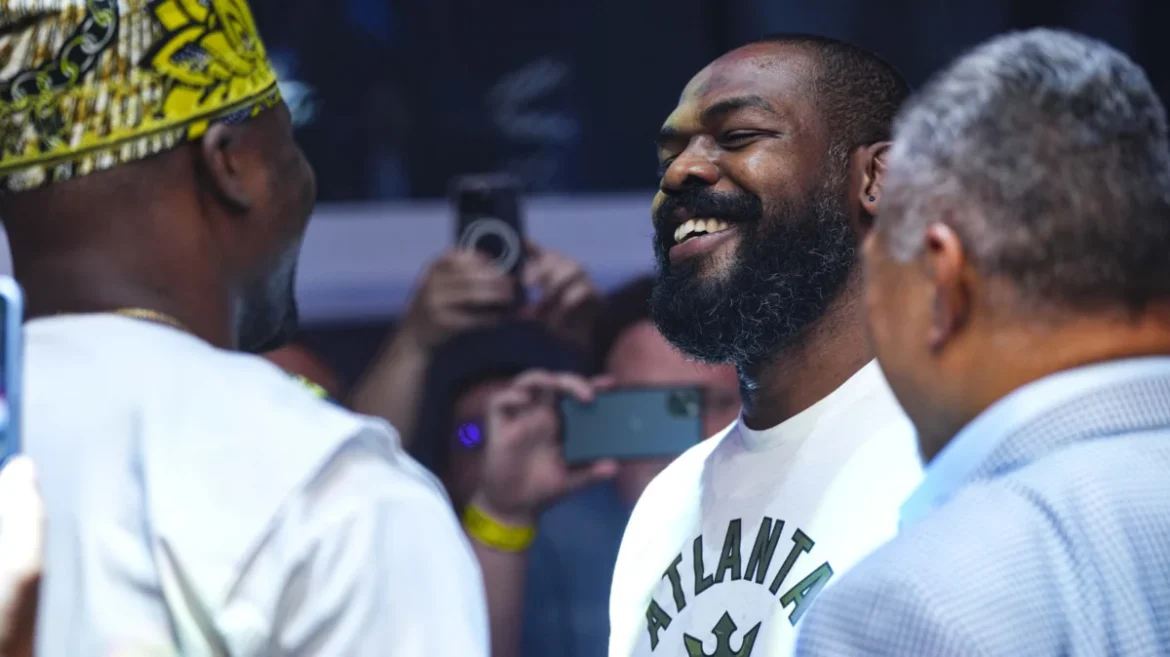
The world of professional combat sports, much like the squared circle of professional wrestling, is a theatre of larger-than-life personalities and colossal rivalries. Beyond the glitz and the glamour, however, lies a stark reality: the intricate and often contentious landscape of fighter contracts and promotional negotiations. When titans clash not just in the octagon but at the negotiating table, the ripples can be felt far beyond the immediate parties involved. This is precisely the situation that unfolded with the highly publicized friction between legendary mixed martial artist Jon Jones and his long-time promotional home, the Ultimate Fighting Championship (UFC). The fallout from these disagreements, particularly concerning Jones’s planned return and subsequent contractual impasses, has drawn the attention and concern of fellow fighters, including former UFC Heavyweight Champion Francis Ngannou, who himself experienced a bitter separation from the organization due to similar financial disagreements.
Francis Ngannou, a powerhouse of immense talent and a former undisputed king of the UFC’s heavyweight division, has recently articulated his apprehension regarding the ongoing contractual wrangling between Jon Jones and the UFC. Ngannou, who made the momentous decision to depart the promotion in early 2023 after failing to reach a satisfactory agreement on his own contract, possesses an intimate understanding of the pressures and potential pitfalls inherent in navigating these high-stakes negotiations. His perspective, therefore, carries significant weight, offering a glimpse into the broader implications of such disputes for the athletes who dedicate their lives to the brutal yet captivating sport of mixed martial arts.
The specific catalyst for Ngannou’s recent comments was the highly anticipated, yet ultimately unmaterialized, prospect of Jon Jones returning to competition at a UFC event slated for June, reportedly intended for a White House ceremony. Initial indications suggested that Jones, arguably the most dominant fighter in UFC history, was in discussions for this landmark appearance. However, the official announcement of the fight card proceeded without his name attached. This led to conflicting narratives. UFC President Dana White initially stated that no negotiations had occurred for that specific event, implying Jones was never slated for it. This assertion was swiftly met with a counter-narrative from Jones himself, who claimed that negotiations had indeed taken place, but that he had been presented with an offer he deemed insufficient – a "lowball" proposition, in his words. He further indicated that if the promotion genuinely believed his fighting career was nearing its end, he would seek his release from his contract.
The situation escalated when reports emerged of a substantial financial offer being made to Jones, reportedly in the region of $15 million for the potential bout. While this figure represents a significant sum, Jones reportedly felt his market value and historical significance warranted a higher compensation. Dana White, in response to these claims, reiterated that regardless of Jones’s perceived worth or financial demands, the fighter was not slated for the June card, thereby framing the discussion around monetary figures as somewhat moot in the context of the event’s planning.
Adding another layer to the unfolding drama, prominent combat sports journalist Ariel Helwani weighed in, suggesting that White’s public statements lacked coherence. Citing information gleaned from multiple sources, Helwani asserted that negotiations were, in fact, actively underway, casting doubt on the UFC president’s portrayal of the situation. It was within this complex and often opaque environment that Ngannou, a fighter who has firsthand experience with the financial realities and contractual frustrations within the UFC, was asked to share his insights.
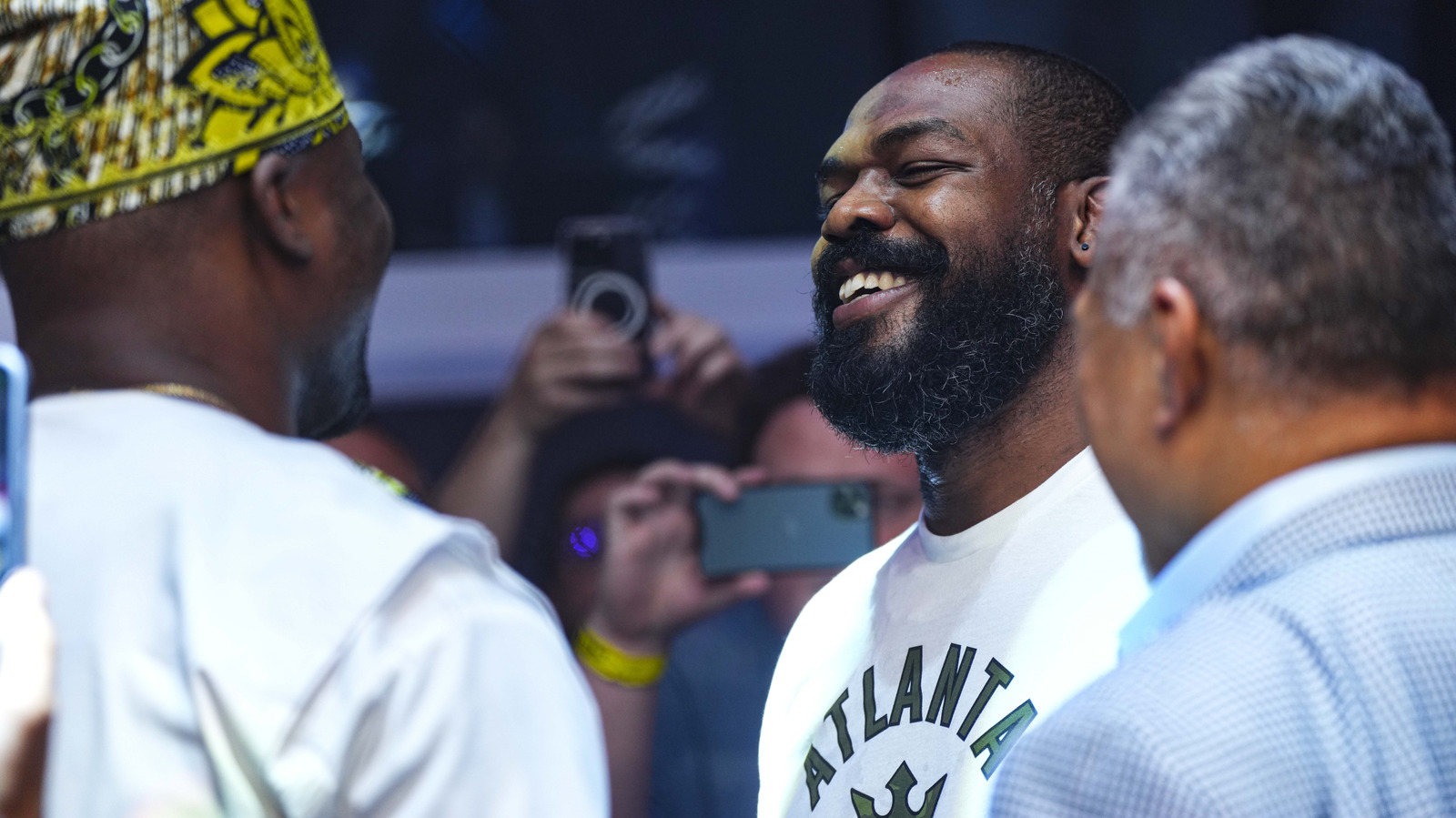
Ngannou’s response was not merely a casual observation but a deeply felt expression of concern, rooted in his own experiences and his profound respect for Jon Jones’s legacy. He began by highlighting the extraordinary longevity and unparalleled success of Jon Jones within the UFC. Jones, who has held championship status since the tender age of 23 and has been a fixture in the organization for over fifteen years, stands as a monumental figure in the sport. Ngannou posited that if anyone in the current landscape of mixed martial arts deserves recognition and equitable compensation, it is unequivocally Jon Jones.
The core of Ngannou’s worry lies in the perception that even the "Greatest Of All Time" (GOAT) is potentially being undervalued or mishandled. He articulated this sentiment with a powerful rhetorical question: "If the GOAT is not respected then who should be respected." This statement underscores a fundamental concern for the welfare and fair treatment of the sport’s most accomplished athletes. Ngannou’s fear is that if an athlete of Jones’s stature, one who has consistently delivered stellar performances and captivated audiences for years, is subjected to what he perceives as disrespectful negotiation tactics or financial undervaluation, then the outlook for other fighters, those who have not yet reached such stratospheric heights, becomes even more precarious. His concern extends to the broader implications for the entire roster, suggesting that the treatment of their most celebrated figures sets a precedent for how all athletes are valued and compensated. He implicitly argues that a lack of respect for the GOAT sends a chilling message to every other competitor striving for recognition and financial security.
The dynamics Ngannou describes are not unique to mixed martial arts; they resonate deeply within the professional wrestling industry as well. In wrestling, where performers are often categorized as independent contractors and their earnings can fluctuate wildly based on booking, merchandise sales, and appearance fees, the struggle for fair compensation and equitable treatment is a constant undercurrent. While the nature of scripted combat differs from the genuine physicality of MMA, the business aspects of athlete management, contract negotiations, and the power balance between promoters and performers share striking similarities. Wrestlers, too, have voiced concerns about exploitative contracts, limited creative control, and the difficulty of achieving financial stability, especially when their careers are subject to the whims of booking decisions and evolving storylines. The desire for recognition of their athletic prowess and their value as entertainers is a universal theme, whether the blows are real or choreographed.
Francis Ngannou’s departure from the UFC was a watershed moment, symbolizing a fighter’s willingness to prioritize his own financial well-being and career autonomy over the perceived security of remaining with a major promotion. His foray into professional boxing, culminating in a highly publicized bout against Tyson Fury, demonstrated his ambition to explore new avenues and maximize his earning potential. This move, while a personal triumph, also highlighted the limitations that fighters can encounter when their contractual obligations restrict their ability to pursue lucrative opportunities outside their primary discipline. The ability to leverage one’s star power across different combat sports disciplines is a growing trend, and Ngannou’s actions have undoubtedly inspired other fighters to consider similar paths.
The Jon Jones – UFC dispute, therefore, becomes more than just a negotiation between two parties; it is a litmus test for the prevailing business practices within the sport. It forces a public examination of how elite athletes are compensated, how their legacies are honored, and what constitutes fair play in the often-unforgiving arena of professional sports promotion. The narrative of a fighter, particularly one as decorated as Jon Jones, feeling undervalued or disrespected can serve as a powerful rallying point for athletes seeking greater agency and a fairer share of the immense profits generated by their performances.
Ngannou’s commentary serves as a stark reminder that behind every spectacular knockout and every championship reign, there are individuals grappling with complex contractual realities. The financial health and career trajectory of these athletes are inextricably linked to the terms of their agreements, and any perceived imbalance in power or compensation can have profound consequences. His concern for Jon Jones is, in essence, a concern for the integrity of the sport itself and the well-being of its most vital contributors. The ongoing saga of Jon Jones and the UFC, amplified by Ngannou’s insightful perspective, continues to be a critical case study in the evolving landscape of athlete empowerment and the perennial pursuit of equitable recognition in the high-stakes world of professional combat sports. The lessons learned from these high-profile disputes have the potential to shape future negotiations and redefine the relationship between promoters and the athletes who are the very heart and soul of the spectacle.