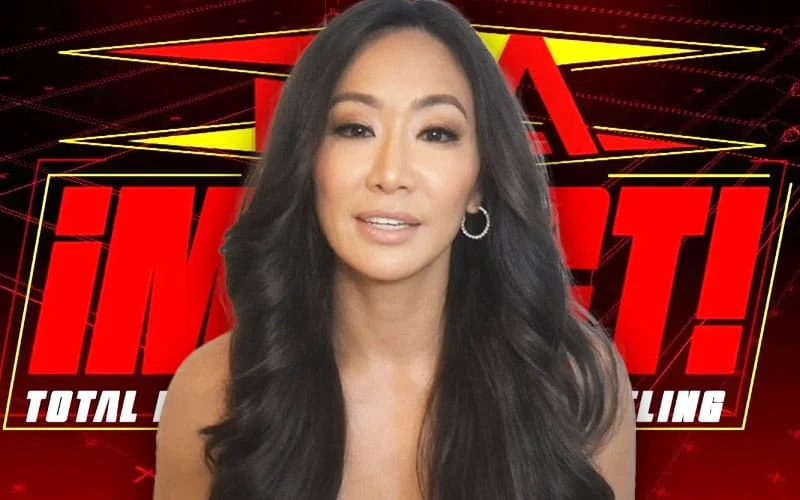
The landscape of professional wrestling is often defined by its cyclical nature, where bridges burned in the heat of a contractual dispute are frequently rebuilt with the mortar of financial necessity or the desire for a final legacy-defining run. However, the ongoing impasse between Gail Kim and the current administration at TNA Wrestling appears to be the rare exception to this rule, standing as a stark testament to the divide between corporate restructuring and the personal integrity of a foundational legend. For decades, Gail Kim has been the undisputed heartbeat of the Knockouts division, a figure whose name is synonymous with the elevation of women’s wrestling from a sideshow to a main-event attraction. Yet, despite the deep-rooted history she shares with the promotion, the prospect of a reconciliation has moved from a hopeful fan theory to a logistical and moral impossibility under the present regime. The friction between the two parties has escalated beyond the standard professional disagreement, evolving into a high-stakes legal confrontation that highlights a fundamental shift in how the company operates under its parent organization, Anthem Sports & Entertainment.
The roots of this profound estrangement can be traced back to the spring of 2025, a period that marked a significant turning point for TNA’s internal culture. In March of that year, the wrestling community was blindsided by the news that Gail Kim had been relieved of her duties. At the time, the company characterized the move as part of a broader corporate restructuring effort, a term often used to sanitize the departure of key personnel during financial or strategic pivots. For Kim, who had transitioned seamlessly from an in-ring pioneer to a vital backstage producer and talent relations executive, the firing was more than just a change in employment status. It was the catalyst for a legal dispute that has since become the defining narrative of her post-TNA life. This was not merely the end of a job; it was the severance of a relationship with a brand she had helped build from its infancy in the mid-2000s. The fallout from this decision has led to a protracted legal battle that is currently winding its way through the system, with both parties scheduled to enter mediation in June.
While the legal proceedings have largely been kept behind closed doors, the public received a rare and unfiltered glimpse into Kim’s mindset on March 26, 2026. Responding to a passionate plea from a supporter on social media who begged her to return and fix the struggling Knockouts division, Kim did not offer the typical diplomatic response often seen in the industry. Instead, she provided a definitive and chillingly clear assessment of the situation, stating that a return is completely off the table as long as the current ownership and leadership remain in place. Her words underscored a sentiment that many had suspected but few had confirmed: the issue is not one of money or ego, but of fundamental ethics. By framing the conflict as a matter of right versus wrong rather than a simple need to bury the hatchet, Kim elevated the dispute from a contractual spat to a moral crusade. She expressed a firm belief that the truth regarding the circumstances of her departure and the internal state of the company would eventually be revealed, suggesting that the problems within the organization run far deeper than what is visible to the casual viewer.
To understand why this stance is so significant, one must appreciate the immense weight Gail Kim carries within the history of TNA. When she first arrived in the promotion after her initial stint with WWE, she was the catalyst for the creation of the Knockouts Championship in 2007. Her legendary rivalry with Awesome Kong served as the blueprint for serious, athletic, and high-stakes women’s wrestling at a time when other major promotions were still focusing on gimmick matches and shorter segments. Kim didn’t just participate in the division; she mentored it, shaped its identity, and fought for its place on the card. Her transition to a backstage role was seen as a natural evolution, ensuring that the next generation of talent, from Jordynne Grace to Deonna Purrazzo, had a veteran voice advocating for their creative direction and well-being. When a figure of such historical importance declares that the current leadership is the primary obstacle to her involvement, it sends a ripple effect through the entire roster and the industry at large.
The mention of new ownership as a prerequisite for her return is perhaps the most damning part of her public statement. It suggests a total loss of faith in Anthem’s vision for the company and the individuals tasked with executing it. Since Anthem took the reins of the promotion, the company has seen various waves of management, some of which were praised for stabilizing the brand and others that were criticized for a perceived lack of connection to the wrestling product’s soul. Kim’s insistence that the "truth always comes out" hints at systemic issues that may have contributed to her firing in 2025. In the world of corporate wrestling, "restructuring" is often a catch-all for removing voices that challenge the status quo or push back against executive mandates. If Kim felt that the direction of the company was compromising the integrity of the product she helped create, her resistance would naturally put her at odds with those prioritizing the bottom line over the creative legacy of the Knockouts.
The upcoming mediation in June represents a critical juncture in this saga. Mediation is often a final attempt to settle a dispute before it reaches a full trial, a process that can be both costly and damaging to a company’s public image. For Anthem, settling with Kim might offer a way to move past the negative publicity, but for Kim, the objective seems to be something more than a financial settlement. Her public rhetoric suggests she is seeking a form of vindication or a public acknowledgment of the grievances that led to her departure. In an industry where "never say never" is the unofficial motto, Kim’s "not under this leadership" is a powerful rejection of the idea that everything has a price. It places her in a small category of wrestling figures who prioritize their principles over the lure of a paycheck or the comfort of a familiar locker room.
The impact of her absence is felt acutely within the Knockouts division itself. While the roster remains talented, the loss of Kim’s guidance has left a vacuum in the leadership structure. She was often the bridge between the talent and the executive office, a role that requires a delicate balance of empathy and authority. Without that bridge, the division risks losing the distinct identity that Kim worked so hard to cultivate. Fans who call for her return to "fix" the division are recognizing a perceived decline in the storytelling or the prominence of the women’s matches, attributing that shift to the absence of the division’s original architect. However, Kim’s response makes it clear that she will not be a cosmetic fix for a structure she believes is fundamentally broken at the top. She is unwilling to lend her credibility to a regime she no longer respects, even if it means staying away from the ring and the office indefinitely.
This standoff also highlights the changing dynamics of talent relations in the modern era. In previous decades, a disgruntled performer had few places to go and would often return to a company that had mistreated them simply because it was the only game in town. Today, the landscape is different. While TNA remains a significant platform, the professional wrestling world is more diverse than ever, and a legend like Gail Kim has the freedom to stand her ground without fearing for her livelihood. Her legacy is secure, and her influence extends far beyond the confines of a single promotion. By choosing to fight this battle in the legal arena and in the court of public opinion, she is setting a precedent for how veteran talent should be treated and the level of respect they should be afforded by corporate entities.
The phrase "right and wrong" used by Kim is particularly evocative in the context of professional wrestling, a business that has historically operated in shades of gray. Wrestling has a reputation for being a "dirty" business where loyalty is rarely rewarded and backstage politics can derail even the most successful careers. For Kim to draw a hard line in the sand based on moral grounds suggests that the events of March 2025 were particularly egregious. Whether it was a matter of how the firing was handled, the reasons behind the restructuring, or the treatment of other staff members during that period, the "truth" she alludes to is clearly something she believes will vindicate her stance. It paints a picture of a woman who is at peace with her decision, even if that decision keeps her away from the company that was her home for the better part of two decades.
As June approaches, the wrestling world will be watching the outcome of the mediation closely. While a settlement might end the legal proceedings, it is unlikely to change the fundamental reality of the situation: the bond between Gail Kim and TNA is severed. Unless there is a seismic shift in the corporate structure of Anthem or a complete change in the executive suite, the Knockouts division will have to move forward without its most influential figure. Kim’s refusal to "bury the hatchet" is a reminder that some wounds are too deep for simple apologies. It is a stand for accountability in a business that often lacks it, and a statement that a legacy is worth more than a temporary return to the spotlight. The story of Gail Kim and TNA is no longer just about wrestling; it is a case study in the clash between corporate management and the individuals who provide the creative spark that makes the business possible. For now, the door remains shut, the legal battle continues, and the truth remains the ultimate prize that Kim is waiting for time to reveal. In the end, her absence speaks as loudly as her presence ever did, serving as a constant reminder of the high cost of losing the trust of those who built the foundation upon which a company stands.