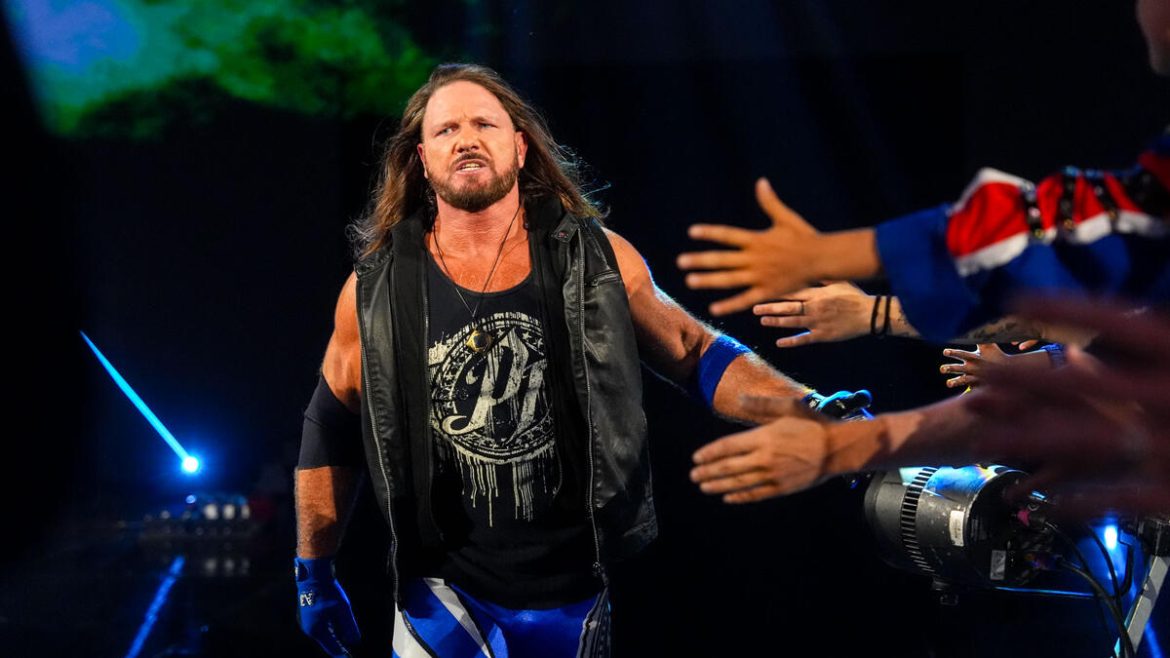
The wrestling world, a vibrant tapestry woven with captivating narratives and athletic prowess, often blurs the lines between competition and camaraderie, between scripted rivalries and genuine respect. It’s a landscape where history is as important as the present, and where legends are forged through dedication and iconic moments. Within this dynamic environment, the recent actions of a seasoned performer, AJ Styles, during a WWE house show in Tampa, Florida, have sparked discussion and offered a poignant reminder of the professional boundaries that, while often tested, remain crucial to the integrity of the industry. On December 27th, 2025, as WWE staged a live event in the Sunshine State, a moment unfolded that underscored the complex relationship between different wrestling promotions and the personal commitments of their stars.
The incident in question occurred as Styles, a celebrated figure within WWE and a current holder of championship gold, was engaging with fans, a common and cherished practice at these live events. Fans eagerly awaited the opportunity to interact with their favorite performers, seeking autographs and photographs as mementos of their experience. Amidst the throng of supporters, one individual presented Styles with an item that immediately presented a unique challenge: an AEW World Championship belt. The visual itself was striking – a symbol of a rival promotion being offered for endorsement by a WWE superstar. In a move that was both gracious and firm, Styles acknowledged the item and the fan’s request, but ultimately declined to sign it. His response, captured on video and quickly disseminated across social media platforms, was delivered with a clear undertone of respect for his former colleagues and the entities they represent. "Nick, Matt, I love ya, I can’t sign this though!" he stated, directly referencing Nick and Matt Jackson, collectively known as The Young Bucks.
This brief, yet significant, exchange carries considerable weight when contextualized within the broader history of professional wrestling and the specific careers of those involved. AJ Styles, Nick Jackson, and Matt Jackson share a history that predates their current affiliations. All three were pivotal members of the legendary Bullet Club faction during their tenure in New Japan Pro-Wrestling (NJPW). This period, from the mid-2010s onwards, saw Bullet Club evolve into one of the most influential and popular stable in international wrestling, with Styles serving as its charismatic leader. His leadership and the Jacksons’ innovative tag team wrestling were instrumental in the faction’s global impact, laying groundwork for many of the styles and storytelling techniques that would later be adopted by promotions like AEW. Styles’ departure from NJPW for WWE in 2016 marked a significant shift, while the Young Bucks, alongside Kenny Omega, would go on to become founding figures and Executive Vice Presidents of All Elite Wrestling.
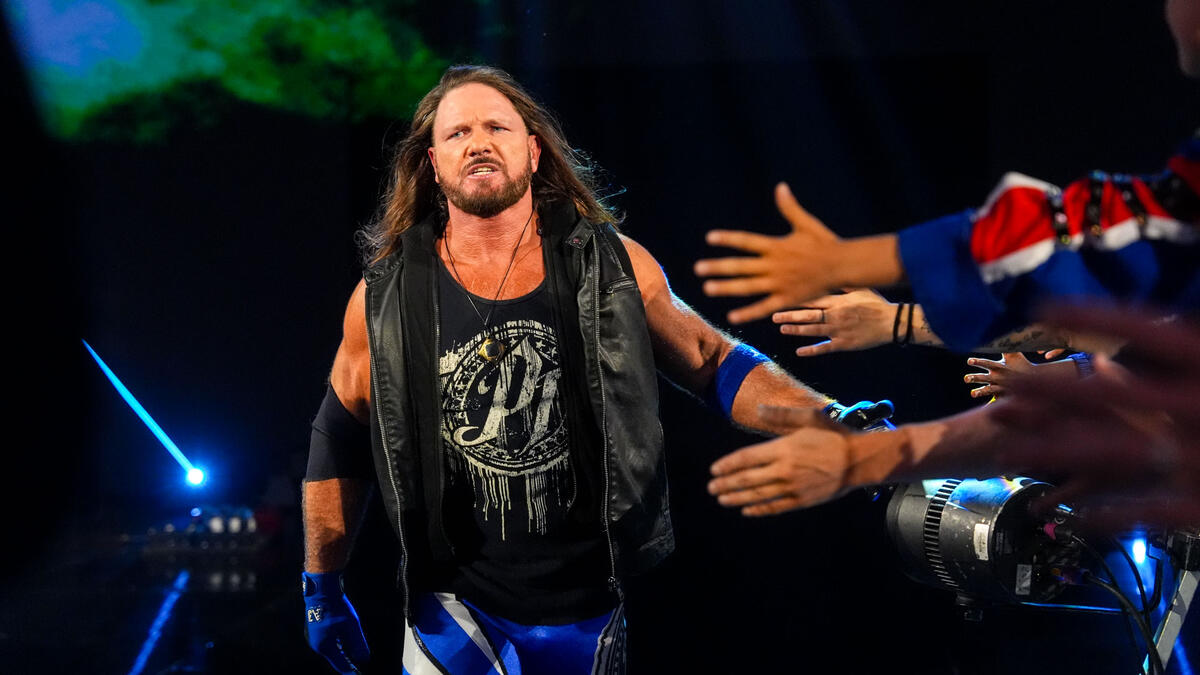
The decision by Styles not to sign the AEW championship belt, while perhaps appearing as a minor detail to some, speaks volumes about the unspoken rules and the often-delicate ecosystem of professional wrestling. In an era where inter-promotional dream matches and crossovers are increasingly sought after by fans and sometimes facilitated by promotions, the individual performer’s position remains paramount. WWE and AEW operate as direct competitors, vying for viewership, talent, and market share. While there can be instances of professional courtesy and even collaboration on specific projects or events, the fundamental competitive nature of their business model remains. For a contracted WWE talent, endorsing a championship belt from a rival organization, even in a seemingly innocuous manner like an autograph, could be construed as undermining the legitimacy of their own company’s championships and contractual obligations. It could be seen as a subtle endorsement of a competing product, a line that many performers, especially those in prominent positions, are trained and expected to uphold.
Styles’ reference to the Young Bucks, "Nick, Matt, I love ya," highlights the personal relationships that often exist behind the scenes, transcending promotional divides. These are individuals who have shared locker rooms, grueling tours, and significant career milestones. The respect he expressed for them is genuine and understandable. However, his immediate follow-up, "I can’t sign this though!" unequivocally draws the line. This isn’t a rejection of the individuals or their accomplishments; it’s a clear demarcation of his professional identity and his current employer’s interests. It’s a demonstration of loyalty, not just to WWE as a corporate entity, but to the concept of the business itself. The AEW World Championship represents the pinnacle of achievement within All Elite Wrestling. For AJ Styles, a man who has held numerous prestigious titles throughout his career, including world championships in multiple major promotions, signing that specific belt at a WWE event would be akin to a high-ranking military officer signing an opposing nation’s flag during a formal ceremony.
Furthermore, the timing of this event is noteworthy. The WWE house show in Tampa occurred on the same date as AEW’s own major pay-per-view event, World’s End, on December 27th, 2025. This places the incident squarely within a period of heightened competition and promotional focus for both companies. While a house show is a less scrutinized event than a televised broadcast or a major pay-per-view, the actions of its performers are still observed. For WWE, maintaining the perceived prestige of their championships and talent is paramount. Allowing a WWE champion to legitimize a rival’s top prize, even indirectly, could create a perception of weakness or a lack of seriousness in their own product.
AJ Styles’ career trajectory offers a unique perspective on this situation. Having achieved legendary status in TNA (now Impact Wrestling), then carving out a significant niche in NJPW, and finally becoming a cornerstone of WWE’s main roster, he has navigated the independent scene, international territories, and the largest wrestling promotion in the world. He understands the business from multiple angles and has likely encountered similar dilemmas throughout his career. His ability to command respect and hold multiple championships across different eras and companies is a testament to his skill and adaptability. This experience likely informs his understanding of professional etiquette and the importance of respecting the brand he currently represents.

The WWE World Tag Team Championship, which Styles was defending earlier that night alongside Dragon Lee, is a tangible representation of his current role within WWE. The championship belts in professional wrestling are more than just props; they are symbols of achievement, narrative drivers, and often, the focal point of intense feuds and storylines. They represent the culmination of hard work, sacrifice, and the creative efforts of countless individuals. To have one’s signature affixed to a championship belt of a direct competitor would be to imbue that symbol with a credibility it wouldn’t otherwise possess within the context of the rival promotion’s narrative.
This incident also touches upon the broader debate surrounding inter-promotional interactions in wrestling. While fans often clamor for dream matches and crossovers, the reality of the business often dictates a more guarded approach. The narrative integrity of each promotion is carefully curated, and the introduction of elements from a rival can disrupt that carefully constructed reality. Performers are, in essence, ambassadors for their respective brands. Their actions, both in and out of the ring, contribute to the perception and credibility of their employer.
In conclusion, AJ Styles’ refusal to sign an AEW championship belt at a WWE house show, while seemingly a small gesture, is a powerful illustration of the professional boundaries that govern the wrestling industry. It highlights the delicate balance between personal relationships, individual careers, and the corporate interests of competing promotions. Styles’ response was a masterclass in professionalism, demonstrating respect for his former peers while unequivocally upholding his current commitments. It serves as a reminder that even in an industry built on illusion and spectacle, there are foundational principles of loyalty and brand integrity that even the most decorated veterans understand and respect. The AEW belt, a symbol of excellence in one universe, remained outside the purview of a WWE superstar, a quiet affirmation of the distinct worlds they inhabit and the professional lines they must carefully navigate.