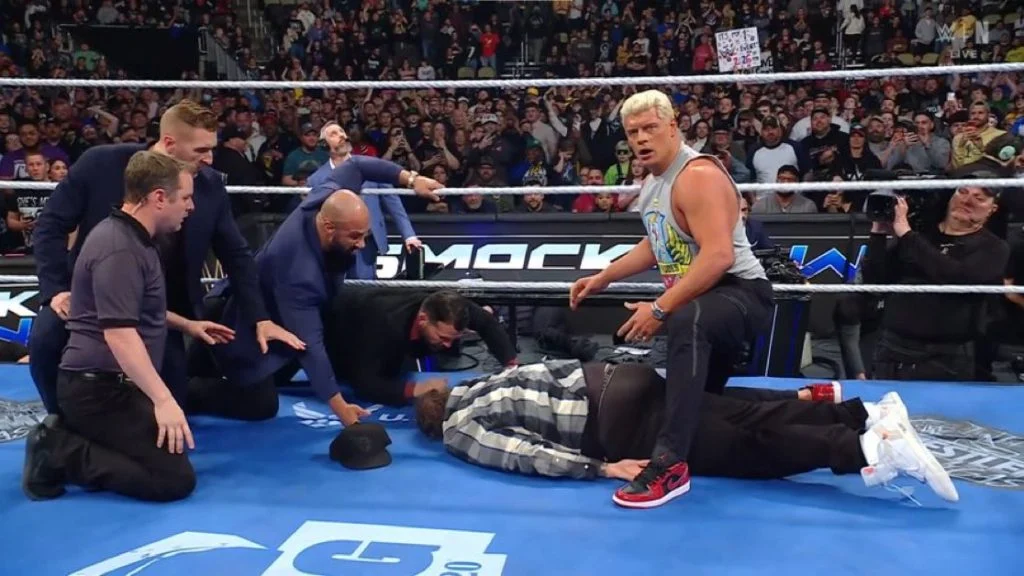
As the grandest spectacle in sports entertainment draws near, an palpable undercurrent of anticipation typically electrifies the air, building towards WrestleMania with each passing week. Yet, for many discerning viewers, Friday Night SmackDown has found itself shrouded in an unexpected creative malaise, prompting a collective shrug rather than the customary surge of excitement. The weekly broadcast, historically a cornerstone of WWE’s programming, has recently presented a curious blend of uninspired narrative progression, in-ring encounters that seldom ascend beyond the ordinary, and comedic endeavors that, more often than not, elicit groans instead of genuine amusement. It’s a perplexing situation, almost as if an unseen, mischievous force has cast a spell upon the show, causing its usually vibrant roster to operate at a fraction of their known capabilities, leaving the audience yearning for the innovative spark that defines the road to WrestleMania.
The "Road to WrestleMania" is meant to be a period of elevated storytelling, where every segment, every promo, and every match is meticulously crafted to amplify stakes and build momentum towards the biggest night of the year. Champions and challengers alike should be delivering career-defining performances, their feuds intensifying with each encounter, their words cutting deeper with every microphone in hand. Instead, SmackDown has, in recent memory, felt strangely muted, a stark contrast to the crescendo of excitement that typically accompanies this pivotal season. The narrative threads often seem to meander without a clear destination, leaving audiences struggling to invest emotionally in the outcomes. This isn’t merely a minor dip; it’s a noticeable downturn during a time when the spotlight shines brightest, raising questions about the creative direction and its impact on the overall product.
One of the most glaring criticisms leveled against the recent iteration of SmackDown revolves around its verbal exchanges. The art of the wrestling promo is foundational; it’s where characters are defined, motivations are laid bare, and rivalries are forged in the fires of spoken word. A compelling promo can elevate a wrestler from a mere athlete to a captivating personality, capable of swaying an arena with their charisma and conviction. However, on SmackDown, a recurring issue has been the perceived lack of depth and originality in these segments. Many monologues and dialogues have felt formulaic, repetitive, or simply uninspired, failing to add significant layers to existing feuds or ignite new ones. When top-tier talent, known for their ability to command an audience with a microphone, deliver lines that feel recycled or devoid of genuine passion, it signals a deeper problem within the creative process. The absence of organic, character-driven storytelling in these verbal confrontations means that the emotional hooks necessary to draw viewers into a rivalry are often missing, leaving the audience detached rather than engrossed.
Beyond the spoken word, the in-ring action, a fundamental pillar of professional wrestling, has also faced scrutiny. While WWE’s roster boasts some of the most athletic and skilled performers in the world, the quality of matches presented on SmackDown has, at times, been perceived as underwhelming. This isn’t necessarily a commentary on the individual abilities of the wrestlers, but rather on how these abilities are being utilized and showcased. Matches frequently conclude with predictable outcomes or feature sequences that feel overly familiar, lacking the innovation or high-stakes drama expected during a WrestleMania build. When championship contests or main event bouts fail to resonate with the intensity and unpredictability that defines truly great wrestling, it dampens the overall viewing experience. The feeling that many matches are merely placeholders, serving to fill airtime rather than advance significant storylines or elevate talent, contributes to the sense of a show that is not firing on all cylinders.
Perhaps one of the most perplexing elements contributing to the current atmosphere on SmackDown is the hit-or-miss nature of its comedic offerings. Wrestling has always incorporated humor, from lighthearted antics to outrageous characters, but the success of such segments hinges on their ability to entertain without detracting from the overarching narrative or undermining the seriousness of other storylines. Recently, SmackDown has featured comedic bits that have been met with a largely indifferent, if not outright critical, reception. A prime example of this phenomenon was the recurring presence of musical artist Jelly Roll, who appeared in a non-performance capacity, instead offering motivational platitudes backstage. This particular series of segments left many viewers scratching their heads, questioning the purpose and placement of such an appearance. Why was a popular musician, known for his performances, relegated to a role akin to a "WWE life coach"? The original intent, perhaps to inject a dose of mainstream pop culture or relatable humor, seemed to misfire, resulting in moments that felt disconnected from the wrestling product and failed to elicit the intended comedic or inspirational effect. The segments came across as forced and artificial, a clear instance where attempts at humor or cross-promotion simply fell flat, highlighting a disconnect between creative vision and audience expectation.
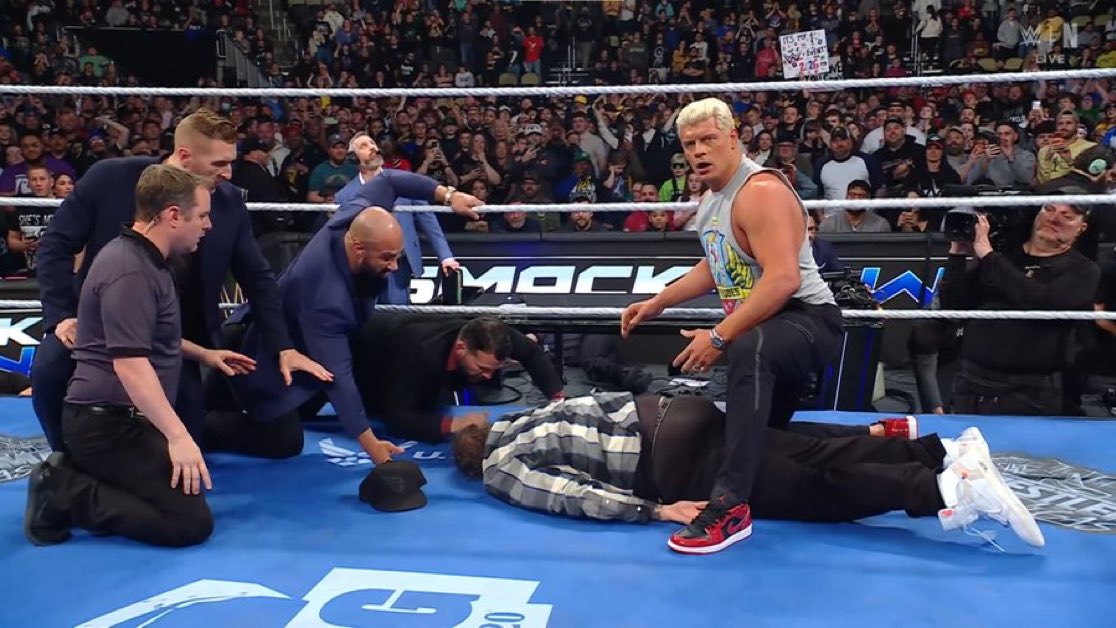
The collective frustration among fans often manifests in a metaphorical sense, as if an external force, perhaps a mischievous entity like the "very nice, very evil" Danhausen, has somehow afflicted the show with a "curse." This isn’t to suggest a literal magical hex, but rather to articulate the inexplicable downturn in quality, the feeling that the show is being sabotaged by unseen forces or, more realistically, by a series of unfortunate creative choices. It’s a tongue-in-cheek way for dedicated viewers to express their bewilderment when a product, known for its peaks of excellence, suddenly plummets into a trough of mediocrity, especially during a period that should be its most compelling. The "curse" becomes a catch-all explanation for the perplexing decisions that lead to talent performing below their proven capabilities, storylines losing their way, and the overall broadcast feeling significantly less engaging than its potential suggests.
This perceived creative slump isn’t a reflection of the talent on the roster, which remains world-class. SmackDown is home to an incredible array of athletes and performers, many of whom have consistently demonstrated their ability to deliver captivating promos, execute thrilling matches, and embody compelling characters. The issue, therefore, lies not with the individuals, but with how their immense talents are being harnessed and directed. When highly skilled wrestlers are given repetitive dialogue, predictable match structures, or storylines that fail to explore their full potential, the result is an output that appears "uninspired" and below their usual standard. It suggests a broader problem in the booking philosophy, where perhaps too much focus is placed on a select few, or where the pressure of weekly television production leads to compromises in originality and depth.
The towering shadow of The Bloodline storyline, while undeniably one of the most compelling narratives in modern wrestling history, might also be inadvertently contributing to the perceived creative vacuum elsewhere on the blue brand. For years, the saga of Roman Reigns, The Usos, Paul Heyman, and later Solo Sikoa and Cody Rhodes, has dominated WWE programming, providing unparalleled drama and character development. However, the sheer magnitude and consistent brilliance of this central storyline can, at times, overshadow everything else on the show. When so much creative energy and audience investment is concentrated on one epic tale, other feuds and characters can struggle to gain traction and feel significant in comparison. This isn’t to say The Bloodline is detrimental; rather, it highlights the challenge of crafting multiple compelling narratives simultaneously, ensuring that the entire roster feels relevant and poised for greatness, even alongside a storyline of such monumental proportions. The danger lies in other talent feeling like supporting players in a drama not their own, their own aspirations and rivalries feeling secondary.
The timing of this creative dip is particularly problematic given the stakes of WrestleMania. The "Showcase of the Immortals" is not just a single event; it’s the culmination of months of buildup, the payoff for intricate storylines, and the stage where legends are made. If the preceding weeks of SmackDown fail to generate genuine excitement and emotional investment in the various matches slated for WrestleMania, the overall impact of the event itself could be diminished. Fans want to feel a connection to every story unfolding, not just the main event. They crave the feeling that every competitor is fighting for something deeply personal and consequential. When the build lacks this intensity, the matches, no matter how technically proficient, risk feeling less impactful on the grand stage.
Looking beyond the current state of SmackDown, it’s worth acknowledging that the broader wrestling landscape continues to offer a diverse array of compelling content. News regarding individuals like Steve Maclin, a talent making significant waves in other promotions, or events like TNA Sacrifice and Ring of Honor’s Global Wars, underscore the vibrant and competitive nature of professional wrestling worldwide. The emergence of new television shows dedicated to the sport further illustrates that engaging and innovative wrestling is thriving in many corners of the industry. This broader context serves as a subtle reminder that the issues observed on SmackDown are not endemic to wrestling as a whole, but rather specific to the creative direction currently being pursued on one particular brand. It highlights that there is a wealth of talent and creative potential within WWE’s own roster, suggesting that a shift in approach could quickly rectify the current perceived shortcomings.
Ultimately, the aspiration for SmackDown, especially during WrestleMania season, remains high. The potential for compelling narratives, exhilarating in-ring performances, and memorable character moments is ever-present, residing within the incredible roster assembled by WWE. The current period of creative inconsistency, though perplexing, is not insurmountable. A renewed focus on organic storytelling, genuine character development, and matches that feel consequential and unpredictable could quickly re-energize the blue brand. As the final weeks leading up to WrestleMania unfold, fans will undoubtedly hold onto hope that the "curse" is lifted, that the creative spark returns, and that SmackDown once again delivers the electrifying, must-watch television that truly befits the road to the biggest show of the year, ensuring that every championship, every rivalry, and every superstar feels poised for their unforgettable moment in the spotlight.