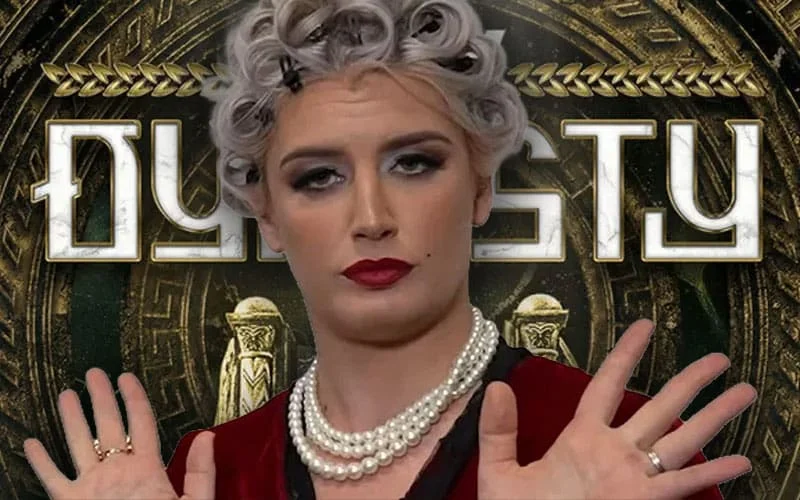
The landscape of professional wrestling is often defined by its unpredictability, where the most meticulously crafted plans can evaporate in an instant due to the physical toll of the sport or the shifting tides of creative direction. This volatile nature was recently highlighted following the conclusion of AEW Dynasty, a pay-per-view event that sought to solidify new legacies while navigating the sudden absence of one of the promotion’s most captivating figures. For months, the trajectory of the women’s division had been anchored by the cinematic and polarizing presence of the former world champion, yet when the lights dimmed in the arena for this marquee event, a noticeable void remained where a certain star was once expected to shine. The discourse surrounding the status of the roster intensified during the post-event media interactions, where the head of the organization, Tony Khan, shed light on the logistical hurdles that forced a significant restructuring of the evening’s festivities. It became clear through these revelations that the original blueprint for the show featured a prominent role for the performer known for her black-and-white aesthetic, a plan that was ultimately scrapped as the company pivoted toward a different narrative path.
To understand the magnitude of this shift, one must look at the momentum built during the preceding months, specifically the fallout from the Revolution event. The creative engine of All Elite Wrestling typically operates on a long-term cycle, where the conclusion of one major show serves as the foundational bedrock for the next. In the eyes of the promotion’s leadership, the road to Dynasty was meant to be paved with the involvement of key pillars who have defined the modern era of the company. Among these essential components was the woman who has spent the last year reinventing herself through a lens of Old Hollywood glamour and psychological depth. Her transformation into the Timeless character was not merely a gimmick change but a complete overhaul of her presentation, making her one of the most reliable draws on the roster. When a talent of that caliber is removed from a high-profile card, the ripples are felt throughout the entire locker room, necessitating a frantic scramble to ensure the quality of the product remains uncompromised for the viewing audience.
During the customary post-show press scrum, Tony Khan was candid about the challenges of booking a show of this magnitude when core participants are suddenly unavailable. He acknowledged that the creative team had to navigate a series of substantial alterations in the weeks leading up to the pay-per-view. Interestingly, the discussion was not limited to a single individual; Khan pointed out that both the former champion and the burgeoning star Kyle Fletcher were initially slated for significant contributions to the event. The admission that these two athletes were integral to the original vision of Dynasty underscores the fluid nature of the wrestling business. For a booker, losing a veteran presence like the Timeless one and a high-octane workhorse like Fletcher requires a total rethink of the show’s pacing and match order. The executive made it clear that their involvement is always a priority, and the decision to move forward without them was a result of circumstances that demanded a complete departure from the initial scripts written in the wake of the previous pay-per-view cycle.
The mystery of this absence is compounded by the manner in which the performer was transitioned off of television. Wrestling fans are accustomed to the "injury angle," a storytelling device used to explain a talent’s hiatus while keeping the audience engaged with a potential revenge plot. In this instance, the narrative involved a calculated backstage assault perpetrated by an unidentified assailant. This trope is a double-edged sword; it provides a logical reason for a star to vanish, but it also creates a lingering expectation for a resolution that may now be further away than anyone anticipated. The suddenness of the attack and the subsequent removal from all active competition suggested a short-term break, perhaps to heal minor nagging injuries or to refresh the character. However, the revelation that she was intended to wrestle at Dynasty suggests that the decision to keep her on the sidelines was either a very late call or a response to a situation that escalated rapidly behind the scenes.
As the wrestling community attempts to piece together the timeline of these events, the focus has shifted toward the long-term implications of her current status. Rumors and internal whispers have begun to circulate regarding the duration of this hiatus, with some reports painting a stark picture of a prolonged absence. The suggestion that the promotion is not expecting her back in the squared circle for the remainder of 2026 has sent shockwaves through the fanbase. If these projections hold true, the women’s division will be forced to evolve without one of its most recognizable and decorated stars for a significant period. A sabbatical of this length is rare for a performer in their prime, leading to intense speculation about whether the hurdles are physical, personal, or a complex combination of both. In a world where the "next man up" mentality governs the roster, her absence provides an opening for other talents to ascend, yet the unique flavor she brought to the screen is not easily replicated.
The impact of losing such a talent is felt most acutely in the creative continuity of the division. The Timeless persona was more than just a wrestler; she was a centerpiece around which multiple storylines revolved. Her interactions with the rest of the roster often blurred the lines between reality and performance art, drawing viewers into a world of heightened drama. By removing her from the equation, AEW has had to find new ways to maintain the interest of a demographic that had become invested in her descent into cinematic madness. The fact that she was supposed to be a "big part" of Dynasty suggests that a major storyline beat was missed—perhaps a title defense or the culmination of a long-running feud that would have defined the middle portion of the year. Instead, the company had to lean on other rivalries to carry the weight of the show, proving the resilience of the roster while also highlighting the "what if" scenarios that now haunt the creative offices.
Furthermore, the mention of Kyle Fletcher in the same breath as the former champion adds another layer of intrigue to the logistical puzzles Tony Khan has been solving. Fletcher, a standout performer whose stock has risen dramatically through his association with the Don Callis Family and his work in the international scene, represents the future of the company’s workrate-heavy style. Like his colleague, Fletcher’s absence from the card was a deviation from the post-Revolution plan. When a promoter loses both a character-driven veteran and a rising athletic phenom, the texture of the event changes. Dynasty was still praised for its high-level in-ring action, but one cannot help but wonder how the inclusion of these two would have altered the flow of the broadcast. Khan’s comments reflect a deep appreciation for their utility, suggesting that their absence was a loss not just for the fans, but for the internal morale of a team that takes pride in delivering the most complete wrestling experience possible.
The narrative surrounding the "mystery attacker" remains one of the most frustratingly open-ended plot points in recent memory. In the history of the sport, such angles usually lead to a high-profile reveal and a subsequent "grudge match" that draws significant television ratings. By extending this absence into the distant future, AEW risks the audience losing interest in the payoff, or worse, the eventual return feeling disconnected from the original catalyst. However, if the reports of a 2026 return are accurate, the company may be forced to put that specific storyline on ice indefinitely or find a way to pivot the "attacker" toward a different target. This creates a vacuum where speculation thrives, often leading to a disconnect between what the fans expect and what the promotion can actually deliver. Managing these expectations is a delicate balancing act for Tony Khan, who must remain transparent enough to satisfy the media while protecting the privacy and health of his employees.
Looking ahead, the question of how All Elite Wrestling fills the gap left by the Timeless one is paramount. The women’s roster is currently deep with talent, featuring international stars and homegrown heroes who are more than capable of headlining events. Yet, the specific niche of high-concept character work is currently underserved. While the in-ring product remains the core identity of the brand, the theatrical elements brought by the missing star provided a necessary contrast that appealed to a broader range of professional wrestling enthusiasts. Her absence necessitates a search for the next great character arc, a task that is easier said than done in an industry where lightning rarely strikes twice in the same way. The void she left at Dynasty was a silent reminder of her value, and the confirmation of her original booking only serves to emphasize how much the landscape has shifted in a few short weeks.
Ultimately, the situation serves as a poignant reminder of the fragility of the wrestling industry’s grand designs. A few weeks can be the difference between a career-defining performance on a major pay-per-view and an indefinite period of inactivity. Tony Khan’s admission regarding the changes to the Dynasty card provides a rare glimpse into the "war room" of wrestling booking, where the best-laid plans are often subject to the whims of fate. As the company moves forward into the latter half of the year and looks toward the horizon of 2026, the shadow of the Timeless star will undoubtedly loom large. Whether she returns to reclaim her throne or remains a ghost in the machine of AEW’s history, her removal from the Dynasty lineup marks a significant turning point for the promotion. For now, the fans are left with the memories of her cinematic outbursts and the lingering question of who truly stands to benefit from her absence in a division that is constantly in a state of flux. The road to the next major event will be built on the lessons learned from this pivot, as the promotion strives to maintain its momentum in an era where the only constant is change itself.