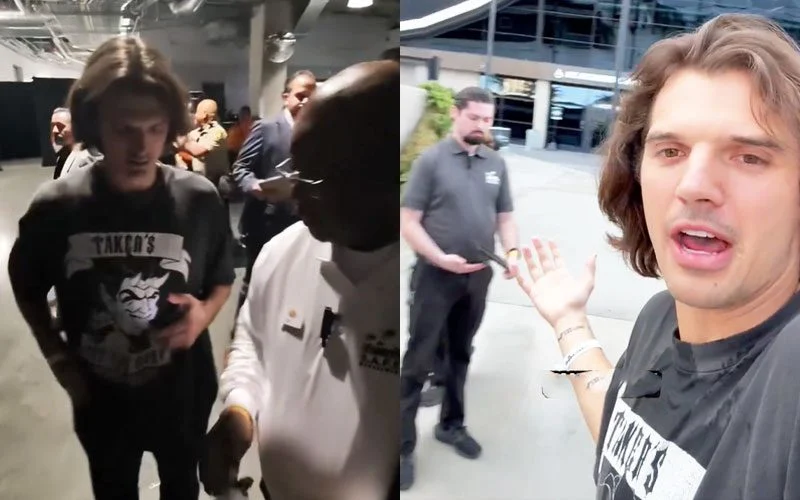
The glitz and glamour of Las Vegas have long served as the perfect backdrop for the high-stakes world of professional wrestling, and WrestleMania 42 at Allegiant Stadium was designed to be the ultimate culmination of that synergy. As thousands of fans descended upon the desert to witness the grandest spectacle in sports entertainment, the atmosphere was electric with the promise of historic matches and unforgettable moments. However, for a prominent figure in the digital wrestling community known as GFed, the experience transformed from a celebratory pilgrimage into a confusing and public confrontation with the machinery of the global wrestling leader. While the event inside the ring was carefully choreographed to perfection, a very real and unscripted drama was unfolding in the concourses of the stadium, involving a paying customer, a camera phone, and the uncompromising protocols of corporate security.
The incident began to garner significant attention when the content creator shared footage of a direct encounter with the venue’s security staff. According to the documented interaction, the influencer was enjoying the festivities when he was approached by multiple officials and informed that his presence at the event was no longer permitted. The tension in the footage was palpable as the guards made it clear that their instructions were specific and non-negotiable. What made the situation particularly noteworthy was the immediate clarification provided by the stadium personnel regarding the source of the order. They were quick to distance the venue itself from the decision, explicitly stating that the mandate for removal had originated from the security leadership within the wrestling organization. This distinction is crucial in the world of large-scale event management, as it shifts the narrative from a simple violation of stadium policy to a targeted executive decision made by the promotion hosting the show.
As the situation developed, the influencer naturally sought a justification for his removal. Having purchased a ticket and entered the building without any reported incident of physical disruption or verbal harassment, the sudden arrival of security felt like an ambush. The creator questioned the guards about the specific grounds for his ejection, emphasizing that he had conducted himself as a standard attendee. The response from the security team, however, offered more questions than answers. They alluded to potential issues stemming from social media activity, suggesting that the influencer’s digital footprint had triggered a red flag at the highest levels of the organization’s security apparatus. This revelation points to the increasingly sophisticated ways in which major entertainment entities monitor their environment, extending their reach far beyond the physical gates of the arena and into the digital lives of their audience members.
The legal and ethical implications of such an ejection are a frequent topic of debate among fans and legal experts alike. When an individual purchases a ticket to a WWE event, they are essentially entering into a contract that grants them a revocable license to occupy a seat. While the promotion retains the right to remove anyone for any reason, the optics of doing so without a clear, immediate provocation can be damaging to the brand’s relationship with its community. In this instance, the creator pointed out the financial investment he had made to be there, highlighting the frustration of being denied a service that had been paid for in full. The security staff remained unmoved, reiterating that because it was the promotion’s show, they held the ultimate authority over who was allowed to remain in the building. They even went as far as to suggest that the ban might extend to the following night’s festivities, effectively ending the influencer’s WrestleMania weekend prematurely.
The lack of a concrete explanation from the guards on-site left a vacuum that was quickly filled by online speculation. In the hours following the incident, various theories began to circulate across social platforms. One prominent rumor suggested that the ejection was not actually a result of the wrestling promotion’s internal directives, but rather a consequence of a pre-existing ban involving the National Football League and Allegiant Stadium. This theory gained enough traction that the influencer felt compelled to issue a public rebuttal. He clarified that he had attended numerous events at NFL venues since the alleged ban without incident, and he urged observers to listen closely to the words of the security guards in his video, who repeatedly identified the wrestling company’s security head as the source of the order. By debunking the NFL connection, the creator redirected the focus back toward the mysterious and unexplained nature of the promotion’s decision to single him out.
This incident highlights a growing friction between traditional sports entertainment giants and the new wave of independent content creators. In the modern era, the "content wrestler" or influencer occupies a unique space in the ecosystem. They often provide free publicity and drive engagement, but their independent nature means they are not subject to the same corporate filters as official media partners. This can lead to a delicate dance where the promotion may occasionally view certain creators as a liability or a threat to their carefully managed brand image. If the security team’s mention of "social media" was indeed the primary driver for the ejection, it suggests a level of scrutiny that many fans might find unsettling. It implies that a fan’s past comments, criticisms, or even the style of their content could result in them being blacklisted from live events, regardless of their behavior on the day of the show.
The silence from the organization following the event has only served to heighten the intrigue surrounding the case. Typically, a company of such magnitude prefers to let these situations fade from the news cycle rather than providing a detailed public explanation that could open them up to further scrutiny or legal challenges. However, in the age of viral video, the "no comment" approach can sometimes backfire, allowing the narrative to be shaped entirely by the person who was ejected. By capturing the interaction on video, the influencer ensured that the world saw the confusion and the lack of transparency firsthand. The guards’ refusal to provide a contact person or a formal grievance process further painted a picture of an organization that operates with an iron fist when it comes to controlling its environment.
Beyond the immediate controversy, the event at Allegiant Stadium serves as a reminder of the logistical complexity of WrestleMania. Managing a crowd of tens of thousands of people requires a multi-layered security approach that includes local law enforcement, stadium staff, and the promotion’s own internal "black suit" security team. The internal team is often comprised of former law enforcement or military personnel who are tasked with protecting the talent and the brand’s integrity. When an order comes from the head of this department, it carries the weight of the entire corporation. For a fan or a creator to be targeted by this specific group suggests that they were on a "watch list" well before they ever scanned their ticket at the turnstile.
The fallout of this ejection also raises questions about the future of fan engagement at major wrestling events. If the criteria for being allowed to stay at a show are shifting from "don’t be disruptive" to "don’t have a controversial social media presence," the boundary of what it means to be a member of the audience is being redefined. For years, the wrestling industry has had a complicated relationship with its most vocal fans. From the "smart fans" of the 1990s to the modern digital influencers, there has always been a segment of the audience that the promotion struggles to control. Ejections like the one witnessed in Las Vegas may be a sign that the industry leaders are becoming more proactive in removing voices they deem problematic, even if those voices are coming from paying customers.
As the dust settles on WrestleMania 42, the story of GFed remains a significant footnote in an otherwise successful weekend for the company. While the record-breaking gates and the high-profile matches will dominate the headlines, the image of a creator being escorted out of the building without a clear reason will linger in the minds of those who follow the behind-the-scenes world of the business. It serves as a cautionary tale for influencers who operate in the orbit of major corporations, proving that even a front-row seat doesn’t guarantee security if you find yourself on the wrong side of the corporate gatekeepers. The desert sun may have set on the event, but the questions regarding the limits of corporate power and the rights of the digital-age fan continue to burn brightly.
Ultimately, the incident at Allegiant Stadium is a microcosm of the tension between the old guard of the wrestling industry and the new, decentralized world of internet media. The promotion’s ability to exert total control over its live environment is one of its greatest strengths, allowing it to produce a polished, professional product that appeals to millions. Yet, when that control is used to silence or remove individuals without a transparent cause, it risks alienating the very community that fuels its popularity. Whether this was an isolated incident based on a specific security threat or a broader move toward a more restrictive attendance policy remains to be seen. For now, the wrestling world is left to ponder the identity of the invisible line that, once crossed, transforms a loyal fan into an unwanted guest at the biggest party of the year.
The creator in question has remained vocal about the experience, using his platform to keep the conversation alive. In doing so, he has turned a moment of personal frustration into a broader discussion about accountability and the power dynamics of the entertainment industry. While he may have missed the chance to see the main event in person, his ejection has arguably garnered him more attention than any standard vlog from the stands ever could. In the strange, often contradictory world of professional wrestling, sometimes the most impactful stories are the ones that happen far away from the squared circle, in the quiet, tense corridors where the real power is wielded. As WrestleMania moves toward its next chapter, the industry will have to grapple with how it handles the influencers who are increasingly becoming a part of the show, whether the promotion wants them there or not. The mystery of the Las Vegas ejection stands as a stark reminder that in the kingdom of sports entertainment, the house always wins, and the house has a very long memory.