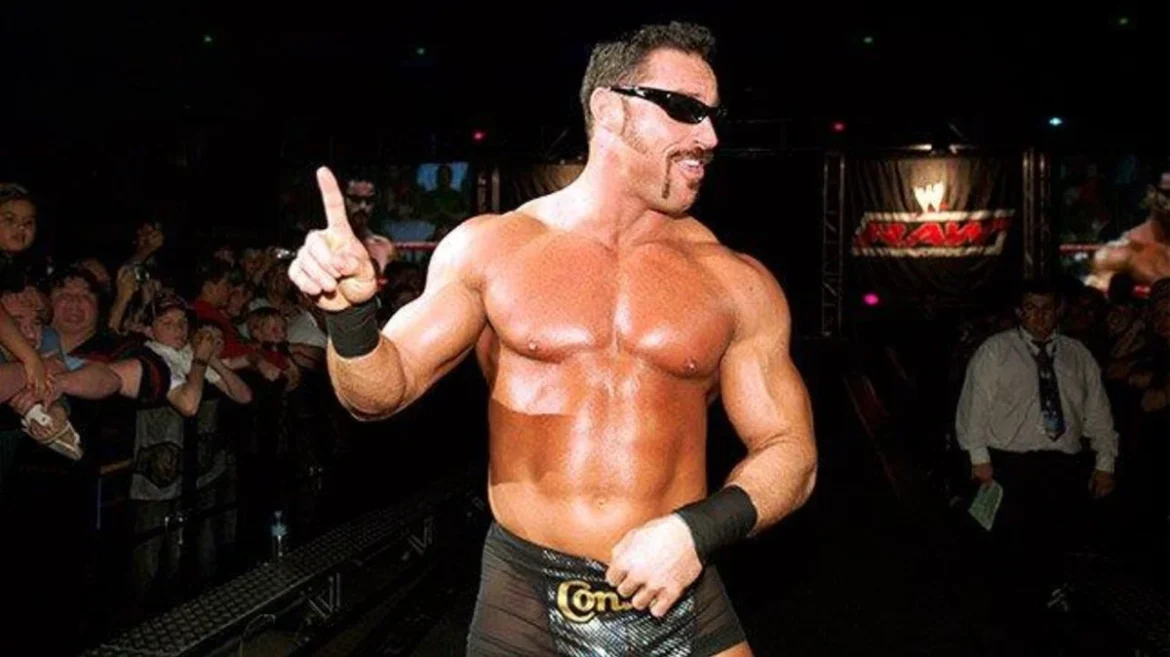
The landscape of professional wrestling is often defined by the larger-than-life characters, the earth-shattering maneuvers, and the captivating narratives that unfold within the squared circle. Yet, behind the spectacle, the journey of a wrestler is frequently shaped by the opinions and directives of those in positions of power, particularly the creative visionaries who steer the ship. For Rob Conway, a man who carved out a significant niche for himself in World Wrestling Entertainment during the early to mid-2000s, a pivotal moment in his career involved receiving a particularly noteworthy endorsement from none other than Vince McMahon himself. This wasn’t a fleeting compliment; it was a deeply analytical assessment of Conway’s abilities and a clear directive that significantly impacted his approach to his craft within the WWE machine.
Conway’s tenure in WWE saw him oscillate between tag team success and singles aspirations, often showcasing a physically imposing presence and a solid in-ring repertoire. His most memorable run undoubtedly came as part of the French-themed villainous duo, La Résistance, alongside Sylvain Grenier. This stable, complete with their tricolor flags and arrogant pronouncements, was designed to elicit boos and embody a distinct persona. However, it was during this period, when the duo was diligently working to establish their heelish identity, that Conway found himself on the receiving end of Vince McMahon’s keen observational insight. According to Conway’s recollections, during an interview on "INSIGHT with Chris Van Vliet," McMahon took the time to pull him and Grenier aside, offering a critique and compliment that resonated deeply.
McMahon, a man notoriously difficult to impress and known for his exacting standards, reportedly told Conway that he considered him to be "one tier below Bret Hart as a worker." This was not hyperbole; for McMahon, Bret "The Hitman" Hart represented a benchmark of technical wrestling excellence, a gold standard of in-ring performance. To be placed in such close proximity to Hart’s esteemed reputation, even with a caveat, was an extraordinary testament to Conway’s fundamental wrestling skills. However, the compliment was immediately followed by a crucial piece of advice, a directive that encapsulated the often-complex nature of character work in WWE. McMahon emphasized the importance of Conway’s gimmick, stating, "But you have a gimmick. You need to not worry about having such good matches. You gotta work the gimmick."
This seemingly contradictory advice – to de-emphasize exceptional in-ring ability in favor of character execution – was a masterclass in understanding the WWE product at the time. While technical prowess was certainly valued, the ultimate goal for many performers was to connect with the audience on an emotional level, to generate a reaction, whether cheers or boos. McMahon’s point was clear: La Résistance, with their distinct nationalistic heel persona, was not designed to be a series of technical clinics. Their purpose was to be despised, to embody a foreign threat, and to contribute to the overall narrative of the show. Their success would be measured not by the ovation for a perfectly executed suplex, but by the venomous heat they generated from the crowd.
Conway recalled that prior to this conversation, McMahon wouldn’t typically wish them a good match. Instead, the directive was often to engage with their characters, to wave their flags, and to embrace the theatricality of their roles. This feedback helped Conway and Grenier understand the broader objective. They weren’t striving for "five-star matches" in the traditional wrestling purist sense. Their mission was to embody their characters so effectively that the audience would invest in them, ultimately fueling the storylines and elevating other performers. This realization marked a significant shift in their mindset, encouraging them to lean into the heat-seeking aspect of their La Résistance persona.
The impact of this advice extended beyond the tag team division. When Conway transitioned into a singles competitor, he carried this understanding with him. He had already received confirmation of his in-ring capabilities from the ultimate authority, which provided a foundational confidence. This allowed him to focus on other facets of his presentation. Conway actively worked on his physique, understanding that a visually impressive presence was a key component of the WWE superstar mold. He recognized that in addition to his technical skills, he needed to cultivate a look that commanded attention and projected authority.
His singles run saw him adopt the moniker "Conway’s Law," aiming to establish himself as a formidable force. During this period, Conway also encountered McMahon’s distinctive approach to character development and performance. He recounted an instance where he delivered a promo that he felt went exceptionally well. However, McMahon’s feedback was not about the content or the delivery’s impact, but rather about the visual presentation. "You need to do it again; you need more oil," McMahon instructed, emphasizing the importance of a polished, almost glistening, appearance for a wrestler aiming for a prominent spot on the roster. This seemingly minor detail underscored McMahon’s holistic vision for his performers, where every aspect of their presentation, from their in-ring work to their physical sheen, played a role in the overall package.
While Conway was never explicitly promised a specific championship or a main event push, he felt that he was on a trajectory that could lead him towards significant opportunities. The Intercontinental Championship, often seen as a stepping stone to the upper echelons of the card, was a goal he felt was within reach. This ambition was fueled by the understanding that his skills were recognized and that he was being guided to refine his presentation to align with WWE’s vision for its top talent. The specific praise from McMahon, coupled with the directives on character work and presentation, provided Conway with a clear roadmap, even if the ultimate destination remained fluid.
The memory of Vince McMahon’s assessment serves as a powerful illustration of the nuanced criteria for success within WWE. It wasn’t solely about possessing the innate talent for athletic competition; it was also about understanding how to translate that talent into a compelling character that served the larger narrative. Rob Conway, through his experience, learned firsthand that even the most technically gifted wrestlers must embrace their gimmicks and connect with the audience on a primal level. McMahon’s high praise, while couched in a specific directive, affirmed Conway’s fundamental abilities while simultaneously pushing him to evolve into a more complete performer, one capable of generating both admiration for his in-ring prowess and disdain for his villainous persona. This duality, the ability to be both a skilled athlete and a captivating character, is the enduring formula that has defined WWE’s most successful stars, and it’s a lesson Rob Conway learned directly from the architect himself. His journey, marked by this pivotal moment of validation and guidance, offers a valuable glimpse into the strategic thinking that shapes professional wrestling careers within the highest echelons of the industry.