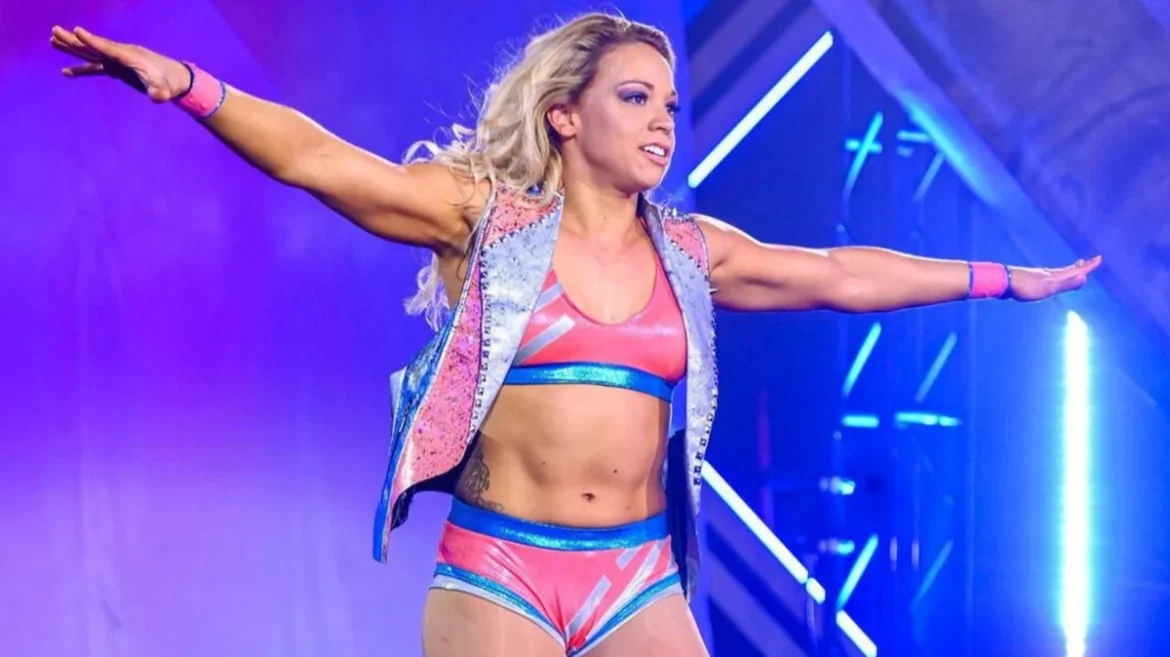
The landscape of professional wrestling is a constantly shifting tapestry, woven with threads of tradition, innovation, and the enduring appeal of compelling characters. For decades, the industry has seen the rise and fall of countless personas, each striving to capture the imagination of the audience and carve out a unique space in the annals of wrestling history. Among these archetypes, the figure of the moral crusader, the self-appointed guardian of propriety and order, has proven to be a surprisingly persistent and adaptable character. This was vividly illustrated by the recent revelations of Zoey Serrano, formerly known to WWE audiences as Zoey Stark, who openly discussed her desire to resurrect and modernize a concept rooted in a pivotal era of wrestling’s past: the Right to Censor.
The concept of the Right to Censor, a faction that emerged during the wildly popular Attitude Era of WWE, was a fascinating commentary on societal anxieties and the perceived excesses of televised entertainment. Comprised of characters like Steven Richards, Val Venis, Ivory, and Bull Buchanan, the group positioned themselves as defenders of decency, decrying the often gratuitous violence, suggestive content, and rebellious attitudes that defined the era. Their mission was to "clean up" professional wrestling, imposing their own brand of censorship on storylines and performances they deemed offensive. While their on-screen actions were often played for comedic effect and served as a foil to the more rebellious characters, the underlying premise tapped into a genuine societal discourse about what was acceptable for mass consumption.
Zoey Serrano’s pitch for a modern iteration of this gimmick, as she detailed in a recent discussion, stemmed from a collaborative brainstorming session with fellow WWE performer Liv Morgan. Morgan, recognizing Serrano’s inherent intensity and her capacity for portraying a dominant, uncompromising character, suggested the Right to Censor as a potential avenue for Serrano to explore. The idea resonated deeply with Serrano, who saw it as a natural fit for her wrestling style and persona. She envisioned a contemporary version of the group, one that could adapt the core tenets of moral policing to the current wrestling climate, where societal norms and media scrutiny have evolved significantly.
The genesis of Serrano’s interest in this gimmick wasn’t solely her own initial spark of inspiration. It was Liv Morgan, a performer known for her creative thinking and ability to connect with the audience on multiple levels, who identified the potential in Serrano. Morgan reportedly approached Serrano at a live event, articulating her belief that Serrano needed a defined character to amplify her impact. The suggestion of the Right to Censor was not a casual one; Morgan saw it as a character that could provide Serrano with a clear narrative direction and a compelling reason for her actions in the ring and on the microphone. This collaborative spirit, where established performers mentor and inspire one another, is a vital, albeit often unseen, component of professional wrestling’s creative engine.
Serrano’s enthusiasm for the concept was immediate. She understood the inherent theatricality of a group dedicated to imposing their moral code on others, and she recognized how her own in-ring presence could lend itself to such a role. The idea of being an "unkillable" and "pure" force, as she described her desired persona, perfectly aligned with the self-righteous authority that the Right to Censor embodied. The original Right to Censor was often portrayed as an almost cult-like organization, convinced of their own righteousness and unwavering in their mission. Serrano saw the potential to recapture that unwavering conviction and apply it to a 21st-century context.
Following Morgan’s suggestion to explore the idea further, Serrano took to social media, a powerful platform for wrestlers to engage with fans and test the waters for new concepts. She conceived of a social media campaign that would, in essence, be the "launch" of her modern Right to Censor pitch. This involved posting images and commentary that critiqued the attire and perceived "inappropriate" styles of her fellow female Superstars, including prominent figures like Liv Morgan herself, Bianca Belair, and Rhea Ripley. This wasn’t an act of genuine animosity but rather a strategic performance, designed to demonstrate the character’s ideology in action. By targeting popular and recognizable figures, Serrano aimed to generate buzz and illustrate how the gimmick would function within the existing WWE ecosystem.
The response to Serrano’s social media initiative was reportedly significant, with her posts garnering substantial engagement and a wide reach. The sheer volume of reactions, exceeding 10 million views, indicated a strong audience interest in the concept. This demonstrated that the core idea of a moralistic, censorious faction, even one with roots in a past era, still held a certain fascination for wrestling fans. It suggested that the inherent conflict and potential for controversy inherent in such a gimmick could still resonate in the modern era. However, despite the positive audience reception and Serrano’s clear vision, the concept did not ultimately materialize as an on-screen storyline within WWE’s creative plans at that time.
The decision by WWE creative not to pursue Serrano’s pitch, despite its apparent popularity and her own strong connection to the idea, highlights the complex and often unpredictable nature of professional wrestling booking. Numerous factors influence which ideas are greenlit and which are shelved, including the overall creative direction of the company, the perceived marketability of a given concept, and the availability of other storylines and talent. It is not uncommon for wrestlers to develop compelling character ideas that, for whatever reason, do not align with the immediate plans of management. This can be a source of frustration for performers, but it also underscores the constant creative flux within a major wrestling promotion.
Serrano’s tenure with WWE concluded in April of the following year, as part of the company’s customary post-WrestleMania roster adjustments. Her departure marked the end of a five-year period where she established herself as a formidable competitor, known for her athletic prowess and intense in-ring style. While her time in WWE may not have seen the realization of her Right to Censor pitch, her experience provided her with valuable insights and a platform to hone her craft.
However, the story of Zoey Serrano’s wrestling journey did not end with her WWE exit. Demonstrating remarkable resilience and a commitment to her career, she, alongside fellow former WWE talent Shayna Baszler, quickly found new opportunities. The pair made a significant impact in Total Nonstop Action Wrestling (TNA), where they debuted as the formidable tag team known as "Apex." Their arrival in TNA was met with considerable anticipation, given their established reputations and their shared history.
The culmination of their TNA debut was a major championship victory. At TNA’s Bound for Glory pay-per-view event, a landmark show in the company’s calendar, Apex captured the Knockouts World Tag Team Championships. This victory served as a powerful statement, showcasing their immediate impact on the TNA women’s division and reasserting their status as top-tier talent. It also demonstrated their ability to adapt and thrive in a new environment, proving that their skills and championship pedigree extended beyond their previous employer.
The success of Apex in TNA, and Serrano’s continued exploration of compelling character concepts, underscores a broader trend in professional wrestling: the increasing mobility of talent and the growing importance of independent promotions and alternative platforms. Wrestlers are no longer solely defined by their affiliations with one major company. Instead, their careers are increasingly viewed as holistic journeys, where they can build upon their past successes and forge new legacies across various organizations. Serrano’s desire to revisit the Right to Censor, even if it didn’t happen in WWE, speaks to her understanding of what makes a character compelling and her willingness to explore different facets of wrestling’s rich history. The enduring appeal of the moral crusader archetype, as evidenced by her pitch, suggests that while wrestling may constantly evolve, certain character types possess a timeless quality that can be reinterpreted and revitalized for new generations of fans. The journey of Zoey Serrano, from her innovative pitch to her championship success in TNA, exemplifies the dynamic and ever-evolving nature of the professional wrestling industry.