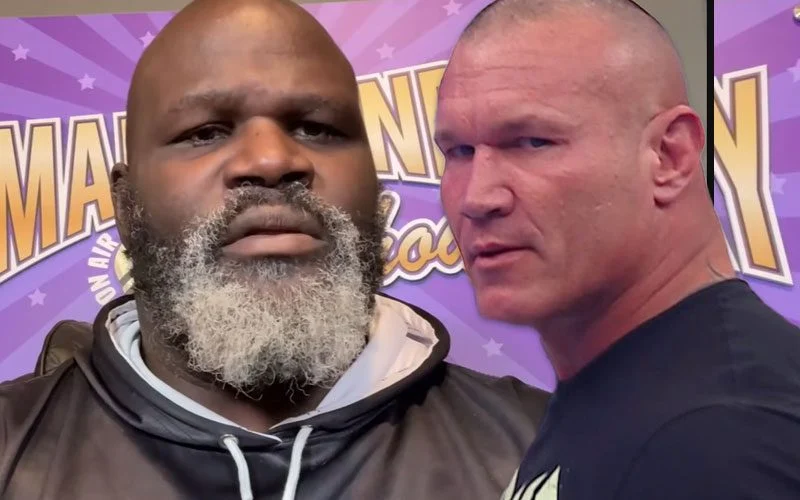
The professional wrestling industry has always existed in a unique gray area where the boundaries between a scripted persona and the individual behind the curtain are frequently blurred to the point of invisibility. For decades, fans have grappled with the challenge of separating the villainous actions of a character on screen from the actual moral compass of the athlete performing the role. This tension recently took center stage during an insightful conversation featuring WWE Hall of Famer Mark Henry, who felt compelled to address long-standing perceptions regarding one of the most decorated performers in the history of the business, Randy Orton. Henry, a man whose reputation for honesty and bluntness is legendary within the locker room, provided a passionate defense of his former colleague, attempting to reconcile the provocative nature of televised storylines with the reality of the man he has known for over two decades. The discussion serves as a fascinating window into the internal culture of sports entertainment, where the pursuit of "heat" often leads to creative choices that can haunt a performer’s legacy long after the cameras stop rolling.
The catalyst for this discussion was a specific period in WWE history where the writing staff leaned heavily into racially charged tropes to build animosity between performers. During an appearance on the digital program Game Day Grace, Henry was confronted with memories of a particular segment involving himself, MVP, and Kofi Kingston. In the storyline, Randy Orton utilized language that many viewers found deeply offensive, employing terms like "thugs" and suggesting that his rivals return to "the hood." For a young audience, particularly those of color, these scripted insults felt less like traditional wrestling trash talk and more like a reflection of systemic prejudices. The interviewer noted that watching those segments as a young fan evoked a genuine desire to see Henry physically dismantle Orton, not just for the sake of the championship, but as a form of cosmic justice for the rhetoric being used. Henry acknowledged the validity of that emotional response, admitting that the visceral reaction of the audience was exactly what the producers and performers were aiming for at the time, however uncomfortable it may seem in retrospect.
Henry’s primary argument hinges on the concept of wrestling psychology and the theatrical nature of the medium. He drew a direct parallel between a professional wrestler playing a villain and an actor portraying a prejudiced character in a prestige film. Specifically, Henry referenced the film Django Unchained, noting that an actor who plays a slave owner or a bigot in a historical drama is rarely accused of harboring those views in their private life. In Henry’s estimation, Randy Orton is an elite level "actor" who understood that the most effective way to make an audience despise him was to touch on societal nerves. According to the former World Heavyweight Champion, the version of Orton that exists in the real world is the furthest thing imaginable from a person with a racist heart. Henry went as far as to suggest that the accusation is so foreign to Orton’s actual personality that the veteran performer would likely find the notion absurd to the point of laughter. This perspective offers a stark contrast to the way many modern fans, who are increasingly sensitive to the historical treatment of minority performers, view such controversial segments.
To understand why Henry’s defense carries such weight, one must look at his own history within the wrestling business and his standing as a locker room leader. Mark Henry did not enter the world of sports entertainment through traditional channels; he was a world-class Olympian, the "World’s Strongest Man," who had to navigate a frequently hostile and exclusionary environment in the mid-1990s. Henry has never been one to sugarcoat the realities of the industry. He has been vocal in the past about the genuine racism he encountered during his early years on the roster, citing the guidance of the legendary Ron Simmons as the primary reason he and other Black wrestlers were able to survive and thrive. Simmons, the first Black man to hold the WCW World Heavyweight Championship, served as a mentor who taught his peers how to command respect and shut down any instances of genuine disrespect. Henry noted that while they never sought out conflict, they were always prepared to finish it if someone crossed the line into actual prejudice or classism. This history of standing up for himself and his community makes his endorsement of Orton particularly significant; Henry is not a man who would defend a colleague out of corporate loyalty or a desire to be polite.
In fact, Henry was quite explicit about his personal feelings toward the various individuals he has encountered throughout his storied career. He made it clear that there are numerous people from his past whom he holds in such low regard that he wouldn’t offer them the most basic human assistance in an emergency. This level of transparency highlights the sincerity of his feelings toward Orton. By categorizing Orton as a "special" and "good human," Henry is separating him from a segment of the industry that he feels was genuinely toxic. The bond between the two was forged through years of traveling the world, sharing locker rooms, and working high-stakes matches together. For Henry, the character of "The Viper"—a cold, calculating, and often cruel antagonist—is a masterpiece of performance art that has very little in common with the man who has been a consistent friend and professional peer.
However, the conversation around Randy Orton’s character is complicated by more than just scripted television promos from a decade ago. While Henry focuses on the professional environment, the public often points to a 2019 incident that occurred outside the confines of a WWE ring. During a live stream of the video game Call of Duty on the platform Twitch, Orton was recorded using a racial slur. The clip went viral instantly, sparking a firestorm of criticism and leading many to question whether the "character" they saw on TV was perhaps closer to reality than previously thought. This real-world lapse in judgment created a rift in the narrative of Orton’s career. For many fans, a scripted promo can be forgiven as the product of a writer’s room, but a spontaneous remark made during a private moment of gaming suggests a deeper, more ingrained issue. Henry’s comments do not explicitly address the Twitch incident, but they provide a counter-narrative from someone who has spent thousands of hours in Orton’s presence away from the cameras.
The tension between Henry’s personal experience and the public’s perception of Orton highlights a broader issue within the wrestling community: the evolution of what is considered acceptable entertainment. During the "Ruthless Aggression" era and the early years of the PG era, WWE creative often relied on low-hanging fruit to generate "heat." This included stereotypical gimmicks, xenophobic storylines, and, as in the case of the Orton-Henry feud, racially insensitive dialogue. Performers like Orton were tasked with delivering these lines to ensure the audience would pay to see them get beaten. In the modern era, there is a growing consensus that such tactics are not only lazy but harmful, as they reinforce negative societal structures. While Henry views these moments through the lens of a professional doing his job, a newer generation of fans views them as a failure of the company to treat its performers of color with dignity.
The role of Ron Simmons in shaping the culture for Black wrestlers cannot be overstated when discussing Henry’s worldview. Henry credited Simmons with instilling a sense of pride and a "no-nonsense" attitude that protected them from the systemic issues prevalent in the business. By mentioning Simmons in the same breath as his defense of Orton, Henry is framing his perspective within a tradition of racial awareness. He is essentially saying that as a student of Ron Simmons, he knows how to identify a real threat and a real bigot. In his eyes, if Orton were truly the person his critics believe him to be, the veteran guard of the locker room would have dealt with him long ago. This internal policing of the locker room is a part of wrestling lore that rarely makes it into the public eye, but it is a crucial component of how veterans like Henry evaluate their peers.
Ultimately, the discourse surrounding Mark Henry’s defense of Randy Orton is a reflection of the complicated legacies that many long-term wrestlers carry. Orton has been in the spotlight since his early twenties, growing up in front of a global audience. His journey from a "hot-headed" young prospect to a respected elder statesman of the WWE roster has been marked by both incredible professional achievements and significant personal controversies. Henry’s testimony serves as a powerful character witness from a man who has every reason to be skeptical of those in power. While Henry’s words may not satisfy every critic or erase the memory of past mistakes, they offer a necessary nuance to the conversation. They remind the audience that the individuals we see on our television screens are multifaceted human beings who exist in a high-pressure, often surreal environment.
As the wrestling industry continues to move forward, the lessons of the past remain vital. The shift toward more inclusive and respectful storytelling is a direct result of the conversations sparked by the very promos Henry discussed. While performers like Orton and Henry represent a bridge between the old way of doing things and the new, the industry itself is still learning how to balance the need for dramatic conflict with the responsibility of social awareness. Mark Henry’s staunch defense of his friend is a testament to the deep-seated brotherhood that can form in the trenches of the wrestling business, a bond that, in Henry’s view, is strong enough to withstand the scrutiny of the public and the mistakes of the past. Whether the fans can make that same leap of faith remains to be seen, but the "World’s Strongest Man" has made his position clear: the man behind the RKO is someone he is proud to call a friend.